Inquire: Call 0086-755-23203480, or reach out via the form below/your sales contact to discuss our design, manufacturing, and assembly capabilities.
Quote: Email your PCB files to Sales@pcbsync.com (Preferred for large files) or submit online. We will contact you promptly. Please ensure your email is correct.
Notes: For PCB fabrication, we require PCB design file in Gerber RS-274X format (most preferred), *.PCB/DDB (Protel, inform your program version) format or *.BRD (Eagle) format. For PCB assembly, we require PCB design file in above mentioned format, drilling file and BOM. Click to download BOM template To avoid file missing, please include all files into one folder and compress it into .zip or .rar format.
After spending fifteen years designing PCBs for aerospace and telecom applications, I can tell you that nothing teaches you more about product reliability than watching a prototype fail spectacularly in the field. That expensive lesson is exactly why Highly Accelerated Life Testing has become an indispensable part of my design workflow. HALT testing has saved my team countless hours of troubleshooting and millions in warranty costs by identifying weak points before they become customer complaints.
In this comprehensive guide, I will walk you through everything you need to know about Highly Accelerated Life Testing, from the fundamental principles to practical implementation strategies that actually work on the production floor. Whether you are new to HALT or looking to optimize your existing testing process, this article covers the essential knowledge that every electronics engineer should have.
What is Highly Accelerated Life Testing?
Highly Accelerated Life Testing is a stress testing methodology designed to uncover design and manufacturing weaknesses in electronic and electromechanical products. Unlike traditional testing methods that attempt to simulate actual field conditions, HALT deliberately pushes products far beyond their specified operating limits to accelerate the discovery of failure modes.
The term HALT was coined by Dr. Gregg Hobbs in 1988, although he had been using the concept under the name “Design Ruggedization” for eighteen years prior. The fundamental philosophy behind Highly Accelerated Life Testing is simple yet powerful: find the weak spots however you can, then make them more robust.
What makes HALT different from conventional reliability testing is its “test-to-fail” approach. Rather than running a product through a predetermined stress profile to see if it passes, HALT continuously increases stress levels until failures occur. This iterative process of test, analyze, and fix (often called the TAAF cycle) continues until no more design weaknesses can be found within the equipment capabilities.
Key Characteristics of HALT Testing
Highly Accelerated Life Testing possesses several distinctive characteristics that set it apart from other reliability assessment methods. The testing applies stresses well beyond the product specifications, typically using temperature extremes from -100°C to +200°C and random vibration levels up to 50 Grms in six degrees of freedom. The rapid thermal transition rates, often exceeding 50°C per minute, create stresses that would take months or years to accumulate under normal operating conditions.
Unlike qualification testing, which aims to demonstrate that a product meets its specifications, HALT is a discovery test focused on finding problems rather than proving compliance. This distinction is crucial because it means that any failure discovered during HALT represents an opportunity for improvement, not a pass/fail verdict.
Understanding the Highly Accelerated Life Testing Process
A properly executed HALT program follows a structured sequence of stress applications, each designed to reveal specific types of weaknesses. The entire process typically takes three to five days, during which engineers can identify and address vulnerabilities that might otherwise remain hidden for months or years in the field.
Cold Thermal Step Stress Testing
The HALT process typically begins with cold thermal step stress testing. The chamber temperature starts at a moderate level and decreases in increments of 10°C, with 5°C increments used as the limits are approached. At each temperature step, the product remains at the setpoint for at least ten minutes plus the time needed to complete functional testing.
This phase reveals the Lower Operational Limit (LOL), the temperature at which the product begins to malfunction but can recover when warmed. Continuing beyond this point identifies the Lower Destruct Limit (LDL), where permanent damage occurs. Common failures discovered during cold step stress include LCD display issues, battery performance degradation, and brittle fractures in solder joints due to thermal contraction.
Hot Thermal Step Stress Testing
Following cold step stress, the test moves to hot thermal step stress using the same incremental approach. This phase determines the Upper Operational Limit (UOL) and Upper Destruct Limit (UDL). High-temperature failures often include semiconductor parametric drift, electrolytic capacitor degradation, plastic deformation, and adhesive failures.
From my experience testing telecom equipment, hot step stress frequently exposes issues with thermal interface materials and heat sink mounting that would eventually cause field failures during summer operation or in poorly ventilated installations.
Rapid Thermal Transition Testing
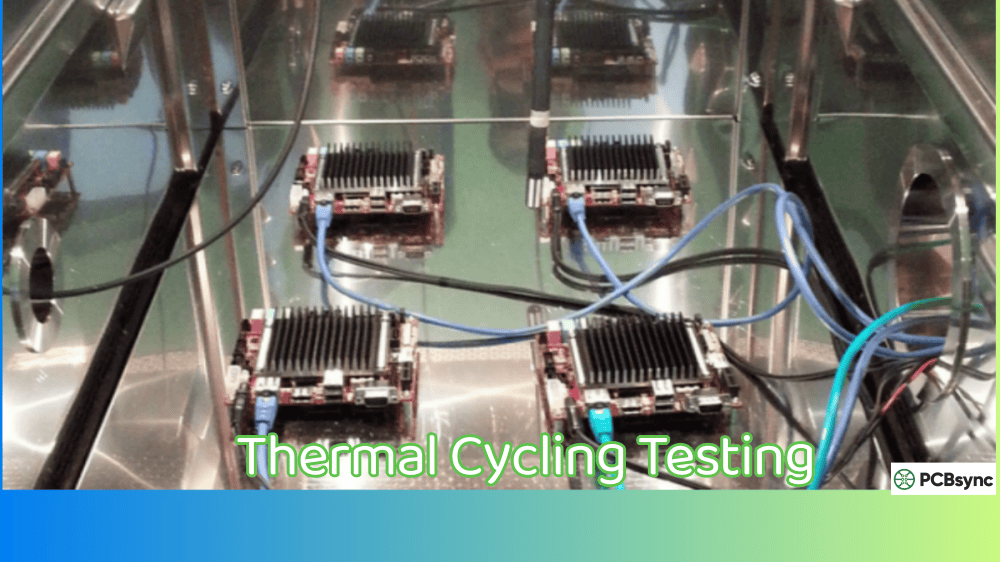
Rapid thermal transition testing, sometimes called thermal shock testing, subjects the product to quick temperature changes between the established operational limits. The transition rates in a HALT chamber can exceed 60°C per minute, creating severe thermal gradients within the product. These gradients induce mechanical stresses from differential thermal expansion between materials with different coefficients of thermal expansion (CTE).
This phase is particularly effective at revealing solder joint weaknesses, especially on large BGA packages where the CTE mismatch between the component and PCB creates significant strain. After years of doing this work, I have found that thermal cycling is where most solder-related issues first become apparent.
Vibration Step Stress Testing
Vibration step stress testing applies incrementally increasing levels of random vibration, typically in 3-5 Grms increments. HALT chambers use pneumatic hammers to generate repetitive shock vibration across a frequency range of 2 Hz to 10,000 Hz in all six degrees of freedom simultaneously. This omnidirectional excitation ensures that weaknesses are found regardless of their orientation.
The vibration testing identifies the Vibration Operational Limit (VOL) and Vibration Destruct Limit (VDL). Common vibration-induced failures include connector intermittencies, wire chafing, fastener loosening, PCB flexure-related solder joint cracks, and component lead fatigue.
Combined Environmental Stress Testing
The final and most stressful phase of Highly Accelerated Life Testing combines temperature cycling with vibration. This combination creates synergistic effects where failures occur that would not appear under either stress applied independently. The interaction between thermal expansion and mechanical vibration often precipitates the most subtle design weaknesses.
Studies have shown that combined stress testing can increase detection efficiency by a factor of ten or more compared to applying stresses individually. This is particularly true for intermittent failures such as cracked solder joints that only manifest under specific combinations of temperature and mechanical loading.
Benefits of Highly Accelerated Life Testing for Product Development
Implementing Highly Accelerated Life Testing offers numerous advantages that directly impact product quality, development timelines, and ultimately, the bottom line. Organizations that have adopted HALT consistently report significant improvements in product reliability and customer satisfaction.
Early Detection of Design Weaknesses
Perhaps the most significant benefit of Highly Accelerated Life Testing is the ability to find design weaknesses during the development phase when corrections are least expensive. A design change during prototyping might cost a few hundred dollars, while the same change after production begins could cost thousands or tens of thousands. Field failures involving recalls can run into millions of dollars.
HALT testing can reveal weaknesses in just three to five days that would otherwise take months or even years to manifest in the field. This time compression allows engineers to iterate designs rapidly and make improvements before committing to production tooling and processes.
Reduced Time to Market
While adding HALT to the development process might seem like it would extend schedules, the opposite is typically true. By identifying and fixing problems early, teams avoid the lengthy troubleshooting cycles that often plague later development stages. Products that go through HALT during prototyping generally have smoother qualification testing and fewer production delays.
Additionally, the confidence gained from comprehensive HALT testing often allows teams to proceed to production with less extensive traditional testing, which can take weeks or months to complete.
Increased Design Margins
By establishing the operational and destruct limits of a design, HALT provides quantitative data about design margins. Large margins between the operational limits and the specification limits indicate a robust design, while narrow margins suggest vulnerability to manufacturing variations or environmental extremes.
This information allows engineers to make informed decisions about where to invest effort in design improvements. Resources can be focused on expanding the margins where they are narrowest, resulting in more efficient use of engineering time.
Lower Warranty and Service Costs
Products that undergo Highly Accelerated Life Testing during development consistently show lower field failure rates than those tested only to specification limits. This translates directly into reduced warranty claims, fewer service calls, and lower inventory requirements for spare parts.
Companies that have implemented HALT programs report savings in the millions of dollars from reduced warranty costs alone. The return on investment for HALT testing equipment and engineering time is typically very high, often paying for itself within the first product development cycle.
HALT Benefits at a Glance
Benefit
Impact
Early Defect Detection
Find failures in 3-5 days instead of months in the field
Cost Savings
10x to 100x cheaper to fix issues during design vs. production
Faster Development
Compressed testing timeline accelerates time to market
Improved Reliability
5x to 1000x improvements in MTBF reported by manufacturers
Reduced Warranty Costs
Lower field failure rates translate to significant savings
Design Margin Visibility
Quantitative data on product robustness enables informed decisions
HALT vs. HASS: Understanding the Differences
Highly Accelerated Life Testing and Highly Accelerated Stress Screening (HASS) are complementary testing methodologies that serve different purposes in the product lifecycle. Understanding when and how to use each is essential for maximizing product reliability.
When to Use HALT
HALT is performed during the product development phase, typically on prototype units or early production samples. The goal is to discover design weaknesses and establish the fundamental limits of the technology being used. HALT testing generally uses only one to five samples because the focus is on learning about the design rather than demonstrating production quality.
The ideal time to perform HALT is during the prototype phase when design changes are still relatively easy and inexpensive to implement. However, HALT can also be valuable when evaluating alternative components, qualifying new suppliers, or assessing the impact of manufacturing process changes.
When to Use HASS
HASS is performed during the manufacturing phase on production units, either on every unit (100% screening) or on a sampling basis. The stress levels used in HASS are derived from the HALT results but are set below the destruct limits to avoid damaging good units. The goal is to precipitate latent defects caused by manufacturing variations, poor workmanship, or marginal components.
A typical HASS profile applies all stresses simultaneously, with temperature ramping continuously between brief dwells at the extremes while vibration is applied. This combined stress is highly effective at revealing process defects before products ship to customers.
Industries That Rely on Highly Accelerated Life Testing
While Highly Accelerated Life Testing was originally developed for solid-state electronics, its application has expanded to virtually any industry where product reliability is critical. The methodology has proven effective across a wide range of product types and operating environments.
Aerospace and Defense
The aerospace and defense sectors were among the earliest adopters of HALT methodology. Equipment operating in aircraft, spacecraft, and military vehicles experiences extreme temperature ranges, intense vibration, and must function flawlessly for extended periods. HALT testing helps ensure that avionics, navigation systems, and weapon systems can withstand these demanding conditions.
NASA has developed specific HALT guidelines for Class P electronics hardware, recognizing the value of accelerated stress testing for mission-critical applications. Military standards such as GMW8287 provide frameworks for implementing HALT in defense electronics programs.
Automotive Electronics
Modern vehicles contain hundreds of electronic control units (ECUs) that must operate reliably across extreme temperatures and constant vibration. The automotive industry refers to HALT as Robustness Validation (RV) and has incorporated it into qualification programs for semiconductor components and electronic assemblies.
Automotive applications are particularly challenging because of the combination of temperature extremes, mechanical shock from road impacts, and long service life requirements. HALT testing helps automotive suppliers identify weaknesses that would eventually lead to field failures and costly recalls.
Telecommunications
Telecommunications equipment must operate continuously in outdoor enclosures, data centers, and central offices where environmental conditions can vary significantly. Network infrastructure demands extremely high reliability because service outages affect thousands of customers simultaneously.
IPC-9592A, the standard for power conversion devices in computer and telecommunications industries, specifically recommends HALT methodology for discovering design weaknesses. The telecom industry has embraced HALT as a critical tool for ensuring network reliability.
Medical Devices
Medical device reliability can directly impact patient safety, making thorough testing essential. HALT helps medical device manufacturers identify potential failure modes that could compromise device performance during critical procedures.
While HALT does not replace regulatory qualification testing, it complements those requirements by revealing weaknesses that standard test protocols might miss. Many medical device manufacturers perform HALT on prototypes before entering formal validation to minimize surprises during the regulatory approval process.
HALT Chamber and Equipment Requirements
Conducting Highly Accelerated Life Testing requires specialized equipment capable of generating extreme environmental stresses with precise control. Understanding the capabilities required helps organizations make informed decisions about purchasing equipment or partnering with testing laboratories.
HALT Chamber Specifications
A proper HALT chamber must be capable of applying random vibration energy from 2 Hz to 10,000 Hz in six degrees of freedom (three linear axes plus three rotational axes). Vibration levels should reach at least 50 Grms to ensure sufficient margin for most products. The vibration is typically generated using pneumatic air hammers, which is why HALT chambers are sometimes called repetitive shock chambers.
Temperature capabilities should span from approximately -100°C to +200°C with rapid transition rates of at least 50°C per minute, though 60°C per minute is preferred. High-power resistive heating elements provide fast heating, while liquid nitrogen (LN2) enables rapid cooling.
Typical HALT Chamber Specifications
Parameter
Specification
Temperature Range
-100°C to +200°C
Thermal Ramp Rate
50-60°C/minute minimum
Vibration Frequency Range
2 Hz to 10,000 Hz
Vibration Level
Up to 50 Grms (6 DOF)
Cooling System
Liquid nitrogen (LN2)
Heating System
High-power resistive heating elements
Monitoring and Instrumentation
Effective HALT testing requires comprehensive monitoring to detect failures as they occur. Thermocouples should be placed directly on the device under test (DUT) to measure actual component temperatures rather than relying solely on chamber air temperature. Accelerometers, typically low-mass types weighing around 4 grams with frequency response from 10 Hz to 5 kHz, measure actual vibration levels on the product.
Functional test equipment monitors product operation throughout the test. Data loggers and multimeters track electrical parameters to detect subtle changes that might indicate impending failure. The monitoring system must be capable of detecting both hard failures, where the product stops functioning entirely, and soft failures, where operation degrades under stress but recovers when conditions normalize.
Common Failure Modes Discovered During Highly Accelerated Life Testing
Understanding the types of failures that HALT typically reveals helps engineers design more robust products from the start. These failure modes represent the weak links that accelerated stress testing is designed to expose.
Solder Joint Failures
Solder joint failures are among the most common issues discovered during HALT. The combination of thermal cycling and vibration stresses the joints through different mechanisms: thermal expansion mismatch causes creep and fatigue, while vibration induces flexure-related stresses. Particularly vulnerable are large BGA packages, where the CTE mismatch between the component and PCB creates significant strain at the peripheral solder balls.
Intermittent solder joint failures, where the connection opens under stress but closes again when the stress is removed, are especially insidious because they may not be detected during routine functional testing. The combined thermal and vibration stresses in HALT are highly effective at precipitating these latent defects into detectable failures.
Connector and Wiring Issues
Connectors often reveal weaknesses under HALT conditions. Vibration can cause contact intermittency, especially in connectors that rely on friction for retention. Temperature extremes may cause plastics to become brittle or soften, affecting contact pressure and alignment.
Wire fatigue at termination points is another common finding. Vibration causes wires to flex at their attachment points, eventually leading to conductor fracture. Proper strain relief and wire routing become apparent weaknesses when subjected to accelerated stress.
Component Parametric Failures
Temperature extremes can cause electronic components to operate outside their specified parameters. Electrolytic capacitors may lose capacitance at low temperatures or exhibit increased ESR at high temperatures. Semiconductors may experience parametric drift that affects circuit timing or signal levels.
These parametric failures often manifest as soft failures that recover when temperature returns to normal. While the component may not be permanently damaged, the discovery of narrow operating margins indicates a need for design improvement or component reselection.
Best Practices for Implementing Highly Accelerated Life Testing
Successfully implementing a HALT program requires careful planning and disciplined execution. These best practices, gathered from years of experience across multiple industries, help ensure that HALT delivers maximum value.
Pre-Test Planning
Effective HALT begins with thorough preparation. Before testing starts, engineers should develop a detailed test plan that includes the following elements: clearly defined objectives, functional test procedures, failure criteria definitions, monitoring requirements, and documentation protocols. Understanding potential failure modes and mechanisms based on reliability physics helps focus attention on the most likely weak points.
Decide how many devices under test (DUTs) are available and appropriate for the testing. Generally, one to five samples are used, though more may be needed if the goal is to evaluate different assembly processes or component variations. Ensure all functional test equipment is properly configured and that the test coverage is adequate to detect relevant failures.
Fixture Design
The fixture that mounts the DUT to the HALT chamber table is critical for effective testing. The fixture must efficiently transmit vibration energy to the product while allowing adequate air circulation for rapid temperature changes. Open-frame designs or fixtures with strategic cutouts allow air to reach internal components.
Avoid over-constraining the product in ways that differ from its actual mounting in the final application. The goal is to stress the product, not the fixture, so resonances should occur in the product rather than the mounting system.
Root Cause Analysis
When failures occur during HALT, thorough root cause analysis is essential. Simply documenting that a failure occurred is insufficient; engineers must understand why the failure occurred. For solder joint failures, determine whether the issue is related to design (excessive strain due to vibration or thermal expansion), manufacturing process (inadequate solder volume or improper reflow profile), or component quality.
One of the major mistakes in the industry is dismissing HALT failures as due to overstress conditions. While the failures did occur sooner than they would in the field due to the accelerated conditions, they would have eventually occurred at lower stress levels given enough time. Every failure discovered in HALT represents a real weakness that should be addressed.
Corrective Action and Verification
Corrective action is the main purpose of performing HALT. Design changes should be implemented to eliminate the root cause of each failure. After implementing fixes, verification HALT testing should be performed to confirm that the corrective actions were effective and that the product has become more robust.
Verification testing should demonstrate that the operational and destruct limits have improved compared to the original design. If the limits have not increased, or if new failure modes appear, further investigation and correction is needed. The iterative nature of HALT continues until no more improvements can be achieved within the equipment capabilities.
Industry Standards and Resources for Highly Accelerated Life Testing
Several industry standards and resources provide guidance for implementing HALT programs. These documents offer frameworks for consistent test execution and help organizations establish best practices.
Relevant Standards
GMW8287 (General Motors) is one of the most comprehensive standards for Highly Accelerated Life Testing, covering HALT, HASS, and HASA methodologies. This standard presents an acceptable and certifiable process for implementing HALT across diverse organizations and is applicable to electronic assemblies, electromechanical assemblies, and certain mechanical assemblies.
IPC-9592A provides requirements for power conversion devices in computer and telecommunications industries, including specific recommendations for HALT methodology. JEDEC standards such as JESD22-A104 for temperature cycling and JESD22-A108 for operating life testing complement HALT by providing guidelines for specific stress conditions.
Useful Resources and References
GMW8287 – Highly Accelerated Life Testing (HALT) Highly Accelerated Stress Screening and Auditing (Available through IHS Markit)
IPC-9592A – Requirements for Power Conversion Devices (Available at IPC.org)
“Next Generation HALT and HASS” by Kirk A. Gray and John J. Paschkewitz (John Wiley & Sons, 2016)
“Accelerated Reliability Engineering: HALT and HASS” by Gregg K. Hobbs (Wiley, 2000)
NASA Guidelines for Highly Accelerated Life Test (HALT) for Class P Electronics (Available at nepp.nasa.gov)
ESPEC HALT Chamber Resources (espec.com)
IPC International Standards Library (www.ipc.org)
Frequently Asked Questions About Highly Accelerated Life Testing
What is the difference between HALT and traditional life testing?
Traditional life testing typically applies stresses at or near the product specification limits and runs for extended periods to demonstrate a specific service life or MTBF. HALT, in contrast, applies stresses well beyond specifications with the explicit goal of causing failures. HALT is a “test-to-fail” methodology focused on discovering weaknesses, while traditional life testing is often “test-to-pass” focused on demonstrating compliance. HALT can reveal failure modes in days that would take months or years to appear in traditional testing.
How many samples are needed for HALT testing?
Typically, one to five prototype samples are used for HALT. Since the goal is to understand the design limitations rather than to generate statistical data, fewer samples are needed compared to qualification testing. However, having multiple samples allows testing to continue after failures occur without waiting for repairs. If evaluating different configurations or suppliers, additional samples for each variation may be appropriate.
Can HALT damage good products?
Yes, HALT is specifically designed to push products past their limits until failure occurs. This is intentional because the goal is to discover the fundamental limits of the technology. However, the knowledge gained enables design improvements that result in more robust products. HALT should be performed on prototype or pre-production units, not on products intended for sale. HASS, which uses lower stress levels derived from HALT results, is designed not to damage good production units.
Is HALT required for regulatory compliance?
HALT is generally not a regulatory requirement but rather a design improvement tool. Most regulatory standards focus on demonstrating that products meet specific performance criteria rather than on the development process used to achieve reliability. However, many companies require HALT as part of their internal product development process, and some industry standards like GMW8287 provide frameworks for HALT implementation. Medical device manufacturers often use HALT to complement regulatory qualification testing.
How much does HALT testing cost?
HALT testing costs vary depending on whether testing is performed in-house or at an external laboratory, the complexity of the product, and the extent of monitoring required. External laboratory testing typically ranges from several thousand to tens of thousands of dollars for a complete HALT program. HALT chambers for in-house testing represent a significant capital investment, often exceeding $200,000. However, the return on investment from reduced warranty costs, fewer field failures, and faster development cycles typically justifies the expense many times over.
Conclusion
Highly Accelerated Life Testing has proven itself as one of the most effective methodologies for improving product reliability in electronics and electromechanical assemblies. By subjecting products to stresses far beyond their specifications, HALT reveals design weaknesses that would otherwise remain hidden until products reach customers.
The benefits of implementing HALT extend far beyond simple defect detection. Organizations that embrace this methodology see faster development cycles, lower warranty costs, improved customer satisfaction, and stronger competitive positions. The investment in HALT equipment and expertise pays for itself through reduced field failure rates and the associated cost savings.
As products become more complex and reliability expectations continue to increase, Highly Accelerated Life Testing will remain an essential tool in the electronics engineer’s arsenal. Whether you are designing PCBs for aerospace, automotive, telecommunications, or medical applications, incorporating HALT into your development process is a proven path to building better, more reliable products.
From my years of experience, I can tell you that the companies that consistently deliver the most reliable products are those that have made HALT a fundamental part of their design culture. The question is not whether you can afford to implement HALT, but whether you can afford not to.
Inquire: Call 0086-755-23203480, or reach out via the form below/your sales contact to discuss our design, manufacturing, and assembly capabilities.
Quote: Email your PCB files to Sales@pcbsync.com (Preferred for large files) or submit online. We will contact you promptly. Please ensure your email is correct.
Notes: For PCB fabrication, we require PCB design file in Gerber RS-274X format (most preferred), *.PCB/DDB (Protel, inform your program version) format or *.BRD (Eagle) format. For PCB assembly, we require PCB design file in above mentioned format, drilling file and BOM. Click to download BOM template To avoid file missing, please include all files into one folder and compress it into .zip or .rar format.