Contact Sales & After-Sales Service

Contact & Quotation

  • Inquire: Call 0086-755-23203480, or reach out via the form below/your sales contact to discuss our design, manufacturing, and assembly capabilities.
  • Quote: Email your PCB files to Sales@pcbsync.com (Preferred for large files) or submit online. We will contact you promptly. Please ensure your email is correct.
Drag & Drop Files, Choose Files to Upload You can upload up to 3 files.

Notes:
For PCB fabrication, we require PCB design file in Gerber RS-274X format (most preferred), *.PCB/DDB (Protel, inform your program version) format or *.BRD (Eagle) format. For PCB assembly, we require PCB design file in above mentioned format, drilling file and BOM. Click to download BOM template To avoid file missing, please include all files into one folder and compress it into .zip or .rar format.


High Gain PCB Antenna Design: Techniques, Array Layouts & Dimension Guide

When a standard PCB antenna’s 2-3 dBi gain isn’t enough, you need a high gain PCB antenna design. I’ve worked on projects where every extra dB of antenna gain meant the difference between a working product and one that couldn’t maintain a reliable link. The good news is that achieving 8, 10, or even 15+ dBi from a PCB-based antenna is entirely possible—if you understand the techniques and tradeoffs involved.

This guide covers everything you need to design a high gain PCB antenna for your application. I’ll explain the techniques that actually increase gain (and by how much), provide practical array layouts with dimensions, and help you select the right substrate material. Whether you need 6 dBi for a WiFi access point or 15 dBi for a point-to-point link, these design approaches will get you there.

Understanding PCB Antenna Gain Fundamentals

Before diving into techniques, let’s clarify what “gain” actually means and how it relates to antenna size and bandwidth.

Gain vs Directivity vs Efficiency

ParameterDefinitionUnitTypical PCB Range
DirectivityRatio of peak radiation intensity to averagedBi3-20 dBi
EfficiencyPower radiated vs power input%50-95%
GainDirectivity × EfficiencydBi2-18 dBi

Gain equals directivity multiplied by efficiency. A highly directional antenna with poor efficiency won’t achieve high gain. Both factors matter.

Typical Gain by PCB Antenna Type

Antenna TypeTypical GainDirectivityPatternComplexity
Monopole/IFA1-3 dBiLowOmnidirectionalSimple
Dipole2-4 dBiLowBidirectionalSimple
Loop1-2 dBiLowOmnidirectionalSimple
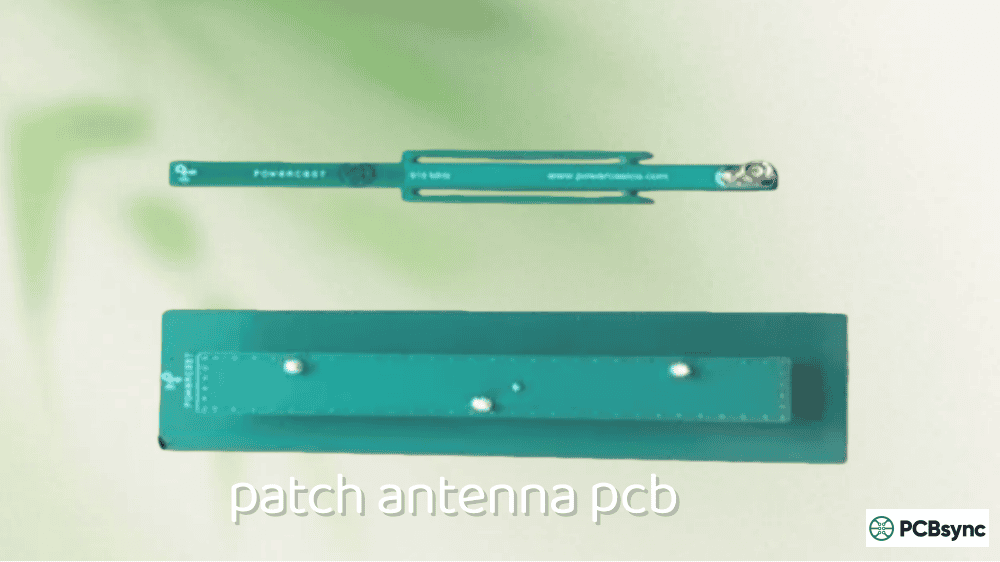
Single patch5-8 dBiMediumUnidirectionalModerate
Stacked patch7-10 dBiMedium-HighUnidirectionalModerate
2×2 patch array10-13 dBiHighUnidirectionalComplex
4×4 patch array14-18 dBiVery HighNarrow beamComplex
Yagi-Uda8-14 dBiHighEnd-fireModerate

The Gain-Bandwidth-Size Tradeoff

Higher gain always comes at a cost. Understanding these tradeoffs helps you make informed design decisions.

Gain TargetRelative SizeTypical BandwidthPattern Width
2-3 dBi0.25λWide (>20%)Omnidirectional
5-7 dBi0.5λ × 0.5λModerate (5-10%)70-90°
10-12 dBi1λ × 1λNarrow (3-5%)30-50°
15+ dBi2λ × 2λVery narrow (1-3%)15-25°

Techniques to Increase PCB Antenna Gain

Here are the proven methods to boost gain in high gain PCB antenna designs, ranked by effectiveness.

Gain Improvement Techniques Summary

TechniqueGain IncreaseSize ImpactComplexityBest For
Antenna arrays+3 to +12 dB2× to 16×HighMaximum gain
Stacked patches+2 to +4 dB1.5× heightModerateGain + bandwidth
Parasitic elements+1 to +3 dB1.5× areaModerateSingle element
Yagi directors+3 to +8 dB2-4× lengthModerateEnd-fire pattern
Reflector backing+2 to +3 dB1× (height added)LowFront-to-back
Low-loss substrate+1 to +2 dBNoneLowAll designs
Larger ground plane+0.5 to +2 dBVariableLowPatch antennas
Air gap dielectric+1 to +3 dBIncreased heightModerateMaximum efficiency

Technique 1: Antenna Arrays

Arraying multiple antenna elements is the most effective way to increase gain. The theoretical gain increase follows a simple rule.

Array ConfigurationElementsTheoretical Gain IncreasePractical Gain Increase
1×2 linear2+3.0 dB+2.5 to +3.0 dB
2×2 planar4+6.0 dB+5.0 to +6.0 dB
1×4 linear4+6.0 dB+5.0 to +5.5 dB
2×4 planar8+9.0 dB+7.5 to +8.5 dB
4×4 planar16+12.0 dB+10 to +11 dB

The practical gain is typically 0.5-2 dB below theoretical due to feed network losses, mutual coupling, and element efficiency.

Technique 2: Stacked Patch Antennas

Adding a second patch above the driven patch improves both gain and bandwidth.

ConfigurationGainBandwidthHeight
Single patch6-7 dBi2-5%0.02-0.05λ
Stacked patch8-10 dBi10-25%0.1-0.15λ
Triple stack9-11 dBi20-40%0.15-0.2λ

Technique 3: Parasitic Elements

Adding non-driven elements near the main antenna can increase gain by shaping the radiation pattern.

Parasitic TypePositionEffectGain Increase
DirectorIn front of drivenNarrows beam forward+1 to +2 dB
ReflectorBehind drivenReduces back radiation+2 to +3 dB
Multiple directorsSeries in frontFurther beam narrowing+3 to +6 dB

Technique 4: Low-Loss Substrate Materials

Substrate loss directly reduces antenna efficiency and gain. Switching from FR4 to low-loss materials provides measurable improvement.

SubstrateDielectric ConstantLoss TangentEfficiency ImpactGain Improvement
FR44.40.020Baseline (70-80%)Baseline
Rogers RO4003C3.550.0027+10-15%+0.5 to +1.0 dB
Rogers RO4350B3.480.0037+8-12%+0.4 to +0.8 dB
Rogers RT/duroid 58802.20.0009+15-20%+1.0 to +1.5 dB
PTFE (Teflon)2.10.0004+18-25%+1.2 to +2.0 dB

Technique 5: Ground Plane Optimization

For patch antennas, ground plane size affects both resonant frequency and gain.

Ground Plane SizeGain EffectNotes
Minimum (patch + 0.1λ)-1 to -2 dBAcceptable for space-constrained
Standard (patch + 0.25λ)NominalRecommended baseline
Large (patch + 0.5λ)+0.5 to +1 dBOptimal for single patch
Very large (patch + 1λ)+1 to +1.5 dBDiminishing returns

High Gain PCB Antenna Array Design

Array design is the primary method for achieving 10+ dBi gain from a high gain PCB antenna. Let me walk through the practical aspects.

Array Element Spacing

Element spacing critically affects both gain and pattern shape. The general rule is half-wavelength (λ/2) spacing.

SpacingEffect on GainEffect on PatternRecommendation
0.5λOptimalNo grating lobesStandard choice
0.6λSlightly higherMinor sidelobesAcceptable
0.7λHigherVisible sidelobesUse with caution
0.8λ+ReducedGrating lobes appearAvoid
< 0.4λReduced (coupling)Wide beamAvoid

Element Spacing by Frequency

FrequencyFree Space λλ/2 SpacingFR4 λ/2 Spacing
433 MHz693 mm346 mm264 mm
868 MHz346 mm173 mm132 mm
915 MHz328 mm164 mm125 mm
2.4 GHz125 mm62.5 mm48 mm
5.8 GHz52 mm26 mm20 mm

Feed Network Topologies

The feed network distributes power to array elements with proper phase and amplitude.

Feed TypeAdvantagesDisadvantagesLossBest For
Corporate (parallel)Equal amplitude, easy designHigher loss, more space0.5-1.5 dBBroadside arrays
SeriesCompact, simpleUnequal amplitude0.3-0.8 dBLinear arrays
HybridBalanced tradeoffsComplex design0.5-1.0 dBLarge arrays

Corporate Feed Design

Corporate feeds use power dividers to split signal equally to all elements.

Divider StageSplit RatioElements FedCumulative Loss
1st stage1:220.2-0.3 dB
2nd stage1:2 each40.4-0.6 dB
3rd stage1:2 each80.6-0.9 dB
4th stage1:2 each160.8-1.2 dB

2×2 Array Layout Example

A 2×2 patch array is a practical design achieving 11-13 dBi gain.

Parameter2.4 GHz Value5.8 GHz ValueNotes
Single patch size29 × 29 mm12 × 12 mmOn FR4
Element spacing62 mm26 mmλ/2 free space
Total array size91 × 91 mm38 × 38 mmIncluding feed
Ground plane110 × 110 mm50 × 50 mm+10 mm border
Expected gain11-12 dBi12-13 dBiWith corporate feed
Beamwidth35-45°30-40°Half-power

4×4 Array Layout Example

For maximum gain, a 4×4 array can achieve 15-17 dBi.

Parameter2.4 GHz Value5.8 GHz ValueNotes
Single patch size29 × 29 mm12 × 12 mmOn FR4
Element spacing62 mm26 mmλ/2
Total array size215 × 215 mm90 × 90 mmIncluding feed
Ground plane235 × 235 mm110 × 110 mm+10 mm border
Expected gain15-17 dBi16-18 dBiWith optimized feed
Beamwidth18-25°15-22°Narrow beam
Feed network loss1.0-1.5 dB0.8-1.2 dBCorporate feed

High Gain PCB Antenna Dimensions by Frequency

These tables provide starting dimensions for high gain PCB antenna designs at common frequencies.

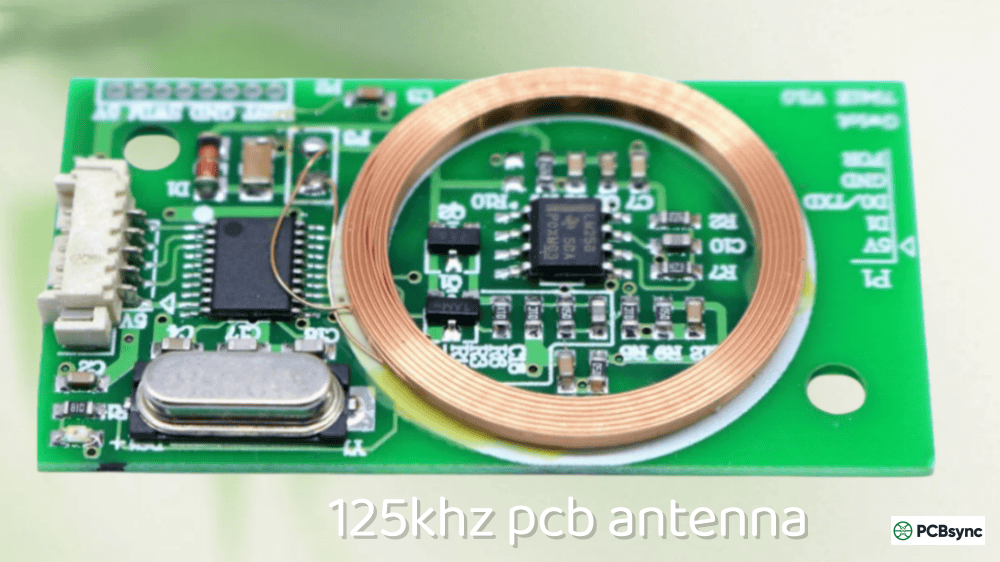
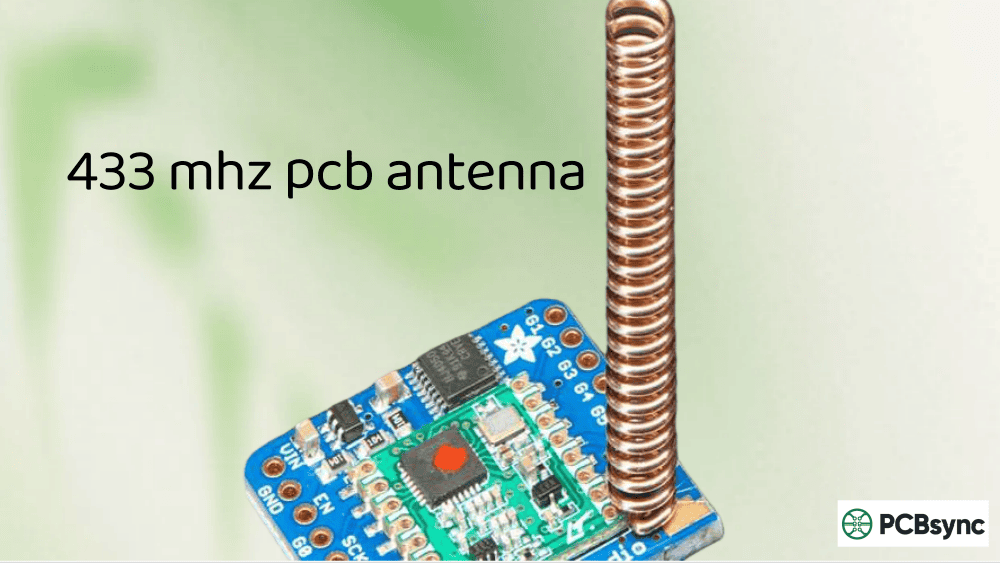
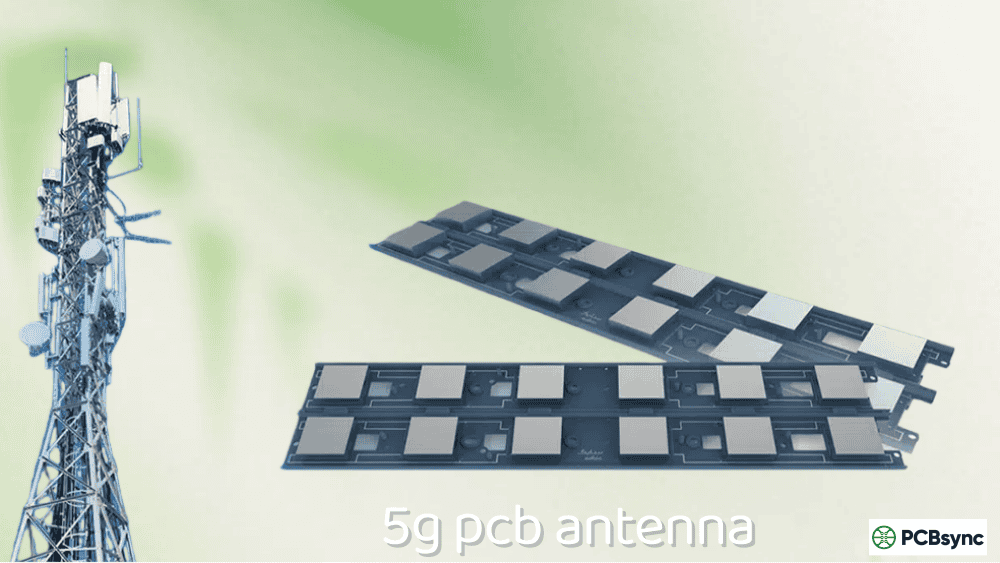
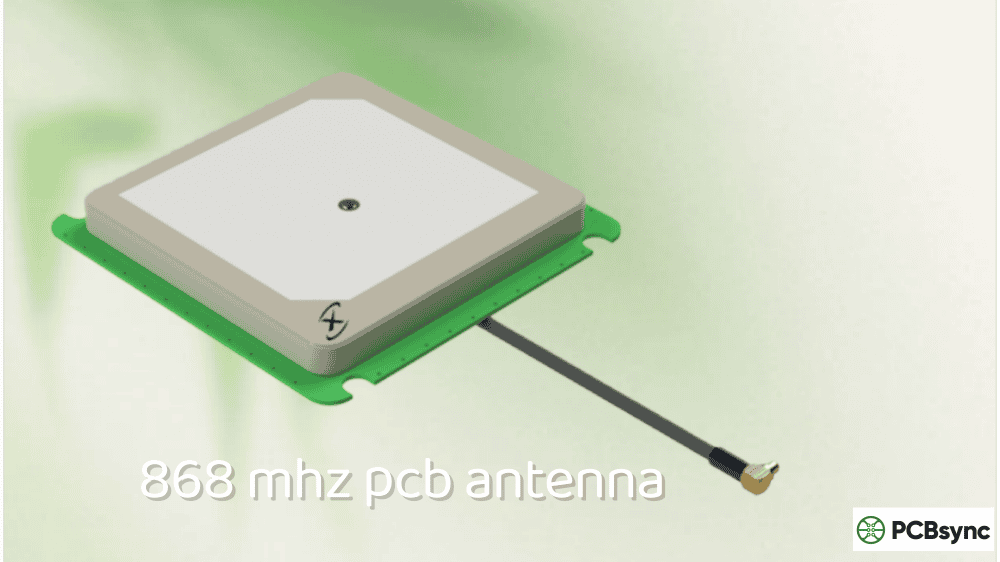
Read more different Antenna PCBs:

433 MHz High Gain Dimensions

DesignSizeExpected GainPatternNotes
Single patch (FR4)165 × 165 mm6-7 dBiUnidirectionalLarge footprint
2-element Yagi350 × 80 mm8-10 dBiEnd-fireDirector + driven
1×2 patch array165 × 510 mm9-10 dBiUnidirectionalLinear array
2×2 patch array510 × 510 mm12-13 dBiNarrow beamLarge PCB required

868/915 MHz High Gain Dimensions

DesignSize (868 MHz)Size (915 MHz)Expected GainNotes
Single patch82 × 82 mm78 × 78 mm6-7 dBiStandard
Stacked patch82 × 82 × 15 mm78 × 78 × 14 mm8-9 dBi+bandwidth
3-element Yagi200 × 40 mm190 × 38 mm9-11 dBiEnd-fire
2×2 patch array255 × 255 mm242 × 242 mm11-13 dBiCorporate feed
4×4 patch array600 × 600 mm570 × 570 mm16-18 dBiMaximum gain

2.4 GHz High Gain Dimensions

DesignSizeExpected GainBeamwidthApplication
Single patch29 × 29 mm6-7 dBi70-90°Access point
Stacked patch29 × 29 × 6 mm8-9 dBi60-80°CPE device
2-element Yagi80 × 20 mm8-9 dBiEnd-fireClient device
4-element Yagi150 × 20 mm10-12 dBiEnd-fireDirectional
2×2 patch array91 × 91 mm11-13 dBi35-45°Sector antenna
4×4 patch array215 × 215 mm15-17 dBi18-25°Point-to-point
8×8 patch array460 × 460 mm19-21 dBi10-15°Backhaul

5.8 GHz High Gain Dimensions

DesignSizeExpected GainBeamwidthApplication
Single patch12 × 12 mm7-8 dBi65-85°Standard
Stacked patch12 × 12 × 3 mm9-10 dBi55-75°Enhanced
4-element Yagi60 × 10 mm10-12 dBiEnd-fireDirectional
2×2 patch array38 × 38 mm12-14 dBi30-40°CPE
4×4 patch array90 × 90 mm16-18 dBi15-22°Backhaul
8×8 patch array195 × 195 mm20-22 dBi8-12°Point-to-point

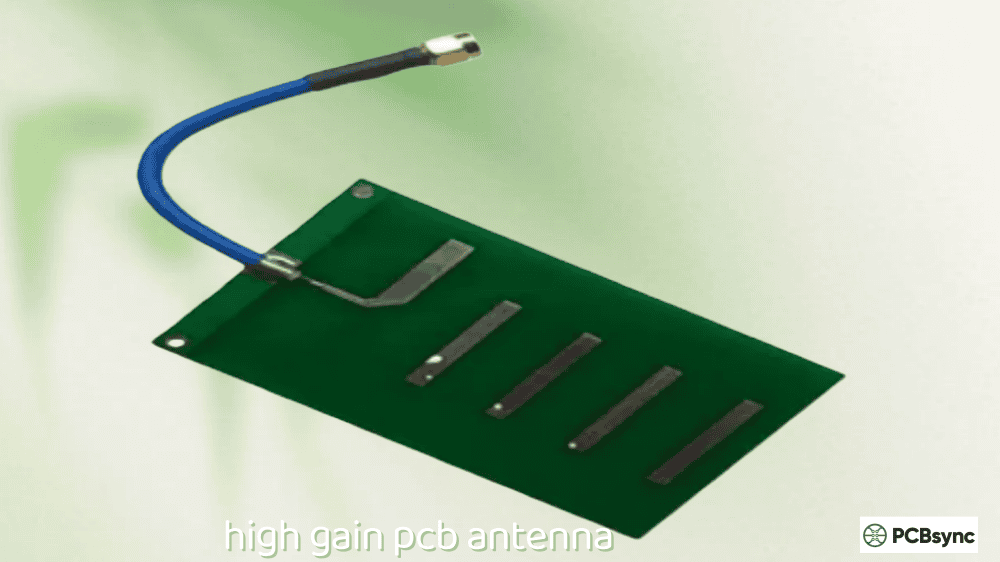
PCB Yagi-Uda Antenna Design

The Yagi-Uda is an excellent high gain PCB antenna option when an end-fire pattern is acceptable.

Yagi Element Dimensions

ElementLengthSpacing from DrivenFunction
Reflector0.5λ (slightly longer)0.2λ behindBack radiation reduction
Driven element0.47-0.48λReference (0)Fed element
Director 10.45λ0.2-0.25λ aheadGain increase
Director 20.44λ0.4-0.5λ aheadFurther gain
Director 30.43λ0.6-0.75λ aheadMaximum gain

Yagi Gain vs Number of Elements

ElementsConfigurationApproximate GainBoom Length
2Driven + Reflector5-6 dBi0.2λ
3+ 1 Director7-9 dBi0.4-0.5λ
4+ 2 Directors9-10 dBi0.6-0.8λ
5+ 3 Directors10-11 dBi0.9-1.1λ
6+ 4 Directors11-12 dBi1.2-1.5λ

PCB Yagi Implementation Tips

AspectRecommendationReason
Element width2-5 mmBandwidth vs pattern
SubstrateThin FR4 (0.8-1.0 mm)Minimize dielectric loading
Feed methodMicrostrip to dipoleImpedance matching
Element shapeStraight or foldedFolded for impedance matching
Ground planeBelow reflector onlyNot full ground

Substrate Selection for High Gain PCB Antennas

Material selection significantly impacts high gain PCB antenna performance. Here’s a practical comparison.

Substrate Comparison for Antenna Performance

Substrateεrtan δAntenna EfficiencyCost FactorBest For
Standard FR44.40.02070-80%Prototypes, low cost
High-Tg FR44.40.01872-82%1.2×Improved FR4
Rogers RO4003C3.550.002785-92%3-4×Production, mid performance
Rogers RO4350B3.480.003782-90%3-4×Production, good value
Rogers RT58802.20.000990-95%6-8×High performance
Taconic TLY2.20.000990-95%5-7×Alternative to RT5880
PTFE/Teflon2.10.000492-97%8-10×Maximum performance

When to Use Low-Loss Substrates

ScenarioFR4 Acceptable?Recommended Substrate
Prototype/proof of conceptYesFR4
Consumer product, cost-sensitiveUsuallyFR4 or RO4003C
High volume productionYesFR4 or RO4350B
Performance-criticalNoRO4003C or better
Gain > 12 dBi requiredNoRT5880 or PTFE
Frequency > 6 GHzNoRogers or PTFE
Military/aerospaceNoRT5880 or PTFE

Efficiency Comparison at 2.4 GHz

SubstrateSingle Patch Gain4×4 Array GainImprovement vs FR4
FR45.5 dBi14.0 dBiBaseline
RO4003C6.3 dBi15.2 dBi+1.2 dB
RT58806.8 dBi16.0 dBi+2.0 dB
PTFE7.0 dBi16.3 dBi+2.3 dB

Common Mistakes That Kill High Gain Antenna Performance

Mistake 1: Insufficient Ground Plane

Problem: Ground plane barely extends beyond patch edges. Effect: Gain reduced 2-3 dB, pattern distorted, impedance shifted. Solution: Extend ground plane minimum λ/4 beyond patch edges.

Mistake 2: Wrong Element Spacing in Arrays

Problem: Using substrate wavelength instead of free-space wavelength for spacing. Effect: Elements too close, mutual coupling, reduced gain. Solution: Calculate spacing using free-space wavelength (c/f), not substrate wavelength.

Mistake 3: Feed Network Losses Ignored

Problem: Designing array without accounting for power divider and transmission line losses. Effect: Actual gain 2-3 dB below expected. Solution: Budget 0.5-1.5 dB loss for feed network, use wider traces, minimize length.

Mistake 4: FR4 at High Frequencies

Problem: Using FR4 above 3 GHz without accounting for increased loss. Effect: Efficiency drops below 60%, gain significantly reduced. Solution: Switch to Rogers or PTFE substrate for frequencies above 3 GHz.

Mistake 5: Phase Errors in Arrays

Problem: Unequal feed line lengths causing phase mismatch between elements. Effect: Beam squinting, reduced gain, pattern distortion. Solution: Ensure all feed paths have equal electrical length, account for bends.

High Gain PCB Antenna Design Resources

Simulation and Design Tools

ToolPurposeCostNotes
HFSS (Ansys)Full-wave EM simulationCommercialIndustry standard
CST StudioFull-wave EM simulationCommercialAlternative to HFSS
ADS (Keysight)Circuit + EM simulationCommercialGood for feed networks
openEMSOpen-source EM simulationFreeMATLAB/Octave based
MATLAB Antenna ToolboxArray synthesisCommercialGood for arrays
4NEC2Wire antenna simulationFreeGood for Yagi design

PCB Substrate Suppliers

SupplierMaterialsWebsite
Rogers CorporationRO4003C, RO4350B, RT5880rogerscorp.com
TaconicTLY, RF-35taconic.com
IsolaAstra MT77, I-Teraisola-group.com
ArlonAD series, DiCladarlon-med.com

Reference Designs and Application Notes

ResourceSourceContent
AN-00501Linx TechnologiesPatch antenna design basics
DN023/DN024Texas InstrumentsWiFi PCB antenna reference
Antenna MagusSoftwareValidated antenna templates
IEEE XplorePapersHigh-gain array research

Impedance Calculators

ToolPurposeURL
Saturn PCB ToolkitMicrostrip impedancesaturnpcb.com
AppCADRF calculationskeysight.com
Mantaro CalculatorTrace widthmantaro.com
QUCSCircuit simulationqucs.sourceforge.net

Frequently Asked Questions

What is the maximum gain achievable from a PCB antenna?

Practical high gain PCB antenna designs can achieve 20-22 dBi with 8×8 element arrays at frequencies like 5.8 GHz. At lower frequencies, the physical size becomes the limiting factor—a 20 dBi antenna at 433 MHz would require a PCB over 1 meter square. The theoretical limit depends on the aperture size: gain ≈ 4πA/λ², where A is the physical area. For a 200×200 mm PCB at 2.4 GHz, the maximum theoretical gain is approximately 23-24 dBi. Real-world designs achieve 80-90% of this theoretical maximum due to efficiency losses, feed network losses, and edge effects. For most applications, 15-18 dBi represents a practical upper limit before the PCB size becomes unwieldy.

Can I achieve high gain with FR4 substrate?

Yes, but with limitations. FR4’s loss tangent (0.02) reduces efficiency by 10-20% compared to low-loss materials like Rogers. At 2.4 GHz, you can reasonably achieve 12-14 dBi with FR4 using a 4×4 patch array. Above 5 GHz, FR4 losses become more significant, and you’ll lose 2-3 dB compared to low-loss substrates. For prototyping and cost-sensitive applications below 3 GHz, FR4 is acceptable if you budget for the efficiency loss. For production designs requiring maximum performance, especially above 3 GHz, invest in Rogers RO4003C or similar low-loss materials. The cost premium is typically 3-5× for the substrate, but the performance improvement justifies it for gain-critical applications.

How much gain does each additional array element add?

Doubling the number of elements theoretically adds 3 dB of gain. A 2×2 array (4 elements) should provide +6 dB over a single element, and a 4×4 array (16 elements) should provide +12 dB. In practice, you’ll achieve 80-90% of this due to feed network losses and mutual coupling. So a realistic expectation is: 2 elements = +2.5 dB, 4 elements = +5 dB, 8 elements = +7.5 dB, 16 elements = +10 dB. The feed network becomes increasingly critical as array size grows—poorly designed networks can waste 1-2 dB of the potential gain increase. Use wider transmission lines (lower loss), minimize feed path length, and consider substrate-integrated waveguide (SIW) for very large arrays.

What is the best element spacing for a PCB antenna array?

Use half-wavelength (λ/2) spacing measured in free-space wavelength, not substrate wavelength. This is the most common mistake in array design. At 2.4 GHz, λ/2 is 62.5 mm—use this value regardless of substrate dielectric constant. The substrate wavelength only affects the individual patch dimensions, not the array spacing. Spacing less than 0.4λ causes excessive mutual coupling, reducing gain and increasing pattern distortion. Spacing greater than 0.7λ creates grating lobes that reduce gain in the main beam direction. For most applications, 0.5λ to 0.6λ provides the best balance of gain, beamwidth, and sidelobe performance. If space is constrained, 0.45λ is the absolute minimum for acceptable performance.

How does beamwidth change with increasing gain?

Higher gain means narrower beamwidth—there’s no escaping this fundamental relationship. Approximate beamwidths: 6 dBi = 70-90°, 10 dBi = 40-50°, 15 dBi = 20-30°, 20 dBi = 10-15°. This has significant implications for your application. A high-gain antenna for a point-to-point link (narrow beam acceptable) differs from one for a base station covering a sector (wider beam needed). For mobile devices or situations where orientation varies, high gain can actually hurt performance because the narrow beam may not point at the target. Consider your use case carefully—sometimes two separate 10 dBi antennas covering different sectors outperform a single 15 dBi antenna with a narrow beam pointing the wrong direction.

Conclusion

Designing a high gain PCB antenna requires balancing multiple factors: antenna type selection, array configuration, substrate material, and feed network optimization. The techniques outlined in this guide can take you from a basic 2-3 dBi monopole to a sophisticated 15+ dBi array—the approach depends on your specific requirements for gain, size, cost, and radiation pattern.

Start by determining your minimum gain requirement based on link budget analysis. If you need 10+ dBi, you’re looking at array designs. For 6-9 dBi, single-element patches, stacked patches, or Yagi antennas are practical options. Pay careful attention to element spacing (use free-space wavelength), feed network design, and substrate selection—these details separate working designs from disappointing ones.

For critical applications, invest in electromagnetic simulation during the design phase. Tools like HFSS, CST, or even free options like openEMS can predict performance before fabrication. Validate with measurements using a VNA and antenna range or anechoic chamber. The effort invested in proper design and verification pays dividends in achieving your gain targets reliably and consistently across production units.

Leave a Reply

Your email address will not be published. Required fields are marked *

Contact Sales & After-Sales Service

Contact & Quotation

  • Inquire: Call 0086-755-23203480, or reach out via the form below/your sales contact to discuss our design, manufacturing, and assembly capabilities.

  • Quote: Email your PCB files to Sales@pcbsync.com (Preferred for large files) or submit online. We will contact you promptly. Please ensure your email is correct.

Drag & Drop Files, Choose Files to Upload You can upload up to 3 files.

Notes:
For PCB fabrication, we require PCB design file in Gerber RS-274X format (most preferred), *.PCB/DDB (Protel, inform your program version) format or *.BRD (Eagle) format. For PCB assembly, we require PCB design file in above mentioned format, drilling file and BOM. Click to download BOM template To avoid file missing, please include all files into one folder and compress it into .zip or .rar format.