Inquire: Call 0086-755-23203480, or reach out via the form below/your sales contact to discuss our design, manufacturing, and assembly capabilities.
Quote: Email your PCB files to Sales@pcbsync.com (Preferred for large files) or submit online. We will contact you promptly. Please ensure your email is correct.
Notes: For PCB fabrication, we require PCB design file in Gerber RS-274X format (most preferred), *.PCB/DDB (Protel, inform your program version) format or *.BRD (Eagle) format. For PCB assembly, we require PCB design file in above mentioned format, drilling file and BOM. Click to download BOM template To avoid file missing, please include all files into one folder and compress it into .zip or .rar format.
Building a device that monitors your heart rate and blood oxygen saturation felt like science fiction a decade ago. Today, with a heartbeat sensor Arduino setup using the MAX30102, you can have real-time biometric data streaming to your Serial Monitor in under an hour.
I’ve integrated the MAX30102 into several wearable prototypes and medical research projects over the years. This guide walks through everything from the physics of photoplethysmography to working code examples that actually produce stable readings, not the erratic garbage that plagues so many first attempts with this sensor.
The MAX30102 is an integrated pulse oximetry and heart-rate monitor biosensor developed by Analog Devices (formerly Maxim Integrated). Unlike simpler IR-based pulse sensors that only detect heartbeat, the MAX30102 measures both heart rate (BPM) and blood oxygen saturation (SpO2) using a technique called photoplethysmography (PPG).
Inside the tiny module sits a red LED (~660nm wavelength), an infrared LED (~880nm wavelength), a high-sensitivity photodetector, and sophisticated analog signal processing circuitry. The sensor shines light through your skin and measures how much gets absorbed by the blood flowing through your capillaries.
MAX30102 Technical Specifications
Parameter
Value
Operating Voltage
1.8V (IC) + 3.3V (LEDs)
Module Input Voltage
3.3V to 5V
Operating Current
<600 μA (measuring)
Standby Current
0.7 μA
ADC Resolution
18-bit
Sample Rate
50 to 3200 samples/second
LED Peak Wavelength (Red)
660nm
LED Peak Wavelength (IR)
880nm
Communication
I2C (address 0x57)
Temperature Range
-40°C to +85°C
FIFO Buffer Depth
32 samples
The module includes onboard voltage regulators that handle the dual power supply requirement, so you can connect it directly to 3.3V or 5V Arduino boards without level shifting.
MAX30102 vs MAX30100: Key Differences
If you’ve seen both sensors online and wondered which to buy, here’s the comparison:
Feature
MAX30100
MAX30102
ADC Resolution
16-bit
18-bit
FIFO Buffer
16 samples
32 samples
LED Pulse Width
Wider
Narrower (more efficient)
Power Consumption
Higher
Lower
Light Detection Accuracy
Good
Better
Availability
Older, still common
Current generation
The MAX30102 offers improved signal resolution, better power efficiency, and a larger data buffer. For new projects, go with the MAX30102. The price difference is negligible, and the improved specs make a noticeable difference in reading stability.
How Photoplethysmography Works
Understanding the measurement principle helps tremendously when troubleshooting unstable readings.
Heart Rate Detection
Every time your heart beats, it pumps a surge of oxygenated blood through your arteries. This pulse of blood reaches your fingertip and temporarily increases the blood volume in the capillaries beneath your skin.
The MAX30102 continuously shines its infrared LED through your finger. Between heartbeats, there’s less blood present, so more light passes through to the photodetector. During a heartbeat, the increased blood volume absorbs more light, and less reaches the detector.
This creates a wave-like pattern in the photodetector signal. By measuring the time between peaks (or valleys) in this waveform, the sensor calculates beats per minute.
SpO2 Measurement Principle
Blood oxygen measurement relies on a fascinating optical property: oxygenated hemoglobin (HbO2) and deoxygenated hemoglobin (Hb) absorb light differently depending on wavelength.
Light Type
Wavelength
Oxygenated Blood
Deoxygenated Blood
Red
660nm
Absorbs less
Absorbs more
Infrared
880nm
Absorbs more
Absorbs less
By alternately flashing red and infrared light and measuring the ratio of absorbed light at each wavelength, the MAX30102 calculates what percentage of hemoglobin is carrying oxygen. This percentage is your SpO2 level.
A healthy person typically shows SpO2 readings between 95% and 100%. Values below 90% indicate potential respiratory issues and warrant medical attention.
MAX30102 Module Pinout
Most MAX30102 breakout boards expose seven or eight pins, though you only need four for basic operation.
Pin
Function
Required?
VIN
Power input (3.3V-5V)
Yes
GND
Ground
Yes
SCL
I2C Clock
Yes
SDA
I2C Data
Yes
INT
Interrupt output
Optional
IRD
IR LED ground (internal)
No
RD
Red LED ground (internal)
No
The INT pin becomes useful when you want the sensor to alert the microcontroller when new data is ready, rather than constantly polling. For battery-powered projects, interrupt-driven reading significantly reduces power consumption.
Heartbeat Sensor Arduino Wiring Diagram
Connecting the MAX30102 to an Arduino Uno requires just four wires.
Arduino Uno to MAX30102 Connections
MAX30102 Pin
Arduino Uno Pin
VIN
3.3V or 5V
GND
GND
SCL
A5
SDA
A4
INT
D2 (optional)
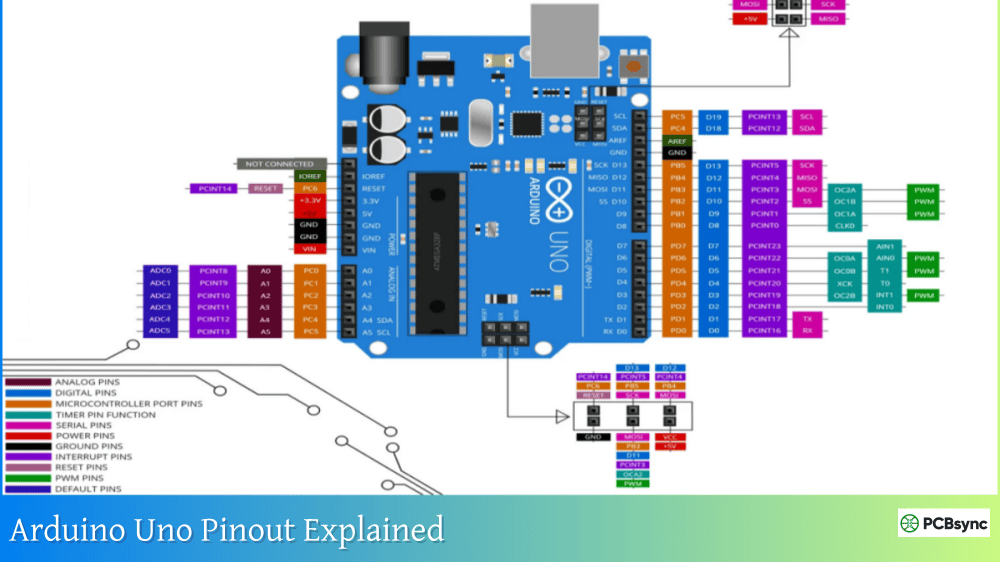
For Arduino boards with dedicated I2C headers (like the Mega, Leonardo, or newer Uno WiFi), use those instead of A4/A5.
Important Wiring Notes
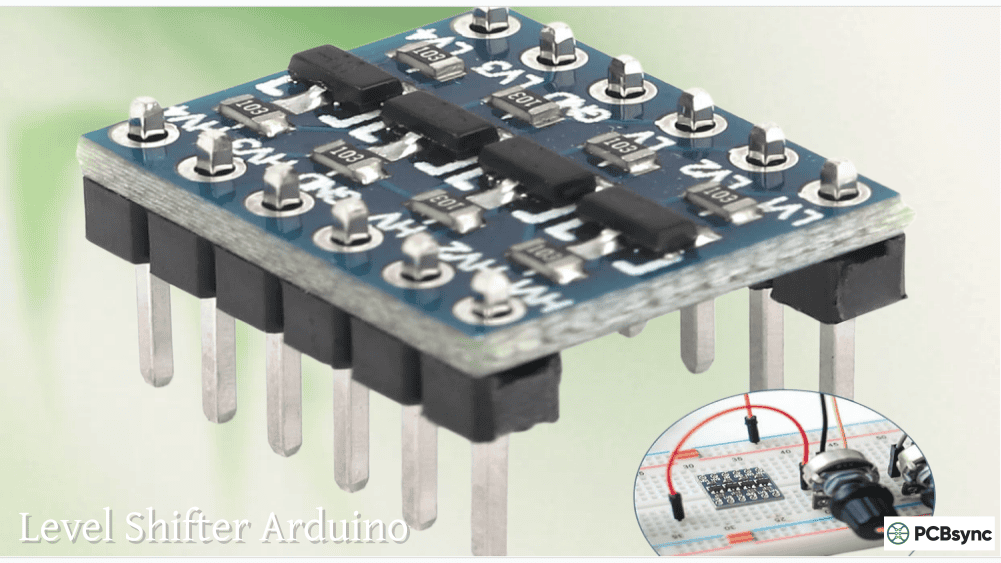
The module’s onboard regulators handle voltage conversion, but the I2C lines need consideration. The MAX30102 module typically defaults to 3.3V logic levels (check the solder jumper on the back of your specific board). Arduino Uno operates at 5V logic, which usually works fine due to the I2C protocol’s open-drain nature, but for guaranteed reliability, consider using a logic level converter or running from a 3.3V Arduino variant.
Installing Required Arduino Libraries
The SparkFun MAX3010x library provides reliable communication with the sensor and includes beat detection algorithms.
Library Installation Steps
Open Arduino IDE and navigate to Sketch > Include Library > Manage Libraries. Search for “SparkFun MAX3010x” and install the SparkFun MAX3010x Pulse and Proximity Sensor Library by SparkFun Electronics.
Alternatively, install the DFRobot MAX30102 library, which offers similar functionality with different API naming conventions.
Basic Heartbeat Sensor Arduino Code
This sketch reads the sensor and displays heart rate with beat detection:
#include <Wire.h>
#include “MAX30105.h”
#include “heartRate.h”
MAX30105 particleSensor;
const byte RATE_SIZE = 4;
byte rates[RATE_SIZE];
byte rateSpot = 0;
long lastBeat = 0;
float beatsPerMinute;
int beatAvg;
void setup() {
Serial.begin(115200);
Serial.println(“Initializing MAX30102…”);
if (!particleSensor.begin(Wire, I2C_SPEED_FAST)) {
Serial.println(“MAX30102 not found. Check wiring.”);
while (1);
}
Serial.println(“Place your finger on the sensor with steady pressure.”);
particleSensor.setup();
particleSensor.setPulseAmplitudeRed(0x0A);
particleSensor.setPulseAmplitudeGreen(0);
}
void loop() {
long irValue = particleSensor.getIR();
if (checkForBeat(irValue) == true) {
long delta = millis() – lastBeat;
lastBeat = millis();
beatsPerMinute = 60 / (delta / 1000.0);
if (beatsPerMinute < 255 && beatsPerMinute > 20) {
rates[rateSpot++] = (byte)beatsPerMinute;
rateSpot %= RATE_SIZE;
beatAvg = 0;
for (byte x = 0; x < RATE_SIZE; x++)
beatAvg += rates[x];
beatAvg /= RATE_SIZE;
}
}
Serial.print(“IR=”);
Serial.print(irValue);
Serial.print(“, BPM=”);
Serial.print(beatsPerMinute);
Serial.print(“, Avg BPM=”);
Serial.print(beatAvg);
if (irValue < 50000)
Serial.print(” [No finger detected]”);
Serial.println();
}
The code maintains a rolling average of the last four heart rate readings to smooth out beat-to-beat variations.
SpO2 Blood Oxygen Measurement Code
Measuring SpO2 requires capturing both red and IR LED data over a sample window:
#include <Wire.h>
#include “MAX30105.h”
#include “spo2_algorithm.h”
MAX30105 particleSensor;
uint32_t irBuffer[100];
uint32_t redBuffer[100];
int32_t bufferLength = 100;
int32_t spo2;
int8_t validSPO2;
int32_t heartRate;
int8_t validHeartRate;
void setup() {
Serial.begin(115200);
if (!particleSensor.begin(Wire, I2C_SPEED_FAST)) {
Getting stable readings from the MAX30102 requires attention to several factors. Here’s a troubleshooting guide based on common issues:
Erratic or Wildly Fluctuating Readings
Symptom
Likely Cause
Solution
BPM jumps from 30 to 200+
Inconsistent finger pressure
Use rubber band to maintain steady contact
IR values near zero
No finger detected
Place finger flat on sensor window
Readings work then stop
Blood flow restricted
Lighten pressure on sensor
Constant noise in signal
Ambient light interference
Cover sensor with opaque material
Readings drift over time
Temperature changes
Allow sensor to stabilize 30 seconds
The “Goldilocks” Pressure Problem
This trips up almost everyone initially. Too much pressure squeezes blood out of your fingertip, eliminating the signal. Too little pressure allows movement and ambient light to corrupt readings.
The correct pressure feels like gently holding a coin between your thumb and finger. Your fingernail should not turn white from compression, and you shouldn’t feel your pulse pounding at the contact point.
Finger Placement Tips
Position your index finger pad directly over the sensor window. The fleshy part of your fingertip works best because blood vessels are close to the surface. Avoid placing the sensor against callused skin or over a knuckle.
For testing, try your earlobe. The thin skin and good blood flow often produce cleaner signals than fingertips.
Code-Level Debugging
If hardware connections are correct but readings remain unstable:
Print raw IR values without beat detection processing. You should see values above 50,000 when a finger is present, fluctuating rhythmically with each heartbeat.
Check the FIFO buffer isn’t overflowing by reading data frequently enough. At 100 samples/second with a 32-sample buffer, you have 320ms before data loss.
Verify I2C communication by scanning for devices. The MAX30102 should appear at address 0x57.
Configuring MAX30102 Sensor Parameters
The sensor offers extensive configurability. Understanding these parameters helps optimize for your specific application.
Sample Rate Configuration
Setting
Sample Rate
Best For
SAMPLERATE_50
50 Hz
Battery conservation
SAMPLERATE_100
100 Hz
General use
SAMPLERATE_200
200 Hz
Higher accuracy
SAMPLERATE_400
400 Hz
Research applications
SAMPLERATE_800+
800-3200 Hz
Signal analysis
Higher sample rates capture more detail but increase power consumption and data processing requirements.
LED Brightness
LED brightness affects signal strength and power consumption. Start with moderate brightness (0x1F to 0x3F) and increase if readings are weak. Very high brightness can saturate the photodetector and actually reduce accuracy.
ADC Range Selection
Range
Full Scale
Resolution
ADCRANGE_2048
2048 nA
Highest sensitivity
ADCRANGE_4096
4096 nA
Good balance
ADCRANGE_8192
8192 nA
Wide range
ADCRANGE_16384
16384 nA
Maximum range
Smaller ranges provide finer resolution but may clip with strong signals. Start with 4096 for general use.
The MAX30102 is not an FDA-approved medical device. While it uses the same measurement principles as clinical pulse oximeters, it lacks the calibration, validation, and quality control required for medical diagnosis.
Use this sensor for educational projects, fitness tracking, and hobbyist health monitoring. Never rely on it for medical decisions, especially regarding respiratory conditions where SpO2 accuracy is critical.
Frequently Asked Questions
Why does my MAX30102 show “sensor not found” error?
This typically indicates an I2C communication problem. Check that SDA connects to A4 and SCL connects to A5 (on Arduino Uno). Verify you’re supplying 3.3V or 5V to VIN. Run an I2C scanner sketch to confirm the sensor appears at address 0x57. If using long wires, add 4.7kΩ pull-up resistors on SDA and SCL lines.
How accurate is the MAX30102 for SpO2 measurement?
Under ideal conditions with proper finger placement, the MAX30102 achieves approximately ±2% SpO2 accuracy in the 70-100% range. However, real-world accuracy depends heavily on finger placement consistency, ambient light, motion artifacts, and individual physiology. Clinical pulse oximeters undergo extensive calibration against arterial blood gas measurements, while hobbyist MAX30102 modules do not.
Can I use the MAX30102 with 3.3V microcontrollers like ESP32?
Yes, the MAX30102 works excellently with ESP32, ESP8266, and other 3.3V boards. The module’s onboard regulators handle voltage conversion, and 3.3V logic levels match the sensor’s default I2C level. Many developers prefer ESP32 for wireless health monitoring projects that transmit data via WiFi or Bluetooth.
Why do I get valid readings for a few seconds, then they become erratic?
This usually indicates finger fatigue causing subtle pressure changes. The blood vessels in your fingertip fatigue under sustained pressure, changing blood flow patterns. Try using a rubber band or clip to maintain consistent contact, or implement automatic recalibration in your code every 30-60 seconds.
What’s the difference between using the interrupt pin versus polling?
Polling continuously reads the sensor in your main loop, consuming CPU cycles and power. The interrupt pin signals when new data is ready, allowing your microcontroller to sleep between readings. For battery-powered wearables, interrupt-driven operation can extend battery life significantly. For simple projects connected to USB power, polling works fine and simplifies the code.
Building Real-World Health Monitoring Applications
The heartbeat sensor Arduino combination serves as the foundation for numerous practical projects:
Fitness trackers that log heart rate during workouts, alerting when you exceed target zones. Sleep monitors that track resting heart rate patterns overnight. Stress detection systems that correlate heart rate variability with anxiety levels. Educational tools that visualize cardiovascular response to exercise or meditation.
For any project involving sustained monitoring, implement data averaging, outlier rejection, and user feedback mechanisms. Raw sensor data contains too much noise for direct display; processing transforms it into meaningful health information.
The MAX30102 proves that sophisticated biometric sensing no longer requires expensive medical equipment. With careful attention to signal quality and realistic expectations about accuracy, you can build genuinely useful health monitoring devices with accessible hardware and open-source software.
Inquire: Call 0086-755-23203480, or reach out via the form below/your sales contact to discuss our design, manufacturing, and assembly capabilities.
Quote: Email your PCB files to Sales@pcbsync.com (Preferred for large files) or submit online. We will contact you promptly. Please ensure your email is correct.
Notes: For PCB fabrication, we require PCB design file in Gerber RS-274X format (most preferred), *.PCB/DDB (Protel, inform your program version) format or *.BRD (Eagle) format. For PCB assembly, we require PCB design file in above mentioned format, drilling file and BOM. Click to download BOM template To avoid file missing, please include all files into one folder and compress it into .zip or .rar format.