Inquire: Call 0086-755-23203480, or reach out via the form below/your sales contact to discuss our design, manufacturing, and assembly capabilities.
Quote: Email your PCB files to Sales@pcbsync.com (Preferred for large files) or submit online. We will contact you promptly. Please ensure your email is correct.
Notes: For PCB fabrication, we require PCB design file in Gerber RS-274X format (most preferred), *.PCB/DDB (Protel, inform your program version) format or *.BRD (Eagle) format. For PCB assembly, we require PCB design file in above mentioned format, drilling file and BOM. Click to download BOM template To avoid file missing, please include all files into one folder and compress it into .zip or .rar format.
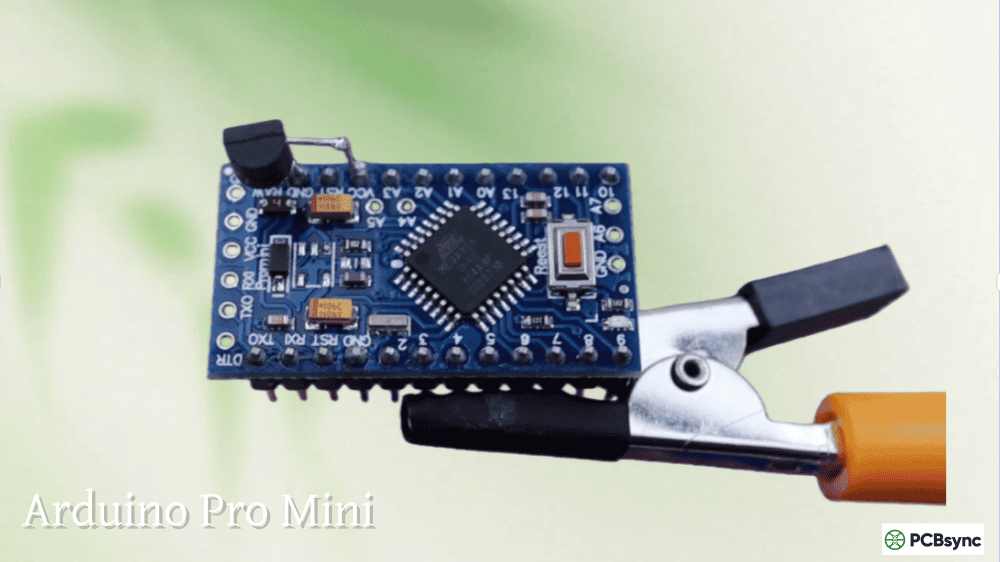
As a PCB engineer who’s programmed countless microcontrollers in production environments, I can tell you that the FTDI adapter is one of those seemingly simple tools that becomes indispensable once you understand its capabilities. Whether you’re programming Arduino Pro Mini boards that lack onboard USB, debugging serial communication on custom PCBs, or recovering boards with damaged USB ports, a quality FTDI adapter solves problems that would otherwise require expensive programmer hardware.
The FTDI adapter is essentially a USB-to-serial bridge based on chips manufactured by Future Technology Devices International (FTDI). The most common implementation uses the FT232RL integrated circuit, which converts USB signals from your computer into UART (Universal Asynchronous Receiver/Transmitter) serial signals that microcontrollers understand natively.
From a hardware design perspective, the FTDI adapter eliminates the need to include USB circuitry on every PCB design. Instead of dealing with complex USB firmware stacks, differential pair routing, and EMI considerations, you simply design your board with a standard 6-pin serial header and use an external FTDI adapter for programming and debugging.
Why FTDI adapters matter for embedded development:
Space savings: Arduino Pro Mini and similar boards omit USB circuitry, reducing PCB size by ~40% Cost reduction: USB-to-serial chips add $1-3 to BOM costs; share one FTDI adapter across multiple projects Voltage flexibility: Most FTDI adapters support both 3.3V and 5V logic levels via jumper or switch Auto-reset capability: DTR pin automatically resets target microcontroller for seamless sketch uploads Universal compatibility: Works with any device exposing UART TX, RX, and ground pins
FT232RL Specifications and Capabilities
Understanding the FTDI adapter hardware capabilities ensures you design compatible systems and avoid communication failures.
Specification
Value
Engineering Notes
USB Interface
USB 2.0 Full Speed
12 Mbps theoretical bandwidth
Data Transfer
Up to 3 Mbaud
Practical limit ~921600 baud
Logic Levels
3.3V or 5V selectable
Jumper-configurable on most adapters
Operating Voltage
4.35V to 5.25V USB
Internal 3.3V regulator included
Current Output
Up to 50mA @ 5V
Insufficient for most Arduino boards
Transmit/Receive Buffers
256 bytes each
Reduces USB polling overhead
EEPROM Integration
Optional external EEPROM
Stores configuration, VID/PID, strings
Flow Control
RTS/CTS hardware support
Optional, disabled on basic adapters
Critical design consideration: While the FTDI adapter can supply 5V power through its VCC pin, the 50mA current limit only supports microcontrollers without additional peripherals. For complete Arduino boards with regulators, LEDs, and other components, always provide external power during programming.
FTDI Adapter Pinout and Connection Guide
The standard 6-pin FTDI adapter follows a common pinout that became ubiquitous through Arduino’s widespread adoption. Understanding proper connections prevents programming failures and potential hardware damage.
Standard 6-Pin FTDI Header
Pin Number
Signal Name
Function
Arduino Connection
Voltage Level
1
GND
Ground
GND
N/A
2
CTS
Clear To Send
Not used (optional)
Logic level
3
VCC
Power Output
VCC or Raw
5V or 3.3V
4
TXO
Transmit Out
RX (D0)
Logic level
5
RXI
Receive In
TX (D1)
Logic level
6
DTR
Data Terminal Ready
Reset via capacitor
Logic level
PCB design best practice: When laying out the 6-pin header on your custom boards, place pin 1 (GND) at the edge nearest to a board corner or silkscreen marking. This prevents reversed cable connections that could damage both the adapter and target board.
Critical Connection Rules
TX to RX crossover: The FTDI adapter TXO (Transmit Out) must connect to target board RX (Receive). Similarly, adapter RXI connects to target TX. This crossover is fundamental—forgetting it is the #1 cause of “can’t communicate” issues.
DTR for auto-reset: The DTR pin toggling low triggers a reset through a 0.1µF capacitor on most Arduino-compatible boards. Without this connection, you’ll need to manually press the reset button immediately before uploading code—poor timing causes upload failures.
Voltage level matching: Set the FTDI adapter voltage jumper to match your target microcontroller’s operating voltage. Connecting a 5V FTDI to a 3.3V microcontroller risks damage. When uncertain, 3.3V logic typically works with 5V devices but not vice versa.
Programming Arduino Pro Mini Example
The Arduino Pro Mini represents the most common FTDI adapter use case:
Set FTDI adapter voltage jumper to match Pro Mini (5V/16MHz or 3.3V/8MHz version)
Align 6-pin header: GND-to-GND and DTR-to-GRN (green wire if using color-coded cable)
Verify TXO-to-RX and RXI-to-TX connections
Provide external power to Pro Mini VCC if running power-hungry peripherals
Select correct board and COM port in Arduino IDE
Upload sketch normally—no manual reset required
Driver Installation for Windows, Mac, and Linux
The FTDI adapter requires Virtual COM Port (VCP) drivers to appear as a standard serial port to your operating system and Arduino IDE.
Windows Driver Installation
Windows does not include FTDI drivers by default. Modern Windows versions (8, 10, 11) often automatically download drivers via Windows Update, but manual installation provides better control:
Download FTDI VCP drivers from https://ftdichip.com/drivers/vcp-drivers/
Extract the ZIP file and run the installer executable
Connect your FTDI adapter to a USB port
Open Device Manager (Windows key + X, select Device Manager)
Verify “USB Serial Port (COMxx)” appears under “Ports (COM & LPT)”
Note the COM port number for use in Arduino IDE
Troubleshooting Windows installation: If Device Manager shows “Unknown Device” or “FT232R USB UART” under “Other Devices,” the driver installation failed. Right-click the device, select “Update Driver,” then “Browse my computer” and point to the extracted driver folder with “Include subfolders” checked.
macOS and Linux Support
macOS: FTDI drivers are included with macOS 10.9 and later. Simply plug in the FTDI adapter and it appears as /dev/cu.usbserial-xxxxxxxx automatically. No installation required.
Linux: The ftdi_sio kernel module loads automatically on all modern distributions. Verify with lsusb command—you should see “Future Technology Devices International” listed. The device appears as /dev/ttyUSB0 or similar.
Permission issue on Linux: If Arduino IDE cannot access the serial port, add your user to the dialout group:
sudo usermod -a -G dialout $USER
Log out and back in for changes to take effect.
Programming Workflow with FTDI Adapter
Once drivers are installed, using the FTDI adapter for development becomes second nature. Here’s the complete workflow I use for production programming:
Arduino IDE Configuration
Connect FTDI adapter to computer USB port
Connect 6-pin cable to target board’s serial header
Open Arduino IDE (1.8.13 or later recommended)
Select Tools → Board and choose your target board type
Select Tools → Port and choose the FTDI COM port
Write or open your sketch
Click Upload—the adapter automatically resets the board and uploads
Upload speed optimization: If uploads succeed but take excessively long, the baud rate might be limited. Most FTDI adapter clones support 115200 baud, but genuine FTDI hardware handles 230400 or 460800. Edit boards.txt to increase upload speed for faster iteration during development.
Command-Line Programming with AVRDUDE
For production environments or automated testing, direct AVRDUDE commands provide scripting capabilities:
Adafruit FTDI Friend (breakout board with configurability)
SparkFun FTDI Basic (5V and 3.3V versions)
Official FTDI TTL-232R cables
Compatible Clones: Available on Amazon, eBay, and AliExpress ($3-8). Quality varies—some use counterfeit chips with driver conflicts.
Recommendation: For professional work, invest in genuine FTDI products ($15-25). For hobby projects where occasional glitches are acceptable, reputable clones work adequately.
Frequently Asked Questions (FAQs)
1. Can I use an FTDI adapter to program Arduino Uno or Mega boards?
While technically possible, it’s unnecessary and inefficient. Arduino Uno and Mega already include USB-to-serial circuitry (ATmega16U2 chip). The FTDI adapter is designed for boards without onboard USB like Pro Mini, LilyPad, or custom designs. If your Uno’s USB port is damaged, yes, you can connect the FTDI to pins 0 (RX) and 1 (TX), but you’ll need to remove the ATmega328P from its socket or cut the connection between the USB chip and main chip.
2. Why does my FTDI adapter work with some boards but not others?
Voltage level mismatch is the most common cause. The FTDI adapter has a jumper or switch selecting between 3.3V and 5V operation for both power output and logic levels. Arduino Pro Mini 3.3V/8MHz versions require 3.3V setting, while 5V/16MHz versions need 5V. Using the wrong setting can cause communication failures or, in extreme cases, damage the target microcontroller’s I/O pins.
3. Can FTDI adapters program AVR microcontrollers without a bootloader?
No, the FTDI adapter only works with microcontrollers that already have a bootloader installed. It communicates via UART serial protocol, which the bootloader interprets to write new firmware. For programming blank chips or recovering corrupted bootloaders, you need an ISP programmer like USBtinyISP or AVRISP mkII. Think of the FTDI as the “easy route” for day-to-day development, while ISP is the “recovery route” for low-level chip programming.
4. Why do some FTDI adapters have 6 pins while others have more?
The standard 6-pin configuration (GND, CTS, VCC, TXO, RXI, DTR) covers 95% of use cases for Arduino-compatible programming. Adapters with 8+ pins expose additional FT232RL features like RTS (Request To Send), RI (Ring Indicator), DSR (Data Set Ready), and DCD (Data Carrier Detect). These extra pins enable hardware flow control and modem control signals for specialized applications. For Arduino programming, the basic 6-pin FTDI adapter is sufficient.
5. Is it safe to leave the FTDI adapter connected while my project runs?
Generally yes, but with caveats. The FTDI adapter can remain connected for serial monitoring and debugging. However, on Arduino boards, the RX and TX pins (D0 and D1) are occupied by serial communication—your sketch cannot use them for other purposes while the adapter is connected. Additionally, if your project draws more than 50mA, provide external power instead of relying on the FTDI’s VCC pin. In battery-powered projects, disconnect the adapter to avoid parasitic power consumption through the USB port.
Conclusion
The FTDI adapter represents an elegant solution to a fundamental embedded development challenge: how to program and communicate with microcontrollers from modern computers that lack native serial ports. By converting USB signals to UART levels that every microcontroller understands, these simple adapters enable efficient development workflows without requiring USB circuitry on every PCB design.
From a PCB engineering perspective, designing boards with 6-pin FTDI-compatible headers provides maximum flexibility. You can program during development, perform field updates, log debug data, and communicate with sensors—all through one universal interface. The modest investment in a quality FTDI adapter ($15-25 for genuine hardware) pays for itself the first time you need to program an Arduino Pro Mini or debug a custom board’s serial communication.
Remember the key rules: always cross-connect TX and RX, match voltage levels to your target device, install proper drivers, and connect the DTR line for automatic reset functionality. With these basics mastered, the FTDI adapter becomes an indispensable tool that simplifies embedded development from prototyping through production.
Inquire: Call 0086-755-23203480, or reach out via the form below/your sales contact to discuss our design, manufacturing, and assembly capabilities.
Quote: Email your PCB files to Sales@pcbsync.com (Preferred for large files) or submit online. We will contact you promptly. Please ensure your email is correct.
Notes: For PCB fabrication, we require PCB design file in Gerber RS-274X format (most preferred), *.PCB/DDB (Protel, inform your program version) format or *.BRD (Eagle) format. For PCB assembly, we require PCB design file in above mentioned format, drilling file and BOM. Click to download BOM template To avoid file missing, please include all files into one folder and compress it into .zip or .rar format.