Inquire: Call 0086-755-23203480, or reach out via the form below/your sales contact to discuss our design, manufacturing, and assembly capabilities.
Quote: Email your PCB files to Sales@pcbsync.com (Preferred for large files) or submit online. We will contact you promptly. Please ensure your email is correct.
Notes: For PCB fabrication, we require PCB design file in Gerber RS-274X format (most preferred), *.PCB/DDB (Protel, inform your program version) format or *.BRD (Eagle) format. For PCB assembly, we require PCB design file in above mentioned format, drilling file and BOM. Click to download BOM template To avoid file missing, please include all files into one folder and compress it into .zip or .rar format.
A practical guide for PCB engineers on FR3 laminate material—covering composition, electrical properties, thermal specs, and real-world applications to help you make informed material decisions.
If you’ve been designing PCBs for any length of time, you’ve probably come across FR3 material in spec sheets or supplier catalogs. While FR4 dominates most conversations about PCB substrates, FR3 occupies a specific niche that’s worth understanding—especially when you’re working on cost-sensitive projects or legacy system maintenance.
The global PCB market offers numerous substrate options, from budget phenolic laminates to high-performance ceramics. FR3 sits in an interesting position: it provides better electrical characteristics than basic FR1/FR2 materials while costing significantly less than glass-reinforced FR4. For certain applications, this balance is exactly what engineers need.
I’ve worked with FR3 boards in automotive dashboards, consumer appliances, and industrial control panels. This guide breaks down what FR3 actually is, how it compares to other FR-grade materials, and when it makes sense to specify it for your designs. We’ll cover the technical specifications, real-world applications, and practical manufacturing considerations that matter most to working engineers.
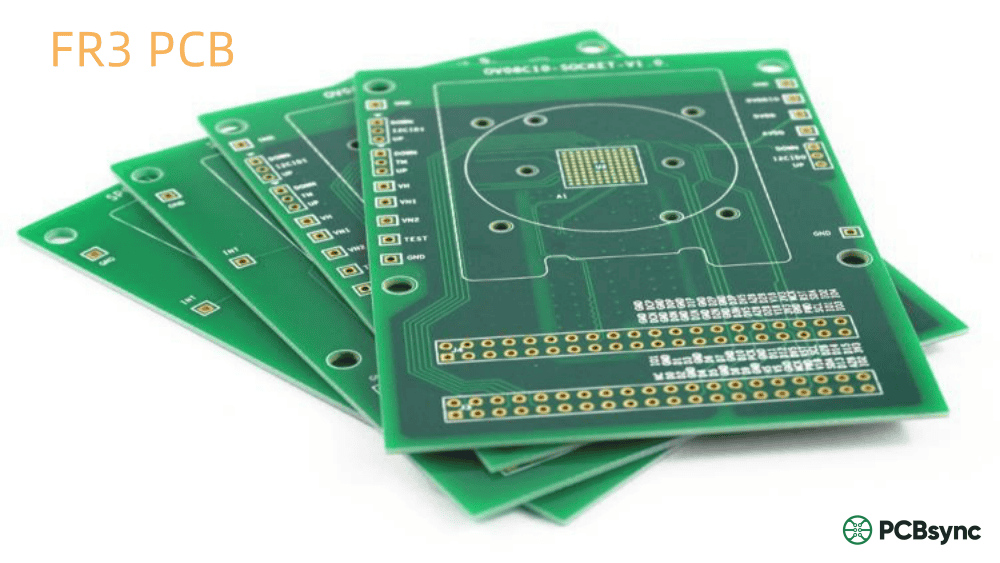
FR3 PCB refers to a printed circuit board substrate made from cellulose paper reinforcement impregnated with epoxy resin. The “FR” designation stands for “Flame Retardant,” indicating the material meets specific fire safety standards defined by NEMA (National Electrical Manufacturers Association) and UL (Underwriters Laboratories).
What distinguishes FR3 from its predecessors (FR1 and FR2) is the resin system. While FR1 and FR2 use phenolic resin, FR3 uses an epoxy resin binder. This seemingly small change significantly improves electrical performance, moisture resistance, and overall durability.
According to IPC-4101B specifications, FR3 is classified under specification sheet /04, defined as cellulose paper with modified epoxy, flame resistant formulation. This places it in a middle ground between basic paper phenolic laminates and the glass-reinforced FR4 that most engineers default to.
Historically, FR3 emerged during the 1960s and 1970s as electronics manufacturers sought better performance than phenolic-based substrates could provide, but before glass-reinforced epoxy became economically viable for mass production. Many legacy industrial systems still use FR3 boards specified during this era, which explains why the material remains relevant for maintenance and replacement applications today.
FR3 Material Composition
Understanding what goes into FR3 helps explain its performance characteristics. The material consists of three primary components:
Base reinforcement: Cotton linter or alpha cellulose paper provides the structural foundation. This paper substrate is what keeps FR3 more affordable than glass-reinforced alternatives.
Resin system: Epoxy resin serves as the binder, offering better electrical insulation and moisture resistance compared to phenolic resins used in FR1/FR2.
Flame retardant additives: Bromine-based compounds are typically added to achieve the UL-94 V-1 flammability rating required for the FR designation.
The manufacturing process involves saturating the paper substrate with epoxy resin under controlled conditions, then curing under heat and pressure to create a rigid laminate. Copper foil (typically 35μm or 1 oz) is then bonded to one or both sides depending on whether you need single-sided or double-sided boards.
FR3 PCB Technical Specifications
Here’s where the numbers matter. These specifications come from industry standards and manufacturer datasheets:
Property
FR3 Specification
Dielectric Constant (Dk) @ 1MHz
4.5 – 4.8
Dissipation Factor (Df) @ 1MHz
0.025 – 0.035
Glass Transition Temperature (Tg)
105°C – 110°C
Continuous Operating Temperature
90°C – 110°C
Flammability Rating
UL 94 V-1
Moisture Absorption
0.8% – 1.2%
Dielectric Breakdown Voltage
≥40 kV/mm
Surface Resistivity
≥10^10 Ω
Standard Thickness Range
0.8mm – 1.6mm
Copper Foil Options
18μm, 35μm, 70μm
IPC Specification
IPC-4101B/04
NEMA Grade
FR-3
Note: Actual values vary by manufacturer and specific formulation. Always request datasheets from your laminate supplier for critical applications.
FR3 vs FR4: Key Differences
This is probably the comparison you’re most interested in. FR4 has become the default choice for good reasons, but that doesn’t mean FR3 is obsolete. Understanding when each material makes sense requires looking at specific properties and how they translate to real-world performance.
Property
FR3
FR4
Base Material
Cellulose Paper
Woven Fiberglass
Resin System
Epoxy
Epoxy
Dielectric Constant
4.5 – 4.8
4.2 – 4.7
Glass Transition (Tg)
105 – 110°C
130 – 180°C
Mechanical Strength
Moderate
High
Moisture Resistance
Good
Excellent
Through-hole Drilling
Limited
Excellent
Multilayer Capability
1-2 layers (typical)
1-32+ layers
High-Frequency Performance
Poor
Moderate
Relative Cost
Lower
Higher
Typical Applications
Consumer, Automotive
Most applications
The fundamental difference comes down to reinforcement. FR3’s paper base means it can’t match FR4’s mechanical properties, but it punches easily at room temperature and costs less to manufacture. If you’re doing high-volume production of simple single-layer boards, that cost difference adds up.
Advantages of FR3 PCB
Despite being less common than FR4 in modern designs, FR3 offers genuine benefits in the right applications. Understanding these advantages helps you identify projects where FR3 provides optimal value.
Cost Efficiency
FR3 material costs 20-40% less than standard FR4. For high-volume consumer products where margins are tight, this difference matters. The paper substrate is cheaper to source and process than woven fiberglass.
Excellent Punchability
Unlike FR4 which requires CNC drilling, FR3 boards can be punched at ambient temperatures. This enables faster, lower-cost PCB manufacturing for simple board geometries. Many Asian manufacturers maintain punching lines specifically for FR3 production.
Good Electrical Insulation
The epoxy resin system provides reliable electrical insulation for low-to-medium frequency applications. Surface resistivity exceeds 10^10 ohms, adequate for most consumer and industrial control circuits.
Flame Retardant Properties
FR3 meets UL 94 V-1 flammability standards, making it suitable for applications where fire safety compliance is required. The material self-extinguishes and won’t sustain combustion.
Better Than FR1/FR2
Compared to phenolic-based FR1 and FR2, the epoxy resin in FR3 delivers improved moisture resistance, better dimensional stability, and lower dielectric losses. If you’re upgrading from older FR1/FR2 designs, FR3 is often the logical step.
Being honest about limitations helps you avoid costly design mistakes. Every material has trade-offs, and FR3 is no exception. These constraints don’t make FR3 a bad choice—they simply define where it’s appropriate to use.
Through-hole challenges: The paper substrate doesn’t hold up well to drilling. Plated through-holes are possible but less reliable than FR4. Stick to surface mount or single-sided through-hole designs.
Lower Tg: With a glass transition around 105-110°C, FR3 isn’t suitable for lead-free soldering processes (which peak around 250°C) or high-temperature operating environments.
Moisture absorption: Higher water absorption than FR4 can affect performance in humid environments. Not recommended for outdoor or marine applications without conformal coating.
Limited layer count: Practical for single-sided and some double-sided boards only. Multilayer FR3 boards exist but aren’t common or recommended for new designs.
High-frequency limitations: The higher dissipation factor makes FR3 unsuitable for RF, microwave, or high-speed digital applications above roughly 100 MHz.
When to Use FR3 PCB
Based on real-world experience across multiple industries, here are scenarios where FR3 makes practical and economic sense. The common thread is cost-sensitive applications with straightforward electrical requirements.
Consumer Electronics
Remote controls, calculators, simple toys, LED lighting controllers, and basic household appliances represent the bread and butter of FR3 applications. These products prioritize cost and don’t require high performance. The circuits are typically single-layer with modest component counts, and the production volumes often reach millions of units annually—exactly where FR3’s cost advantage shines.
Automotive Secondary Systems
Instrument cluster backlighting, interior lighting modules, simple sensor interfaces, and non-critical control boards. The automotive industry has used FR3 for decades in cost-sensitive applications that don’t involve safety-critical functions.
Industrial Controls
Motor controllers, relay boards, power supply interfaces, and basic PLCs represent another strong market for FR3. Many industrial control panels don’t require high-density interconnects and benefit from FR3’s cost advantages in volume production. The operating environment is typically controlled, minimizing concerns about moisture exposure and extreme temperatures.
Legacy System Maintenance
If you’re maintaining or repairing older equipment designed around FR3 boards, sticking with the original material ensures compatibility. Some industrial and military systems still contain FR3 boards specified decades ago.
High-Volume Simple Boards
When producing millions of simple, single-layer PCBs, the cost savings from FR3 become substantial. The math is straightforward: even a 20-30% reduction in material cost multiplied by millions of units represents significant savings. Many Asian manufacturers specifically optimize their production lines for high-speed FR3 fabrication with punching rather than routing, further reducing per-unit costs.
FR3 PCB Manufacturing Considerations
If you’re specifying FR3 for your project, understanding the manufacturing nuances will help you get better results and avoid common pitfalls. The fabrication process differs from FR4 in several important ways that affect design choices and cost optimization.
Here are the key factors to consider:
Surface finish options: HASL (Hot Air Solder Leveling), OSP (Organic Solderability Preservative), and immersion silver all work with FR3. ENIG is possible but adds cost that may negate FR3’s price advantage.
Panelization: FR3 panels are often punched rather than V-scored or routed. Design your board outline with punching tolerances in mind (typically ±0.2mm).
Solder mask: Standard liquid photoimageable solder mask works fine. Green is most common and cheapest; other colors available at slight premium.
Assembly: SMT assembly is preferred over through-hole. If using through-hole components, minimize the number of holes and avoid small drill sizes.
Lead-free considerations: The lower Tg of FR3 is marginal for lead-free soldering. If your assembly process requires lead-free, test thoroughly or consider upgrading to FR4.
Complete FR Material Comparison
For reference, here’s how all FR-grade materials stack up against each other. This comparison helps contextualize where FR3 fits in the broader landscape of PCB substrate options. Each grade evolved to address specific market needs, from the most basic FR1 to the high-performance FR4:
Property
FR1
FR2
FR3
FR4
Reinforcement
Paper
Cotton Paper
Paper
Glass Fiber
Resin
Phenolic
Phenolic
Epoxy
Epoxy
Tg (°C)
130
105
105-110
130-180
Dk @ 1MHz
6.0
5.0
4.8
4.5
Punchability
Hot only
Cold
Cold
Poor
Drilling
Limited
Limited
Limited
Excellent
Multilayer
No
No
Limited
Yes
Relative Cost
Lowest
Low
Medium-Low
Medium
Useful Resources for PCB Engineers
Here are some valuable resources for deeper research on PCB materials:
Standards & Specifications:
IPC-4101: Specification for Base Materials for Rigid and Multilayer Printed Boards (ipc.org)
NEMA LI 1-1998: Industrial Laminated Thermosetting Products (nema.org)
Altium Designer Material Library: altium.com/documentation
Frequently Asked Questions
Can FR3 boards handle lead-free soldering?
It’s marginal and requires careful process control. FR3’s Tg of 105-110°C is below the typical lead-free reflow peak temperature of 245-260°C. While short exposure during soldering may be acceptable for simple boards, repeated thermal cycling or extended time at peak temperature can cause delamination, measling, and other defects. If your process is strictly lead-free, consider upgrading to FR4 or run extensive testing with your specific assembly profile before committing to production. Wave soldering is generally safer than reflow for FR3 lead-free applications.
Is FR3 suitable for multilayer PCBs?
Technically possible but not recommended. The paper substrate doesn’t provide the dimensional stability needed for precise layer registration in multilayer stackups. FR3 is best suited for single-sided and simple double-sided boards. For anything beyond 2 layers, switch to FR4.
Why would I choose FR3 over the cheaper FR1 or FR2?
The epoxy resin system in FR3 provides significantly better moisture resistance and lower dielectric losses than the phenolic resins in FR1/FR2. If your application involves any humidity exposure or requires decent electrical performance, the modest cost increase from FR2 to FR3 is worthwhile. FR1/FR2 also emit formaldehyde during processing, which creates health and environmental concerns.
What surface finishes work with FR3?
HASL (both leaded and lead-free), OSP, and immersion silver are all compatible with FR3. ENIG (Electroless Nickel Immersion Gold) works but the cost premium may eliminate the savings from using FR3 in the first place. For most FR3 applications, HASL or OSP provides adequate performance at the lowest cost.
Where can I source FR3 material?
Most Asian PCB manufacturers (particularly in China and Taiwan) stock FR3 and can produce boards readily. Major laminate suppliers like Shengyi, Kingboard, and ITEQ offer FR3 grades. For smaller quantities, contact regional distributors or ask your PCB fabricator directly—many maintain FR3 inventory for legacy applications.
Conclusion
FR3 PCB material occupies a useful middle ground between the ultra-cheap FR1/FR2 laminates and the industry-standard FR4. Its combination of epoxy resin electrical properties with paper substrate cost-effectiveness makes it a sensible choice for high-volume, cost-sensitive applications that don’t demand high-temperature performance or multilayer complexity.
The key is matching material to application. For consumer electronics, automotive secondary systems, and industrial control boards where the circuit complexity is low and budget matters, FR3 delivers reliable performance at a competitive price point. When you need higher reliability, better thermal performance, or more than two layers, FR4 remains the better investment despite the higher material cost.
The PCB industry continues to evolve, with new materials emerging for specialized applications. However, FR3 maintains its relevance in specific market segments where its unique combination of properties—good electrical insulation, flame retardancy, cold punchability, and reasonable cost—aligns with product requirements.
As a working PCB engineer, my advice is simple: understand your design requirements first, then select the material that meets them at the lowest reasonable cost. FR3 isn’t obsolete—it’s just specific. Use it where it fits, and you’ll deliver good products at competitive prices. Document your material selection rationale for future reference, and maintain relationships with suppliers who can provide consistent FR3 quality when you need it.
Inquire: Call 0086-755-23203480, or reach out via the form below/your sales contact to discuss our design, manufacturing, and assembly capabilities.
Quote: Email your PCB files to Sales@pcbsync.com (Preferred for large files) or submit online. We will contact you promptly. Please ensure your email is correct.
Notes: For PCB fabrication, we require PCB design file in Gerber RS-274X format (most preferred), *.PCB/DDB (Protel, inform your program version) format or *.BRD (Eagle) format. For PCB assembly, we require PCB design file in above mentioned format, drilling file and BOM. Click to download BOM template To avoid file missing, please include all files into one folder and compress it into .zip or .rar format.