Inquire: Call 0086-755-23203480, or reach out via the form below/your sales contact to discuss our design, manufacturing, and assembly capabilities.
Quote: Email your PCB files to Sales@pcbsync.com (Preferred for large files) or submit online. We will contact you promptly. Please ensure your email is correct.
Notes: For PCB fabrication, we require PCB design file in Gerber RS-274X format (most preferred), *.PCB/DDB (Protel, inform your program version) format or *.BRD (Eagle) format. For PCB assembly, we require PCB design file in above mentioned format, drilling file and BOM. Click to download BOM template To avoid file missing, please include all files into one folder and compress it into .zip or .rar format.
Getting started with IoT can feel overwhelming. There are countless microcontrollers, protocols, and platforms to choose from, and it’s easy to get lost in the options before you’ve even blinked an LED. Having spent years designing embedded systems and helping newcomers find their footing, I can tell you that ESP8266 WiFi projects offer the perfect entry point into the world of connected devices.
The ESP8266 changed everything when it hit the market back in 2014. Suddenly, WiFi connectivity wasn’t a $50+ expense anymore. For less than five dollars, you could add internet capabilities to almost any project. That democratization of wireless technology opened floodgates that haven’t closed since.
In this guide, I’ll walk you through 10 practical ESP8266 WiFi projects that I’ve built, tested, and refined over time. Each project teaches fundamental IoT concepts while producing something genuinely useful. Whether you want to monitor your home environment, automate appliances, or simply understand how connected devices work, there’s something here for you.
What You Need to Get Started with ESP8266 WiFi Projects
Before diving into specific builds, let’s cover the essentials. Every project in this guide assumes you have access to these basics:
Essential Hardware
Component
Purpose
Approximate Cost
NodeMCU ESP8266
Main development board
$4-8
Breadboard
Prototyping connections
$3-5
Jumper Wires
Making connections
$3-5
USB Cable
Programming and power
$2-4
5V Power Supply
External power source
$5-8
Software Requirements
Software
Purpose
Arduino IDE
Code development and uploading
ESP8266 Board Package
Arduino IDE addon for ESP8266
Required Libraries
Varies by project
Serial Monitor
Debugging and output viewing
The NodeMCU is my recommended starting point. It includes a USB-to-serial converter, voltage regulation, and breaks out most GPIO pins to convenient headers. You won’t need external programmers or level shifters to get going.
If you’re already familiar with Arduino boards, you’ll find the transition smooth. The ESP8266 uses the same Arduino IDE and similar programming syntax, just with added WiFi capabilities and a few GPIO differences to keep in mind.
Project 1: WiFi Weather Station with DHT11 Sensor
A weather station is the quintessential first IoT project, and for good reason. It combines sensor reading, data processing, and web presentation into one compact package.
What You’ll Learn
This project introduces analog and digital sensor interfaces, HTML web page generation, and ESP8266 web server fundamentals. You’ll understand how connected devices collect and share environmental data.
Components Required
Component
Quantity
Notes
NodeMCU ESP8266
1
Main controller
DHT11 Sensor
1
Temperature and humidity
10K Resistor
1
Pull-up for data line
Jumper Wires
5
Connections
How It Works
The ESP8266 reads temperature and humidity values from the DHT11 sensor at regular intervals. It then hosts a web server on your local network that displays these readings in a clean, auto-refreshing dashboard. Anyone on your WiFi can open a browser, type the ESP8266’s IP address, and see current conditions.
I typically add a BME280 sensor for more advanced builds since it includes barometric pressure and offers better accuracy. But for learning the fundamentals, the DHT11 gets the job done at a fraction of the cost.
Project Expansion Ideas
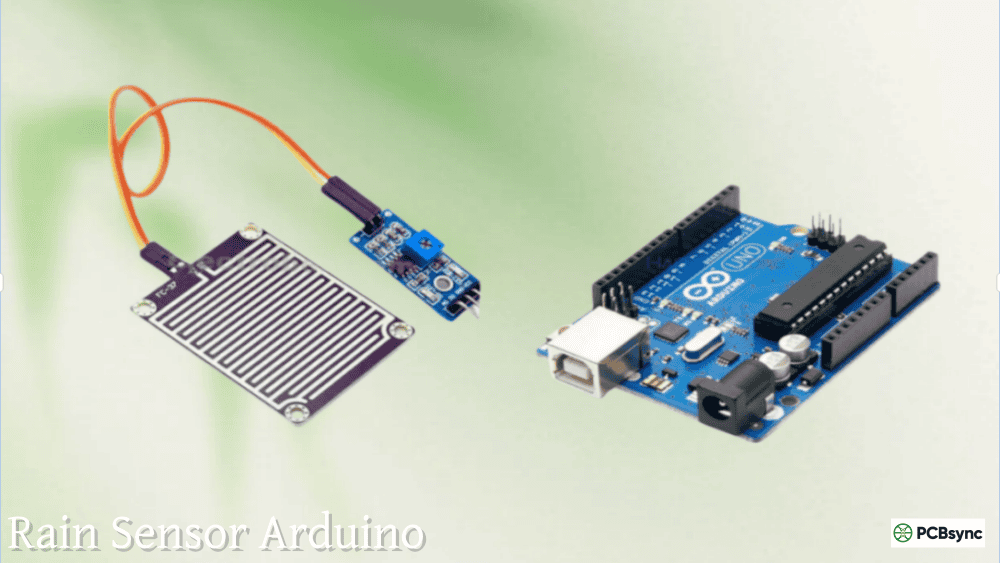
Once you have the basics working, consider adding rain detection with an FC-37 sensor, displaying data on an OLED screen, or logging readings to ThingSpeak for historical tracking.
Project 2: Smart Home Automation with Blynk App
Controlling home appliances from your smartphone feels like magic the first time it works. This project turns that magic into something you actually understand and built yourself.
What You’ll Learn
You’ll grasp relay control, app-based interfaces, cloud connectivity, and the basics of switching AC loads safely. This is where IoT becomes genuinely practical.
Components Required
Component
Quantity
Notes
NodeMCU ESP8266
1
Main controller
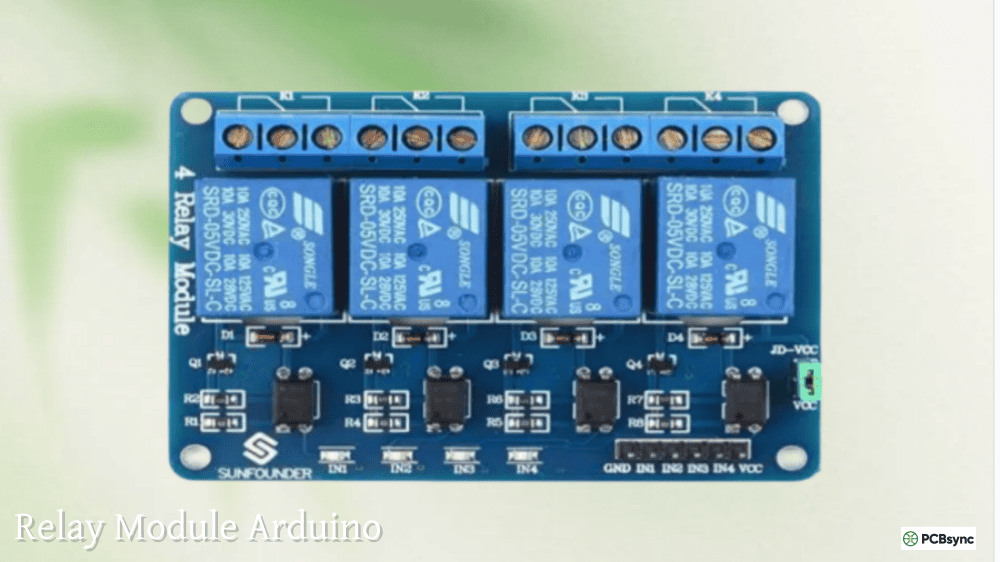
4-Channel Relay Module
1
5V active low preferred
Jumper Wires
8
Connections
5V 2A Power Supply
1
Powers relay coils
How It Works
The Blynk platform provides both a mobile app and cloud infrastructure. When you tap a button in the app, Blynk’s servers relay that command to your ESP8266, which then activates or deactivates the appropriate relay. Each relay can control a light, fan, or other AC appliance.
The beauty of Blynk is that it handles the networking complexity. You don’t need to worry about port forwarding, dynamic DNS, or SSL certificates. For someone just starting out, that’s a huge advantage.
Safety Note
When working with AC mains voltage, take proper precautions. Use optically isolated relay modules, ensure proper insulation, and never touch exposed connections while powered. If you’re uncomfortable with mains wiring, start by controlling low-voltage devices like USB-powered gadgets or LED strips.
Project 3: WiFi Controlled RGB LED Strip
LED projects deliver instant gratification. Colors change, effects dance, and you’ve got a genuine piece of interactive hardware responding to your commands.
What You’ll Learn
This build teaches PWM control, web interface design, color theory in RGB space, and how to drive addressable LEDs with the WS2812B protocol.
Components Required
Component
Quantity
Notes
NodeMCU ESP8266
1
Main controller
WS2812B LED Strip
1 meter
NeoPixel compatible
5V 2A Power Supply
1
For LED strip
330Ω Resistor
1
Data line protection
1000µF Capacitor
1
Power stabilization
How It Works
The ESP8266 creates a web interface where you can pick colors using a color wheel or sliders. Your selections translate to commands sent to the WS2812B strip, which contains individually addressable RGB LEDs. The Adafruit NeoPixel library handles the timing-critical communication protocol.
You can add preset effects like rainbow cycles, theater chase, or breathing animations. The WS2812FX library includes over 40 built-in effects you can trigger from your web interface.
Pro Tip
Power the LED strip directly from your 5V supply, not through the NodeMCU. Each WS2812B draws up to 60mA at full brightness, so a meter of 60 LEDs could pull 3.6A. That’s way more than the NodeMCU’s voltage regulator can handle.
Project 4: IoT Plant Monitoring System
Plants don’t complain when they’re thirsty until it’s too late. This project gives them a voice by monitoring soil moisture and alerting you when watering is needed.
What You’ll Learn
You’ll master analog-to-digital conversion on the ESP8266, threshold-based alerting, and how to send notifications through web services.
Components Required
Component
Quantity
Notes
NodeMCU ESP8266
1
Main controller
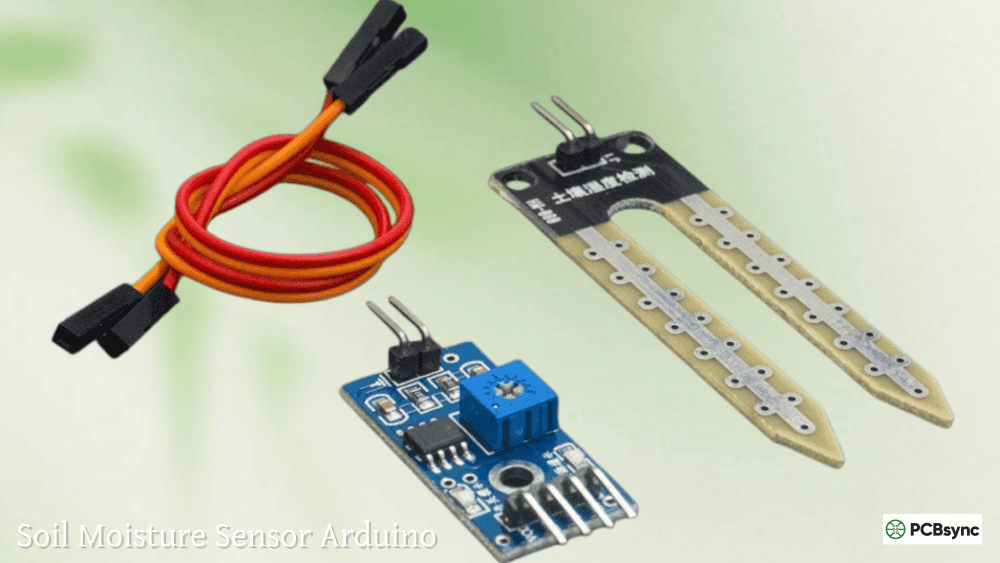
Capacitive Soil Moisture Sensor
1
Corrosion-resistant
RGB LED
1
Status indicator
220Ω Resistors
3
Current limiting
How It Works
The capacitive soil moisture sensor outputs an analog voltage proportional to moisture content. The ESP8266 reads this value through its ADC pin (A0) and compares it against your calibrated thresholds. When moisture drops below acceptable levels, it can light an LED, send a push notification through IFTTT, or update a dashboard.
I recommend capacitive sensors over resistive ones. Resistive sensors degrade quickly because they pass current through the soil, causing electrolysis. Capacitive sensors measure dielectric changes without direct electrical contact, lasting years instead of months.
Calibration Process
Every soil type and pot combination requires calibration. Record the sensor reading when soil is completely dry, then again right after thorough watering. Use these values to set your thresholds in code.
Project 5: Motion Detection Security System
A PIR sensor combined with WiFi connectivity creates a surprisingly capable security system that notifies you anywhere in the world when movement occurs.
What You’ll Learn
This project covers digital input reading, interrupt-based programming, HTTP requests to external services, and push notification integration.
Components Required
Component
Quantity
Notes
NodeMCU ESP8266
1
Main controller
HC-SR501 PIR Sensor
1
Motion detection
Piezo Buzzer
1
Local alarm
LED
1
Status indicator
How It Works
The PIR sensor detects infrared radiation changes caused by warm bodies moving through its field of view. When triggered, it pulls its output pin high. The ESP8266 monitors this pin and, upon detection, sends an HTTP request to IFTTT’s Webhooks service, which forwards a notification to your phone.
You can also trigger the local buzzer and LED for immediate audible and visual alerts. The system can be armed or disarmed remotely through a web interface or physical button.
Sensitivity Adjustment
The HC-SR501 includes two potentiometers. One adjusts sensitivity (detection range up to 7 meters), the other sets how long the output stays high after detection (3 seconds to 5 minutes). Tune these for your specific application.
Project 6: ThingSpeak Data Logger
Cloud data logging transforms one-off readings into historical trends. ThingSpeak provides free data storage and visualization for exactly this purpose.
What You’ll Learn
You’ll understand RESTful APIs, HTTP POST requests, data channel concepts, and how to create charts from sensor data without building your own backend.
Components Required
Component
Quantity
Notes
NodeMCU ESP8266
1
Main controller
Any Analog Sensor
1+
Temperature, light, etc.
How It Works
ThingSpeak provides channels where you send data via HTTP requests. Each channel can hold multiple fields (temperature, humidity, light, etc.). The ESP8266 periodically reads sensor values and posts them to your ThingSpeak channel using their API. ThingSpeak stores the data and generates charts automatically.
The free tier allows 8 fields per channel and up to 3 million messages per year. That’s plenty for personal projects and learning.
Integration Options
ThingSpeak integrates with MATLAB for analysis, can trigger IFTTT applets when values cross thresholds, and exports data in multiple formats. It’s a genuine IoT platform, not just a storage bucket.
Project 7: MQTT-Based Home Automation
MQTT is the lightweight messaging protocol that powers serious IoT deployments. Learning it opens doors to Home Assistant, Node-RED, and professional-grade systems.
What You’ll Learn
This project introduces publish/subscribe messaging patterns, broker concepts, topic hierarchies, and how real IoT infrastructure works.
Components Required
Component
Quantity
Notes
NodeMCU ESP8266
1
Main controller
4-Channel Relay Module
1
Device control
Push Buttons
4
Manual override
How It Works
Unlike direct HTTP control, MQTT uses a central broker that routes messages between publishers and subscribers. Your ESP8266 subscribes to command topics (like “home/livingroom/light”) and publishes status updates. Any MQTT client can then control your devices or monitor their state.
You can use free cloud brokers like HiveMQ or Mosquitto, or run your own on a Raspberry Pi. The PubSubClient library makes ESP8266 MQTT integration straightforward.
Why MQTT Matters
HTTP requires the controller to be reachable from the internet, meaning port forwarding and security concerns. MQTT clients only make outbound connections to the broker, simplifying network configuration while enabling bidirectional communication.
Project 8: ESP8266 Web Server for GPIO Control
Building your own web server teaches fundamentals that underpin every other WiFi project. This is where you truly understand what’s happening under the hood.
What You’ll Learn
You’ll grasp HTTP request/response cycles, HTML form handling, server-side processing, and how web applications interact with hardware.
Components Required
Component
Quantity
Notes
NodeMCU ESP8266
1
Main controller
LEDs
4
Output indication
220Ω Resistors
4
Current limiting
How It Works
The ESP8266 runs an asynchronous web server that serves HTML pages and processes incoming requests. When you click a button on the webpage, it sends a request that the ESP8266 intercepts and uses to toggle GPIO pins. The page then refreshes to show updated states.
The ESPAsyncWebServer library handles requests without blocking, meaning your sensor readings and other tasks continue uninterrupted even while serving web pages.
Beyond Basics
Once you understand the fundamentals, you can add CSS styling for professional-looking interfaces, implement AJAX for updates without page refreshes, and include authentication to prevent unauthorized access.
Know when doors and windows open or close, even when you’re away. This simple project delivers genuine peace of mind.
What You’ll Learn
This build covers magnetic reed switch operation, interrupt handling, deep sleep for battery life, and notification services.
Components Required
Component
Quantity
Notes
ESP-01 Module
1
Compact form factor
Magnetic Reed Switch
1
Door/window detection
3.3V Regulator
1
Battery power
2x AA Batteries
1
Power source
How It Works
A magnetic reed switch closes when near a magnet and opens when apart. Mount the magnet on the door and the switch on the frame. When the door opens, the ESP8266 wakes from deep sleep, connects to WiFi, sends a notification, and returns to sleep.
Deep sleep is crucial here. Active, the ESP8266 draws around 80mA. In deep sleep, it drops to 20µA. With proper sleep management, battery-powered sensors can run for months.
Compact Design
For door sensors, the tiny ESP-01 module makes more sense than a full NodeMCU. It’s small enough to hide in a doorframe and includes enough GPIO for basic applications.
Project 10: WiFi Controlled Robot Car
Robotics projects capture imagination like few others. Combining motor control with WiFi creates something genuinely interactive and fun.
What You’ll Learn
This project teaches motor driver interfaces, PWM speed control, real-time command handling, and mobile-responsive web design.
Components Required
Component
Quantity
Notes
NodeMCU ESP8266
1
Main controller
L298N Motor Driver
1
Dual H-bridge
DC Gear Motors
2
With wheels
Robot Chassis
1
Two-wheel platform
Battery Pack
1
Motors require 6-12V
How It Works
The ESP8266 hosts a web page with direction controls (forward, backward, left, right, stop). Tapping these buttons sends commands that the ESP8266 translates into motor driver signals. The L298N takes low-current logic signals and outputs high-current motor drives.
PWM on the enable pins controls speed, while the input pins determine direction. You can implement tank steering (each side independent) or car steering (both motors forward/reverse with differential turning).
Taking It Further
Add an ESP32-CAM for FPV driving, ultrasonic sensors for obstacle avoidance, or implement proportional control using accelerometer data from your phone. The platform supports endless expansion.
Essential Resources for ESP8266 WiFi Projects
Official Documentation and Tools
Resource
URL
Description
ESP8266 Arduino Core
github.com/esp8266/Arduino
Official Arduino support
ESP8266 Datasheet
espressif.com
Technical specifications
ESPTool
github.com/espressif/esptool
Firmware flashing utility
Arduino IDE
arduino.cc
Development environment
IoT Platforms and Services
Platform
URL
Best For
ThingSpeak
thingspeak.com
Data logging and visualization
Blynk
blynk.io
Mobile app control
IFTTT
ifttt.com
Service integrations
Adafruit IO
io.adafruit.com
Dashboard and triggers
Firebase
firebase.google.com
Real-time database
Libraries Worth Installing
Library
Purpose
ESP8266WiFi
Core WiFi functionality
ESP8266WebServer
Basic web server
ESPAsyncWebServer
Non-blocking web server
PubSubClient
MQTT client
Adafruit NeoPixel
WS2812B LED control
ArduinoJson
JSON parsing and generation
DHT
Temperature/humidity sensors
Blynk
Blynk app integration
Community and Learning
Resource
URL
Description
Random Nerd Tutorials
randomnerdtutorials.com
Excellent step-by-step guides
ESP8266.com Forum
esp8266.com
Official community
Instructables
instructables.com
Project inspiration
Hackster.io
hackster.io
Hardware project sharing
Frequently Asked Questions
How do I install the ESP8266 board package in Arduino IDE?
Open Arduino IDE, go to File → Preferences, and paste this URL into Additional Boards Manager URLs: http://arduino.esp8266.com/stable/package_esp8266com_index.json. Then open Tools → Board → Boards Manager, search for “ESP8266,” and install the package. After installation, select “NodeMCU 1.0 (ESP-12E Module)” from the board menu.
Why does my ESP8266 keep disconnecting from WiFi?
This usually stems from power supply issues. The ESP8266 draws significant current during WiFi transmission (peaks over 300mA), and inadequate supplies cause brownouts that reset the chip. Use a quality 5V 2A power supply, add a 100µF capacitor near the board’s power pins, and avoid powering multiple devices through the NodeMCU’s 3.3V regulator.
Can I use 5V sensors with the ESP8266?
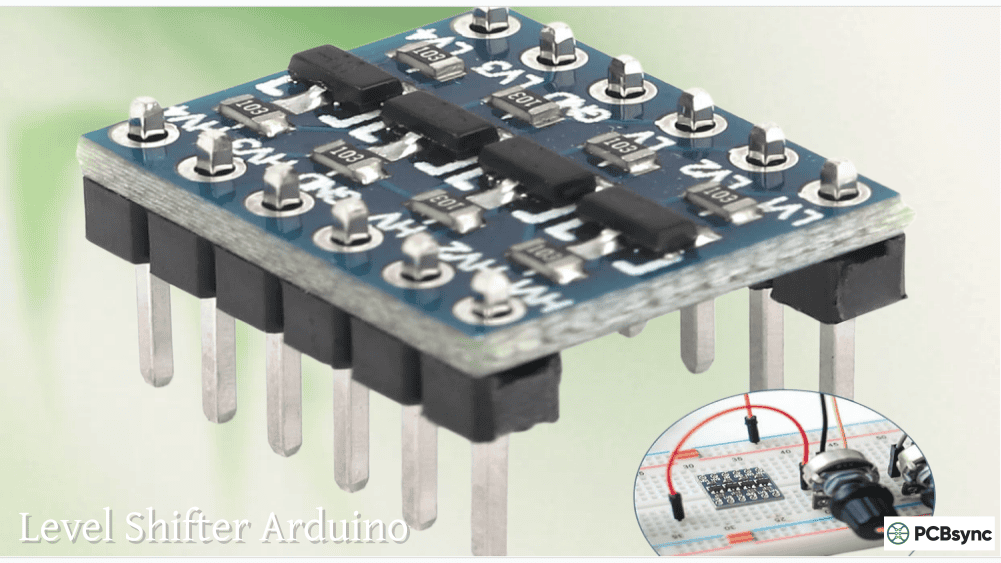
The ESP8266 GPIO pins are not 5V tolerant. Connecting 5V signals directly can damage the chip permanently. Use voltage dividers (two resistors) or level shifters to convert 5V signals to 3.3V. For powering 5V sensors, use the NodeMCU’s VIN pin (which outputs USB voltage) but always level-shift the signal lines.
How many GPIO pins are actually usable on the ESP8266?
The ESP8266 has 17 GPIO pins, but only about 11 are practically usable. GPIO 6-11 connect to the internal flash and shouldn’t be touched. GPIO 0, 2, and 15 have boot mode requirements. GPIO 1 and 3 are serial TX/RX. That leaves GPIO 4, 5, 12, 13, 14, and 16 as freely usable, plus the ADC input (A0). Plan your projects accordingly.
What’s the difference between ESP8266 and ESP32 for beginners?
The ESP8266 is simpler, cheaper, and has more beginner-friendly resources. The ESP32 adds Bluetooth, more GPIO, better ADC, and dual cores but costs slightly more and has a steeper learning curve. Start with ESP8266 to learn fundamentals, then graduate to ESP32 when you need its additional capabilities. Most ESP8266 WiFi projects can be adapted to ESP32 with minor code changes.
Moving Forward with ESP8266 WiFi Projects
These ten projects provide a solid foundation for IoT development. Each teaches different aspects of connected device design, from basic sensor reading to sophisticated cloud integration. The skills transfer directly to professional applications and more advanced platforms.
What makes ESP8266 WiFi projects so valuable isn’t just the low cost or the cool factor. It’s the understanding you gain. When you build something that reads a sensor, processes data, hosts a web server, and sends notifications, you fundamentally understand how the smart devices surrounding us actually work.
Start with whichever project interests you most. Don’t feel obligated to work through them sequentially. The weather station teaches web servers, but if you’re itching to control LEDs, jump straight to project three. Learning works best when motivation is high.
And when things don’t work, which happens to everyone, remember that debugging is where real learning occurs. The ESP8266 community is massive and helpful. Whatever problem you encounter, someone has likely solved it and documented the solution.
Build something. Break it. Fix it. Then build something better. That’s how engineers grow, and these ESP8266 WiFi projects give you the perfect playground for that journey.
Inquire: Call 0086-755-23203480, or reach out via the form below/your sales contact to discuss our design, manufacturing, and assembly capabilities.
Quote: Email your PCB files to Sales@pcbsync.com (Preferred for large files) or submit online. We will contact you promptly. Please ensure your email is correct.
Notes: For PCB fabrication, we require PCB design file in Gerber RS-274X format (most preferred), *.PCB/DDB (Protel, inform your program version) format or *.BRD (Eagle) format. For PCB assembly, we require PCB design file in above mentioned format, drilling file and BOM. Click to download BOM template To avoid file missing, please include all files into one folder and compress it into .zip or .rar format.