Inquire: Call 0086-755-23203480, or reach out via the form below/your sales contact to discuss our design, manufacturing, and assembly capabilities.
Quote: Email your PCB files to Sales@pcbsync.com (Preferred for large files) or submit online. We will contact you promptly. Please ensure your email is correct.
Notes: For PCB fabrication, we require PCB design file in Gerber RS-274X format (most preferred), *.PCB/DDB (Protel, inform your program version) format or *.BRD (Eagle) format. For PCB assembly, we require PCB design file in above mentioned format, drilling file and BOM. Click to download BOM template To avoid file missing, please include all files into one folder and compress it into .zip or .rar format.
ESP32 WiFi & Bluetooth Projects: Dual Connectivity Guide
When I first started working with ESP32 WiFi & Bluetooth capabilities on the bench, I wasn’t prepared for just how much this little chip would change my approach to embedded design. After years of juggling separate modules for wireless communication, having dual connectivity on a single SoC felt almost too good to be true. In this guide, I’m sharing everything I’ve learned about leveraging both protocols effectively—the wins, the gotchas, and the practical projects that actually work in real-world applications.
The ESP32, developed by Espressif Systems, isn’t just another microcontroller with wireless capabilities bolted on as an afterthought. It’s a genuine system-on-chip where WiFi and Bluetooth share carefully designed RF resources. The chip integrates antenna switches, RF balun, power amplifiers, and low-noise receive amplifiers—all the stuff we used to source separately and route carefully on our PCBs.
At its heart, you’ll find a dual-core or single-core Tensilica Xtensa LX6 microprocessor running at up to 240 MHz. This processing power becomes critical when you’re running both wireless protocols simultaneously, which we’ll dig into later.
ESP32 WiFi & Bluetooth Technical Specifications
Before jumping into projects, let’s look at what we’re actually working with:
Feature
Specification
WiFi Standards
802.11 b/g/n (2.4 GHz)
WiFi Modes
Station, Access Point, Station+AP
Bluetooth Version
Classic + BLE 4.2
Operating Frequency
2.4 GHz ISM Band
CPU
Dual-core Xtensa LX6 @ 240 MHz
SRAM
520 KB
Flash
Up to 16 MB (external)
Operating Temperature
-40°C to +125°C
GPIO Count
34 pins
The temperature range is worth noting—I’ve deployed ESP32 boards in industrial enclosures where things get toasty, and they’ve held up remarkably well.
How ESP32 WiFi & Bluetooth Coexistence Actually Works
Here’s where things get interesting from a design perspective. The ESP32 has a single 2.4 GHz ISM band RF module shared between WiFi and Bluetooth. They cannot transmit or receive simultaneously at the physical layer—period. What Espressif has done is implement time-division multiplexing (TDM) to share RF resources.
The ESP-IDF framework provides two coexistence mechanisms:
Software Coexistence Mode: The recommended approach where the software stack arbitrates RF access based on priority and timing requirements.
Hardware Coexistence Mode: Useful for specific scenarios like WiFi AP mode, but requires more careful configuration.
Coexistence Configuration Options
Parameter
Impact
BLE Scan Window
Shorter windows give WiFi more airtime
BLE Scan Interval
Larger intervals reduce BLE responsiveness but improve WiFi
WiFi Task Core
Assigning WiFi and BLE to different cores reduces contention
Bluetooth Controller Core
PIN_TO_CORE settings in menuconfig
In my experience, running WiFi and BLE tasks on separate cores makes a noticeable difference in stability. The IDF’s CONFIG_BTDM_CTRL_PINNED_TO_CORE_CHOICE and CONFIG_ESP_WIFI_TASK_CORE_ID settings are your friends here.
Getting Started with ESP32 WiFi & Bluetooth Development
Development Environment Setup
You’ve got options for development, and each has trade-offs:
Environment
Pros
Cons
Arduino IDE
Quick setup, familiar syntax, huge community
Limited debugging, abstracted hardware access
ESP-IDF
Full feature access, production-grade
Steeper learning curve
PlatformIO
Best of both worlds, proper project structure
Additional tooling complexity
MicroPython
Rapid prototyping
Performance overhead
For production firmware, I typically prototype in Arduino and then migrate to ESP-IDF when I need finer control. The Arduino framework’s ESP32 support has matured significantly, and for many projects, it’s perfectly adequate.
Essential Libraries for ESP32 WiFi & Bluetooth Projects
WiFi.h – Core WiFi functionality
BluetoothSerial.h – Classic Bluetooth SPP
BLEDevice.h – BLE operations
WiFiProv.h – WiFi provisioning via BLE
ESPAsyncWebServer.h – Non-blocking web server
PubSubClient.h – MQTT client
Practical ESP32 WiFi & Bluetooth Projects
Let me walk you through projects I’ve actually built and deployed. These aren’t just demo sketches—they’re solutions to real problems.
Project 1: WiFi Provisioning via Bluetooth
This is probably the most practical use of dual connectivity. Instead of hardcoding WiFi credentials (which is fine for development but terrible for production), you use Bluetooth to configure WiFi settings on the fly.
How It Works:
ESP32 boots and checks for stored WiFi credentials
If none exist, it starts a BLE service advertising as a provisioning device
User connects via smartphone app and sends SSID/password over BLE
ESP32 stores credentials and connects to WiFi
BLE service shuts down to free up resources
The WiFiProv library handles most of the heavy lifting. Espressif provides companion apps for Android and iOS that implement the provisioning protocol.
Hardware Required:
Component
Purpose
ESP32 DevKit
Main controller
USB Cable
Power and programming
Smartphone
BLE provisioning app
Key Code Structure:
#include “WiFiProv.h”
#include “WiFi.h”
void SysProvEvent(arduino_event_t *sys_event) {
switch (sys_event->event_id) {
case ARDUINO_EVENT_WIFI_STA_GOT_IP:
Serial.println(“Connected to WiFi”);
break;
case ARDUINO_EVENT_PROV_CRED_SUCCESS:
Serial.println(“Provisioning successful”);
break;
}
}
void setup() {
Serial.begin(115200);
WiFi.onEvent(SysProvEvent);
WiFiProv.beginProvision(WIFI_PROV_SCHEME_BLE,
WIFI_PROV_SCHEME_HANDLER_FREE_BTDM,
WIFI_PROV_SECURITY_1, “abcd1234”, “PROV_ESP32”);
}
Project 2: Home Automation with Dual Control
This project gives you internet control via WiFi and local fallback via Bluetooth when the internet goes down—something I’ve found essential in real deployments.
System Architecture:
Control Method
Range
Internet Required
Blynk IoT (WiFi)
Unlimited
Yes
Bluetooth App
~10m
No
Physical Switches
N/A
No
Hardware Components:
Part
Quantity
Notes
ESP32 DevKit
1
Any variant works
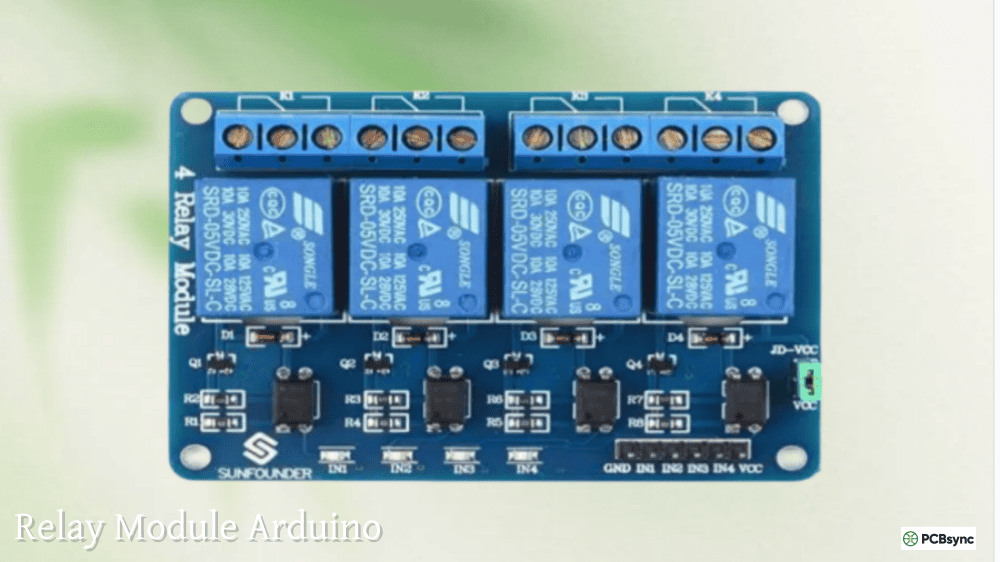
5V Relay Module
4-8
Optocoupler isolated
5V Power Supply
1
2A minimum
Tactile Switches
4-8
For manual override
Terminal Blocks
As needed
AC wire connections
Design Considerations:
The trickiest part is handling state synchronization. When WiFi reconnects after an outage, the Blynk app needs to reflect the current relay states. I use Blynk.virtualWrite() in the reconnection callback to push actual hardware states back to the cloud.
Project 3: BLE Sensor Gateway
Here’s a project where ESP32 really shines—acting as a bridge between BLE sensors and your cloud infrastructure.
Use Case: Collect data from BLE environmental sensors (temperature, humidity, air quality) and forward to MQTT broker over WiFi.
When running BLE scanning and WiFi simultaneously, I’ve found these settings work well:
BLE scan interval: 100ms
BLE scan window: 50ms
MQTT publish interval: 5000ms minimum
WiFi connection check: 30 seconds
Trying to push data faster than this tends to destabilize the connection, especially if you’re scanning for multiple BLE devices.
Project 4: Bluetooth Audio to WiFi Bridge
This is a more advanced project using the ESP32’s A2DP (Advanced Audio Distribution Profile) support. The ESP32 can act as a Bluetooth audio sink, receiving audio from your phone and forwarding it over WiFi.
Important Caveat: A2DP and WiFi don’t coexist well. The audio streaming demands constant RF access, leaving little room for WiFi operations. This project works best when you’re streaming audio OR transferring data, not both simultaneously.
Hardware Setup:
Component
Purpose
ESP32 DevKit
Audio processing
PCM5102 DAC
I2S audio output
3.5mm Jack
Analog output
Speaker/Headphones
Audio playback
The ESP32-A2DP library by pschatzmann makes this surprisingly straightforward to implement.
Project 5: Mesh Network with Cloud Connectivity
ESP-MESH lets multiple ESP32 boards form a self-healing mesh network. One node (the root) connects to your WiFi router, and all other nodes route through each other to reach the internet.
This architecture is excellent for large-scale deployments like warehouse monitoring or agricultural sensor networks where running cables isn’t feasible.
ESP32 WiFi & Bluetooth PCB Design Guidelines
Having laid out several custom ESP32 boards, here are the lessons I’ve learned the hard way:
Compact, cost-effective, but sensitive to enclosure
U.FL connector
Flexible antenna placement, adds cost
Keep-out zone
15mm minimum around antenna area
Ground plane
Critical for RF performance
Power Supply Design
The ESP32 draws significant current during RF transmission—peaks of 500mA for WiFi and 130mA for Bluetooth. Your power supply needs adequate decoupling:
Location
Capacitor
Value
Power input
Bulk electrolytic
100µF
Near VCC pins
MLCC
10µF
Near VCC pins
MLCC
0.1µF
Near RF section
MLCC
10pF
Layout Best Practices
Keep the antenna trace impedance at 50Ω
Avoid routing digital signals under the RF section
Use solid ground plane beneath the module
Place decoupling capacitors as close to pins as possible
Frequently Asked Questions About ESP32 WiFi & Bluetooth
Can ESP32 use WiFi and Bluetooth at the same time?
Yes, the ESP32 can use WiFi and Bluetooth simultaneously through time-division multiplexing. Both protocols share a single 2.4 GHz radio, so they take turns accessing the RF hardware. In practice, this works well for most applications, but high-bandwidth scenarios (like A2DP audio streaming with heavy WiFi traffic) may experience performance issues. Proper configuration of scan intervals and task core assignments significantly improves coexistence stability.
What’s the difference between Classic Bluetooth and BLE on ESP32?
Classic Bluetooth offers higher data throughput (up to 3 Mbps) and supports audio profiles like A2DP, making it suitable for streaming applications. BLE (Bluetooth Low Energy) consumes significantly less power and is ideal for battery-powered IoT devices and sensor applications. Programming-wise, Classic Bluetooth uses a serial-like interface (SPP), while BLE uses a client-server model with GATT profiles. For most IoT projects, BLE is the better choice due to lower power consumption and simpler coexistence with WiFi.
How do I improve ESP32 WiFi range in my project?
Several factors affect WiFi range: antenna type, transmit power settings, and RF environment. First, ensure your PCB has proper ground plane and antenna keep-out zones. Consider using an external antenna via U.FL connector for challenging environments. In code, you can increase TX power with WiFi.setTxPower(WIFI_POWER_19_5dBm), though this increases current draw. For extreme range requirements, directional antennas have achieved 10+ km in line-of-sight tests, though this is atypical for standard deployments.
Why does my ESP32 keep resetting when WiFi connects?
This almost always indicates a power supply issue. When WiFi transmits, current draw spikes to 300-500mA. If your supply can’t handle this surge, voltage drops trigger the brownout detector, causing a reset. Solutions include: adding 100µF+ bulk capacitance near the ESP32, using a power supply rated for at least 1A, and checking for voltage drop along your supply traces. You can also temporarily disable the brownout detector in code for testing, but this isn’t recommended for production.
What’s the best way to send ESP32 sensor data to the cloud?
MQTT remains the most efficient protocol for ESP32-to-cloud communication. It’s lightweight, supports QoS levels for delivery guarantees, and works well with limited bandwidth. Popular platforms like AWS IoT, Google Cloud IoT, Home Assistant, and ThingSpeak all support MQTT. For simpler deployments, HTTP POST requests to services like ThingSpeak work fine but consume more overhead per message. If you need real-time bidirectional communication, WebSockets are another option, though they maintain persistent connections that may affect power consumption.
Final Thoughts on ESP32 WiFi & Bluetooth Development
After working with ESP32 across numerous projects—from quick prototypes to production deployments—I can confidently say it’s the most versatile wireless platform available at its price point. The dual WiFi and Bluetooth capability, combined with decent processing power and extensive peripheral support, makes it suitable for an enormous range of applications.
The key to success with ESP32 WiFi & Bluetooth projects is understanding the coexistence limitations upfront. Plan your RF resource usage, test thoroughly under realistic conditions, and build in fallback mechanisms where reliability matters. The chip is remarkably capable, but it’s not magic—proper engineering practices still apply.
Whether you’re building a simple home automation controller or a complex mesh sensor network, the ESP32 provides the tools. The learning curve is manageable, the community support is extensive, and the price makes experimentation practical. Now get building.
Inquire: Call 0086-755-23203480, or reach out via the form below/your sales contact to discuss our design, manufacturing, and assembly capabilities.
Quote: Email your PCB files to Sales@pcbsync.com (Preferred for large files) or submit online. We will contact you promptly. Please ensure your email is correct.
Notes: For PCB fabrication, we require PCB design file in Gerber RS-274X format (most preferred), *.PCB/DDB (Protel, inform your program version) format or *.BRD (Eagle) format. For PCB assembly, we require PCB design file in above mentioned format, drilling file and BOM. Click to download BOM template To avoid file missing, please include all files into one folder and compress it into .zip or .rar format.