Inquire: Call 0086-755-23203480, or reach out via the form below/your sales contact to discuss our design, manufacturing, and assembly capabilities.
Quote: Email your PCB files to Sales@pcbsync.com (Preferred for large files) or submit online. We will contact you promptly. Please ensure your email is correct.
Notes: For PCB fabrication, we require PCB design file in Gerber RS-274X format (most preferred), *.PCB/DDB (Protel, inform your program version) format or *.BRD (Eagle) format. For PCB assembly, we require PCB design file in above mentioned format, drilling file and BOM. Click to download BOM template To avoid file missing, please include all files into one folder and compress it into .zip or .rar format.
As a PCB engineer who’s worked on dozens of ESP32 and ESP8266 projects over the years, I can tell you that getting the board layout right makes or breaks your IoT device. I’ve seen too many promising projects fail because someone ignored antenna placement rules or skimped on power decoupling. This guide covers everything I’ve learned about ESP32 PCB design, ESP8266 PCB design, and specifically ESP32-CAM PCB layoutfor camera-based applications.
Whether you’re building a smart home sensor, a WiFi-enabled data logger, or a surveillance system with ESP32-CAM, the fundamentals remain the same. Let me walk you through what actually matters in the real world.
The ESP32 and ESP8266 aren’t your typical microcontrollers. These chips pack WiFi and Bluetooth radios operating at 2.4 GHz, which means every trace, via, and component placement decision affects RF performance. I’ve measured 10-15 dB differences in signal strength between well-designed and poorly-designed boards running identical firmware.
Here’s what’s at stake with bad ESP32 PCB design:
Reduced WiFi range (sometimes down to just a few meters)
Intermittent connectivity and dropped connections
Failed certifications (FCC, CE) due to EMI issues
Random resets from power supply noise
Overheating during sustained RF transmission
The good news? Following Espressif’s guidelines and applying solid RF layout principles will get you 90% of the way there. Let’s dig into the specifics.
Understanding the ESP32 vs ESP8266 Architecture
Before jumping into layout, you need to understand what you’re working with. Both chips share similar RF architectures but have key differences that affect your ESP32 PCB design and ESP8266 PCB design approaches.
ESP32 Key Specifications for PCB Design
Parameter
ESP32 Value
Design Impact
Operating Voltage
3.0V – 3.6V
LDO selection critical
Peak Current (TX)
Up to 500mA
Decoupling is essential
RF Output Impedance
(30+j10)Ω to (35+j10)Ω
Matching network required
Crystal Frequency
40 MHz
Keep-out zones needed
Flash Interface
QSPI (80 MHz)
Trace length matching
ESP8266 Key Specifications for PCB Design
Parameter
ESP8266 Value
Design Impact
Operating Voltage
3.0V – 3.6V
Same as ESP32
Peak Current (TX)
Up to 350mA
Slightly easier power design
RF Output Impedance
~39Ω
Different matching values
Crystal Frequency
26 MHz
Smaller keep-out possible
Flash Interface
SPI (40/80 MHz)
Standard SPI routing
The ESP32 demands more attention to power distribution because of its dual-core processor and higher peak current. Meanwhile, ESP8266 PCB design is somewhat more forgiving, making it a good starting point for newcomers to RF layout.
Layer Stack-Up Recommendations
Your PCB layer count fundamentally shapes what’s possible with your layout. Here’s what I recommend based on project complexity:
Four-Layer Stack-Up (Recommended for Production)
This is what Espressif uses in their reference designs, and it’s my go-to for any serious ESP32 PCB design:
Layer
Purpose
Key Rules
Layer 1 (TOP)
Signal traces, components
Keep RF traces here, short and direct
Layer 2 (GND)
Solid ground plane
No breaks under RF, crystal, or high-speed signals
Layer 3 (POWER)
Power distribution, some signals
Maintain GND flood under sensitive areas
Layer 4 (BOTTOM)
Minimal routing
Avoid components if possible
The dedicated ground plane on Layer 2 is crucial. It provides a consistent reference for controlled impedance traces and creates a low-inductance return path for high-frequency signals.
Two-Layer Stack-Up (Budget Projects)
For hobby projects and prototypes, a two-layer board can work, but you’ll need to be more careful:
Dedicate as much of the bottom layer to ground as possible
Route power on the top layer, not the bottom
Keep all RF-related traces on the top layer
Add extra ground vias around the ESP module
Two-layer ESP8266 PCB design is more practical than two-layer ESP32 design because the ESP8266’s lower complexity and current requirements are easier to manage with limited ground plane area.
RF Layout and Antenna Placement
This is where most ESP32 PCB design projects go wrong. The antenna and RF matching circuit deserve your full attention.
Antenna Placement Rules
The antenna (whether PCB trace, chip, or external) needs a clear path to radiate. Follow these non-negotiable rules:
For ESP modules with built-in PCB antennas:
Position the antenna portion to extend beyond the edge of your baseboard
Maintain at least 15mm clearance from any metal (components, traces, enclosure walls)
Never place ground plane under the antenna element
Keep the antenna feed point close to the board edge
For ESP32-CAM PCB layout specifically:
The ESP32-CAM module comes with a PCB antenna and a u.FL connector option. If you’re designing a carrier board:
Ensure the antenna section overhangs your carrier board
Leave 3mm minimum gap between the module and any enclosure
Consider using an external antenna via the u.FL connector for better range
RF Trace Impedance Control
The RF trace connecting your ESP chip to the antenna must be controlled impedance at 50Ω. Here’s a practical stack-up for achieving this on a four-layer board:
Parameter
Typical Value
Trace Width
0.3mm – 0.4mm (varies with dielectric)
Dielectric Height (to GND)
0.2mm – 0.25mm
Copper Weight
1 oz (35µm)
Dielectric Constant (FR4)
4.2 – 4.5
Use your PCB manufacturer’s impedance calculator or a tool like Saturn PCB Toolkit to dial in the exact trace width for your specific stack-up.
CLC Matching Circuit Layout
The CLC (capacitor-inductor-capacitor) matching network transforms the chip’s output impedance to 50Ω. Getting this layout right is critical:
Use 0201 or 0402 package components (0201 preferred)
Place components in a zigzag pattern to minimize coupling
Keep the matching network within 3mm of the RF pin
Add ground vias immediately adjacent to each ground pad
Include a stub on the first capacitor to suppress second harmonics (15 mil length, 100Ω characteristic impedance)
Power problems cause more ESP project failures than any other issue. The radio’s transmit bursts draw huge current spikes that can cause brownouts if your power supply can’t respond fast enough.
Decoupling Strategy
Here’s my proven decoupling approach for ESP32 PCB design:
Location
Capacitor Value
Purpose
Power input
100µF electrolytic + 10µF ceramic
Bulk energy storage
Before chip
10µF ceramic
Local reservoir
VDD3P3 (RF power)
10µF + 0.1µF ceramic
RF supply filtering
Each power pin
0.1µF ceramic
High-frequency decoupling
VDD_SDIO
10µF ceramic
Flash power stability
Critical placement rules:
Every decoupling cap needs a ground via within 1mm of its ground pad
Use a star topology for power distribution (traces branch from a central point)
Route power traces at 45° angles to maintain distance from RF traces
Main power trace width: minimum 25 mil (0.635mm)
VDD3P3 trace width: minimum 20 mil (0.508mm)
LDO and Regulator Selection
Don’t use just any 3.3V regulator. The ESP32 needs:
Current capacity: Minimum 500mA, preferably 700mA or more
Dropout voltage: Below 500mV if running from USB (5V) or single LiPo (3.7V nominal)
Transient response: Fast enough to handle 300mA current spikes
Popular choices that work well:
AMS1117-3.3 (cheap, but watch for counterfeits)
AP2112K-3.3 (better dropout, 600mA)
ME6211C33 (low quiescent current for battery projects)
RT9080 (excellent transient response)
For ESP8266 PCB design, you can get away with slightly lower current regulators (300mA minimum) because the chip draws less during transmission.
Crystal Oscillator Layout
The 40 MHz crystal on ESP32 (26 MHz on ESP8266) requires careful attention to prevent interference with the radio.
Crystal Placement Guidelines
Position the crystal away from:
The RF trace and antenna
High-speed digital signals
The UART TX line (especially GPIO1/U0TXD)
Espressif recommends adding a series inductor (start with 0Ω, adjust after testing) on the XTAL_P clock trace to reduce high-frequency harmonics that can affect RF performance.
Keep-Out Zone
Maintain a copper-free zone around the crystal on the top layer:
Clear ground copper directly under the crystal
Add ground vias around the perimeter of the keep-out zone
This reduces parasitic capacitance and temperature-related frequency drift
ESP32-CAM PCB Layout Considerations
The ESP32-CAM adds unique challenges because you’re dealing with a high-speed camera interface alongside WiFi. Here’s how to handle the ESP32-CAM PCB layout effectively.
Camera Interface Routing
The OV2640 camera connects via a parallel DVP (Digital Video Port) interface running at up to 20 MHz. While this isn’t as demanding as the RF section, you still need to:
Keep camera data traces roughly equal length (within 5mm)
Route camera signals away from the WiFi antenna
Add a ground plane under the camera connector
Use short, direct traces from the camera connector to the ESP32
GPIO Pin Constraints
The ESP32-CAM uses many GPIOs for the camera and SD card interface, leaving limited pins for your application. Plan your design around these restrictions:
If you’re designing a carrier board for the ESP32-CAM module, consider adding an I/O expander (like PCF8574) to gain additional GPIO through I2C.
Power Requirements
The ESP32-CAM draws significantly more current than a standard ESP32 module:
Idle: ~80mA
WiFi Active: ~160-260mA
Camera Active: ~80-140mA additional
Flash LED: ~310mA at full brightness
Design your power supply for at least 500mA continuous current, preferably 1A if using the flash LED.
Common ESP32 and ESP8266 PCB Design Mistakes
I’ve reviewed hundreds of ESP board designs. Here are the mistakes I see most often:
Mistake 1: Inadequate Ground Plane
Problem: Routing signal traces on the ground layer, breaking up the ground plane.
Solution: Keep Layer 2 as a solid, unbroken ground. Route signals on other layers. If you absolutely must route on the ground layer, ensure continuous ground under all RF-related components.
Mistake 2: Poor Antenna Clearance
Problem: Ground plane or traces extending under or close to the antenna.
Solution: Follow the module datasheet’s keep-out zones religiously. When in doubt, add more clearance.
Mistake 3: Insufficient Decoupling
Problem: A single 10µF capacitor for the entire board, placed far from the ESP chip.
Solution: Use the distributed decoupling strategy outlined above. Capacitors must be close to their associated power pins with short ground return paths.
Mistake 4: Ignoring Strapping Pins
Problem: Leaving boot-mode strapping pins (GPIO0, GPIO2, GPIO15 on ESP8266; GPIO0, GPIO2, GPIO12, GPIO15 on ESP32) floating or incorrectly pulled.
Solution: Add appropriate pull-up or pull-down resistors (typically 10kΩ) to ensure correct boot mode. Check the datasheet for required states.
Mistake 5: Long RF Traces
Problem: Routing the RF trace across the board to reach a convenient antenna location.
Solution: Place the antenna close to the RF pin. The RF trace should be as short as possible, ideally under 10mm.
Choosing Between ESP32 Modules for Your Design
Not all ESP32 modules are created equal, and your choice significantly impacts your PCB design approach. Let me break down the options:
ESP-WROOM-32 Series
The workhorse module for most ESP32 PCB design projects. It includes the ESP32 chip, crystal, flash memory, and a PCB antenna in a single package. The castellated edge pins make it easy to solder to your carrier board. This module has undergone FCC and CE pre-certification, which simplifies your compliance path.
Key considerations for layout:
38 pins total, 25.5mm x 18mm footprint
Requires 15mm+ antenna clearance zone
Ground pad on bottom must connect to your ground plane via at least 9 vias
IPEX variant (ESP32-WROOM-32U) available for external antenna applications
ESP32-WROVER Series
Similar to WROOM but adds PSRAM (4MB or 8MB), which is essential for applications like camera streaming or complex web servers. The additional memory also changes your layout requirements slightly because of the extra high-speed memory interface.
For ESP32-CAM PCB layout projects, the WROVER-based modules are common choices because the camera interface and frame buffer demand significant RAM.
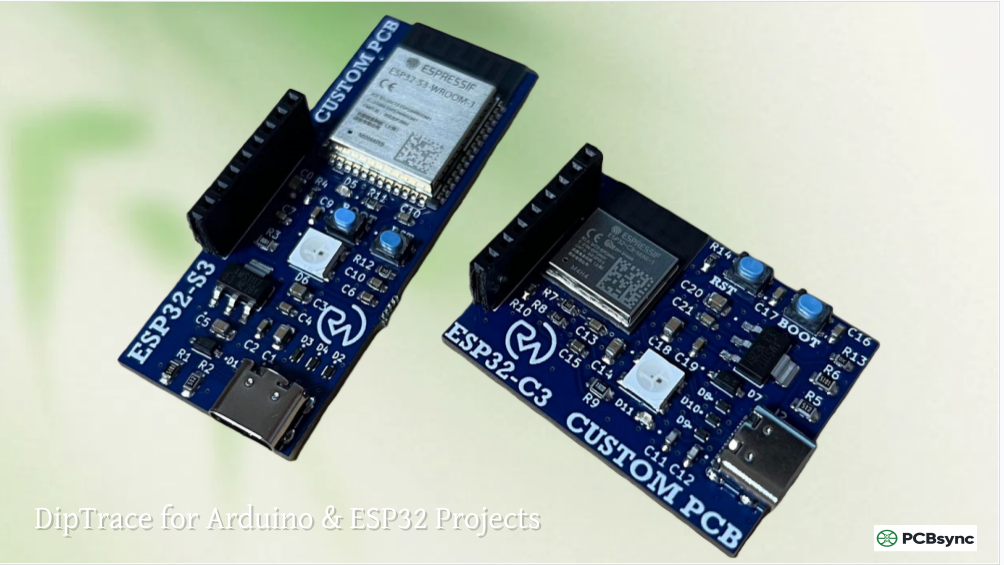
ESP32-S3 and ESP32-C3 Modules
These newer variants offer USB OTG support (S3) or a RISC-V core (C3). If you’re starting a new design, consider these instead of the original ESP32, which Espressif has marked NRND (Not Recommended for New Designs).
The S3’s USB support eliminates the need for a separate USB-to-UART bridge chip, simplifying both your schematic and ESP32 PCB design. The C3 is excellent for cost-sensitive designs that don’t need Bluetooth Classic or the dual-core architecture.
ESP8266 Module Options
For ESP8266 PCB design, the ESP-12E and ESP-12F are the most popular modules. They include the ESP8266 chip, 4MB flash, crystal, and a PCB antenna. The ESP-12F adds some RF improvements over the 12E, but they’re pin-compatible.
The ESP-01 is another option for extremely constrained designs, but its limited GPIO and lack of ADC pins make it unsuitable for most IoT applications.
High-Speed Signal Routing Best Practices
Beyond the RF section, your ESP32 board likely includes other high-speed signals that need attention.
QSPI Flash Interface
The ESP32’s flash interface runs at up to 80 MHz in QIO mode. While not as sensitive as the RF section, poor routing can cause boot failures or data corruption:
Keep all six flash traces (CLK, CS, D0-D3) roughly equal length (within 10mm)
Route on the same layer as the ESP module
Avoid vias if possible; if needed, minimize via count
Maintain consistent trace width and spacing
Add series termination resistors (22Ω-47Ω) if trace length exceeds 50mm
USB Interface (ESP32-S2/S3)
For designs using ESP32-S2 or ESP32-S3 with USB:
Route D+ and D- as a differential pair
Target 90Ω differential impedance
Keep traces equal length (within 0.5mm)
Add ESD protection TVS diodes at the USB connector
Place common-mode choke near the connector for EMI compliance
I2C and SPI Peripherals
Standard I2C and SPI connections to sensors or displays don’t require controlled impedance, but good practices help:
Keep clock traces away from analog signals
Add 4.7kΩ pull-ups for I2C (may need lower values for faster speeds or longer traces)
For SPI displays, series resistors (100Ω-330Ω) can reduce EMI and ringing
Thermal Considerations
The ESP32 can get warm during sustained WiFi activity, and proper thermal design prevents reliability issues.
Heat Dissipation Strategies
The module’s ground pad (thermal pad) on the bottom is your primary heat dissipation path. Connect it to your ground plane with multiple vias (minimum 9, more is better). This spreads heat across your PCB’s copper.
For high-duty-cycle applications (continuous streaming, heavy data transmission):
Use at least 2oz copper on your ground plane
Increase the ground pour area around the module
Consider thermal vias under the module connecting to multiple ground layers
In enclosed designs, add ventilation or a small fan
When to Consider Active Cooling
The ESP32-CAM often needs additional cooling because it runs both WiFi and the camera processor continuously. For 24/7 surveillance applications:
Add a small 20mm or 25mm fan
Use a metal enclosure as a heatsink (ensure antenna clearance)
Apply thermal paste between the module and enclosure
EMI and Regulatory Compliance
If you’re building a product for sale, you’ll need FCC (US), CE (Europe), or other regional certifications.
Pre-Certified Modules Help
Using pre-certified modules like ESP-WROOM-32 significantly simplifies your certification path. The module itself has already passed the RF emissions and immunity tests. However, you still need to ensure your complete device passes:
Conducted emissions (power supply noise)
Radiated emissions (from your PCB traces and cables)
ESD immunity
Power supply variations
Layout Practices for Compliance
Your ESP32 PCB design choices directly impact EMI performance:
Maintain solid ground planes without slots or cuts
Keep high-speed digital signals away from board edges and cables
Add EMI filtering (ferrite beads, common-mode chokes) on cables
Shield sensitive analog circuits from the WiFi section
Route clock signals on inner layers when possible
Design Software and Tools
Several tools can handle ESP32 PCB design effectively:
KiCad (Free, Open Source)
My top recommendation for most designers. Espressif maintains official KiCad libraries with symbols, footprints, and 3D models for all ESP modules. The impedance calculator in KiCad 8 is excellent for RF trace design.
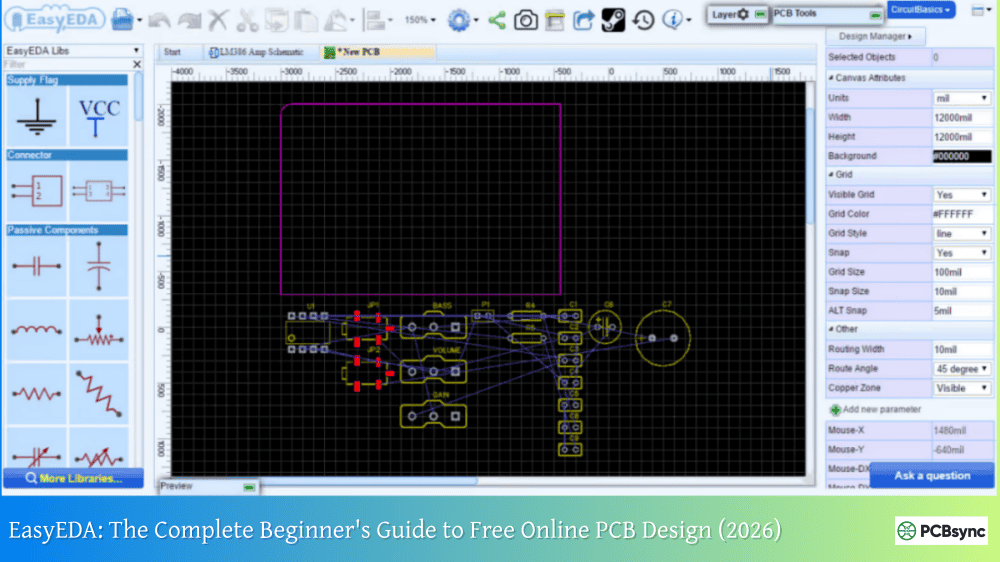
EasyEDA (Free, Web-Based)
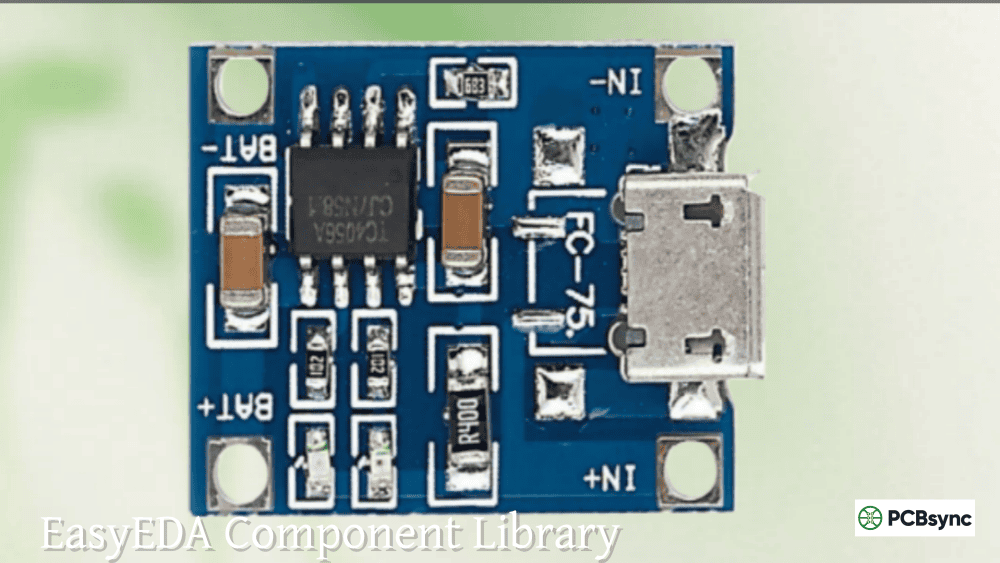
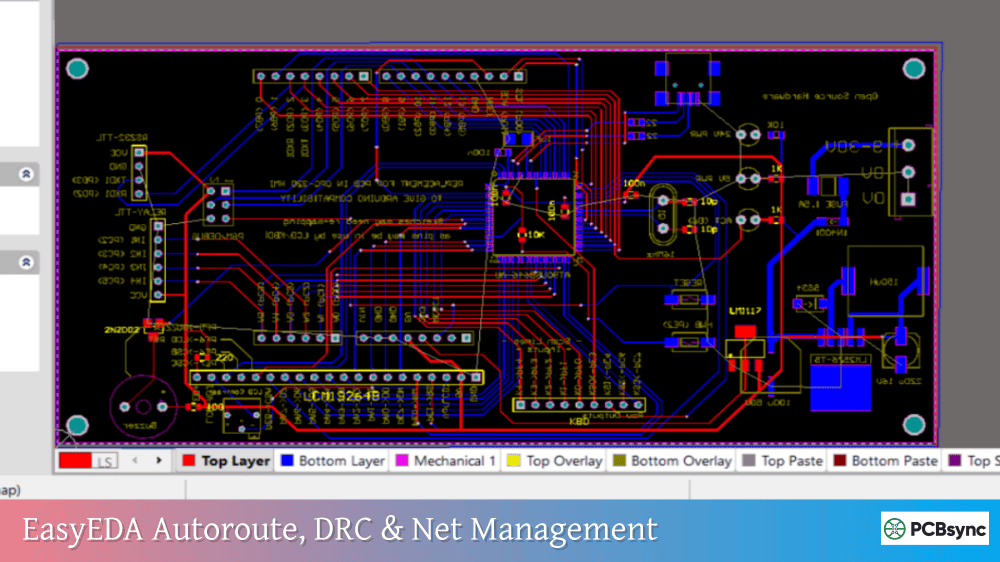
Great for beginners and quick prototypes. The JLCPCB integration makes ordering boards seamless. Component libraries include most ESP modules with pre-verified footprints.
Altium Designer (Professional)
If you’re doing production work, Altium offers the best tools for RF design and advanced impedance control. Espressif provides Altium-format reference designs for professional use.
Useful Resources and Downloads
Here’s where to find reference designs, datasheets, and tools for your ESP32 and ESP8266 PCB design work:
Run DRC (Design Rule Check) with manufacturer-specified rules
Verify all ESP module pins are correctly connected
Check RF trace impedance with your EDA tool’s calculator
Review antenna clearance zones
Confirm decoupling capacitor placement near power pins
Post-Assembly Testing
Measure 3.3V rail stability under load (should stay within 3.0V-3.6V)
Test WiFi RSSI at a fixed distance (compare to reference design)
Verify boot mode by checking serial output at startup
Run a stress test (continuous TX) while monitoring temperature
Check current consumption in sleep modes
Frequently Asked Questions
Can I use a two-layer PCB for ESP32 designs?
Yes, but with limitations. Two-layer boards can work for simple applications where maximum WiFi range isn’t critical. Ensure you have a solid ground plane on the bottom layer covering at least the area under the ESP module, RF trace, and crystal. Expect slightly reduced RF performance compared to a four-layer design. For production devices requiring FCC/CE certification, a four-layer board is strongly recommended.
What’s the minimum keep-out zone around the antenna?
For PCB trace antennas (like those on ESP-WROOM modules), maintain at least 15mm clearance from any metal, including ground plane, traces, and components. The antenna should extend beyond your baseboard edge. For chip antennas, follow the specific manufacturer’s datasheet, but expect a keep-out zone of at least 5mm x 5mm on the ground layer.
Why does my ESP32 reset randomly during WiFi transmission?
This is almost always a power supply issue. During TX bursts, the ESP32 draws current spikes up to 500mA. If your power supply can’t respond quickly enough, the voltage dips below 3.0V and triggers a brownout reset. Solutions include adding more bulk capacitance (100µF+ at power input), using a higher-capacity LDO, and ensuring decoupling caps are placed close to the chip with short ground returns.
Can I run ESP32-CAM and WiFi simultaneously?
Yes, but you’ll need adequate power supply headroom. The camera and WiFi can draw over 400mA combined. Additionally, the camera’s parallel interface can generate noise that affects WiFi performance if not properly isolated. Keep camera traces away from the antenna and ensure good ground plane coverage under the camera connector.
What trace width should I use for the RF signal?
The RF trace must be controlled impedance at 50Ω. The exact width depends on your stack-up, specifically the dielectric thickness and constant between the RF trace and ground plane. Typical values for FR4 with a 0.2mm dielectric height are 0.3mm to 0.4mm. Always use your PCB manufacturer’s impedance calculator or a tool like Saturn PCB Toolkit to determine the correct width for your specific design.
Wrapping Up
Solid ESP32 PCB design and ESP8266 PCB design come down to respecting RF fundamentals while providing clean, stable power. The ESP chips themselves are incredibly capable, but they need the right environment to perform. Pay attention to your antenna placement, maintain a clean ground plane, implement proper decoupling, and you’ll build boards that work reliably in the field.
For ESP32-CAM PCB layout projects, remember the additional challenges of the camera interface and higher power consumption. Plan your GPIO usage carefully and provide adequate current capacity.
Start with Espressif’s reference designs, adapt them to your needs, and don’t be afraid to iterate. Every project teaches something new about RF layout, and each board you build will be better than the last.
Inquire: Call 0086-755-23203480, or reach out via the form below/your sales contact to discuss our design, manufacturing, and assembly capabilities.
Quote: Email your PCB files to Sales@pcbsync.com (Preferred for large files) or submit online. We will contact you promptly. Please ensure your email is correct.
Notes: For PCB fabrication, we require PCB design file in Gerber RS-274X format (most preferred), *.PCB/DDB (Protel, inform your program version) format or *.BRD (Eagle) format. For PCB assembly, we require PCB design file in above mentioned format, drilling file and BOM. Click to download BOM template To avoid file missing, please include all files into one folder and compress it into .zip or .rar format.