Inquire: Call 0086-755-23203480, or reach out via the form below/your sales contact to discuss our design, manufacturing, and assembly capabilities.
Quote: Email your PCB files to Sales@pcbsync.com (Preferred for large files) or submit online. We will contact you promptly. Please ensure your email is correct.
Notes: For PCB fabrication, we require PCB design file in Gerber RS-274X format (most preferred), *.PCB/DDB (Protel, inform your program version) format or *.BRD (Eagle) format. For PCB assembly, we require PCB design file in above mentioned format, drilling file and BOM. Click to download BOM template To avoid file missing, please include all files into one folder and compress it into .zip or .rar format.
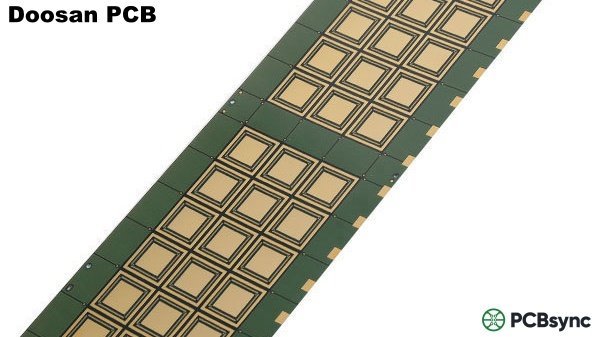
After 15 years working with various laminate suppliers across Asia and Europe, I’ve seen how material selection can make or break a project. Doosan PCB materials have consistently shown up in my most demanding designs—from automotive radar modules to high-speed server backplanes. This guide breaks down everything you need to know about Doosan PCB products, their technical capabilities, and real-world applications based on hands-on experience and industry data.
Doosan Corporation’s Electronics Materials division (commonly known as Doosan Electro-Materials or DEM) has evolved from a regional supplier into one of the world’s top CCL (Copper Clad Laminate) manufacturers. Their facilities in South Korea, China, and Europe produce over 15 million square meters of laminate annually—numbers that matter when you’re trying to secure consistent supply for volume production.
What sets Doosan PCB substrates apart isn’t just capacity. Their vertical integration from resin synthesis to final laminate production gives them tighter control over material properties than many competitors who rely on third-party resin suppliers. For engineers, this translates to more predictable electrical performance and fewer surprises during impedance testing.
The company’s investment in R&D—roughly 5% of annual revenue—has produced some genuinely useful innovations, particularly in low-loss materials for 5G applications and halogen-free formulations that meet increasingly strict environmental regulations without sacrificing processability.
PCBSync Engineering Tools
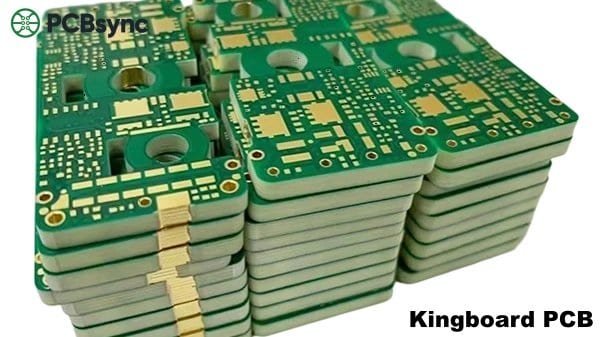
Kingboard PCB Laminate Material Reference & Selection Guide
v2.0Interactive
🔷
FR-4 Standard Series
Tg 130-140°C | General Purpose
KB-6160Standard FR-4
KB-6160AUV Block + AOI
KB-6160CHigh CTI 600V
KB-6150Thin Core
Applications: Consumer electronics, IoT devices, general industrial
🔶
FR-4 Mid Tg Series
Tg 140-155°C | Enhanced Thermal
KB-6164Tg 140°C DSC
KB-6164FTg 140°C + UV Block
KB-6165Anti-CAF
KB-6165FAnti-CAF + Filler
Applications: Automotive, industrial control, power electronics
Doosan’s bread-and-butter products cover the FR-4 spectrum that handles 70-80% of typical PCB applications. Their EM-285 series has become my go-to recommendation for general-purpose designs where cost efficiency matters but you still need UL94 V-0 flame rating and decent thermal performance.
The EM-370 series targets mid-range applications requiring better thermal reliability. With a Tg of 170°C (DSC) and a Td of 340°C, these materials handle lead-free assembly processes without the premium pricing of high-performance laminates.
Product Series
Tg (DSC)
Td (TGA 5%)
Dk @ 1GHz
Df @ 1GHz
Key Applications
EM-285
135°C
310°C
4.4
0.020
Consumer electronics, IoT devices
EM-370
170°C
340°C
4.2
0.018
Industrial controls, power supplies
EM-827
180°C
350°C
4.0
0.015
Server boards, automotive ECUs
EM-891
200°C
360°C
3.8
0.012
High-reliability applications
High-Frequency and High-Speed Materials
This is where Doosan PCB materials have made the biggest strides in recent years. The RF-500 series competes directly with Rogers and Isola products for mmWave applications, while the EM-888 series offers hybrid solutions that balance performance with manufacturability.
The EM-888HF variant deserves special mention. With a Dk of 3.4 and Df of 0.003 at 10 GHz, it handles 77 GHz automotive radar designs without forcing you into PTFE territory—which means standard FR-4 processing and significant cost savings on multilayer builds.
Material
Dk @ 10GHz
Df @ 10GHz
Dk Tolerance
Target Frequency Range
EM-888
3.6
0.005
±0.05
Up to 28 GHz
EM-888HF
3.4
0.003
±0.03
Up to 77 GHz
RF-500
3.0
0.0018
±0.02
77 GHz+ / mmWave
RF-600
2.65
0.0015
±0.02
110 GHz+ / sub-THz
Halogen-Free and Environmentally Compliant Products
Environmental regulations aren’t optional anymore, and Doosan has responded with a comprehensive halogen-free lineup. The EM-HF series meets IEC 61249-2-21 standards while maintaining the processing characteristics engineers expect from standard materials.
I’ve run the EM-HF370 through our standard process window without modifications—something that wasn’t possible with first-generation halogen-free materials that required extended press cycles and temperature adjustments.
Specialty and Advanced Materials
Beyond the mainstream products, Doosan produces application-specific materials that solve particular engineering challenges:
High-CTI Materials (EM-CTI Series): Comparative Tracking Index ratings above 600V for power electronics where creepage distances are tight.
Flex and Rigid-Flex Substrates: The FX series supports designs requiring controlled impedance in flexible sections—increasingly important for wearables and medical devices.
IC Substrate Materials: Ultra-thin materials (25-50 μm core) for package substrates supporting fine-pitch flip-chip designs.
Thermally Enhanced Laminates: Metal-core and ceramic-filled variants for LED lighting and power module applications where heat dissipation is the primary design constraint.
Technical Capabilities and Performance Characteristics
Electrical Performance Specifications
Understanding the electrical characteristics of Doosan PCB materials requires looking beyond headline Dk/Df numbers. The real-world performance depends on how these properties behave across frequency, temperature, and humidity conditions.
Doosan publishes detailed characterization data using multiple test methods (IPC-TM-650 2.5.5.5 for Dk, and both stripline and cavity resonator methods for high-frequency validation). This transparency helps during design review when customers or certification bodies ask for material traceability.
Thermal management has become increasingly critical as power densities rise and lead-free assembly processes push temperature envelopes. Doosan materials generally perform well in thermal cycling tests, with their high-Tg products showing minimal Z-axis expansion below glass transition.
The mechanical properties—particularly peel strength and flexural modulus—remain consistent across production lots. This consistency matters when you’re qualifying a material for automotive or aerospace applications where lot-to-lot variation can trigger requalification requirements.
Doosan maintains certifications that matter for regulated industries:
IATF 16949 (Automotive quality management)
ISO 9001:2015 (Quality management systems)
ISO 14001:2015 (Environmental management)
UL Recognition (E-file numbers available for all major product lines)
IPC-4101 qualification (slash sheets available)
REACH and RoHS compliance documentation
Halogen-free certification per IEC 61249-2-21
These certifications aren’t just paperwork—they represent audit trails and process controls that reduce risk when you’re designing products for automotive, medical, or aerospace applications.
Industrial Applications and Market Segments
Automotive Electronics
The automotive sector has driven significant development at Doosan, particularly for ADAS (Advanced Driver Assistance Systems) applications. Their RF-500 and EM-888HF materials see heavy use in 77 GHz radar modules where signal integrity directly impacts safety-critical functions.
For powertrain and body electronics, the EM-827 and EM-891 series handle the thermal cycling and vibration requirements specified in AEC-Q100 testing. Several Tier 1 automotive suppliers have standardized on Doosan materials for new platform designs.
Telecommunications and 5G Infrastructure
The 5G rollout has created demand for low-loss materials that can handle frequencies from sub-6 GHz to mmWave bands. Doosan PCB substrates appear in base station antenna arrays, beamforming networks, and backhaul equipment where insertion loss budgets are tight.
The company’s ability to supply consistent material in high volumes has made them a preferred supplier for telecommunications OEMs who can’t afford material shortages during infrastructure buildouts.
Data Center and Server Applications
High-layer-count server backplanes require materials that maintain signal integrity across long trace runs while surviving the thermal demands of hot-swap events. The EM-827 series has found a home in this segment, with several major server manufacturers qualifying Doosan materials for their latest platforms.
Consumer Electronics and Mobile Devices
While consumer electronics often emphasize cost over performance, premium smartphones and tablets increasingly use Doosan high-frequency materials for antenna feeds and RF front-end modules. The EM-888 series offers a price/performance balance that works for high-volume consumer applications.
Medical and Industrial Equipment
Medical devices and industrial controls require long-term reliability and consistent supply. Doosan’s extensive product qualification data and multi-site manufacturing provide the supply chain stability these sectors demand.
How to Select the Right Doosan PCB Material
Decision Framework for Material Selection
Choosing the right Doosan PCB material starts with understanding your application’s primary constraints. This flowchart approach has served me well across hundreds of designs:
Step 1: Identify the frequency requirements. If your highest-frequency signals stay below 3 GHz, standard FR-4 (EM-370 or EM-827) will typically suffice. Above 3 GHz, consider the EM-888 series. For 77 GHz and above, you’ll need RF-500 or RF-600.
Step 2: Assess thermal demands. Lead-free assembly with multiple reflow cycles requires Tg above 170°C minimum. High-reliability applications in harsh environments should target 180°C or higher.
Step 3: Check regulatory requirements. Halogen-free mandates, CTI requirements for power electronics, and flammability ratings all influence material selection.
Step 4: Consider manufacturability. Check with your fabricator about their experience with the specific Doosan product. Some materials require process adjustments that not all shops can accommodate.
Step 5: Validate cost impact. High-performance materials can cost 3-5x more than standard FR-4. Ensure the application actually requires the performance premium.
Material Selection Quick Reference
Application
Recommended Material
Key Consideration
General consumer electronics
EM-285, EM-370
Cost efficiency
Industrial controls
EM-370, EM-827
Thermal reliability
Automotive ECUs
EM-827, EM-891
AEC-Q100 qualification
5G antenna modules
EM-888, EM-888HF
Low insertion loss
77 GHz radar
RF-500, EM-888HF
Dk stability at mmWave
Power electronics
EM-CTI series
High CTI rating
Flex-rigid designs
FX series
Controlled impedance in flex
LED lighting
EM-MC (metal core)
Thermal conductivity
Working with Doosan Materials: Practical Considerations
Fabrication Guidelines
Doosan publishes detailed processing guidelines for each product family. Key parameters that affect yield and reliability include:
Lamination: Most Doosan materials use standard FR-4 press cycles, but high-Tg products may require extended cure times. The EM-891 series, for example, specifies 180°C minimum lamination temperature with 90-minute cure cycle.
Drilling: Drill entry/exit parameters need adjustment for harder, higher-Tg materials. Use proper backup materials and consider reducing hit count for thick constructions.
Desmear: Standard permanganate desmear processes work well. For halogen-free materials, verify chemical compatibility with your desmear supplier.
Plating: No special considerations beyond standard practices. Copper adhesion is excellent across all product lines.
Storage and Handling Requirements
Doosan laminates ship vacuum-sealed with moisture indicators. Standard recommendations apply:
Store at 23±5°C, below 50% RH
Use within 6 months of production date (date code on packaging)
Bake materials exposed to humidity before lamination (4 hours at 120°C minimum)
Allow materials to reach room temperature before opening vacuum packaging
Doosan Electro-Materials maintains a technical library with datasheets, processing guides, and qualification reports. Access these resources through their official channels:
Product Datasheets: Available through Doosan’s official website at www.doosanelectro.com in the products section. Datasheets include complete electrical, thermal, and mechanical property data.
Processing Guidelines: Fabrication guides covering lamination, drilling, and plating parameters are available by request through your Doosan sales representative or distributor.
IPC Slash Sheet Data: IPC-4101 qualification data with specific slash sheet numbers for qualified products.
UL Recognition Files: UL file numbers and recognized constructions available through the UL Product iQ database.
Industry Standards References
These standards documents are essential for proper material specification:
IPC-4101: Specification for Base Materials for Rigid and Multilayer Printed Boards
IPC-TM-650: Test Methods Manual (for understanding test methods referenced in datasheets)
IPC-6012: Qualification and Performance Specification for Rigid Printed Boards
IEC 61249-2-21: Halogen-free material requirements
SAE J1739: Failure Mode Effects Analysis for automotive applications
Distributor and Technical Support Contacts
Doosan materials are available through regional distributors who typically provide sample stock and technical support:
Asia Pacific: Contact Doosan regional offices in Korea, China, and Japan
Europe: Authorized distributors including Ventec and regional partners
Americas: Distribution through specialty laminate suppliers
For technical questions beyond what distributors can answer, Doosan’s applications engineering team provides direct support for qualified projects.
Doosan PCB Materials: Competitive Landscape
How Doosan Compares to Major Competitors
Understanding where Doosan fits in the competitive landscape helps with material standardization decisions. Here’s an honest assessment based on working with multiple suppliers:
Attribute
Doosan
Isola
Rogers
Panasonic
Standard FR-4 breadth
Excellent
Excellent
Limited
Good
High-frequency options
Good
Excellent
Excellent
Good
Halogen-free range
Excellent
Good
Limited
Excellent
Global availability
Good
Excellent
Excellent
Excellent
Technical support
Good
Excellent
Excellent
Good
Cost competitiveness
Excellent
Good
Premium
Good
Automotive qualifications
Excellent
Good
Good
Excellent
Doosan’s primary advantages are cost competitiveness and strong automotive presence. Their high-frequency materials have improved significantly but haven’t yet matched Rogers or Isola’s top-tier products for the most demanding RF applications. For most applications below 40 GHz, however, Doosan materials deliver equivalent performance at lower cost.
Frequently Asked Questions About Doosan PCB Materials
What is the typical lead time for Doosan PCB laminates?
Standard Doosan materials like EM-370 and EM-827 typically ship within 2-4 weeks from regional warehouses. Specialty products including RF-500 and custom constructions may require 6-8 weeks lead time. During supply constraints, lead times can extend significantly—build relationships with distributors who maintain safety stock for critical materials.
Are Doosan materials qualified for automotive applications?
Yes, Doosan maintains IATF 16949 certification and has qualified multiple product lines through PPAP (Production Part Approval Process) with major automotive OEMs and Tier 1 suppliers. The EM-827, EM-891, and RF-500 series are commonly specified for automotive electronics including ADAS radar modules, powertrain controllers, and body electronics.
How do Doosan high-frequency materials compare to Rogers laminates?
For applications up to approximately 40 GHz, Doosan’s EM-888HF and RF-500 series provide comparable electrical performance to mid-tier Rogers products at 20-30% lower cost. Above 77 GHz or for the most demanding RF applications, Rogers RO3000 and RO4000 series may offer advantages in Dk stability and ultra-low loss. Many designs successfully use hybrid stackups combining Doosan materials with Rogers where needed.
What environmental certifications do Doosan PCB materials carry?
Doosan products comply with RoHS directive requirements and REACH regulation. Their halogen-free product lines (EM-HF series) meet IEC 61249-2-21 requirements with bromine content below 900 ppm and chlorine below 900 ppm. Environmental declarations and conflict minerals documentation are available through Doosan’s quality department.
Can standard PCB fabricators process Doosan materials?
Most Doosan standard and mid-performance materials process using standard FR-4 equipment and chemistry. Fabricators experienced with materials from Isola, Panasonic, or other major suppliers typically require minimal process adjustments. Higher-performance materials like RF-500 may require specific lamination cycles and drilling parameters—verify with your fabricator before specifying.
Future Developments and Industry Trends
Emerging Technologies Shaping Doosan’s Roadmap
The electronics industry doesn’t stand still, and Doosan PCB development reflects upcoming technology demands. Several areas show active investment:
Sub-THz Materials: As automotive radar moves toward 140 GHz and beyond, material requirements tighten further. Doosan’s RF-600 series represents their response to this trend, though commercial availability remains limited.
Package Substrate Thinning: Mobile and computing applications push toward thinner IC substrates. Doosan’s work on 25 μm and below core materials addresses this trend, though Japanese suppliers currently dominate this segment.
Sustainable Manufacturing: Environmental pressure extends beyond halogen-free formulations. Doosan has announced initiatives targeting carbon footprint reduction in manufacturing processes—a factor that may influence future procurement decisions as ESG requirements tighten.
AI/HPC Interconnect: High-bandwidth memory and chiplet architectures require materials optimized for very high layer counts with tight impedance tolerances. Watch for developments in this space as AI hardware demand grows.
Regional Supply Chain Considerations
Geopolitical factors increasingly influence material sourcing decisions. Doosan’s manufacturing footprint across Korea, China, and Europe provides options that single-region suppliers cannot match. For applications requiring supply chain diversification, this geographic spread represents genuine risk mitigation—something that became painfully clear during recent supply chain disruptions.
Wrapping Up
Doosan PCB materials have earned their place in the industry through consistent quality, competitive pricing, and continuous improvement in high-frequency performance. They’re not always the best choice—Rogers still owns the ultra-high-frequency segment, and Isola’s breadth in specialty materials is hard to match. But for the vast majority of PCB applications, Doosan offers materials that meet specifications at attractive price points.
My recommendation? Start with Doosan for standard FR-4 and mid-frequency applications where their cost advantage is most pronounced. Evaluate their high-frequency materials against application-specific requirements rather than defaulting to premium brands. And build relationships with knowledgeable distributors who can help navigate the product line and secure supply during tight market conditions.
The PCB material market continues to evolve with 5G, automotive electronics, and AI-driven computing creating new demands. Doosan’s investment trajectory suggests they’ll remain competitive in these growth areas. For engineers making material decisions today, Doosan deserves serious consideration for any new platform design.
Inquire: Call 0086-755-23203480, or reach out via the form below/your sales contact to discuss our design, manufacturing, and assembly capabilities.
Quote: Email your PCB files to Sales@pcbsync.com (Preferred for large files) or submit online. We will contact you promptly. Please ensure your email is correct.
Notes: For PCB fabrication, we require PCB design file in Gerber RS-274X format (most preferred), *.PCB/DDB (Protel, inform your program version) format or *.BRD (Eagle) format. For PCB assembly, we require PCB design file in above mentioned format, drilling file and BOM. Click to download BOM template To avoid file missing, please include all files into one folder and compress it into .zip or .rar format.