Inquire: Call 0086-755-23203480, or reach out via the form below/your sales contact to discuss our design, manufacturing, and assembly capabilities.
Quote: Email your PCB files to Sales@pcbsync.com (Preferred for large files) or submit online. We will contact you promptly. Please ensure your email is correct.
Notes: For PCB fabrication, we require PCB design file in Gerber RS-274X format (most preferred), *.PCB/DDB (Protel, inform your program version) format or *.BRD (Eagle) format. For PCB assembly, we require PCB design file in above mentioned format, drilling file and BOM. Click to download BOM template To avoid file missing, please include all files into one folder and compress it into .zip or .rar format.
If you’ve ever worked on a high-frequency PCB project and struggled with signal integrity issues, you know how critical material selection is. DiClad 870/880 laminates from Rogers Corporation have been my go-to choice for years when designing RF and microwave circuits that demand low loss and stable electrical performance. These PTFE-based composites strike an excellent balance between cost and performance — something that’s hard to find in the high-frequency laminate space.
In this guide, I’ll walk you through everything you need to know about DiClad 870/880: the technical specifications, when to choose 870 vs 880, fabrication tips I’ve learned the hard way, and how these materials stack up against alternatives like RO4350B and RT/duroid 5880.
DiClad 870/880 are woven fiberglass reinforced, PTFE-based composite laminates manufactured by Rogers Corporation. They’re specifically engineered for high-frequency printed circuit board applications where you need a lower dielectric constant than standard materials can provide.
The “secret sauce” is in the controlled fiberglass-to-PTFE ratio. By using fewer plies of woven fiberglass and a higher proportion of PTFE content, Rogers achieved lower Dk and dissipation factor values compared to other laminates in the DiClad series — without significantly compromising mechanical strength.
Key Characteristics at a Glance
Material composition: PTFE resin + woven fiberglass reinforcement
Manufacturer: Rogers Corporation (formerly Arlon)
Target frequency range: Up to 10+ GHz
Construction: Non-cross-plied (fiberglass plies aligned in same direction)
Standard panel sizes: 48″ × 54″ (also available in 24″ × 18″)
What makes DiClad different from other Rogers products like CuClad? The main distinction is that DiClad laminates don’t use cross-plied constructions. This gives you more predictable electrical performance in certain orientations, though it’s something to account for in your design.
DiClad 870 vs DiClad 880: Understanding the Differences
One of the most common questions I get is: “Should I use DiClad 870 or 880?” The answer depends on whether you prioritize electrical performance or dimensional stability.
Technical Specifications Comparison
Property
DiClad 870
DiClad 880
Test Method
Dielectric Constant (Dk)
2.33 ± 0.04
2.17 / 2.20
IPC-TM-650 2.5.5.5
Dissipation Factor (Df) @ 10 GHz
0.0013
0.0009
IPC-TM-650 2.5.5.5
Dissipation Factor @ 1 MHz
0.0009
0.0009
—
PTFE/Glass Ratio
Medium
High (more PTFE)
—
Moisture Absorption
0.02%
0.02%
IPC-TM-650 2.6.2.1
Thermal Conductivity
0.25 W/m/K
0.22 W/m/K
ASTM C518
Copper Peel Strength
14 lbs/in
12 lbs/in
IPC-TM-650 2.4.8
When to Choose DiClad 870
Go with DiClad 870 when:
You need better dimensional stability and registration
Your application involves multilayer stackups where layer alignment matters
Mechanical durability during fabrication is a concern
Budget is slightly tighter (870 is marginally less expensive)
The medium fiberglass/PTFE ratio in DiClad 870 provides a good compromise — you still get a low Dk of 2.33, but with improved mechanical properties compared to 880.
When to Choose DiClad 880
DiClad 880 is the better choice when:
Absolute lowest loss is your priority
You’re designing for millimeter-wave frequencies where every 0.0001 of Df matters
You’re working on aerospace or defense applications with strict performance specs
The higher PTFE content in DiClad 880 delivers the lowest dielectric constant (2.17-2.20) and dissipation factor (0.0009) in the DiClad family. That difference might seem small on paper, but at 10+ GHz, it translates to measurable improvements in insertion loss.
Detailed Technical Properties of DiClad 870/880
Let me break down the properties that matter most for RF/microwave design.
Electrical Properties
Parameter
DiClad 870
DiClad 880
Why It Matters
Dk @ 10 GHz
2.33
2.17-2.20
Lower Dk = smaller circuits, faster signal propagation
Df @ 10 GHz
0.0013
0.0009
Lower Df = less signal loss, better efficiency
Dk Stability vs Frequency
Excellent
Excellent
Predictable impedance across bandwidth
Volume Resistivity
>10⁷ MΩ·cm
>10⁷ MΩ·cm
High isolation between traces
One thing I really appreciate about DiClad 870/880 is the Dk stability across frequency. Unlike some cheaper laminates where Dk drifts significantly from 1 GHz to 10 GHz, these materials maintain consistent values. This makes impedance calculations much more reliable.
Thermal Properties
Parameter
DiClad 870
DiClad 880
Notes
CTE (X-axis)
17 ppm/°C
20 ppm/°C
Close to copper (17 ppm/°C)
CTE (Y-axis)
29 ppm/°C
32 ppm/°C
—
CTE (Z-axis)
217 ppm/°C
237 ppm/°C
Higher than FR-4, plan accordingly
Thermal Conductivity
0.25 W/m/K
0.22 W/m/K
Moderate heat spreading
Max Operating Temp
260°C
260°C
Lead-free solder compatible
The Z-axis CTE is worth noting — it’s higher than FR-4, which means you need to be careful with plated through-holes in thick boards or during aggressive thermal cycling. More on this in the fabrication section.
Mechanical Properties
Parameter
DiClad 870
DiClad 880
Flexural Strength (MD)
15,000 psi
12,000 psi
Peel Strength (1 oz Cu)
14 lbs/in
12 lbs/in
Dimensional Stability
Better
Good
Density
2.1 g/cm³
2.0 g/cm³
Applications: Where DiClad 870/880 Excels
Based on my experience and industry data, here’s where these laminates really shine:
Telecommunications & Wireless Infrastructure
DiClad 870/880 is widely used in:
Base station antennas — The low moisture absorption keeps performance stable outdoors
Power amplifiers — Low Df means less energy wasted as heat
Filters and couplers — Dk uniformity is critical for filter response
5G infrastructure — Growing demand for sub-6 GHz and mmWave applications
Aerospace & Defense
This is where DiClad 880 particularly excels due to its superior electrical properties:
Military radar feed networks — Requires ultra-low loss at X-band and above
Satellite communication systems — Weight and performance both matter
Missile guidance systems — Extreme reliability requirements
Phased array antennas — Consistent Dk across large panel areas
Automotive Radar
With ADAS (Advanced Driver Assistance Systems) becoming standard:
77 GHz automotive radar sensors — DiClad 880’s low loss is beneficial here
V2X communication modules — Vehicle-to-everything connectivity
Fabrication Guidelines: Lessons From the Shop Floor
Working with PTFE-based materials like DiClad 870/880 isn’t quite the same as processing FR-4. Here are practical tips that will save you headaches:
Drilling Recommendations
Parameter
Recommendation
Drill Speed
300-500 SFM
Feed Rate
0.001-0.003 in/rev
Drill Type
Carbide, positive rake angle
Stack Height
2-3 panels max
Entry Material
Aluminum (0.006-0.008″)
Backup Material
Phenolic or hardwood
PTFE is softer than FR-4 and prone to “smearing” during drilling. Use sharp carbide drills and don’t push the feed rate too hard. If you’re seeing rough hole walls, slow down and check your drill wear.
Etching Considerations
Standard cupric chloride or ferric chloride etchants work fine
Maintain proper etchant temperature (typically 120-130°F for cupric chloride)
Rinse thoroughly — PTFE doesn’t absorb water, but contaminants can affect adhesion
Lamination Tips for Multilayer Boards
DiClad 870/880 can be combined with other materials in hybrid stackups, but pay attention to:
CTE matching — The Z-axis CTE difference from FR-4 can cause stress at interfaces
Bonding materials — Rogers offers compatible prepregs like RO4450B for hybrid constructions
Temperature profiles — Follow Rogers’ recommended lamination cycles
Surface Preparation for Plating
This is where a lot of people run into trouble. PTFE’s naturally low surface energy makes adhesion challenging:
Sodium etch (plasma or chemical) improves copper adhesion
Alternatively, use mechanical abrasion with fine Scotch-Brite
Don’t skip this step — poor adhesion leads to delamination and plating voids
Handling and Storage
Store flat in climate-controlled conditions (low humidity)
Avoid contamination from fingerprints — wear gloves
Use within 6 months of opening vacuum-sealed packaging for best results
DiClad 870/880 vs Alternative Materials
How does DiClad stack up against other popular high-frequency laminates?
Comparison Table
Material
Dk @ 10 GHz
Df @ 10 GHz
Relative Cost
Best For
DiClad 870
2.33
0.0013
$$
Cost-effective RF, filters
DiClad 880
2.17-2.20
0.0009-$
Low-loss microwave, aerospace
RO4350B
3.48
0.0037
$$
General high-freq, easier processing
RT/duroid 5880
2.20
0.0009
$$$$
Aerospace, defense, lowest loss
FR-4
4.2-4.5
0.020
$
Low-freq, digital circuits
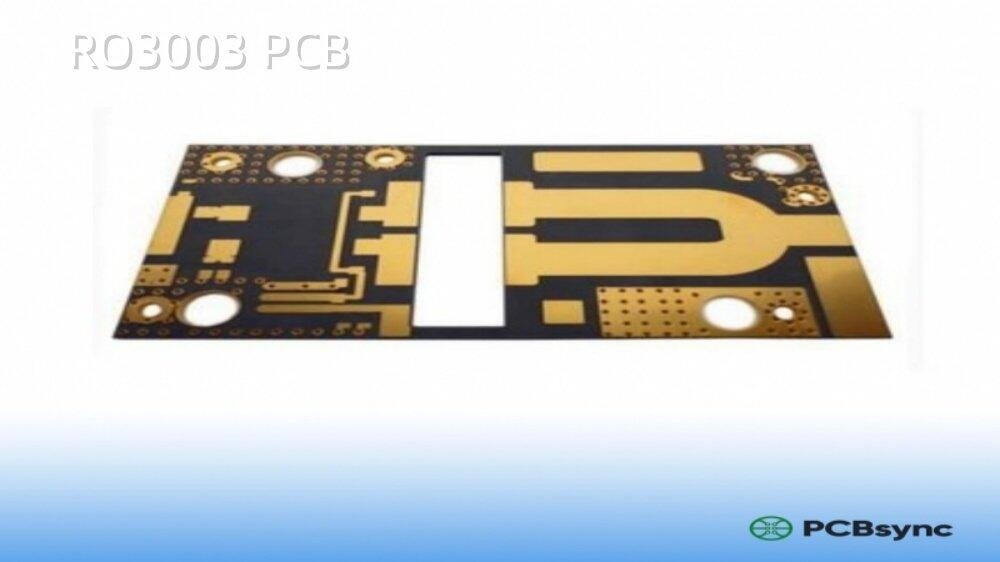
RO3003
3.00
0.0013
$$$
High-freq up to 10 GHz
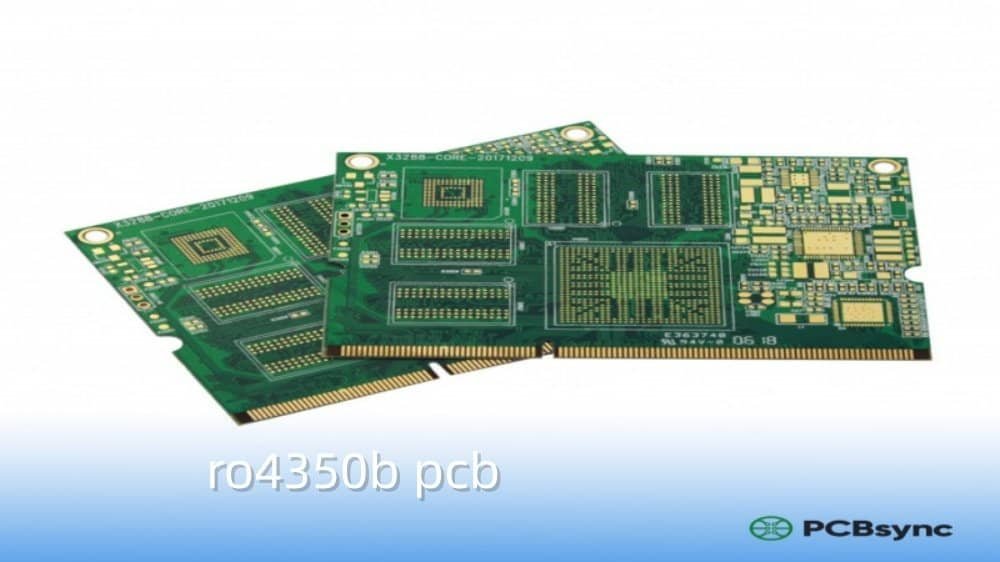
DiClad 870/880 vs RO4350B
RO4350B is probably the most popular Rogers material, and for good reason — it processes like FR-4 and offers good high-frequency performance. But DiClad 870/880 wins when:
You need a lower Dk (2.17-2.33 vs 3.48)
Insertion loss must be minimized (Df of 0.0009-0.0013 vs 0.0037)
Your design requires circuit miniaturization
Choose RO4350B when fabrication simplicity and hybrid FR-4 compatibility are priorities.
DiClad 880 vs RT/duroid 5880
These materials have nearly identical electrical specs (Dk ~2.20, Df ~0.0009). The differences:
RT/duroid 5880 uses microfiber glass reinforcement (better for thin constructions)
1. What is the dielectric constant of DiClad 870/880?
DiClad 870 has a dielectric constant (Dk) of 2.33 ± 0.04 at 10 GHz, while DiClad 880 offers an even lower Dk of 2.17 to 2.20 depending on the specific grade. Both values remain stable across a wide frequency range, which is essential for predictable RF circuit performance.
2. Is DiClad 870/880 compatible with lead-free soldering?
Yes. Both DiClad 870 and 880 are compatible with lead-free soldering processes up to 260°C peak reflow temperatures. The materials maintain their electrical and mechanical properties through multiple reflow cycles, making them suitable for modern RoHS-compliant manufacturing.
3. Can DiClad 870/880 be used in multilayer PCBs?
Absolutely. DiClad 870/880 laminates work well in multilayer constructions, though you need to account for CTE differences if combining with FR-4 or other materials. Rogers offers compatible bonding films and prepregs (like RO4450 series) for hybrid stackups. For best results, match materials with similar thermal expansion characteristics.
4. What frequency range is DiClad 870/880 suitable for?
DiClad 870/880 performs excellently from DC to well beyond 10 GHz. The materials are commonly used in applications up to 40 GHz and can support millimeter-wave designs with proper attention to loss budgets. The stable Dk and low Df make them particularly strong performers in the 1-20 GHz range that covers most wireless infrastructure and radar applications.
5. How does DiClad 870/880 compare to standard FR-4?
DiClad 870/880 significantly outperforms FR-4 in high-frequency applications. The key differences:
Property
DiClad 880
FR-4
Dk @ 10 GHz
2.17
4.2-4.5
Df @ 10 GHz
0.0009
0.020
Moisture Absorption
0.02%
0.10-0.15%
FR-4’s dissipation factor is roughly 20× higher than DiClad 880, meaning dramatically more signal loss at high frequencies. For circuits above 1 GHz where performance matters, DiClad is the clear choice — though at a higher cost.
Final Thoughts
DiClad 870/880 remains one of the most cost-effective solutions for high-frequency PCB applications requiring low dielectric constant and minimal signal loss. After working with these materials on dozens of projects, I can say they deliver consistent, reliable performance when you follow proper fabrication guidelines.
Quick decision guide:
Choose DiClad 870 for balanced performance and better mechanical handling
Choose DiClad 880 when lowest loss is critical and you can manage the slightly reduced dimensional stability
If you’re transitioning from FR-4 to high-frequency materials for the first time, DiClad offers a good entry point — it’s not as finicky as some pure PTFE materials, yet delivers the electrical performance that serious RF designs demand.
Got questions about specifying DiClad for your project? Drop a comment below or reach out to Rogers’ technical support team — they’re genuinely helpful with material selection questions.
Inquire: Call 0086-755-23203480, or reach out via the form below/your sales contact to discuss our design, manufacturing, and assembly capabilities.
Quote: Email your PCB files to Sales@pcbsync.com (Preferred for large files) or submit online. We will contact you promptly. Please ensure your email is correct.
Notes: For PCB fabrication, we require PCB design file in Gerber RS-274X format (most preferred), *.PCB/DDB (Protel, inform your program version) format or *.BRD (Eagle) format. For PCB assembly, we require PCB design file in above mentioned format, drilling file and BOM. Click to download BOM template To avoid file missing, please include all files into one folder and compress it into .zip or .rar format.