Inquire: Call 0086-755-23203480, or reach out via the form below/your sales contact to discuss our design, manufacturing, and assembly capabilities.
Quote: Email your PCB files to Sales@pcbsync.com (Preferred for large files) or submit online. We will contact you promptly. Please ensure your email is correct.
Notes: For PCB fabrication, we require PCB design file in Gerber RS-274X format (most preferred), *.PCB/DDB (Protel, inform your program version) format or *.BRD (Eagle) format. For PCB assembly, we require PCB design file in above mentioned format, drilling file and BOM. Click to download BOM template To avoid file missing, please include all files into one folder and compress it into .zip or .rar format.
DeskPi Pro Review: Turn Your Raspberry Pi into a Mini PC
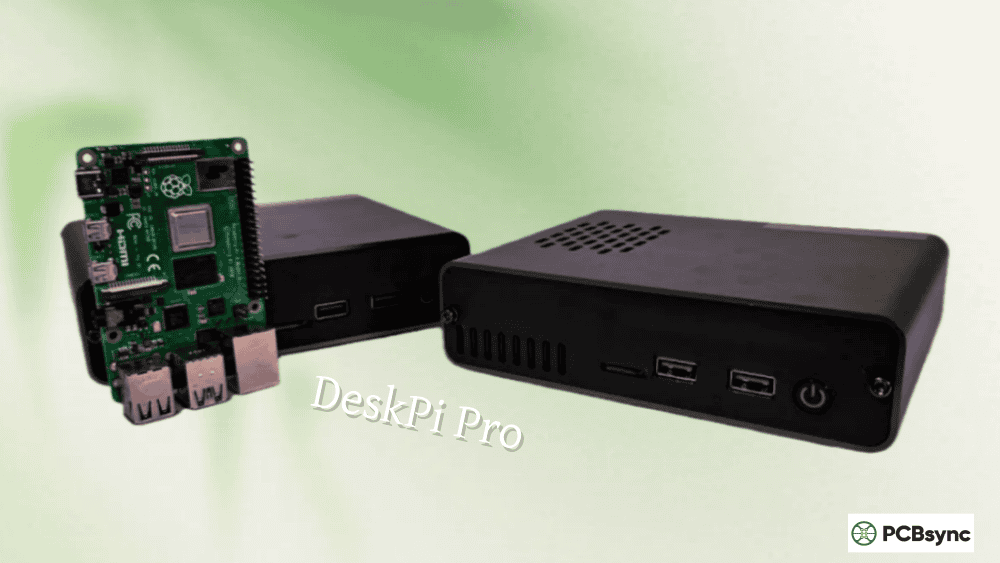
After testing dozens of enclosures over the years, the DeskPi Pro stands out as one of the most ambitious Raspberry Pi cases I’ve encountered. This isn’t just a protective shell. It’s a complete transformation kit that converts your Pi 4 into something resembling a proper desktop computer.
I’ve been running a deskpi pro as my workshop media server for eighteen months now. The combination of integrated storage, proper cooling, and full-size ports addresses the practical limitations that make bare Pi boards frustrating for desktop use. Whether you’re building a home theater PC, a lightweight workstation, or a raspberry pi nas case solution, the DeskPi Pro deserves serious consideration.
Most Raspberry Pi cases focus on protection and maybe basic cooling. The DeskPi Pro takes a fundamentally different approach by reimagining the entire Pi experience. The aluminum NUC-style enclosure houses not just your Pi 4, but an entire ecosystem of expansion boards that transform its capabilities.
Key Features Overview
Feature
Specification
Case Material
Aluminum alloy body, acrylic front/rear panels
Cooling
ICE Tower cooler with PWM-controlled fan
Storage Support
2.5″ SATA HDD/SSD + M.2 SATA (B-key)
Video Output
2x Full-size HDMI (4K capable)
Front Panel
Power button, 2x USB 2.0, microSD slot
Rear Panel
2x USB 3.0, 2x USB 2.0, Ethernet, GPIO, audio
Power Input
USB-C with QC 3.0 / PD 2.0 support
Dimensions
Approximately 120 x 120 x 55mm
Weight
~400g (without drives)
Price
$55-65 USD
The magic happens through clever PCB design. DeskPi’s engineers created extension boards that reroute the Pi’s native ports while adding new functionality. The microSD slot moves to the front panel for easy access. The micro-HDMI ports convert to full-size HDMI. And most importantly, a SATA controller connects storage drives through the USB 3.0 interface.
Unboxing and Build Quality
The DeskPi Pro arrives well-packaged with everything needed for assembly. Inside the box you’ll find the aluminum enclosure, ICE Tower cooler, all necessary cables and adapters, mounting hardware, a QC 3.0 power supply, and clear assembly instructions.
Build quality impressed me immediately. The machined aluminum feels substantial and professional. At roughly 400 grams empty, the case has enough heft to stay planted on your desk without feeling unnecessarily heavy. The acrylic panels on front and rear serve a practical purpose beyond aesthetics. They allow Wi-Fi and Bluetooth signals to pass through while the aluminum body provides shielding and heat dissipation.
What’s Included in the Box
Component
Purpose
Aluminum enclosure
Main housing
ICE Tower cooler
CPU cooling with PWM fan
SATA adapter board
2.5″ drive support
M.2 adapter plate
M.2 SATA SSD mounting
GPIO extension cable
Rear GPIO access
HDMI adapter board
Micro to full-size conversion
microSD extension
Front panel card access
USB extension board
Front panel USB ports
QC 3.0 power supply
5V/3A power delivery
Mounting hardware
Screws, standoffs, thermal pads
Assembly takes about 30 minutes and feels like building a miniature PC. The process involves connecting multiple ribbon cables and small connectors, so patience helps. I recommend working in good lighting and keeping track of which screws go where since several sizes look similar.
Storage Options for Your Raspberry Pi NAS Case
The DeskPi Pro’s storage expansion represents its strongest selling point. The internal SATA interface supports both 2.5-inch drives and M.2 SATA SSDs, making it an excellent raspberry pi nas case for home server applications.
Storage Compatibility
Drive Type
Supported
Notes
2.5″ SATA SSD
Yes
Up to 15mm height
2.5″ SATA HDD
Yes
5400/7200 RPM supported
M.2 SATA SSD
Yes
2242, 2260, 2280 lengths
M.2 NVMe SSD
No
SATA interface only
eMMC modules
No
Not compatible
The SATA connection routes through the Pi’s USB 3.0 port, which limits theoretical maximum throughput to around 400-450 MB/s. In practice, I measured sequential read speeds around 350 MB/s and write speeds around 300 MB/s with a Samsung 860 EVO. These numbers exceed what most home server or media center applications require.
For network-attached storage use, the Gigabit Ethernet becomes the bottleneck anyway. My Samba file transfers consistently hit 90-110 MB/s, which matches the theoretical maximum of Gigabit networking. The deskpi pro handles these sustained transfers without breaking a sweat.
Storage Performance Benchmarks
Test
Result
Sequential Read
~350 MB/s
Sequential Write
~300 MB/s
Random Read (4K)
~35 MB/s
Random Write (4K)
~80 MB/s
Network Transfer (Samba)
90-110 MB/s
One important note: the DeskPi Pro uses an ASMedia USB-to-SATA bridge chip. Earlier versions had compatibility issues with USB boot, but the current V3 revision resolved these problems. If you’re buying new, you should receive the updated hardware that boots reliably from attached SSDs.
Thermal Performance and Cooling
The included ICE Tower cooler transforms the Raspberry Pi 4’s thermal characteristics. This isn’t a simple heatsink with a tiny fan. It’s a proper tower cooler with copper heat pipes and a substantial aluminum fin stack.
Temperature Testing Results
Scenario
Temperature
Idle (fan auto)
35-40°C
Light use (browsing, office)
42-48°C
Heavy load (compilation)
52-58°C
Stress test (30 min)
55-62°C
Overclocked to 2.1GHz
58-65°C
The PWM fan control deserves special mention. After installing the DeskPi software package, you can configure temperature thresholds that determine when the fan activates and at what speed. I run mine with the fan off below 50°C, 25% at 55°C, 50% at 60°C, and 100% above 65°C. This keeps the system silent during normal use while providing aggressive cooling when needed.
Overclocking to 2.0-2.1GHz remains stable with this cooling solution. The thermal headroom means your Pi won’t throttle during demanding tasks like video encoding or compilation jobs.
Software Setup and Configuration
The DeskPi Pro requires software installation for full functionality. Without the driver package, the power button and fan control won’t work properly, and shutdown won’t cut power to the board.
Installation Commands
Connect your assembled DeskPi Pro and run these commands in terminal:
After installation and reboot, the deskpi-config utility lets you adjust fan curves and other settings. The software also enables the safe shutdown function. Pressing the power button sends a proper shutdown signal rather than just cutting power, protecting your filesystem and any connected storage.
For the front USB ports to function, you’ll need to enable the dwc2 overlay. Add this line to /boot/config.txt:
dtoverlay=dwc2,dr_mode=host
DeskPi Pro vs Alternative Raspberry Pi Cases
Several competing products target similar use cases. Here’s how the deskpi pro compares:
Feature
DeskPi Pro
Argon ONE M.2
Argon EON
Geekworm X857
Price
~$60
~$65
~$150
~$35
Storage
2.5″ + M.2 SATA
M.2 SATA
4x SATA bays
2.5″ SATA
Cooling
ICE Tower
Passive + fan
60mm fan
None included
Full HDMI
Yes
Yes
Yes
No
Front USB
Yes
No
No
No
Power Button
Yes
Yes
Yes
No
GPIO Access
Yes
Yes (magnetic)
Yes
Yes
NAS Focused
Partial
No
Yes
No
The DeskPi Pro occupies a middle ground between simple storage cases and dedicated NAS enclosures. For single-drive desktop or server use, it offers the best combination of features and value. If you need multiple drive bays for a proper raspberry pi nas case with RAID capability, the Argon EON makes more sense despite its higher price.
The DeskPi Pro excels as a Kodi or LibreELEC media center. Full-size HDMI ports eliminate adapter dongles, the SSD provides snappy interface response, and the quiet cooling keeps fan noise from intruding during movies. The IR receiver support (with optional module) enables remote control integration.
Lightweight Desktop Replacement
Running Raspberry Pi OS desktop or Ubuntu feels genuinely usable with SSD storage. Boot times drop from over a minute on microSD to under 20 seconds. Application launches happen instantly instead of with the characteristic SD card delays. For web browsing, document editing, and light development work, the experience approaches that of a budget traditional PC.
Development Server
Local development servers benefit from the reliable storage and good thermals. Running Docker containers, small databases, or development web servers works smoothly. The exposed GPIO maintains access for hardware projects while the professional enclosure keeps everything tidy.
Network Attached Storage
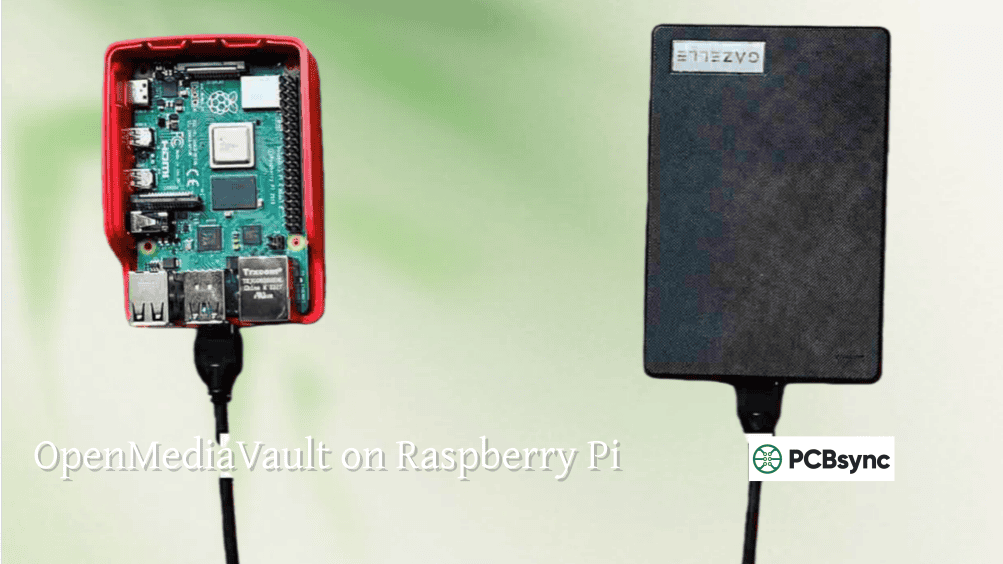
While not a dedicated NAS enclosure, the DeskPi Pro works well for single-drive file serving. Running OpenMediaVault or a simple Samba share provides network storage for home use. The Gigabit Ethernet handles typical home network demands, and the SSD ensures responsive file access.
Useful Resources and Downloads
Resource
URL
Description
DeskPi GitHub
github.com/DeskPi-Team/deskpi
Official drivers and scripts
DeskPi Store
deskpi.com
Purchase and documentation
Raspberry Pi Imager
raspberrypi.com/software
OS installation tool
OpenMediaVault
openmediavault.org
NAS operating system
Armbian
armbian.com
Alternative Linux images
DeskPi Wiki
wiki.deskpi.com
Setup guides and FAQ
Known Limitations and Considerations
No product is perfect. The DeskPi Pro has some limitations worth understanding before purchase.
The M.2 slot only supports SATA drives, not faster NVMe SSDs. This matters less than you might think since USB 3.0 bandwidth limits speeds anyway, but it does restrict future upgrade options if NVMe M.2 drives become significantly cheaper than SATA equivalents.
Assembly requires care with delicate ribbon cables. The FPC connectors that link extension boards use small locking mechanisms that can break if forced. Taking your time during assembly prevents frustration.
The included power supply works well, but some users report occasional low voltage warnings depending on attached peripherals. Using a higher-quality 5V/4A USB-C PD supply resolves this if you encounter issues.
GPIO header pins sit slightly recessed in the rear opening. Some HATs may not seat properly, though standard jumper wire connections work fine.
Frequently Asked Questions
Does the DeskPi Pro support Raspberry Pi 5?
No, the DeskPi Pro is designed specifically for Raspberry Pi 4 Model B. The different board layout and port positions of the Pi 5 make it incompatible. DeskPi offers separate products for other Pi models.
Can I boot directly from the SSD without a microSD card?
Yes, current DeskPi Pro versions (V2 and V3) support USB boot reliably. You’ll need to update your Pi’s bootloader to enable USB boot priority, then install your operating system directly to the SSD. The microSD slot remains available for backup or secondary storage.
What’s the maximum storage capacity supported?
The SATA interface supports drives up to at least 4TB without issues. Users have reported success with larger drives as well. For most raspberry pi nas case applications, 1-2TB provides ample capacity at reasonable cost.
Is the fan noise noticeable during normal use?
With proper software configuration, the fan remains off during idle and light tasks. At low speeds (25-50%), it produces a gentle hum barely audible from a few feet away. Only at full speed during heavy loads does it become clearly audible, and even then it’s not objectionable.
Does the DeskPi Pro support TRIM for SSDs?
The current ASMedia bridge chip in the DeskPi Pro does not pass through TRIM commands. For most users this has minimal practical impact, but those concerned about long-term SSD performance should be aware of this limitation.
Final Verdict
The DeskPi Pro successfully transforms a Raspberry Pi 4 into something that looks and functions like a proper mini computer. The combination of excellent cooling, integrated storage, and thoughtful port arrangement addresses the practical frustrations of using a bare Pi board for desktop applications.
At around $60, the value proposition is strong. You’re getting an ICE Tower cooler, SATA storage adapter, full-size HDMI conversion, and a premium aluminum enclosure. Buying these components separately would cost more and result in a messier setup.
For anyone building a Pi-based media center, lightweight desktop, or single-drive NAS, the deskpi pro earns a strong recommendation. The build quality, thermal performance, and feature set justify the investment over simpler cases that leave you wanting more functionality.
The main scenarios where I’d suggest alternatives are multi-drive NAS builds (consider Argon EON) or projects requiring frequent GPIO access (a more open case design helps). For everything else, the DeskPi Pro represents the current benchmark for turning your Raspberry Pi into a capable mini PC.
Inquire: Call 0086-755-23203480, or reach out via the form below/your sales contact to discuss our design, manufacturing, and assembly capabilities.
Quote: Email your PCB files to Sales@pcbsync.com (Preferred for large files) or submit online. We will contact you promptly. Please ensure your email is correct.
Notes: For PCB fabrication, we require PCB design file in Gerber RS-274X format (most preferred), *.PCB/DDB (Protel, inform your program version) format or *.BRD (Eagle) format. For PCB assembly, we require PCB design file in above mentioned format, drilling file and BOM. Click to download BOM template To avoid file missing, please include all files into one folder and compress it into .zip or .rar format.