Inquire: Call 0086-755-23203480, or reach out via the form below/your sales contact to discuss our design, manufacturing, and assembly capabilities.
Quote: Email your PCB files to Sales@pcbsync.com (Preferred for large files) or submit online. We will contact you promptly. Please ensure your email is correct.
Notes: For PCB fabrication, we require PCB design file in Gerber RS-274X format (most preferred), *.PCB/DDB (Protel, inform your program version) format or *.BRD (Eagle) format. For PCB assembly, we require PCB design file in above mentioned format, drilling file and BOM. Click to download BOM template To avoid file missing, please include all files into one folder and compress it into .zip or .rar format.
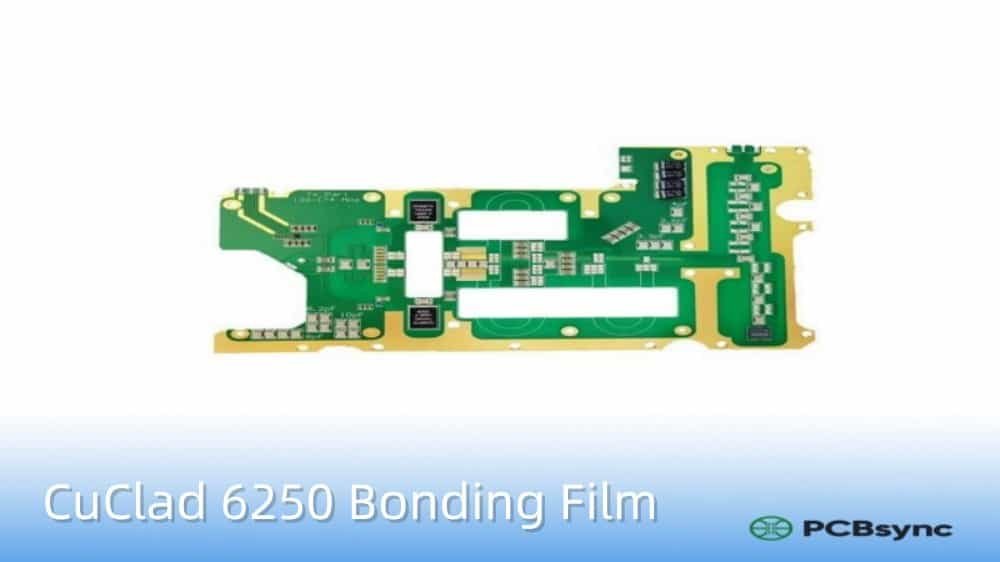
If you’ve spent any time working with PTFE-based multilayer PCBs for RF or microwave applications, you’ve probably encountered the challenge of bonding these notoriously difficult-to-bond materials. The CuClad 6250 Bonding Film from Rogers Corporation offers a practical solution that I’ve relied on across numerous stripline and multilayer builds—particularly when thermal sensitivity is a concern.
This guide covers everything you need to know about CuClad 6250 Bonding Film: its electrical and mechanical properties, step-by-step lamination procedures, typical applications, and how it compares to alternatives like CuClad 6700. Whether you’re designing radar front-ends, communication filters, or satellite systems, understanding this material can save you significant headaches during fabrication.
CuClad 6250 Bonding Film is a low melting point thermoplastic bonding film manufactured by Rogers Corporation (originally developed by Arlon Materials for Electronics before the acquisition). It’s specifically designed for laminating stripline and multilayer circuits built from CuClad laminates or other PTFE-based substrates.
The film is an ethylene-acrylic acid (EAA) thermoplastic copolymer. Unlike thermoset prepregs that cure permanently during lamination, CuClad 6250 can be reheated, remelted, and reflowed—making rework possible when things don’t go right the first time. This characteristic alone makes it invaluable during prototyping phases.
Rogers supplies CuClad 6250 in both 24-inch (610mm) roll form and sheeted formats, giving fabricators flexibility depending on their production setup and panel sizes.
Key Properties and Specifications of CuClad 6250 Bonding Film
Understanding the material specifications is critical for proper stackup design and impedance calculations. Here’s a comprehensive breakdown of what CuClad 6250 brings to the table.
Electrical Properties
Property
Value
Test Condition
Dielectric Constant (Dk)
2.32
10 GHz
Dissipation Factor (Df)
0.0013 – 0.0015
10 GHz
Volume Resistivity
>10^13 Ω·cm
–
The Dk of 2.32 falls within the midrange of CuClad and DiClad microwave PCB substrate product lines. This matching ensures uniform reproducibility of electrical performance when bonding these materials together—your impedance calculations won’t be thrown off by a wildly different dielectric constant at the bond layer.
The low dissipation factor (loss tangent) of 0.0013-0.0015 means minimal signal loss through the bonding layer, which matters significantly at microwave frequencies where every fraction of a dB counts.
Mechanical and Physical Properties
Property
Value
Notes
Thickness
0.0015″ (0.038mm)
Standard available thickness
Melt Temperature
213°F (101°C)
Thermoplastic transition point
Bonding Temperature
250°F – 300°F (121°C – 149°C)
Recommended processing window
Available Width
24″ (610mm)
Roll and sheet formats
Thermal Properties
Property
Value
Operating Temperature Range
-55°C to +125°C
Processing Temperature
275°F (135°C) suggested set point
Maximum Temperature
300°F (149°C)
The relatively low melt temperature of 213°F (101°C) is one of CuClad 6250’s defining characteristics. This allows bonding of pressure-sensitive and temperature-sensitive dielectric materials—like foam materials—that would be damaged by the higher temperatures required for alternatives like CuClad 6700.
Why Choose CuClad 6250 Bonding Film?
After working with various bonding solutions over the years, several factors make CuClad 6250 stand out for specific applications.
Advantages for RF/Microwave Multilayers
Low-Temperature Processing: The 250°F-300°F bonding window means you can laminate heat-sensitive substrates without degradation. Traditional RF thermoplastic films often require significantly higher temperatures that can damage certain foam dielectrics or cause excessive z-axis expansion.
Excellent Dk Matching: With a dielectric constant of 2.32, CuClad 6250 matches well with common PTFE-based laminates in the CuClad and DiClad families. This eliminates the impedance discontinuities that can occur when bonding layers have mismatched electrical properties.
Rework Capability: As a thermoplastic, the film can be reheated and reflowed. If you discover an alignment issue or need to replace an inner layer, rework is possible—unlike thermoset systems where you’d need to scrap the entire assembly.
Low Electrical Loss: The dissipation factor of 0.0013-0.0015 ensures minimal insertion loss contribution from the bonding layers themselves.
No Shelf Life Limitations: When stored properly in the original sealed packaging at temperatures not exceeding 25°C (77°F) and 70% relative humidity, CuClad 6250 has no shelf life restrictions. This is a significant advantage over some thermoset prepregs that require refrigerated storage and have finite shelf lives.
Common Use Cases
CuClad 6250 Bonding Film finds application across several RF/microwave domains:
Stripline circuitry requiring buried signal layers
Multilayer PTFE constructions for filters and couplers
Hybrid constructions bonding circuit boards to thick metal heat sinks (aluminum backplanes)
Radar systems requiring high-reliability multilayer builds
Communication systems operating at microwave frequencies
Satellite and space applications (though CuClad 6700 may be preferred for NASA/ESA compliance)
Proper lamination technique is critical for achieving reliable bonds with consistent electrical performance. Here’s the process I’ve found works reliably.
Pre-Lamination Surface Preparation
PTFE materials are notoriously difficult to bond due to their low surface energy. Proper surface treatment is essential.
FluoroEtch Treatment: Rogers recommends FluoroEtch® Fluoropolymer Etchant (from Acton Technologies) to maximize adhesion of bonding films to PTFE surfaces. This sodium-based chemical etchant modifies the PTFE surface chemistry, creating reactive sites that promote adhesion.
Gas Plasma Treatment: Alternatively, gas plasma cycles can effectively promote adhesion to PTFE surfaces. This applies to both plated through-hole preparation and multilayer lamination interfaces.
Important: After surface preparation, store panels in a clean, dry environment. Layup and lamination should occur as soon as possible—preferably within 24 hours of etching/surface preparation—to prevent surface contamination or degradation.
Lamination Procedure
CuClad 6250 bonding films come ready to use and require no preparation. Handle and cut material in a clean, dust-free environment, and always use gloves to prevent transfer of oils from skin contact.
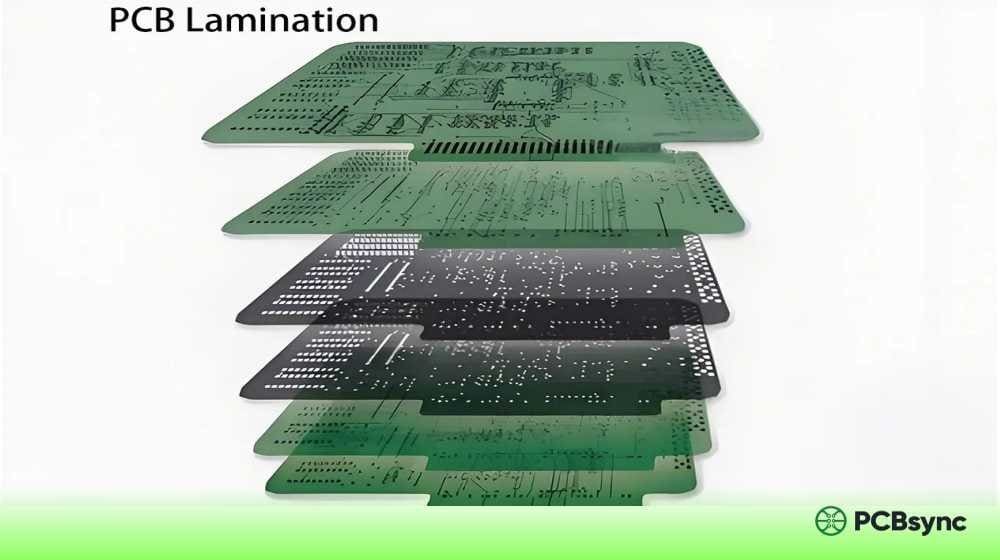
Step 1: Layup
Lay the bonding film between the layers to be laminated. Use enough film to:
Encapsulate the thickness of copper traces and patterns
Provide additional thickness as dielectric if required by your stackup design
Step 2: Temperature Monitoring
Place a thermocouple into the laminate at the edge of the bond line (outside the working area of the multilayer board) to measure actual working temperature at the bonding interface. This is critical—press platen temperature doesn’t always reflect what’s happening at the bond line.
Step 3: Press Setup and Temperature
Preheat the press to approximately 275°F (135°C). Bonding occurs at temperatures from 250°F minimum to 300°F maximum.
Step 4: Apply Pressure
Apply pressure of approximately 100 psi. If lower pressure doesn’t result in sufficient flow for more complex circuit fill (dense trace patterns), pressure up to 200 psi may be used. Ensure sufficient padding to develop uniform pressure across the panel.
Step 5: Temperature Hold
Once the thermocouple confirms the bond line has reached minimum 250°F (maximum 300°F), hold at temperature for an additional 10 minutes. This step is critical—insufficient time at temperature will result in a failed or spotty bond.
Step 6: Controlled Cooling
Cool under pressure at a maximum cool-down rate of 10°F/min. Do not remove the panel from the press until the temperature drops below 125°F.
Transfer Option: If hot-press availability is limited, you can transfer to a cooling press while still hot. Maintain pressure equal to hot pressure during transfer. Material should not be allowed to sit on cold surfaces during transfer, and forced cooling faster than 10°F/min without adequate pressure may cause partial debonding or board warpage.
CuClad 6250 vs CuClad 6700: Choosing the Right Bonding Film
Rogers offers both CuClad 6250 and CuClad 6700 bonding films for PTFE multilayer applications. Understanding when to use each is important for successful fabrication.
Comparison Table
Property
CuClad 6250
CuClad 6700
Composition
Ethylene-acrylic acid (EAA)
Chlorotrifluoroethylene (CTFE)
Dielectric Constant (Dk)
2.32
2.30 – 2.35
Dissipation Factor (Df)
0.0013 – 0.0015
0.0025
Melt Temperature
213°F (101°C)
397°F (203°C)
Bonding Temperature Range
250°F – 300°F
400°F – 475°F
Hold Time
10 minutes minimum
15 minutes minimum
Cool to Before Removal
Below 125°F
Below 200°F
Available Thicknesses
0.0015″ (0.038mm)
0.0015″ (0.038mm), 0.003″ (0.076mm)
NASA/ESA Compliance
Not specified
Compliant
Flame Retardant
No
Intrinsic
When to Use CuClad 6250
Choose CuClad 6250 when:
Bonding temperature-sensitive materials (foams, certain dielectrics)
Lower processing temperatures are required
Your application doesn’t require high-temperature exposure during assembly or operation
Rework capability is important during development
When to Use CuClad 6700
Choose CuClad 6700 when:
Higher operating temperatures are expected
NASA/ESA outgassing compliance is required (space applications)
Intrinsic flame retardance is needed
Multiple lamination cycles with higher subsequent temperatures are anticipated
You need the 0.003″ thickness option for thicker dielectric spacing
Storage and Handling Best Practices
Proper storage ensures consistent material performance throughout your inventory.
Storage Requirements
Requirement
Specification
Temperature
≤25°C (77°F)
Relative Humidity
≤70%
Light Exposure
Keep away from direct sunlight
Packaging
Store in original sealed package
Position
Store rolls on edge (upright) or suspended by roll cores
Why position matters: Storing film rolls flat can create creased areas or flat spots from the weight of the roll, leading to thickness variations and potential voids during lamination.
Shelf Life
When stored under the conditions specified above, there are no shelf-life limitations for CuClad 6250 bonding film. This is a significant advantage over many thermoset prepreg systems that require refrigerated storage and have limited working lives.
Troubleshooting Common Lamination Issues
Based on experience and fabrication guidelines, here are solutions to common problems encountered when working with CuClad 6250.
Failed or Spotty Bonds
Cause: Insufficient hold time at bonding temperature.
Solution: Ensure the thermocouple at the bond line confirms the material has reached minimum 250°F, then hold for at least 10 minutes. Don’t trust platen temperature alone.
Partial Debonding After Press Removal
Cause: Cooling too fast or removing from press before adequate cooling.
Solution: Maintain 10°F/min maximum cool-down rate under pressure. Don’t remove until temperature is below 125°F.
Board Warpage
Cause: Forced cooling without adequate pressure, or placing hot panel on cold surfaces.
Solution: Keep panel under pressure during entire cool-down. If transferring to cooling press, maintain equal pressure and don’t let panel contact cold surfaces.
Poor Adhesion to PTFE Surfaces
Cause: Inadequate surface preparation or contamination.
Solution: Use FluoroEtch or plasma treatment. Complete lamination within 24 hours of surface prep. Handle with gloves in clean environment.
Insufficient Circuit Fill
Cause: Pressure too low for trace density.
Solution: Increase pressure up to 200 psi maximum. Ensure adequate padding for uniform pressure distribution.
Applications in RF and Microwave PCB Design
CuClad 6250 Bonding Film serves critical functions across numerous high-frequency applications. Here’s where the material excels.
Stripline Constructions
Stripline transmission lines require a signal trace sandwiched between two ground planes with controlled dielectric spacing. CuClad 6250 provides the bonding layer while maintaining consistent Dk and low loss—essential for predictable characteristic impedance.
Multilayer Microwave Circuits
Complex microwave circuits often require multiple signal layers with precisely controlled dielectric thicknesses. The ability to bond PTFE layers while matching the electrical properties of the base laminate makes CuClad 6250 well-suited for these builds.
Radar System Components
Military and commercial radar systems demand high reliability and consistent RF performance. CuClad 6250’s combination of low loss, Dk matching, and proven track record in high-reliability applications makes it a common choice for radar front-end PCBs.
Communication System Filters and Couplers
Microwave filters and directional couplers require tight control of dielectric properties and low insertion loss. The material’s electrical consistency supports repeatable filter responses across production runs.
Heat Sink Attachment
CuClad 6250 can bond circuit boards to thick aluminum heat sinks—useful for high-power amplifier modules where thermal management is critical. The low bonding temperature prevents thermal damage to active components that may already be attached.
Useful Resources and Documentation
For engineers working with CuClad 6250 Bonding Film, these resources provide essential technical data and support.
Safety Data Sheet (SDS): Available on Rogers website
Technical Support Tools
Rogers Bonding Material Properties Tool: Compare and select bonding materials based on design attributes
Rogers Technology Support Hub: Access calculators, conversion tools, and technical papers
Rogers Laminates Properties Tool: Sort and compare all high-frequency laminates by properties
Material Database References
MatWeb Material Database: Technical property data for CuClad 6250 and comparison materials
EverythingRF Product Listing: Specifications and pricing requests
Sample Requests
Rogers Corporation offers sample material through their online request system for design evaluation and process qualification.
Frequently Asked Questions About CuClad 6250 Bonding Film
What temperature does CuClad 6250 bond at?
CuClad 6250 bonds in the temperature range of 250°F to 300°F (121°C to 149°C), with 275°F (135°C) as the suggested press set temperature. The actual bonding interface should reach minimum 250°F as confirmed by thermocouple measurement at the bond line.
Can CuClad 6250 be reworked?
Yes. As a thermoplastic bonding film, CuClad 6250 can be reheated to remelt and reflow. This allows rework of multilayer assemblies if alignment issues or defects are discovered—a significant advantage over thermoset bonding systems during development and prototyping.
What is the shelf life of CuClad 6250?
There are no shelf-life limitations for CuClad 6250 when stored properly. Keep material in the original sealed package at temperatures not exceeding 25°C (77°F) and 70% relative humidity, away from direct sunlight. Store roll forms on edge or suspended by cores to prevent flat spots.
Is CuClad 6250 suitable for space applications?
While CuClad 6250 works well for many applications, Rogers CuClad 6700 is specifically noted as compliant with NASA/ESA guidelines for satellite and space applications due to its low outgassing characteristics. If your design requires NASA outgassing compliance, CuClad 6700 may be the better choice.
How does CuClad 6250 compare to thermoset prepregs?
CuClad 6250 is a thermoplastic film offering lower processing temperatures (250-300°F vs. 350-400°F+ for many thermosets), rework capability, and no shelf-life limitations. Thermoset prepregs offer higher temperature ratings after cure and may be preferred for sequential lamination of higher layer count boards where multiple high-temperature cycles are required.
Conclusion
CuClad 6250 Bonding Film fills an important niche in RF and microwave PCB fabrication—providing a low-temperature, reworkable bonding solution with electrical properties matched to common PTFE-based laminates. Its 250°F-300°F processing window makes it the go-to choice when temperature-sensitive materials are involved, while its indefinite shelf life simplifies inventory management compared to thermoset alternatives.
For applications requiring higher operating temperatures or space-qualified materials, CuClad 6700 offers similar functionality with enhanced thermal capability and NASA/ESA compliance. Understanding when to use each material—and following proper lamination procedures—leads to reliable multilayer builds with consistent RF performance.
The key to success with CuClad 6250 lies in proper surface preparation, accurate temperature monitoring at the bond line, adequate hold time, and controlled cooling. Get these parameters right, and you’ll achieve the strong, consistent bonds that high-reliability microwave circuits demand.
Inquire: Call 0086-755-23203480, or reach out via the form below/your sales contact to discuss our design, manufacturing, and assembly capabilities.
Quote: Email your PCB files to Sales@pcbsync.com (Preferred for large files) or submit online. We will contact you promptly. Please ensure your email is correct.
Notes: For PCB fabrication, we require PCB design file in Gerber RS-274X format (most preferred), *.PCB/DDB (Protel, inform your program version) format or *.BRD (Eagle) format. For PCB assembly, we require PCB design file in above mentioned format, drilling file and BOM. Click to download BOM template To avoid file missing, please include all files into one folder and compress it into .zip or .rar format.