Inquire: Call 0086-755-23203480, or reach out via the form below/your sales contact to discuss our design, manufacturing, and assembly capabilities.
Quote: Email your PCB files to Sales@pcbsync.com (Preferred for large files) or submit online. We will contact you promptly. Please ensure your email is correct.
Notes: For PCB fabrication, we require PCB design file in Gerber RS-274X format (most preferred), *.PCB/DDB (Protel, inform your program version) format or *.BRD (Eagle) format. For PCB assembly, we require PCB design file in above mentioned format, drilling file and BOM. Click to download BOM template To avoid file missing, please include all files into one folder and compress it into .zip or .rar format.
As a PCB engineer with over a decade in electronics manufacturing, I’ve seen countless boards fail prematurely—not because of design flaws, but because they lacked proper protection. Moisture creeps in. Dust accumulates. Salt spray corrodes traces. These problems are preventable with one critical process: conformal coating.
This guide covers everything you need to know about conformal coating—from selecting the right material for your application to troubleshooting common defects. Whether you’re protecting consumer electronics or mission-critical aerospace assemblies, the principles here will help you make informed decisions.
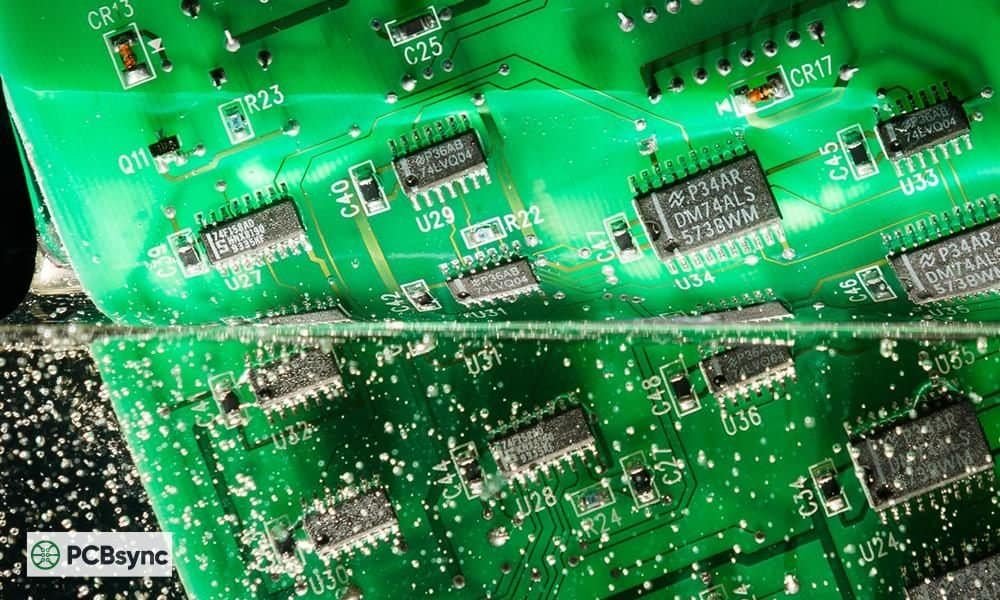
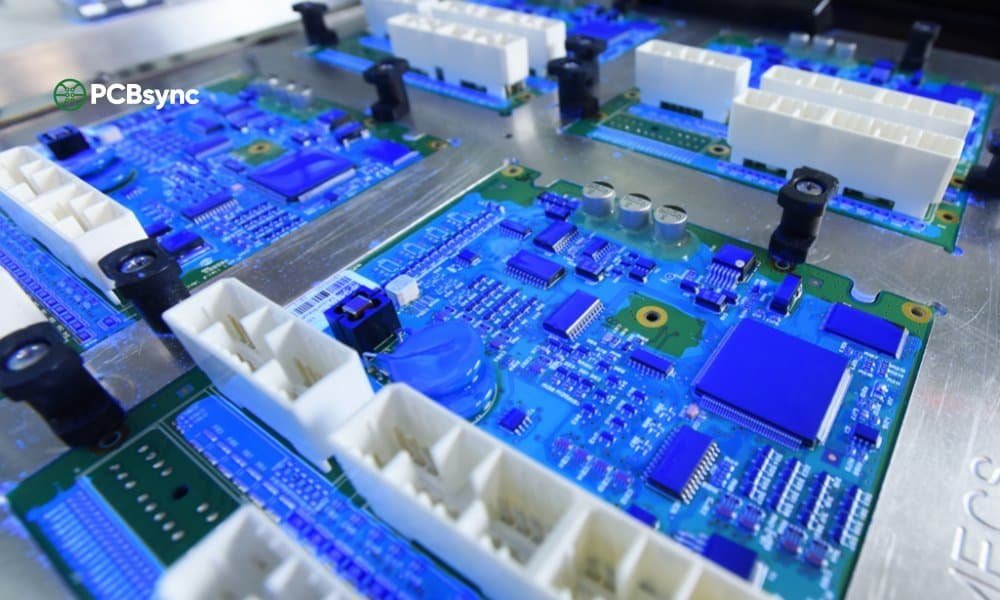
Conformal coating is a thin, protective polymeric film applied to printed circuit boards (PCBs) and electronic assemblies. The term “conformal” refers to how the coating conforms to the irregular topography of the board—covering solder joints, component leads, exposed traces, and other vulnerable areas without adding significant bulk.
Typical conformal coating thickness ranges from 25 to 250 micrometers (μm), or roughly 1 to 5 mils. Unlike potting compounds that completely encapsulate electronics in solid material, conformal coatings maintain the board’s original profile while providing substantial environmental protection.
Why Conformal Coating Matters
A bare PCB is vulnerable to numerous environmental threats. Conformal coating protects against:
Moisture and humidity that can cause corrosion and electrical leakage
Dust and airborne contaminants that create conductive paths
Chemical exposure including cleaning agents, fuel vapors, and industrial pollutants
Salt spray in marine or coastal applications
Thermal shock and temperature cycling
Mechanical vibration and physical stress
Types of Conformal Coating
Each conformal coating chemistry offers distinct performance characteristics. Selecting the right type depends on your operating environment, processing requirements, and rework expectations.
Acrylic Resin (AR)
Acrylic conformal coatings are the workhorse of the industry. They’re economical, easy to apply, and simple to remove—making them ideal for prototyping and products requiring field serviceability.
Key Properties: High dielectric strength, good moisture resistance, fast drying at room temperature, easy removal with common solvents (IPA, acetone), operating temperature range: -65°C to +125°C.
Limitations: Poor resistance to solvents and fuel vapors. Not suitable for harsh chemical environments.
Best Applications: Consumer electronics, LED lighting, general-purpose protection, products requiring frequent rework.
Silicone Resin (SR)
Silicone coatings excel in extreme temperature environments. Their inherent flexibility makes them resistant to thermal cycling and mechanical vibration.
Key Properties: Excellent temperature range: -65°C to +200°C, superior flexibility and vibration resistance, good moisture and salt spray protection.
Limitations: Higher moisture permeability than other coatings. Difficult to remove—requires specialized solvents and mechanical agitation.
Urethane coatings provide excellent chemical and moisture resistance with good abrasion protection. They’re the go-to choice when exposure to solvents or fuel vapors is a concern.
Key Properties: Superior moisture and chemical resistance, excellent abrasion resistance, solvent-resistant once cured.
Limitations: Very difficult to remove. Longer cure times than acrylics. May yellow with age.
Best Applications: Aerospace fuel systems, marine electronics, military equipment, industrial environments with chemical exposure.
Epoxy Resin (ER)
Epoxy coatings create a hard, durable finish with excellent humidity and chemical resistance. They’re typically two-part systems requiring precise mixing.
Key Properties: Outstanding humidity barrier, excellent chemical and abrasion resistance, non-permeable (unlike other traditional coatings).
Limitations: Rigid—prone to cracking under thermal stress. Extremely difficult to remove. Short pot life after mixing.
Best Applications: Potting applications, harsh industrial environments, boards that won’t require rework.
Parylene (XY)
Parylene is applied through vapor deposition rather than liquid application. It produces ultra-thin, pinhole-free coatings with exceptional barrier properties.
Key Properties: Uniform thickness even on complex geometries, excellent dielectric properties, superior moisture and chemical barrier, biocompatible for medical applications.
Limitations: Requires specialized CVD equipment. Very difficult to remove (plasma etching often required). Higher cost per unit.
Best Applications: Medical implants, aerospace, military, MEMS devices, high-reliability applications.
Conformal Coating Comparison Table
Property
Acrylic
Silicone
Urethane
Epoxy
Parylene
Temp Range
-65 to +125°C
-65 to +200°C
-65 to +125°C
-65 to +150°C
-200 to +150°C
Moisture Resistance
Good
Good
Excellent
Excellent
Excellent
Chemical Resistance
Poor
Good
Excellent
Excellent
Excellent
Ease of Removal
Easy
Difficult
Difficult
Very Difficult
Very Difficult
Cost
Low
Medium
Medium
Medium
High
IPC Thickness Standards by Coating Type
The IPC-A-610 standard specifies acceptable dry film thickness ranges:
Coating Type
Minimum Thickness
Maximum Thickness
Acrylic (AR)
30 μm (0.03 mm)
130 μm (0.13 mm)
Silicone (SR)
50 μm (0.05 mm)
210 μm (0.21 mm)
Urethane (UR)
30 μm (0.03 mm)
130 μm (0.13 mm)
Epoxy (ER)
30 μm (0.03 mm)
130 μm (0.13 mm)
Parylene (XY)
0.5 μm
76 μm
Conformal Coating Application Methods
The application method you choose depends on production volume, board complexity, and quality requirements.
Brush Application
Brushing is the simplest and most accessible method—essentially painting the coating onto the board. An operator manually applies coating using a brush, targeting specific areas or covering the entire board.
Advantages: Low equipment cost, no masking required for selective coating, excellent for repair and rework, suitable for low-volume production.
Disadvantages: Labor-intensive and slow, inconsistent thickness and coverage, prone to bubbles from brush strokes.
Spray Application
Spray coating uses atomized coating material applied either manually or through automated systems. Offers more uniform coverage than brushing.
Advantages: Faster than brushing, more uniform coverage, suitable for medium to high volumes, can be automated.
Disadvantages: Overspray requires masking, potential for “3D shadowing” on tall components, ventilation requirements.
Selective Coating
Selective coating uses robotic systems to apply coating precisely where needed, eliminating masking requirements. A programmable robotic nozzle follows a pre-defined path.
Advantages: Eliminates masking (major labor savings), highly precise and repeatable, ideal for complex board layouts, reduced material waste.
Disadvantages: High equipment cost, programming time for new board designs.
Dip Coating
Dip coating involves immersing the entire PCB into a tank of coating material. Film thickness is determined by immersion time, withdrawal speed, and coating viscosity.
Advantages: Excellent coverage including under components, fast cycle time, consistent results, good for double-sided coating.
Proper curing is essential for achieving the coating’s full protective properties.
Air/Evaporation Curing
Most solvent-based acrylics cure through simple solvent evaporation at room temperature. Tack-free time can range from minutes to hours, with full cure taking 24-72 hours.
Heat Curing
Elevated temperature accelerates curing for many coating types. A two-step approach (lower temperature first, then higher) often produces better results by allowing volatile solvents to escape before the surface skins over.
UV Curing
UV-cure coatings polymerize in seconds under ultraviolet light—ideal for high-throughput production. Shadow areas under components require a secondary cure mechanism (typically moisture cure).
Curing Time Reference
Coating Type
Tack-Free Time
Full Cure Time
Acrylic
10-30 minutes
24-72 hours
Silicone
2-8 hours
12 hours – 7 days
Urethane
5-15 minutes
24-48 hours
UV-Cure
Seconds (under UV)
Immediate + secondary
Common Conformal Coating Defects and Solutions
Even experienced operators encounter coating defects. Understanding the root causes enables quick troubleshooting.
Dewetting
Appearance: Coating beads up and pulls away from certain areas, leaving bare substrate exposed.
Causes: Coating too thick, improper atomization during spraying, solvent evaporates too quickly.
Solutions: Reduce coating viscosity, adjust spray parameters, increase flash-off time before cure.
Defect Troubleshooting Quick Reference
Defect
Primary Cause
First Step Solution
Dewetting
Surface contamination
Clean with IPA before coating
Delamination
Contamination or insufficient tack time
Clean surface, wait longer between coats
Bubbles
Thick application or fast cure
Apply thinner, use staged cure
Orange Peel
Viscosity or atomization issues
Adjust viscosity, optimize spray settings
Cracking
Thick coating or thermal stress
Reduce thickness, slower cure
Wicking
Low viscosity, poor masking
Increase viscosity, improve masking
Conformal Coating Removal and Rework
When repairs are needed, the coating must be removed to access components. The removal method depends on the coating type.
Solvent Removal
Best for: Acrylic, silicone, urethane coatings.
Apply solvent to localized area using brush or swab. Allow soak time, then gently agitate. Acrylic removes quickly; silicone and urethane require longer soak times.
Thermal Removal
Best for: Most coating types except thick silicone.
Use soldering iron to burn through coating during rework, or hot-air tool to soften larger areas for peeling. Monitor temperature to avoid component damage.
Mechanical Removal
Best for: Epoxy, parylene, thick urethane.
Scraping with dental picks, micro-abrasion using soft abrasive media with compressed air. Work carefully to avoid damaging traces or pads.
Industry Standards and Certifications
Specifying the right standards ensures your conformal coating meets performance requirements.
IPC-CC-830C
The primary specification for conformal coating qualification. Tests include thermal shock, moisture resistance, fungal resistance, and flammability. Replaced MIL-I-46058C (declared inactive in 1998).
IPC-A-610G
Acceptability standard for electronic assemblies. Defines coating coverage requirements and thickness specifications. Categorizes products into three classes:
Class 1 (General Electronics): Consumer products where cosmetic appearance is more important than reliability.
Class 2 (Dedicated Service): Industrial equipment where continued performance and extended life are required.
Class 3 (High Performance): Equipment where continued performance is critical (aerospace, military, medical life support).
Frequently Asked Questions
Is conformal coating waterproof?
Traditional conformal coatings (acrylic, silicone, urethane) are semi-permeable—they resist moisture but are not fully waterproof. They protect against humidity and condensation but cannot withstand immersion. Parylene, epoxy coatings, and potting compounds offer better water barrier properties for applications requiring immersion protection.
How thick should conformal coating be?
Per IPC-A-610, acrylic, urethane, and epoxy coatings should be 30-130 μm thick. Silicone coatings have a wider range of 50-210 μm. Parylene can be as thin as 0.5 μm. Thicker isn’t always better—excessive thickness can cause cracking, increase stress on components, and trap more moisture.
Can conformal coating be applied after assembly?
Yes, conformal coating is typically applied as the final step in PCB assembly after soldering and cleaning. Some specialized coatings can be applied in the field for repairs. Always ensure the board is thoroughly cleaned before coating to prevent contamination-related defects.
How do I know which coating type to choose?
Start with your operating environment. For extreme temperatures, choose silicone. For chemical exposure, select urethane. For ease of rework, go with acrylic. For medical or aerospace applications requiring the highest reliability, consider parylene. Also factor in production volume, budget, and whether field rework is expected.
How long does conformal coating last?
With proper application and appropriate coating selection for the environment, conformal coating can protect electronics for 10-20+ years. UV-resistant coatings maintain clarity and protection even in outdoor applications. The coating’s lifespan depends heavily on matching the coating properties to the actual operating conditions.
Useful Resources
Industry Standards
IPC-CC-830C: Qualification and Performance of Electrical Insulating Compound
IPC-A-610G: Acceptability of Electronic Assemblies
IPC-HDBK-830: Conformal Coating Handbook
IPC-7711/7721: Rework, Modification and Repair of Electronic Assemblies
Conformal coating is a critical but often overlooked aspect of electronics reliability. The right coating, properly applied, can mean the difference between a product that fails in months and one that performs for decades.
Key takeaways to remember:
Match the coating chemistry to your operating environment
Design your PCB with coating in mind from the start
Invest in proper surface preparation—contamination is the primary cause of coating failures
Follow IPC standards for thickness and coverage
Establish clear acceptance criteria before production
Whether you’re coating a few prototype boards by hand or running thousands through an automated selective coating line, the fundamentals remain the same: clean surfaces, appropriate materials, controlled application, and thorough inspection.
Inquire: Call 0086-755-23203480, or reach out via the form below/your sales contact to discuss our design, manufacturing, and assembly capabilities.
Quote: Email your PCB files to Sales@pcbsync.com (Preferred for large files) or submit online. We will contact you promptly. Please ensure your email is correct.
Notes: For PCB fabrication, we require PCB design file in Gerber RS-274X format (most preferred), *.PCB/DDB (Protel, inform your program version) format or *.BRD (Eagle) format. For PCB assembly, we require PCB design file in above mentioned format, drilling file and BOM. Click to download BOM template To avoid file missing, please include all files into one folder and compress it into .zip or .rar format.