Inquire: Call 0086-755-23203480, or reach out via the form below/your sales contact to discuss our design, manufacturing, and assembly capabilities.
Quote: Email your PCB files to Sales@pcbsync.com (Preferred for large files) or submit online. We will contact you promptly. Please ensure your email is correct.
Notes: For PCB fabrication, we require PCB design file in Gerber RS-274X format (most preferred), *.PCB/DDB (Protel, inform your program version) format or *.BRD (Eagle) format. For PCB assembly, we require PCB design file in above mentioned format, drilling file and BOM. Click to download BOM template To avoid file missing, please include all files into one folder and compress it into .zip or .rar format.
Complete guide to CMOS technology explained for engineers. Learn how complementary metal-oxide-semiconductor works, NMOS/PMOS transistors, fabrication process, advantages, applications in microprocessors, memory, and image sensors.
Look at any electronic device around you—your smartphone, laptop, smartwatch, or even your car’s dashboard—and you’re looking at the triumph of CMOS technology. This fabrication process powers approximately 99% of all integrated circuits manufactured today, from the processor running your computer to the image sensor in your camera.
As a PCB engineer who has worked with countless ICs over the years, I can tell you that understanding CMOS explained at a fundamental level isn’t just academic knowledge—it directly impacts how you design circuits, select components, and troubleshoot problems. This comprehensive guide breaks down everything you need to know about how complementary metal-oxide-semiconductor technology makes modern electronics possible.
CMOS technology (Complementary Metal-Oxide-Semiconductor) is a semiconductor fabrication process that uses complementary pairs of p-type and n-type MOSFETs (Metal-Oxide-Semiconductor Field-Effect Transistors) to create integrated circuits. The “complementary” aspect is crucial—it means using both transistor types together in a way that minimizes power consumption while maximizing performance.
The term “metal-oxide-semiconductor” describes the physical structure of these transistors: a metal gate electrode sits atop an oxide insulator layer, which rests on a semiconductor substrate. Originally, aluminum served as the gate material, but modern processes use polysilicon, and advanced nodes have returned to metal gates with high-κ dielectric materials.
Frank Wanlass and Chih-Tang Sah at Fairchild Semiconductor invented CMOS in 1963, presenting their work at the International Solid-State Circuits Conference. Wanlass received the patent (US 3,356,858) in 1967. RCA commercialized the technology in the late 1960s under the trademark “COS-MOS,” and the name eventually standardized to CMOS by the early 1970s.
What made CMOS revolutionary? Two defining characteristics: high noise immunity and extremely low static power consumption. These properties weren’t just incremental improvements—they enabled an entirely new class of electronic devices that simply weren’t possible with earlier technologies.
How CMOS Technology Works: The Fundamentals
To truly understand CMOS explained, you need to grasp how the complementary transistor pairs operate together. Let’s break this down step by step.
Understanding NMOS and PMOS Transistors
CMOS circuits use two types of MOSFETs working in tandem:
NMOS (N-channel MOSFET):
Has n-type source and drain regions in a p-type substrate
Conducts when a HIGH voltage (logic 1) is applied to the gate
Uses electrons as majority charge carriers
Faster than PMOS due to higher electron mobility
Pulls output toward ground (logic 0) when conducting
PMOS (P-channel MOSFET):
Has p-type source and drain regions in an n-type substrate (or n-well)
Conducts when a LOW voltage (logic 0) is applied to the gate
Uses holes as majority charge carriers
Slower than NMOS due to lower hole mobility
Pulls output toward supply voltage (logic 1) when conducting
The Complementary Operation Principle
The genius of CMOS technology lies in how these transistors work together. In any properly designed CMOS logic gate:
When NMOS transistors conduct, PMOS transistors are off
When PMOS transistors conduct, NMOS transistors are off
There’s never a direct current path from power supply to ground in steady state
This complementary switching behavior means the circuit draws significant current only during the brief moment when it’s switching between states. In static conditions—whether outputting logic 0 or logic 1—virtually no current flows through the circuit.
The CMOS Inverter: The Building Block
The CMOS inverter is the simplest and most fundamental CMOS circuit, demonstrating the technology’s core principles:
Circuit Structure:
One PMOS transistor connected between VDD (supply voltage) and output
One NMOS transistor connected between output and ground (VSS)
Both gates tied together as the input
Operation:
Input HIGH (logic 1): NMOS turns ON, PMOS turns OFF → Output pulled to ground (logic 0)
Input LOW (logic 0): NMOS turns OFF, PMOS turns ON → Output pulled to VDD (logic 1)
The voltage transfer characteristic (VTC) of a well-designed CMOS inverter shows an almost ideal step function, with the transition occurring sharply at the midpoint voltage (VDD/2). This provides excellent noise margins in both logic states.
CMOS Logic Gates Explained
From the basic inverter, more complex logic functions are built using systematic arrangements of NMOS and PMOS transistors.
CMOS NAND Gate
A 2-input NAND gate requires:
Two NMOS transistors in series (between output and ground)
Two PMOS transistors in parallel (between VDD and output)
Operation:
Both inputs HIGH: Both NMOS ON, both PMOS OFF → Output LOW
Any input LOW: At least one NMOS OFF, at least one PMOS ON → Output HIGH
CMOS NOR Gate
A 2-input NOR gate requires:
Two NMOS transistors in parallel (between output and ground)
Two PMOS transistors in series (between VDD and output)
Operation:
Any input HIGH: At least one NMOS ON, at least one PMOS OFF → Output LOW
Both inputs LOW: Both NMOS OFF, both PMOS ON → Output HIGH
CMOS Logic Gate Transistor Count
Gate Type
NMOS Count
PMOS Count
Total Transistors
Inverter (NOT)
1
1
2
2-Input NAND
2
2
4
2-Input NOR
2
2
4
3-Input NAND
3
3
6
3-Input NOR
3
3
6
2-Input XOR
4
4
8
CMOS Fabrication Process
Understanding how CMOS technology is manufactured helps explain why it dominates the semiconductor industry. The fabrication process involves numerous precise steps performed on silicon wafers in cleanroom environments.
Key Fabrication Steps
1. Wafer Preparation: Starting with a pure silicon wafer (typically p-type substrate), the surface is cleaned and polished to atomic smoothness. Modern wafers are 300mm in diameter.
2. Well Formation: To create both NMOS and PMOS transistors on the same substrate, “wells” or “tubs” are created. N-wells are formed in the p-substrate for PMOS transistors, or p-wells are formed in n-substrate for NMOS transistors. Twin-well processes create both simultaneously.
3. Oxidation: A thin layer of silicon dioxide (SiO2) is grown on the wafer surface through thermal oxidation. This oxide serves as the gate insulator and provides isolation between components.
4. Photolithography: Light-sensitive photoresist is applied, exposed through masks containing circuit patterns, and developed to create precise patterns for subsequent processing steps.
5. Etching: Unwanted material is removed through wet chemical or dry plasma etching, transferring patterns from the photoresist to underlying layers.
6. Ion Implantation: Dopant atoms (boron for p-type, phosphorus or arsenic for n-type) are accelerated and implanted into specific regions to create source, drain, and well regions.
7. Gate Formation: Polysilicon (or metal in advanced processes) is deposited and patterned to form transistor gates. The gate defines the transistor channel length.
8. Metallization: Metal interconnect layers (typically aluminum or copper) are deposited and patterned to connect transistors into functional circuits. Modern chips have 10+ metal layers.
9. Passivation: A protective layer covers the completed circuit to prevent contamination and mechanical damage.
CMOS Process Technology Nodes
Process Node
Year
Gate Length
Transistors/mm²
Typical Application
1 μm
1985
~1000nm
~100K
Early CMOS processors
350nm
1995
~350nm
~1M
Consumer electronics
180nm
1999
~180nm
~5M
Mobile phones
90nm
2004
~50nm
~30M
High-performance computing
45nm
2008
~30nm
~100M
Smartphones, laptops
22nm
2012
~22nm
~500M
Advanced processors
14nm
2014
~14nm
~1B
FinFET introduction
7nm
2018
~7nm
~3B
High-end mobile SoCs
5nm
2020
~5nm
~5B
Latest processors
3nm
2022
~3nm
~10B
Cutting-edge chips
Modern programmable logic devices, including Altera FPGA products, are manufactured using advanced CMOS processes that enable remarkable integration density and performance.
Advantages of CMOS Technology
CMOS technology dominates the IC industry for compelling technical and economic reasons:
Extremely Low Static Power Consumption
The most significant advantage. CMOS circuits consume virtually no power in steady state because there’s no direct path from VDD to ground when the circuit isn’t switching. A single CMOS gate consumes approximately 10 nanowatts in static conditions, compared to about 10 milliwatts for an equivalent TTL gate—a million-fold difference.
High Noise Immunity
CMOS logic levels swing nearly rail-to-rail (close to VDD for logic 1, close to ground for logic 0). This provides noise margins typically exceeding 30% of the supply voltage. In a 5V system, noise margins can exceed 2V, making CMOS highly resistant to electrical interference.
Wide Operating Voltage Range
CMOS can operate across a broad supply voltage range. The classic 4000-series operates from 3V to 15V, while modern low-voltage CMOS variants work from below 1V to 3.3V. This flexibility simplifies power supply design and enables operation from various battery voltages.
Excellent Scalability
CMOS transistors can be made extremely small while maintaining functionality. This scalability has driven Moore’s Law for decades, enabling the exponential increase in transistor density that powers modern computing.
High Integration Density
The low power consumption and small transistor size allow billions of transistors on a single chip. Modern processors contain over 10 billion transistors—this density would be impossible with power-hungry technologies.
Low Heat Generation
Less power consumption means less heat. CMOS circuits run cooler than TTL or bipolar equivalents, reducing cooling requirements and improving reliability.
High Fan-Out
CMOS gates have extremely high input impedance (essentially infinite DC impedance), allowing one output to drive 50+ inputs without signal degradation. TTL fan-out is limited to about 10 loads.
CMOS Technology Comparison with Other Technologies
Parameter
CMOS
TTL
ECL
Static Power
~10nW/gate
~10mW/gate
~25mW/gate
Noise Margin
High (>30% VDD)
Moderate (~0.4V)
Low (~0.2V)
Supply Voltage
1-15V (varies)
5V (fixed)
-5.2V (fixed)
Fan-Out
50+
10
25
Propagation Delay
1-25ns
3-10ns
0.5-2ns
Input Impedance
Very High
Moderate
High
Transistor Type
MOSFET
Bipolar
Bipolar
Scalability
Excellent
Limited
Limited
Integration Density
Highest
Low
Very Low
ESD Sensitivity
High
Low
Moderate
Applications of CMOS Technology
CMOS technology has become ubiquitous across virtually all electronic applications:
Microprocessors and Microcontrollers
Every modern CPU—from Intel Core and AMD Ryzen processors to ARM cores in smartphones—uses CMOS fabrication. The technology enables billions of transistors to operate at multi-gigahertz frequencies while consuming manageable power levels. Without CMOS, laptop and smartphone processors would require external cooling systems or massive batteries.
Memory Chips
SRAM (Static RAM), DRAM (Dynamic RAM), and Flash memory all rely on CMOS technology. The low power consumption is critical for battery-backed memory and portable storage devices. A modern SSD contains multiple NAND flash chips, each manufactured using advanced CMOS processes.
Image Sensors
CMOS image sensors have largely replaced CCDs in digital cameras, smartphones, and security systems. The same silicon processes used for logic circuits can integrate photodiodes, amplifiers, and signal processing on a single chip. Canon, Sony, and other manufacturers produce CMOS sensors with over 100 megapixels.
Digital Logic Circuits
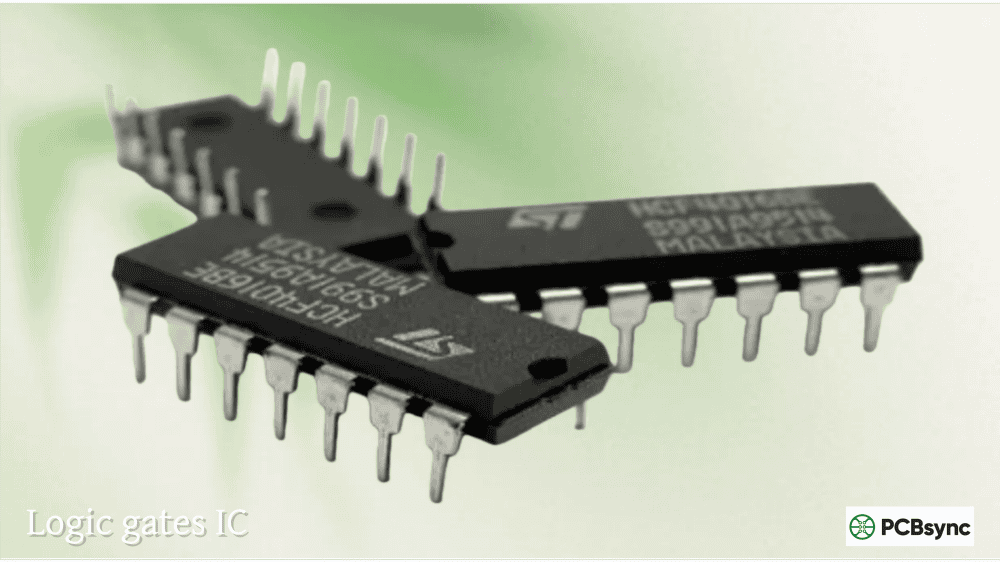
From simple logic gates to complex application-specific integrated circuits (ASICs), CMOS is the default technology. FPGAs, CPLDs, and custom digital designs all rely on CMOS fabrication.
Analog and Mixed-Signal ICs
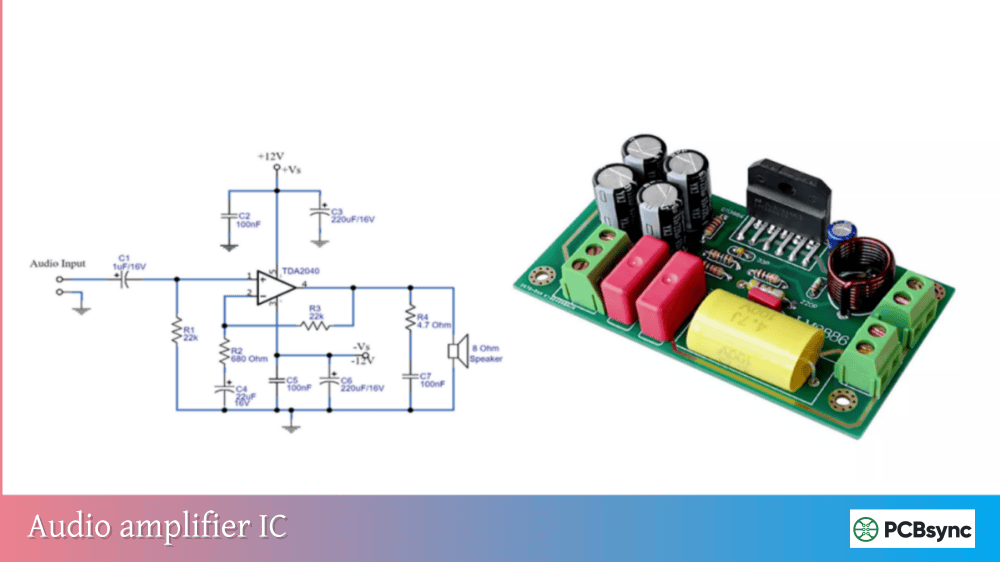
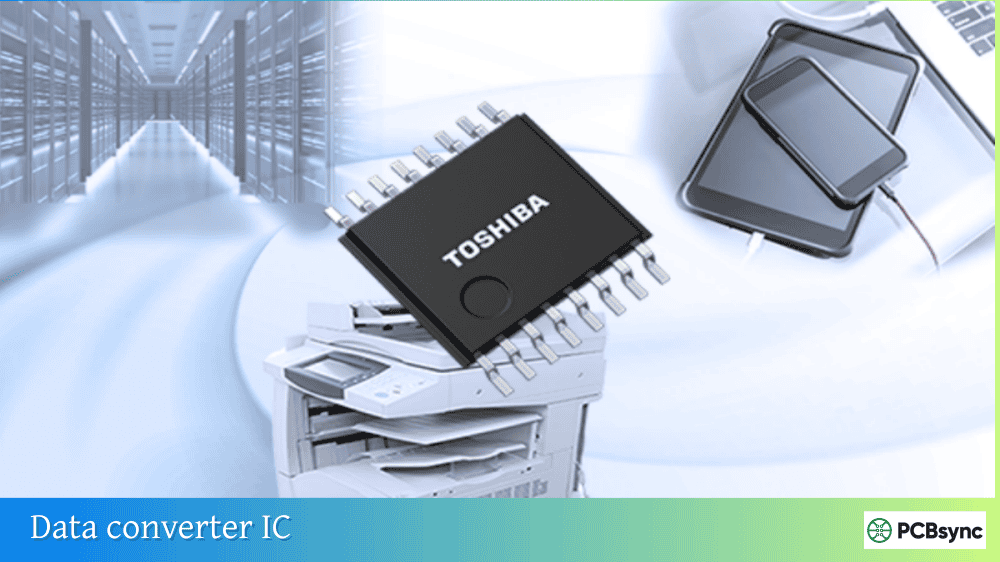
While traditionally associated with digital circuits, CMOS also serves analog applications. Data converters (ADCs/DACs), operational amplifiers, and mixed-signal systems increasingly use CMOS for cost and integration advantages.
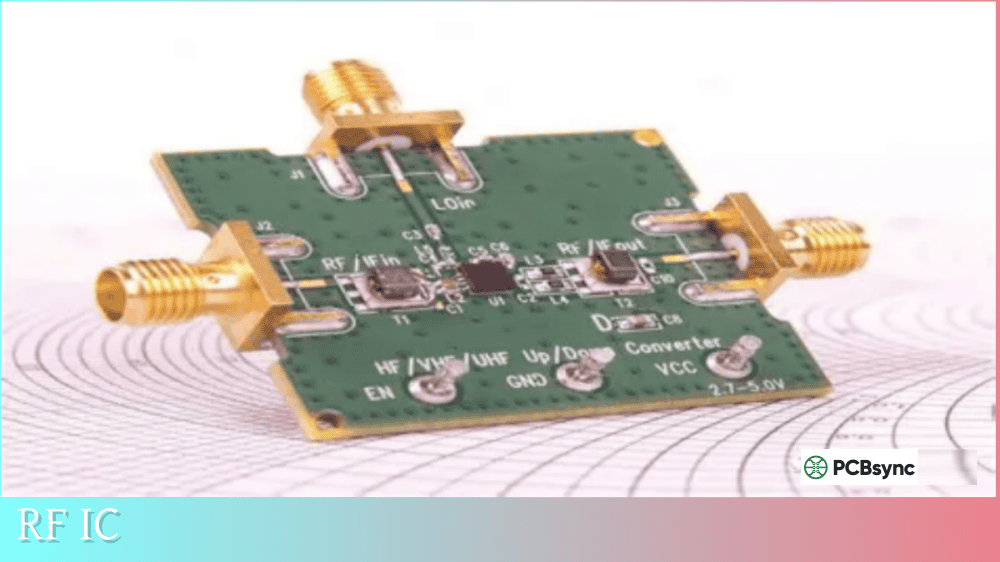
RF and Wireless Communication
RF CMOS, developed by Asad Abidi at UCLA in the late 1980s, enabled the integration of radio circuits onto standard CMOS chips. This technology powers the wireless transceivers in every smartphone, WiFi router, and Bluetooth device.
Consumer Electronics Application Areas
Application
CMOS Components Used
Smartphones
Processor, memory, image sensor, RF transceiver, power management
Despite its dominance, CMOS technology faces certain limitations:
Electrostatic Discharge (ESD) Sensitivity
The thin gate oxide in CMOS transistors can be permanently damaged by ESD. Voltages as low as 100V can punch through the oxide, destroying the transistor. Proper handling procedures, ESD-safe workstations, and on-chip protection circuits are essential.
Latch-Up
Under certain conditions, parasitic thyristor structures in CMOS can trigger a low-impedance path between power and ground, potentially destroying the chip. Modern designs include guard rings and careful layout practices to prevent latch-up.
Dynamic Power Consumption
While static power is negligible, CMOS power consumption increases with switching frequency. At gigahertz frequencies, dynamic power becomes significant. The relationship is: P = CV²f, where C is capacitance, V is voltage, and f is frequency.
Leakage Current
As transistors shrink below 100nm, quantum mechanical effects cause current to leak through the gate oxide and between source and drain even when transistors are “off.” Managing leakage is a major challenge in advanced process nodes.
Manufacturing Complexity
Advanced CMOS processes require hundreds of fabrication steps and billion-dollar fabrication facilities. The complexity and cost limit leading-edge manufacturing to a handful of companies worldwide.
Physical Limits
As transistors approach atomic dimensions, quantum effects, variability, and reliability challenges multiply. The industry is approaching fundamental physical limits that may eventually require post-CMOS technologies.
Future of CMOS Technology
The semiconductor industry continues pushing CMOS to smaller nodes through innovations like:
FinFET Transistors: 3D fin-shaped channels provide better gate control, enabling continued scaling below 22nm.
Gate-All-Around (GAA) FET: Stacked nanosheet transistors with gates surrounding all sides of the channel, used at 3nm and beyond.
High-κ Metal Gate (HKMG): Advanced gate materials reduce leakage while maintaining performance.
3D Integration: Stacking chips vertically increases density without further transistor shrinking.
Research continues into post-CMOS technologies—carbon nanotubes, spintronics, quantum computing—but CMOS will remain dominant for the foreseeable future.
Useful Resources for CMOS Technology
Technical References
JEDEC Standards:jedec.org – Industry standards for semiconductor devices
IEEE Xplore: Technical papers on CMOS design and fabrication
Semiconductor Engineering:semiengineering.com – Industry news and technical analysis
Educational Resources
MIT OpenCourseWare: Free courses on digital circuit design and VLSI
“CMOS VLSI Design” by Weste & Harris: Standard textbook for CMOS design
Design Tools and Datasheets
Texas Instruments: Logic family datasheets and selection guides
NXP Semiconductors: Application notes for CMOS interfacing
DigiKey/Mouser: Component databases with CMOS IC specifications
Frequently Asked Questions
What does CMOS stand for and what does it mean?
CMOS stands for Complementary Metal-Oxide-Semiconductor. “Complementary” refers to the use of two transistor types (NMOS and PMOS) working together. “Metal-Oxide-Semiconductor” describes the physical structure: a metal (or polysilicon) gate electrode over an oxide insulator on a semiconductor substrate. The complementary operation—where one transistor type is always off while the other is on—is what gives CMOS its characteristic low power consumption.
Why is CMOS technology so widely used compared to other technologies?
CMOS dominates because it offers an unmatched combination of advantages: extremely low static power consumption (enabling battery-powered devices), high noise immunity (ensuring reliable operation), excellent scalability (allowing billions of transistors per chip), and cost-effective manufacturing (using well-established processes). While TTL and ECL have specific advantages in speed or ruggedness, CMOS’s overall balance of properties makes it suitable for 99% of integrated circuit applications.
How does CMOS achieve such low power consumption?
CMOS achieves low power through its complementary switching mechanism. In any steady state (outputting logic 0 or 1), either the PMOS or NMOS transistor is completely off, blocking current flow from VDD to ground. Current flows only during the brief transition between states. In contrast, TTL and other technologies have continuous current flow even when not switching. This fundamental difference means a CMOS gate uses about 10 nanowatts static power versus 10 milliwatts for TTL—a million-fold improvement.
What is the relationship between CMOS and the CMOS battery in computers?
The CMOS battery on a computer motherboard powers a small amount of CMOS memory (CMOS RAM) that stores BIOS/UEFI settings, system time, and hardware configuration. This memory is called “CMOS” because it uses CMOS technology, which requires so little power that a coin cell battery can maintain it for years. When this battery dies, the computer loses its stored settings and clock time. This is a specific application of CMOS technology, not the technology itself.
What is the difference between CMOS and CCD image sensors?
Both capture light, but they work differently. CCD (Charge-Coupled Device) sensors shift electrical charges across the chip and read them from a corner, requiring multiple voltage levels and more power. CMOS image sensors read each pixel individually through built-in circuits, requiring only a single voltage and consuming less power. CMOS sensors also allow on-chip integration of processing circuits. While CCDs historically offered better image quality, modern CMOS sensors have caught up and surpassed CCDs in most applications, which is why CMOS dominates smartphone and digital camera markets.
Conclusion
CMOS technology represents one of the most successful and impactful innovations in the history of electronics. From its invention in 1963 to its current status powering virtually every digital device on the planet, CMOS has enabled the computing revolution that defines modern life.
The key takeaways from this CMOS explained guide:
CMOS uses complementary NMOS and PMOS transistors that work together to minimize power consumption
The technology draws virtually no power in steady state—current flows only during switching transitions
High noise immunity, wide voltage range, and excellent scalability make CMOS suitable for nearly all IC applications
Modern CMOS processes pack billions of transistors onto single chips, enabling smartphones, computers, and countless other devices
While facing challenges from physical limits, continued innovation keeps extending CMOS capabilities
Understanding CMOS fundamentals isn’t just theoretical knowledge—it’s practical understanding that helps engineers design better circuits, select appropriate components, and troubleshoot effectively. Whether you’re working with simple logic gates or complex processors, the principles of CMOS technology underpin everything in modern electronics.
As process nodes continue shrinking and new transistor architectures emerge, CMOS will remain the foundation of semiconductor manufacturing for years to come. The technology that started with a few hundred transistors now enables chips with tens of billions—and that remarkable journey continues.
Inquire: Call 0086-755-23203480, or reach out via the form below/your sales contact to discuss our design, manufacturing, and assembly capabilities.
Quote: Email your PCB files to Sales@pcbsync.com (Preferred for large files) or submit online. We will contact you promptly. Please ensure your email is correct.
Notes: For PCB fabrication, we require PCB design file in Gerber RS-274X format (most preferred), *.PCB/DDB (Protel, inform your program version) format or *.BRD (Eagle) format. For PCB assembly, we require PCB design file in above mentioned format, drilling file and BOM. Click to download BOM template To avoid file missing, please include all files into one folder and compress it into .zip or .rar format.