Inquire: Call 0086-755-23203480, or reach out via the form below/your sales contact to discuss our design, manufacturing, and assembly capabilities.
Quote: Email your PCB files to Sales@pcbsync.com (Preferred for large files) or submit online. We will contact you promptly. Please ensure your email is correct.
Notes: For PCB fabrication, we require PCB design file in Gerber RS-274X format (most preferred), *.PCB/DDB (Protel, inform your program version) format or *.BRD (Eagle) format. For PCB assembly, we require PCB design file in above mentioned format, drilling file and BOM. Click to download BOM template To avoid file missing, please include all files into one folder and compress it into .zip or .rar format.
Carbon Film Resistor: Construction, Specifications & Selection
If you open up a cheap consumer toy, a power supply from the 90s, or a beginner’s Arduino kit, you will see them: those beige or light brown components with four colorful bands. These are the carbon film resistors.
For decades, the carbon resistor was the default choice for electronics. While modern precision designs have largely migrated to Metal Film (the blue ones), the humble carbon film resistor remains a powerhouse in the industry. It is the “Toyota Corolla” of components: inexpensive, reliable, and available in the billions.
However, many junior engineers blindly swap carbon film for metal film without understanding the trade-offs. Did you know carbon film resistors can often handle high-voltage pulses better than their precision metal counterparts? Or that they have a Negative Temperature Coefficient (NTC), causing them to drift in specific ways as they heat up? This guide, written from the perspective of a PCB design engineer, breaks down the construction, specs, and best use cases for this enduring technology.
A carbon film resistor is a fixed-value resistor that uses a thin film of pure carbon deposited on a ceramic carrier to restrict the flow of electric current.
It sits in the “evolutionary middle ground” of resistor technology:
Carbon Composition (Old): Solid dust held together with glue. Noisy, unstable, and absorbs moisture. (Vintage tech).
Carbon Film (Standard): Pure carbon coating. Much more stable than composition, but less precise than metal.
Metal Film (Precision): Nickel-Chromium alloy coating. The modern standard for 1% tolerance.
When you see a BOM (Bill of Materials) calling for a “Generic 5% Resistor,” it is almost always a carbon film.
Construction: The Pyrolysis Process
Understanding how these are made helps explain their behavior in your circuit. The manufacturing process is called Pyrolysis.
1. The Ceramic Core
It starts with a high-grade ceramic rod (usually alumina). This provides the thermal conductivity to get heat out of the resistor.
2. Carbon Deposition (The “Film”)
The ceramic rods are placed in a vacuum chamber filled with hydrocarbon gas (like methane or benzene) and heated to nearly 1000°C.
The heat “cracks” the gas. Pure crystalline carbon deposits onto the ceramic rod.
Engineer’s Note: By controlling the duration and temperature, manufacturers control the thickness of the film. A thicker film generally means lower noise and better stability.
3. Helixing (Trimming)
At this stage, the rod is just a conductive bar with low resistance. To set the exact resistance value (e.g., 10kΩ), a laser or diamond wheel cuts a spiral groove (helix) into the carbon coating.
This effectively turns the short, wide cylinder of carbon into a long, thin ribbon wrapped around the core. A tighter spiral equals a longer path, which equals higher resistance.
4. Cap and Coat
Metal end caps with copper leads are pressed onto the ends. Finally, the entire assembly is coated in multiple layers of epoxy resin—usually the iconic tan/beige color—to protect the carbon from moisture and physical damage.
Key Specifications & Engineering Data
When you look at a datasheet from Yageo, KOA Speer, or Vishay, these are the specs that matter for a carbon resistor.
1. Tolerance (Accuracy)
Standard carbon film resistors are ±5% (Gold Band). You can find ±2%, but it is rare.
Reality Check: If you are building a voltage divider for a Li-Ion battery monitor, do not use carbon film. A 5% error on a 4.2V reading is huge. Use a 1% Metal Film instead. Carbon film is for LED limiters, pull-ups, and non-critical biasing.
2. Temperature Coefficient (TCR)
This is the hidden “Gotcha.” Carbon film resistors have a relatively high Negative Temperature Coefficient (NTC).
Typical TCR: -200 to -1000 ppm/°C.
Meaning: As the resistor gets hot, its resistance decreases.
Comparison: Metal film resistors typically have a low, positive TCR (±50 ppm/°C).
Impact: If you use carbon film in a hot environment (like inside a power supply casing), your 10kΩ resistor might drift down to 9.8kΩ. In an audio amplifier, this thermal drift can shift your bias points.
3. Voltage Coefficient
Unlike an ideal resistor, the resistance of carbon film changes slightly depending on the voltage applied across it. While negligible for 5V logic, at high voltages (100V+), this non-linearity can introduce distortion.
4. Noise (Current Noise)
All resistors generate thermal noise (Johnson noise), but carbon film adds “Current Noise” (or 1/f noise).
Because the carbon structure is granular, electrons have to jump from grain to grain. This creates a “hissing” noise that increases with current flow.
Audio Tip: This is why audiophiles debate resistors. Some like the “warmth” (distortion/noise) of carbon; precision engineers hate it. For a high-gain microphone preamp, avoid carbon film in the signal path.
Carbon Film vs. Metal Film vs. Carbon Comp
Why buy Carbon Film when Metal Film exists? It usually comes down to two factors: Cost and Pulse Handling.
Feature
Carbon Composition
Carbon Film
Metal Film
Tolerance
±10%, ±20%
±5% (Standard)
±1%, ±0.1%
Noise
Very High
Moderate
Low
TCR
>1000 ppm/°C
-200 to -500 ppm/°C
±15 to ±100 ppm/°C
Pulse Handling
Excellent
Good
Poor
Cost
Expensive (Niche)
Cheapest
Moderate
Typical Color
Dark Brown
Tan / Beige
Blue
The “Pulse Handling” Advantage
This is a secret weapon of the carbon film resistor.
Metal film resistors use a very thin, brittle alloy layer. A high-voltage surge (ESD or lightning strike) can vaporize spots on that thin metal, causing the resistor to fail open.
Carbon film is generally thicker and more robust. It can absorb short energy pulses better than standard metal film equivalents.
Application: This makes carbon film a decent choice for protection circuits, snubber networks, or areas prone to static discharge where precision is not required.
Applications: When to Use Carbon Film
As a PCB engineer, I still spec carbon film resistors in about 30% of my designs. Here is where they shine:
1. General Purpose Logic
If you need a 10kΩ pull-up resistor for an I2C bus or a button, precision does not matter. Whether the pull-up is 9.5k or 10.5k makes zero difference to the digital logic. Carbon film is the most cost-effective solution here.
2. LED Current Limiting
Human eyes cannot tell the difference in brightness between an LED running at 19mA vs 20mA. A 5% tolerance carbon resistor is perfectly adequate for indicators.
3. High Voltage Consumer Electronics
In cheap mains-powered devices (chargers, night lights), carbon film resistors are often preferred because they handle the minor surges of the AC line better than cheap metal film options, and they are pennies cheaper at volume.
4. RF Dummy Loads
Because carbon is non-inductive (unlike wire wound resistors), large carbon film or carbon composition resistors are often used as dummy loads for radio transmitters. They present a pure resistance without adding reactance that would mess up the SWR (Standing Wave Ratio).
Do not just use them because they are in your drawer. Avoid them in:
1. Analog Sensor Front-Ends
If you are amplifying a signal from a strain gauge or a thermocouple, the noise and thermal drift of a carbon resistor will swamp your signal. Use 0.1% Metal Film or Thin Film.
2. Precision Voltage References
Setting the output voltage of a regulator (like an LM317)? Use 1% metal film. If you use carbon film, your power supply voltage will drift as the device warms up.
3. High-Fidelity Audio
In the high-gain stages of a preamp, the “current noise” of carbon film can introduce an audible hiss floor.
How to Read the Specifications
When sourcing these parts, you will see a confusing array of sizes and ratings.
Power Ratings
Carbon film resistors rely on size to dissipate heat.
1/8 Watt: Miniature, used in tight PCBs.
1/4 Watt: The industry standard. (CFR-25).
1/2 Watt: Slightly thicker, used for power handling.
1 Watt & 2 Watt: Available but rare for carbon film; usually, you switch to Wire Wound or Metal Oxide at this level.
Voltage Rating (Max Working Voltage)
Just because a resistor is 1MΩ doesn’t mean you can put 1000V across it.
1/4W Resistor Limit: Typically 250V to 350V.
If you exceed this, electricity will arc across the spiral cuts (helix), bypassing the resistance and causing a short circuit. For high voltage measurement, put multiple resistors in series to share the voltage burden.
Useful Resources
For the engineer who needs to download CAD models or datasheets:
Yageo CFR Series: The most common datasheet reference for general carbon film.
KOA Speer CF Series: Excellent data on pulse power characteristics.
DigiKey Resistor Color Code Calculator: A bookmark-worthy tool for decoding those beige bands.
Vishay Technical Library: “Basics of Linear Fixed Resistors” – a great whitepaper on resistor noise.
Frequently Asked Questions (FAQ)
1. Is a carbon film resistor the same as a carbon composition resistor?
No. Carbon Composition (Carbon Comp) is an antique technology made of a solid stick of carbon powder and binder. They drift wildly with humidity and time but are amazing at absorbing huge energy pulses. Carbon Film is a modern, stable ceramic rod with a thin coating. They are not interchangeable in vintage restoration or high-energy pulse circuits.
2. Can I replace a carbon film resistor with a metal film resistor?
Yes, almost always. A metal film resistor is a superior component in terms of noise, tolerance, and stability. Replacing a 5% carbon resistor with a 1% metal resistor is an upgrade. The only exception is in very specific high-voltage pulse circuits where the mass of the carbon might handle the surge better than the thin metal film.
3. Why do carbon film resistors have a beige body color?
There is no law requiring it, but it is an industry convention to help engineers identify them at a glance. Beige/Tan usually means Carbon Film (5%). Blue usually means Metal Film (1%). However, some manufacturers break this rule, so always check the bands or the box.
4. What does the “Negative Temperature Coefficient” mean for my circuit?
It means resistance drops as it heats up. If you use a carbon film resistor in series with a fan to slow it down, the resistor will get hot, its resistance will drop, and the fan will speed up slightly. It creates a “runaway” effect, though usually mild. In contrast, metals increase resistance with heat, which is a self-stabilizing effect.
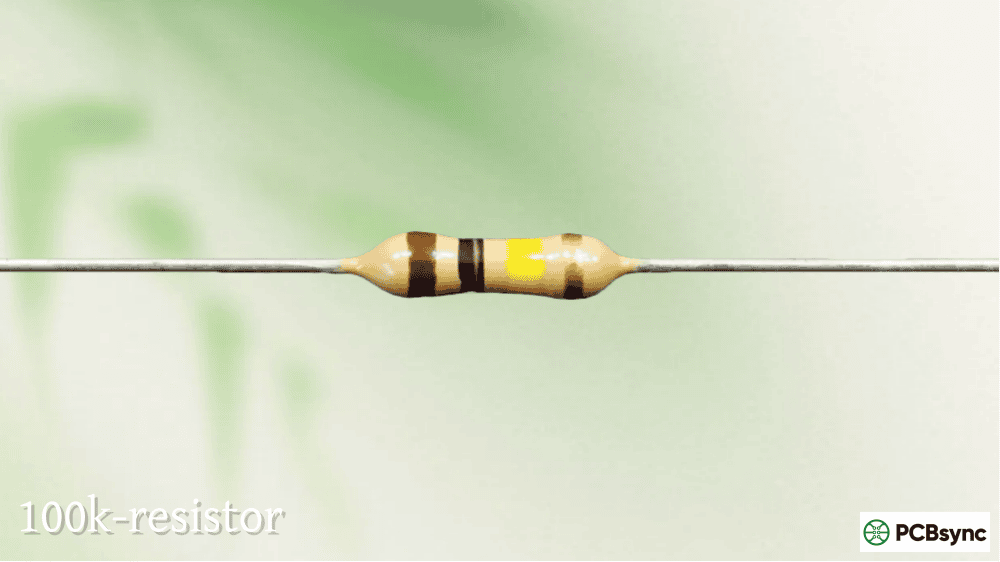
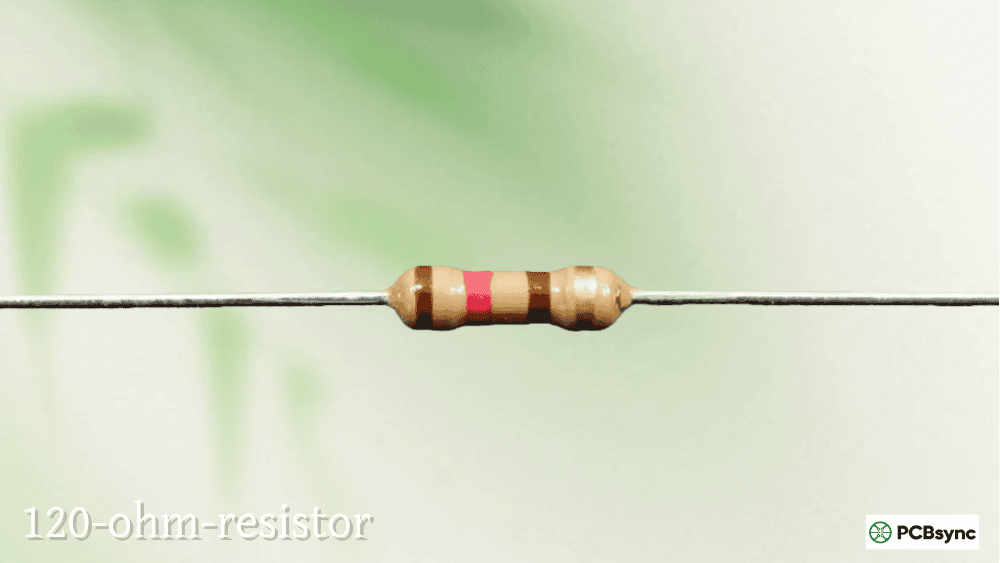
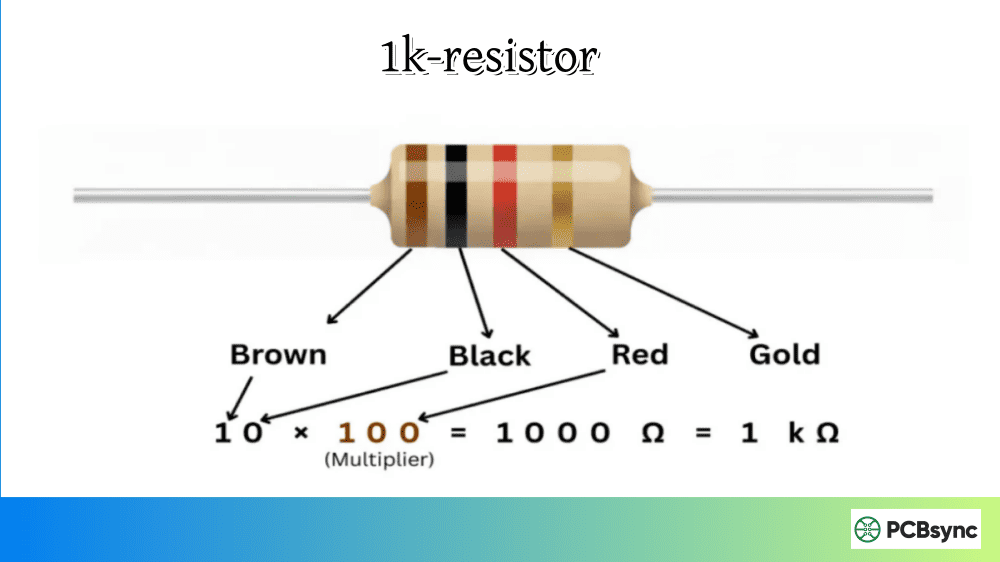
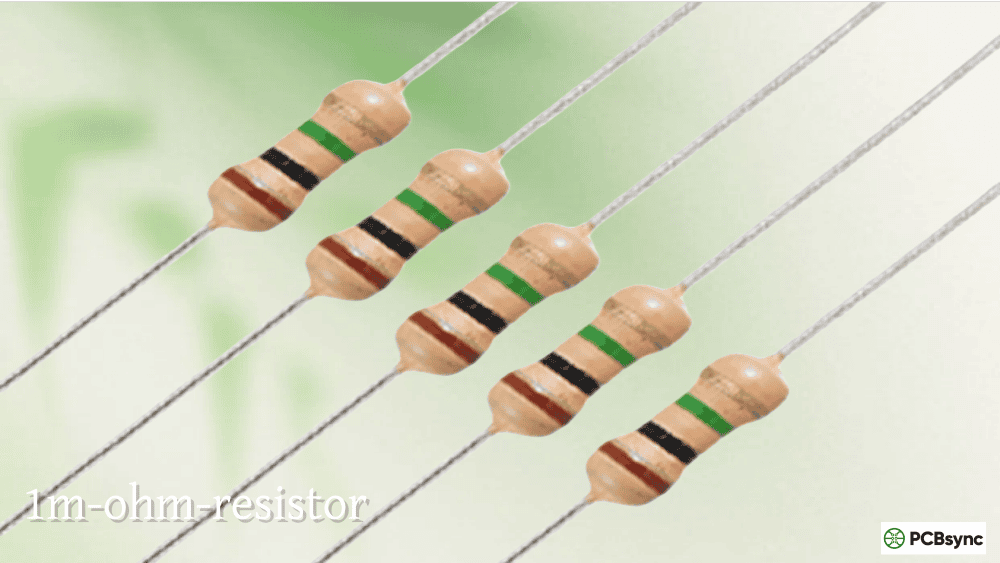
5. How do I identify a 4-band Carbon Film Resistor?
Read the bands from the end closest to the edge.
Band 1: 1st Digit
Band 2: 2nd Digit
Band 3: Multiplier (Number of Zeros)
Band 4: Tolerance (Gold = 5%)
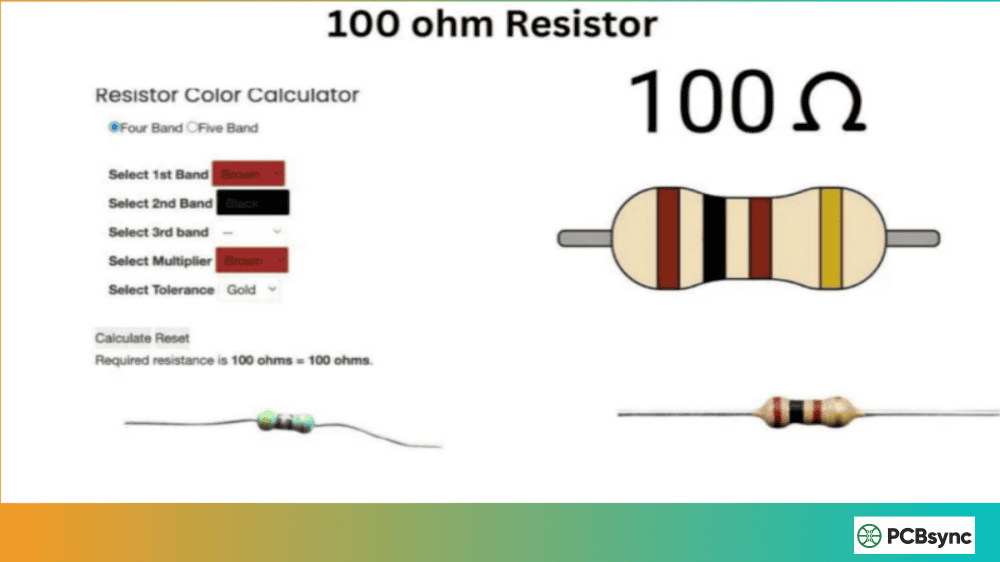
Example: Brown (1), Black (0), Orange (x1k), Gold (5%) = 10kΩ.
Conclusion
The carbon film resistor is the unsung hero of the electronics world. It isn’t the most precise, the quietest, or the toughest component on the board. But it is cheap, available, and “good enough” for 90% of digital and general-purpose analog tasks.
For a PCB engineer, the rule of thumb is simple: Use Metal Film for anything that measures, times, or amplifies. Use Carbon Film for everything else—lighting LEDs, pulling up buttons, and terminating non-critical lines. By understanding the difference, you save money on your BOM without sacrificing performance.
Inquire: Call 0086-755-23203480, or reach out via the form below/your sales contact to discuss our design, manufacturing, and assembly capabilities.
Quote: Email your PCB files to Sales@pcbsync.com (Preferred for large files) or submit online. We will contact you promptly. Please ensure your email is correct.
Notes: For PCB fabrication, we require PCB design file in Gerber RS-274X format (most preferred), *.PCB/DDB (Protel, inform your program version) format or *.BRD (Eagle) format. For PCB assembly, we require PCB design file in above mentioned format, drilling file and BOM. Click to download BOM template To avoid file missing, please include all files into one folder and compress it into .zip or .rar format.