Inquire: Call 0086-755-23203480, or reach out via the form below/your sales contact to discuss our design, manufacturing, and assembly capabilities.
Quote: Email your PCB files to Sales@pcbsync.com (Preferred for large files) or submit online. We will contact you promptly. Please ensure your email is correct.
Notes: For PCB fabrication, we require PCB design file in Gerber RS-274X format (most preferred), *.PCB/DDB (Protel, inform your program version) format or *.BRD (Eagle) format. For PCB assembly, we require PCB design file in above mentioned format, drilling file and BOM. Click to download BOM template To avoid file missing, please include all files into one folder and compress it into .zip or .rar format.
Brown PCB: Understanding Brown Solder Mask Applications
Here’s something most engineers don’t know: the original solder mask chemistry was actually brown. Before green became the industry standard, early solder masks used a brown/yellow base resin mixed with a darker brown hardening agent. Adding yellow and blue pigments produced green, which became the default simply because it looked better than the muddy alternatives available at the time.
So when you choose a brown PCB for your project, you’re not selecting some exotic new color—you’re actually returning to the roots of solder mask technology. And there are legitimate reasons why brown solder mask is experiencing renewed interest for specific applications.
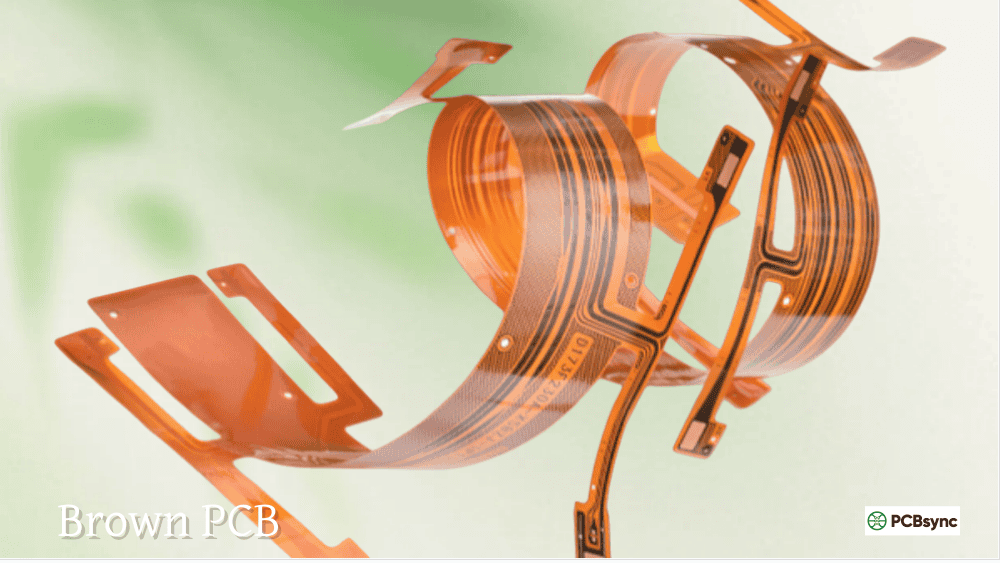
A brown PCB is a printed circuit board with a brown-colored solder mask applied to its surface. The manufacturing process is identical to any other colored board—the only difference is the pigment formulation used in the liquid photo-imageable (LPI) solder mask. Brown is typically created by mixing standard solder mask colors, combining elements of red, yellow, and black pigments to achieve the desired earth tone.
Brown solder mask provides the same protective functions as green or any other color: preventing oxidation of copper traces, stopping solder bridges during assembly, and providing electrical insulation between conductors. The color itself is purely aesthetic and cosmetic, with no inherent effect on electrical performance.
That said, brown PCB occupies a genuine niche in the market. Unlike novelty colors chosen purely for visual appeal, brown serves specific functional and aesthetic purposes that make it the right choice for certain applications.
Why Choose Brown Solder Mask?
Vintage Electronics Reproduction and Restoration
The most common application for brown PCB is vintage electronics reproduction. If you’re building replacement boards for classic audio equipment, restoring antique radios, or recreating period-accurate electronics, brown solder mask provides an authentic appearance that green simply can’t match.
Early printed circuit boards often had brown or amber tones due to the solder mask formulations available at the time. High-end audio equipment manufacturers—particularly those building tube amplifiers and vintage-style gear—choose brown PCBs to maintain visual consistency with original designs. When customers see the inside of a restored McIntosh amplifier or a reproduction Marantz receiver, brown boards look period-correct in a way that modern green boards don’t.
Military and Outdoor Camouflage Applications
Brown PCB offers camouflage advantages in military and outdoor equipment. While black boards absorb too much heat and green stands out against natural backgrounds, brown blends more effectively with earth tones found in field environments.
Military electronics, hunting equipment, outdoor sensors, and tactical gear can benefit from brown solder mask when the PCB might be visible during operation or deployment. The subdued color reduces visual signature without the thermal penalties associated with black boards.
Reduced Eye Strain During Inspection
In some lighting conditions, brown solder mask is easier on the eyes than brighter alternatives like white, yellow, or even green. Workers performing extended visual inspection or hand assembly may find brown boards less fatiguing than high-contrast colors.
This isn’t universally true—trace visibility on brown boards is moderate rather than excellent—but for applications where inspection requirements are modest and worker comfort matters, brown can be a reasonable choice.
Brand Differentiation and Aesthetic Appeal
Some product designers choose brown PCB purely for aesthetic reasons. The earthy, organic appearance works well for eco-friendly products, wooden enclosures, or designs emphasizing natural materials. High-end audio equipment with visible circuit boards sometimes uses brown to convey warmth and craftsmanship.
For products where the PCB is visible through transparent cases or open chassis designs, brown provides a distinctive look that sets products apart from competitors using standard colors.
Technical Specifications for Brown PCB
Brown solder mask meets the same performance standards as traditional colors when properly formulated:
Parameter
Typical Specification
Solder Mask Type
Liquid Photo-Imageable (LPI)
Thickness
0.8-1.2 mils (20-30 μm)
Minimum Dam Width
9-10 mils (varies by manufacturer)
Thermal Resistance
Up to 150°C continuous, 260-288°C peak
Dielectric Strength
≥500 V/mil
Pencil Hardness
≥6H
Adhesion
Pass cross-hatch tape test
Flammability
UL94 V-0
RoHS Compliance
Yes
Note that the minimum dam width for brown solder mask is typically wider than green (9-10 mils vs. 7.5-8 mils). This is because custom-mixed colors haven’t undergone the same decades of optimization that green has received. For designs with tight-pitch components, verify your fabricator’s specific capabilities before committing to brown.
Brown PCB Comparison with Standard Colors
Characteristic
Brown PCB
Green PCB
Black PCB
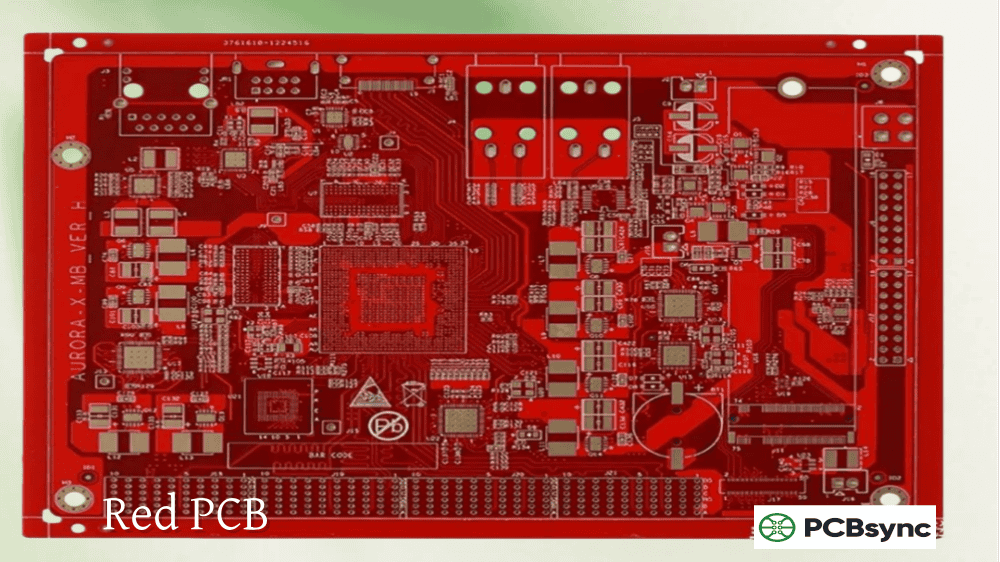
Red PCB
Trace Visibility
Moderate
Excellent
Very Poor
Good
Silkscreen Contrast (White)
Good
Excellent
Excellent
Good
Silkscreen Contrast (Yellow)
Good
Poor
Good
Good
AOI Compatibility
Moderate
Best
Challenging
Good
Heat Absorption
Moderate
Low
High
Moderate
Cost
Higher
Lowest
Standard
Standard
Lead Time
Longer
Shortest
Standard
Standard
Availability
Very Limited
Universal
Common
Common
Eye Strain
Low
Low
Low
Moderate
Vintage Aesthetic
Excellent
Poor
Poor
Poor
Camouflage
Good
Poor
Moderate
Poor
Brown provides a middle ground between the high visibility of green and the heat absorption of black. Its moderate trace visibility makes it acceptable for boards that don’t require intensive inspection, while its camouflage properties and vintage aesthetic serve specialized applications that other colors can’t address.
Applications for Brown Solder Mask
High-End Audio Equipment
Audiophile equipment manufacturers frequently use brown PCB in products with visible circuitry. Tube amplifiers, turntable preamplifiers, and DAC units often feature exposed boards, and brown conveys the warmth and craftsmanship that audio enthusiasts appreciate. The color complements wooden enclosures and vintage-inspired designs better than clinical-looking green.
Vintage Electronics Restoration
Restoration shops working on classic stereo equipment, antique radios, and retro computers choose brown boards to maintain period accuracy. When original boards are beyond repair, brown replacements look more authentic than modern colored alternatives.
Military and Defense Applications
Defense contractors specify brown solder mask for equipment requiring visual camouflage. Field-deployable sensors, communication equipment, and tactical systems benefit from brown’s ability to blend with natural environments without the thermal management challenges of black boards.
Outdoor and Environmental Sensors
Weather stations, agricultural monitoring equipment, and outdoor IoT devices sometimes use brown PCBs when the electronics may be visible or exposed. The earthy color is less visually intrusive in natural settings than bright green or blue.
Industrial Control Systems
Some industrial applications prefer brown PCBs for their unique aesthetic in specific operating environments. Control panels, instrumentation, and monitoring systems occasionally use brown for differentiation or to match existing equipment aesthetics.
Brown is not a standard stock color at most PCB fabricators. It’s typically created by mixing standard solder mask pigments—usually combinations of red, yellow, and black base colors. This custom mixing introduces several considerations:
Color consistency between batches can be challenging. Unlike green solder mask that comes pre-mixed from major suppliers, brown must be formulated at the fab shop. Expect some variation between orders, especially when ordering from different fabricators or when significant time passes between orders.
Manual mixing means brown solder mask lacks the precision of automated paint-matching systems. The exact shade will vary based on the operator, the specific base materials available, and the mixing ratios used.
Availability and Lead Time
Not all PCB manufacturers offer brown solder mask. Before designing with brown, confirm that your preferred fabricator can produce it. Expect to encounter:
Minimum order quantities: Many fabricators require minimum panel quantities for custom colors
Setup fees: Some manufacturers charge additional fees for non-standard color preparation
Extended lead times: Add 5-10 days beyond standard production times for custom color orders
Limited quick-turn options: Few fabricators offer expedited service for custom colors
Cost Implications
Brown PCB typically costs 20-40% more than standard green boards:
Order Type
Green Pricing
Brown Premium
Prototype (5-10 boards)
Base price
+30-40%
Small batch (50-100 boards)
Base price
+25-35%
Production (500+ boards)
Base price
+20-30%
The premium covers custom color mixing, additional quality control for color consistency, and the inefficiencies of processing non-standard materials.
Silkscreen Color Selection
For brown PCB, silkscreen color selection significantly impacts readability:
Silkscreen Color
Contrast on Brown
Recommended Use
White
Good
Best general choice
Yellow
Good
Alternative for specific aesthetics
Black
Moderate
Acceptable for larger text
Blue
Poor
Not recommended
White silkscreen provides the best contrast against brown solder mask for most applications. Yellow can work well and creates a distinctive vintage appearance. Avoid dark silkscreen colors that will blend with the brown background.
Challenges with Brown Solder Mask
Inspection Visibility
Brown offers moderate trace visibility—better than black or white but inferior to green or yellow. For complex boards requiring detailed visual inspection or AOI processing, brown may not be the optimal choice. If your design includes fine-pitch components or dense routing, carefully evaluate whether brown’s inspection characteristics meet your quality requirements.
Limited Process Optimization
Green solder mask has benefited from decades of process refinement. Manufacturers know exactly how to achieve optimal adhesion, dam resolution, and surface finish with green. Brown hasn’t received this attention, meaning process margins may be tighter and defect rates potentially higher than standard colors.
Designer and Assembler Familiarity
Many contract manufacturers and assembly houses have limited experience with brown PCBs. This unfamiliarity can lead to suboptimal process settings, inspection criteria calibration issues, or general reluctance to work with non-standard materials. Verify your assembly partner’s comfort level before committing to brown for production volumes.
Frequently Asked Questions About Brown PCB
Does brown solder mask affect electrical performance?
No. Brown solder mask provides identical electrical performance to green or any other color. Dielectric properties, insulation resistance, and thermal characteristics are determined by the base epoxy formulation, not the pigment color. The brown color is purely cosmetic and has no impact on circuit functionality.
Why isn’t brown PCB more commonly available?
Brown is a custom-mixed color that requires additional manufacturing steps and quality control. Since demand is limited compared to standard colors like green, blue, or black, most fabricators don’t stock brown solder mask materials. The economics don’t justify maintaining inventory of a color used in perhaps 0.1% of orders.
Can I match a specific shade of brown?
You can request a specific shade, but exact matching is difficult. Unlike paint stores with automated color-matching systems, PCB fabricators mix custom colors manually. Expect approximate rather than precise color matching, and anticipate variation between production batches.
Is brown PCB suitable for high-reliability applications?
Brown solder mask can meet the same reliability standards as other colors when properly specified and manufactured. However, the limited process optimization and lower production volumes mean quality control requires more attention. For high-reliability applications, work closely with your fabricator to establish appropriate inspection criteria and acceptance standards.
Which fabricators offer brown PCB?
Brown is available as a custom color option from most full-service PCB manufacturers that offer custom color mixing, including Bittele Electronics, PCB Prime, and various specialty fabricators. Contact manufacturers directly to confirm availability, minimum quantities, and pricing. Large-volume fabricators like PCBWay and JLCPCB may be able to accommodate brown through their advanced or custom PCB services.
IPC-SM-840: Qualification and Performance Specification for Permanent Solder Mask
IPC-A-610: Acceptability of Electronic Assemblies
IPC-2221: Generic Standard on Printed Board Design
PCB Fabrication Services
Bittele Electronics: www.7pcb.com – Custom color options available
PCB Prime: pcbprime.com – Custom color mixing services
RayPCB: www.raypcb.com – Specialty colors including brown
Vintage Electronics Resources
Vintage Radio and Phonograph Society: Technical resources for restoration
AudioKarma Forums: Community knowledge for vintage audio restoration
Vintage Electronics Repair shops: For period-accurate replacement boards
Making Your Decision: Is Brown PCB Right for Your Project?
Brown PCB makes sense when:
Vintage authenticity is essential for restoration or reproduction projects
Camouflage properties provide genuine value in military or outdoor applications
Brand aesthetics require an earthy, organic appearance
The board will be visible and needs to complement wooden or natural enclosures
You’re willing to accept longer lead times and higher costs for the specific aesthetic
Stick with standard colors if:
Production efficiency and cost matter more than specific aesthetics
Your design requires intensive visual inspection or AOI processing
Quick-turn prototyping is needed with tight schedules
Color consistency between batches is critical
Your assembly partner lacks experience with custom colors
Brown solder mask occupies a legitimate niche in PCB manufacturing. It’s not the right choice for every project—or even most projects—but for applications where vintage aesthetics, camouflage properties, or distinctive brand identity matter, brown delivers something that standard colors simply can’t provide.
The fact that brown was the original solder mask color before green took over gives it an interesting historical footnote. Sometimes the best solution isn’t the newest option—it’s the one that existed all along but was overlooked when the industry standardized on green.
Inquire: Call 0086-755-23203480, or reach out via the form below/your sales contact to discuss our design, manufacturing, and assembly capabilities.
Quote: Email your PCB files to Sales@pcbsync.com (Preferred for large files) or submit online. We will contact you promptly. Please ensure your email is correct.
Notes: For PCB fabrication, we require PCB design file in Gerber RS-274X format (most preferred), *.PCB/DDB (Protel, inform your program version) format or *.BRD (Eagle) format. For PCB assembly, we require PCB design file in above mentioned format, drilling file and BOM. Click to download BOM template To avoid file missing, please include all files into one folder and compress it into .zip or .rar format.