Inquire: Call 0086-755-23203480, or reach out via the form below/your sales contact to discuss our design, manufacturing, and assembly capabilities.
Quote: Email your PCB files to Sales@pcbsync.com (Preferred for large files) or submit online. We will contact you promptly. Please ensure your email is correct.
Notes: For PCB fabrication, we require PCB design file in Gerber RS-274X format (most preferred), *.PCB/DDB (Protel, inform your program version) format or *.BRD (Eagle) format. For PCB assembly, we require PCB design file in above mentioned format, drilling file and BOM. Click to download BOM template To avoid file missing, please include all files into one folder and compress it into .zip or .rar format.
Argon ONE M.2 Case Review: Turn Your Pi into an SSD-Powered Beast
After years of building Raspberry Pi projects and testing dozens of enclosures, I can say the Argon ONE M.2 fundamentally changed how I think about Pi cases. This isn’t just a protective shell. It’s a complete transformation that turns your Pi 4 into something resembling a proper desktop computer.
I’ve been running my Argon ONE M2 setup as a home server for over a year now, and this review covers everything I’ve learned about its performance, quirks, and whether it’s worth the premium price tag. If you’re considering the Argon case for your next build, this deep dive will help you decide.
What Makes the Argon ONE M.2 Different from Standard Pi Cases
Most Raspberry Pi cases focus on one thing: protection. The Argon ONE series takes a completely different approach by redesigning the entire user experience. The M.2 variant adds internal SSD storage capability, making it the most feature-rich enclosure available for the Pi 4.
The case repositions all ports to the rear panel, converting the awkward micro HDMI outputs to full-size HDMI connectors. This single change makes cable management dramatically cleaner. No more dongles, no more cables sticking out at odd angles.
What really sets the Argon ONE M2 apart is the integrated M.2 SATA slot in the base. Your SSD sits completely enclosed within the case, connected via a USB 3.0 bridge to the Pi. Combined with the aluminum construction that doubles as a heatsink, you get a package that looks and performs like a mini PC rather than a hobbyist board.
Argon ONE M.2 Hardware Specifications
Feature
Specification
Compatibility
Raspberry Pi 4 (all RAM variants)
SSD Support
M.2 SATA (B-Key and B+M Key), 2242-2280 sizes
HDMI Ports
2x Full-size HDMI (converted from micro)
Cooling
Aluminum heatsink top + 30mm PWM fan
GPIO Access
Magnetic removable cover with pin labels
Power Management
Hardware power button with safe shutdown
IR Receiver
Built-in, compatible with NEC remotes
Dimensions
106 x 95 x 41mm
Connection
UASP supported for maximum transfer speeds
Price
$45-55 USD (varies by retailer)
Unboxing and Assembly Experience
Opening the Argon case box reveals thoughtful packaging. You get the two-piece enclosure, thermal pads, the U-shaped USB 3.0 bridge connector, mounting screws, and a hex key. No SSD included, which is expected at this price point.
Assembly takes about 15 minutes if you’re careful. The process involves connecting your Pi 4 to an internal daughterboard that handles the HDMI conversion and audio routing. A thermal pad sandwiches between the Broadcom SoC and the aluminum top shell.
The M.2 drive slots into the bottom compartment, secured with a single screw. Supported sizes range from 2242 to 2280, covering most SATA drives on the market. One critical note: the Argon ONE M2 only supports SATA M.2 drives, not NVMe. This catches some buyers off guard since NVMe has become more common. Double-check your drive’s interface before purchasing.
Once assembled, the two halves connect via the U-shaped USB adapter. This bridge does consume one USB 3.0 port, leaving you with one USB 3.0 and two USB 2.0 ports accessible. For most server and desktop applications, this tradeoff is worthwhile.
Thermal Performance Testing
The aluminum top shell functions as a massive passive heatsink, and it works remarkably well. During my testing at stock clock speeds, the Pi 4 idled around 44°C with the fan disabled. Under sustained CPU stress using stress-ng, temperatures peaked at 54°C, well below the 80°C throttling threshold.
Test Condition
Temperature
Fan Status
Idle (stock speed)
44°C
Off
Stress test (stock)
54°C
Off
Idle (2.0GHz OC)
40°C
Off
Stress test (2.0GHz OC)
58°C
Triggered at 55°C
Stress test (2.1GHz OC)
73°C
100% speed
Overclocking to 2.0GHz barely moved the needle. Even at 2.1GHz under full load, temperatures stayed under 75°C with active cooling. The Argon ONE daemon lets you configure fan curves, setting different speeds at different temperature thresholds.
The passive cooling impressed me most. For quiet operation in a living room or office environment, you can run most workloads without ever hearing the fan. The entire case acts as a heat spreader, with surface temperatures around 30-34°C during normal use.
SSD Performance and Boot Speed
This is where the Argon ONE M2 delivers its biggest upgrade. Swapping from microSD to M.2 SATA storage transforms the Pi 4 experience.
Metric
MicroSD Card
M.2 SATA SSD
Sequential Read
~45 MB/s
~367 MB/s
Sequential Write
~30 MB/s
~300 MB/s
Boot Time
~25 seconds
~12 seconds
Application Launch
Sluggish
Near-instant
The 800% improvement in read speeds translates to a dramatically snappier system. Applications launch faster, file operations complete quicker, and the overall responsiveness feels closer to a modern computer than a credit-card-sized board.
UASP (USB Attached SCSI Protocol) support maximizes throughput over the USB 3.0 connection. While you won’t hit native SATA III speeds, you’ll get close enough that the bottleneck shifts elsewhere in most real-world scenarios.
For server applications especially, SSD reliability matters as much as speed. MicroSD cards wear out under constant write operations. A quality SATA SSD handles these workloads for years without degradation.
Software Setup and Configuration
Getting the Argon case features working requires installing the official daemon script. From a terminal:
This installs the fan control daemon and power button functionality. After installation, configure your preferences with:
argonone-config
The configuration tool lets you set temperature thresholds for fan activation, choose between always-on or temperature-controlled operation, and configure power button behavior.
For SSD boot configuration, you’ll need to update your Pi’s bootloader if running older firmware:
sudo apt update
sudo apt full-upgrade
sudo rpi-update
Then use the Raspberry Pi Imager or SD Card Copier utility to clone your system to the M.2 drive. Once complete, remove the microSD card and your Pi boots directly from the SSD.
Real-World Use Cases for the Argon ONE M.2
After extensive testing, certain applications benefit most from this Argon case setup.
Home Server Excellence
The combination of passive cooling, SSD storage, and clean cable management makes the Argon ONE M2 ideal for always-on server duty. Pi-hole, Home Assistant, Nextcloud, and similar services run flawlessly. The power button provides proper shutdown capability, protecting your data from corruption.
Desktop Replacement
With an SSD installed, the Pi 4 becomes genuinely usable as a light desktop computer. Web browsing, document editing, and media playback all feel responsive. The dual full-size HDMI ports simplify multi-monitor setups without adapter hassles.
Media Center Build
Kodi, LibreELEC, and OSMC all work beautifully in this enclosure. The built-in IR receiver accepts commands from compatible remotes, and large SSD storage holds extensive media libraries locally. The silent passive cooling keeps your living room quiet.
Network Attached Storage
While not a dedicated NAS enclosure, the Argon ONE M2 can serve as a compact network storage solution. M.2 drives up to 2TB provide substantial capacity, and the quiet operation suits bedroom or office placement.
Known Issues and Limitations
No product is perfect, and the Argon ONE has some quirks worth noting.
The microSD slot becomes inaccessible once assembled. If you need to swap cards frequently, this design frustrates. For SSD-boot setups, this rarely matters.
Early production units used JMicron USB-to-SATA bridge chips that caused compatibility issues with some drives and Linux configurations. Newer units ship with ASMedia chips that work more reliably. If buying used, verify which chipset your unit contains.
The U-shaped USB connector can interfere with thicker USB devices in the adjacent port. Most standard USB plugs fit fine, but oversized flash drives or dongles might not.
GPIO access requires removing the magnetic top cover. While the cover includes a helpful pin reference, this isn’t as convenient as cases with pass-through headers for HAT attachment.
WiFi signal strength drops slightly with the Pi enclosed in aluminum. For critical wireless applications, consider the Ethernet connection instead, or position the case for optimal signal reception.
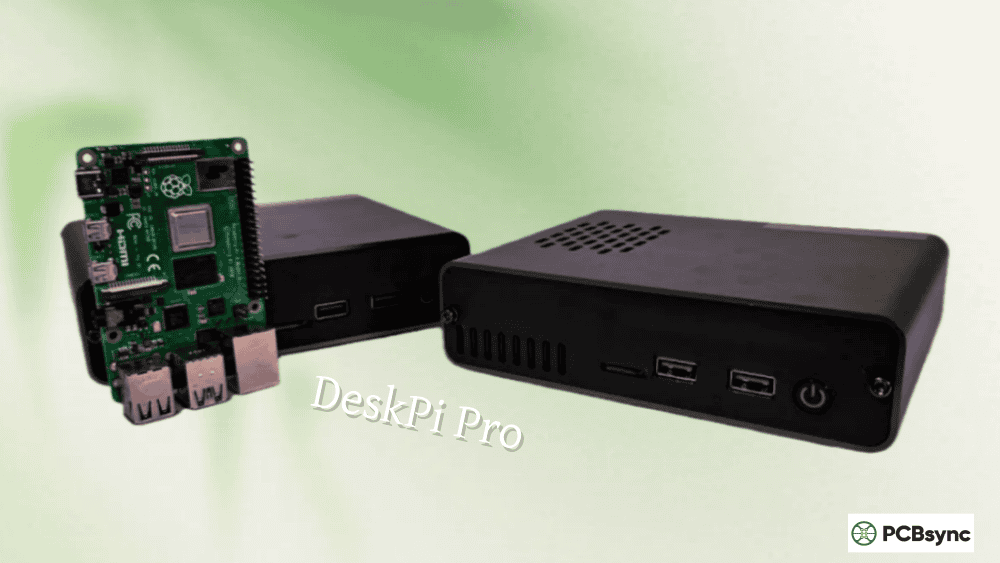
The Argon ONE M2 hits a sweet spot between the budget-friendly Flirc and the more expensive DeskPi Pro. If you need NVMe support specifically, look elsewhere. For most users wanting SSD boot capability without breaking the bank, the Argon delivers excellent value.
Useful Resources for Argon ONE M.2 Users
Resource
URL
Description
Argon40 Official
argon40.com
Manufacturer support and firmware
Argon40 Forum
forum.argon40.com
Community troubleshooting
Argon Software Script
download.argon40.com/argon1.sh
Fan and power control daemon
Waveshare Wiki
waveshare.com/wiki/PI4-CASE-ARGON-ONE-M.2
Detailed setup instructions
Pi Forums Argon Thread
forums.raspberrypi.com
Community discussions
Jeff Geerling Review
jeffgeerling.com
Technical deep-dive and benchmarks
Frequently Asked Questions
Does the Argon ONE M.2 support NVMe SSDs?
No. The Argon ONE M2 for Raspberry Pi 4 only supports M.2 SATA drives with B-Key or B+M Key interfaces. NVMe drives will not work. Argon40 released a separate V3 model for the Pi 5 that does support NVMe, but the Pi 4 version is SATA-only. Always verify your drive interface before purchasing.
Can I use the Argon ONE M.2 case without an SSD installed?
Yes. The case functions perfectly without an SSD, and you can boot from microSD as normal. The M.2 expansion board simply remains empty. Many users start this way and add SSD storage later. You still benefit from the improved cooling, port layout, and power management features.
Why won’t my Argon ONE M.2 boot from the SSD?
Several factors can prevent SSD boot. First, ensure your Pi 4 bootloader firmware is updated to a version supporting USB boot. Second, verify you’re using a SATA M.2 drive, not NVMe. Third, some early Argon case units had problematic JMicron bridge chips. Try a different SSD or contact Argon40 support. Finally, ensure your power supply delivers adequate current, the official Argon PSU (5.25V 3.5A) is recommended.
Is the fan in the Argon ONE loud?
The 30mm fan produces audible noise when running, though it’s not excessively loud. At 30% speed, it’s noticeable in a quiet room. Most users find passive cooling sufficient for typical workloads, keeping the fan off entirely. For heavy processing or overclocking, the fan becomes necessary but tolerable. You can configure temperature thresholds to minimize fan activation.
Can I still use HATs with the Argon ONE M.2?
GPIO pins remain accessible through the magnetic top cover, but standard HATs don’t fit directly. The cover orientation and case height require using a GPIO breakout board or ribbon cable to position HATs externally. For occasional GPIO access, the built-in solution works fine. For permanent HAT installation, consider whether this Argon case suits your needs.
Final Verdict: Is the Argon ONE M.2 Worth It?
At $45-55, the Argon ONE M.2 costs as much as or more than the Raspberry Pi 4 itself. That price buys genuine engineering rather than simple injection molding.
You get thermal management that handles overclocking without throttling. You get full-size HDMI ports that eliminate adapter clutter. You get a power button that protects your data with proper shutdowns. You get internal SSD storage that transforms Pi 4 performance. You get a case that looks professional enough for office deployment.
For server builds, media centers, and desktop replacement projects, the Argon ONE investment pays off in daily usability. The dramatically improved storage performance alone justifies the cost for anyone frustrated by microSD limitations.
If you’re building a portable project, frequently swapping SD cards, or need direct HAT compatibility, simpler cases serve better. But for a polished, high-performance Pi 4 setup that you’ll use daily, the Argon ONE M2 remains my top recommendation.
It turned my Raspberry Pi into something I actually want to use every day. That’s the highest praise I can give any case.
Inquire: Call 0086-755-23203480, or reach out via the form below/your sales contact to discuss our design, manufacturing, and assembly capabilities.
Quote: Email your PCB files to Sales@pcbsync.com (Preferred for large files) or submit online. We will contact you promptly. Please ensure your email is correct.
Notes: For PCB fabrication, we require PCB design file in Gerber RS-274X format (most preferred), *.PCB/DDB (Protel, inform your program version) format or *.BRD (Eagle) format. For PCB assembly, we require PCB design file in above mentioned format, drilling file and BOM. Click to download BOM template To avoid file missing, please include all files into one folder and compress it into .zip or .rar format.