Inquire: Call 0086-755-23203480, or reach out via the form below/your sales contact to discuss our design, manufacturing, and assembly capabilities.
Quote: Email your PCB files to Sales@pcbsync.com (Preferred for large files) or submit online. We will contact you promptly. Please ensure your email is correct.
Notes: For PCB fabrication, we require PCB design file in Gerber RS-274X format (most preferred), *.PCB/DDB (Protel, inform your program version) format or *.BRD (Eagle) format. For PCB assembly, we require PCB design file in above mentioned format, drilling file and BOM. Click to download BOM template To avoid file missing, please include all files into one folder and compress it into .zip or .rar format.
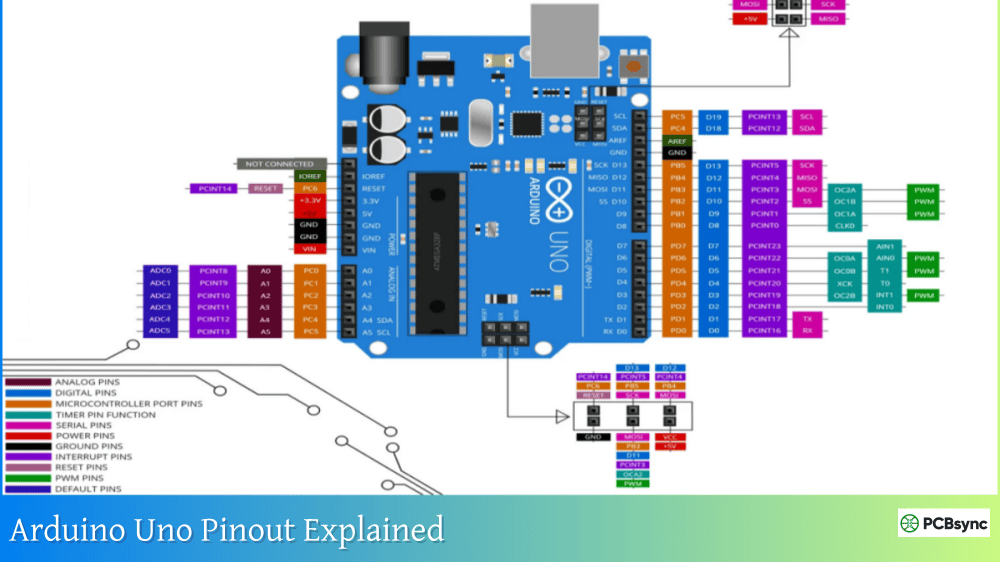
Arduino Uno Pinout Explained: Every Pin You Need to Know
When I first started working with microcontrollers over a decade ago, the Arduino Uno Pinout was one of the most confusing aspects to grasp. Looking at those rows of headers with cryptic labels like “AREF,” “SDA,” and “SCL” can feel overwhelming for any beginner. But trust me—once you understand what each pin does, the entire Arduino ecosystem opens up to you.
In this comprehensive guide, I’ll break down every single pin on the Arduino Uno board from a practical, hands-on perspective. Whether you’re building your first LED circuit or designing a complex sensor network, understanding the pinout is absolutely essential for success.
The Arduino Uno R3 features a total of 32 pins organized into logical groups. These pins are spread across two main headers on either side of the board, plus additional connections like the ICSP header. The pinout is designed for maximum versatility while maintaining the simplicity that makes Arduino so popular.
The main pin categories include power pins for supplying voltage, digital I/O pins for binary signals, analog pins for reading continuous voltages, and specialized communication pins for protocols like UART, I2C, and SPI. Let’s explore each category in detail.
Power Pins on the Arduino Uno
The power pins are critical for supplying electricity to your board and connected components. Getting these wrong can damage your Arduino or the devices attached to it.
Pin
Name
Function
Notes
–
VIN
Voltage Input
7-12V recommended, 6-20V limits
–
5V
Regulated 5V Output
Supplies up to 500mA
–
3.3V
Regulated 3.3V Output
Maximum 50mA
–
GND
Ground
5 pins total, all interconnected
–
IOREF
I/O Reference Voltage
Provides 5V reference for shields
–
RESET
Reset Pin
LOW pulse restarts microcontroller
VIN Pin Explained
The VIN (Voltage Input) pin accepts an unregulated external power supply between 7-12V. This voltage passes through the onboard regulator to produce stable 5V for the microcontroller. While the board can technically accept 6-20V, staying within the 7-12V range prevents the voltage regulator from overheating and ensures stable operation.
Understanding the 5V and 3.3V Outputs
These regulated output pins power external components at specific voltage levels. The 5V pin can supply approximately 500mA when powered via USB, or up to 1A when using an external power supply through the barrel jack. The 3.3V pin has a strict 50mA limit—exceeding this risks damaging the onboard regulator.
Ground Pins Are Critical
The Arduino Uno has five GND pins, all internally connected. Ground provides the common reference point for all voltage measurements in your circuit. Always remember this fundamental rule: all grounds in your circuit must be connected together for proper operation.
Digital Pins (D0-D13)
The Arduino Uno features 14 digital input/output pins, labeled D0 through D13. These pins work with binary signals—either HIGH (5V) or LOW (0V). Each pin can source or sink up to 40mA maximum, though 20mA is the recommended safe limit for longevity.
Complete Digital Pin Reference
Pin
Primary Function
Special Functions
Notes
D0
Digital I/O
RX (Serial Receive)
Used during programming
D1
Digital I/O
TX (Serial Transmit)
Used during programming
D2
Digital I/O
External Interrupt 0
INT0 trigger
D3
Digital I/O, PWM
External Interrupt 1
INT1, Timer2 PWM
D4
Digital I/O
–
General purpose
D5
Digital I/O, PWM
–
Timer0 PWM
D6
Digital I/O, PWM
–
Timer0 PWM
D7
Digital I/O
–
General purpose
D8
Digital I/O
–
General purpose
D9
Digital I/O, PWM
–
Timer1 PWM
D10
Digital I/O, PWM
SPI SS
Timer1 PWM, Slave Select
D11
Digital I/O, PWM
SPI MOSI
Timer2 PWM, Master Out
D12
Digital I/O
SPI MISO
Master In
D13
Digital I/O
SPI SCK, Built-in LED
Serial Clock
PWM Pins for Analog-Like Output
Six digital pins (3, 5, 6, 9, 10, and 11) support PWM (Pulse Width Modulation), indicated by the tilde (~) symbol on the board. PWM creates analog-like output by rapidly switching between HIGH and LOW states at approximately 490Hz (pins 5 and 6 run at 980Hz).
PWM is essential for controlling LED brightness, motor speed, and servo positions. The analogWrite() function accepts values from 0 (always OFF) to 255 (always ON), with intermediate values creating proportional average voltages.
External Interrupt Pins
Pins D2 and D3 can trigger hardware interrupts, allowing your program to respond immediately to external events without constantly polling. Use attachInterrupt() to configure these pins for rising edge, falling edge, or level change detection. This is invaluable for time-sensitive applications like rotary encoders or button press detection.
Serial Communication Pins (D0 and D1)
Pins D0 (RX) and D1 (TX) handle UART serial communication. These pins connect to the ATmega16U2 USB-to-serial converter, which is why they’re also used during sketch uploads. Avoid connecting components to these pins if you need serial communication with your computer—the shared connection causes conflicts.
Analog Pins (A0-A5)
The Arduino Uno has six analog input pins with 10-bit resolution, meaning they convert analog voltages (0-5V) into digital values from 0 to 1023. This provides approximately 4.88mV resolution per step (5V ÷ 1024).
Analog Pin Functions Table
Pin
Primary Function
Alternate Function
ADC Channel
A0
Analog Input
Digital I/O (D14)
ADC0
A1
Analog Input
Digital I/O (D15)
ADC1
A2
Analog Input
Digital I/O (D16)
ADC2
A3
Analog Input
Digital I/O (D17)
ADC3
A4
Analog Input
I2C SDA, Digital I/O (D18)
ADC4
A5
Analog Input
I2C SCL, Digital I/O (D19)
ADC5
How Analog-to-Digital Conversion Works
The ADC (Analog-to-Digital Converter) samples the voltage at an analog pin and converts it to a digital value. With the default 5V reference, each increment represents about 4.88mV. For example, if you measure 2.5V, the ADC returns approximately 512 (half of 1023).
Use analogRead(pin) to read analog values. The conversion takes approximately 100 microseconds, allowing about 10,000 readings per second.
Analog Pins as Digital I/O
A lesser-known feature is that all analog pins can function as additional digital I/O pins (D14-D19). Simply use pinMode() with A0-A5 or their digital equivalents (14-19) to configure them as digital inputs or outputs.
Communication Protocol Pins
The Arduino Uno supports three major serial communication protocols through specific pin combinations.
UART (Serial) Communication
Pin
Function
Description
D0
RX
Receives serial data
D1
TX
Transmits serial data
UART provides point-to-point communication at speeds up to 115200 baud. Since hardware UART is limited to one port (shared with USB), the SoftwareSerial library enables additional serial ports on other digital pins, though with reduced reliability and speed.
I2C (Two-Wire Interface) Communication
Pin
Function
Description
A4
SDA
Serial Data Line
A5
SCL
Serial Clock Line
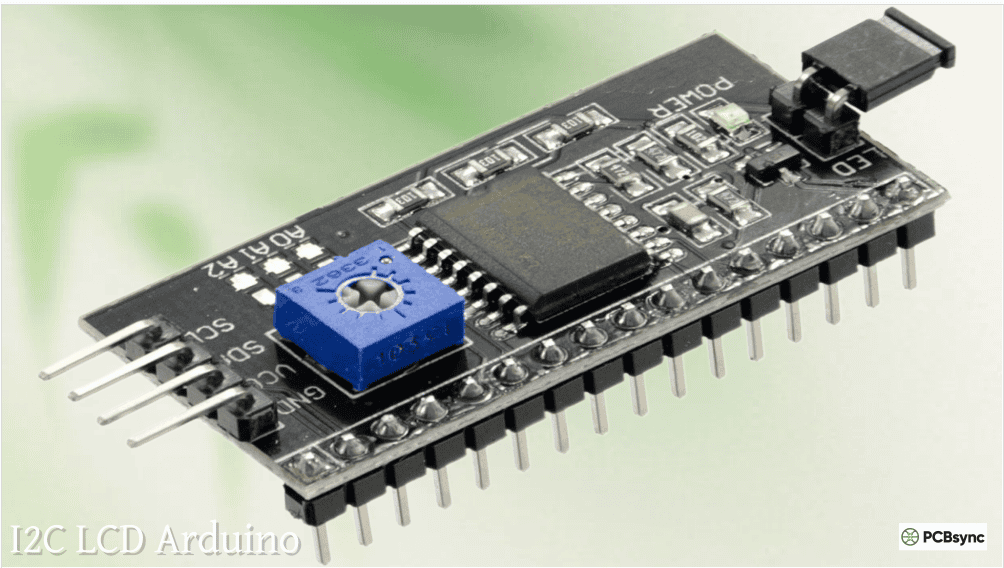
I2C allows connection of up to 128 devices on a two-wire bus, each with a unique address. Common I2C devices include OLED displays, real-time clocks, and various sensors. Both lines require external pull-up resistors (typically 4.7kΩ), though many breakout boards include these.
SPI (Serial Peripheral Interface) Communication
Pin
Function
Description
D10
SS
Slave Select
D11
MOSI
Master Out, Slave In
D12
MISO
Master In, Slave Out
D13
SCK
Serial Clock
SPI is the fastest serial protocol available on Arduino, ideal for high-speed devices like SD cards and TFT displays. Unlike I2C, each slave device requires a dedicated SS pin, limiting the practical number of devices you can connect.
The 6-pin ICSP (In-Circuit Serial Programming) header provides direct access to the ATmega328P for programming without the bootloader. This header is primarily used for burning bootloaders onto blank chips or programming via external programmers like USBasp.
Pin
Name
Function
1
MISO
Master In, Slave Out
2
VCC
5V Power
3
SCK
Serial Clock
4
MOSI
Master Out, Slave In
5
RESET
Reset Line
6
GND
Ground
The ICSP header duplicates the SPI signals from pins D11-D13, providing an alternative connection point for SPI devices or shields that use this header.
Special Function Pins
AREF (Analog Reference)
The AREF pin allows you to provide an external reference voltage for the ADC, improving measurement accuracy for lower voltage ranges. For example, connecting 3.3V to AREF and calling analogReference(EXTERNAL) gives finer resolution when measuring signals below 3.3V.
Reset Pin
The RESET pin restarts the microcontroller when pulled LOW. The onboard reset button connects to this pin through a 10kΩ pull-up resistor. You can trigger resets externally by momentarily grounding this pin, useful for watchdog circuits or remote reset functionality.
Arduino Uno Pinout vs ATmega328P Mapping
Understanding how Arduino pin numbers map to the actual ATmega328P pins is valuable when reading datasheets or working with advanced register manipulation.
Arduino Pin
ATmega328P Pin
Port
D0-D7
PD0-PD7
Port D
D8-D13
PB0-PB5
Port B
A0-A5
PC0-PC5
Port C
This mapping enables direct port manipulation for faster I/O operations. For example, writing to PORTD affects all pins D0-D7 simultaneously, which is significantly faster than individual digitalWrite() calls.
Practical Pin Usage Tips
After years of working with Arduino boards, here are my top recommendations for avoiding common pitfalls:
Avoid pins D0 and D1 during development. These serial pins conflict with USB communication, causing upload failures if components are connected. Only use them in final deployments where serial debugging isn’t needed.
Respect current limits. Each I/O pin handles 20mA safely, with an absolute maximum of 40mA. The total current for all pins combined shouldn’t exceed 200mA. Use transistors or MOSFETs for higher-current loads.
Use internal pull-ups when possible. Enable internal pull-up resistors with pinMode(pin, INPUT_PULLUP) to simplify button and switch circuits, eliminating external resistor requirements.
Reserve PWM pins for analog output. If your project needs LED dimming or motor control, plan your wiring to keep PWM-capable pins available for these functions.
Useful Resources for Arduino Uno Pinout
Resource
Description
Official Arduino Pinout PDF
High-resolution downloadable diagram
ATmega328P Datasheet
Complete microcontroller specifications
Arduino Language Reference
Programming function documentation
Arduino Schematics
Full circuit design files
Arduino Forum
Community support and discussions
Frequently Asked Questions
Can I use analog pins as digital pins on Arduino Uno?
Yes, all six analog pins (A0-A5) can function as digital I/O pins. They correspond to digital pins D14-D19. Use them exactly like regular digital pins with pinMode(), digitalRead(), and digitalWrite() functions. This effectively gives you 20 digital I/O pins instead of just 14.
What happens if I exceed the maximum current on a pin?
Exceeding the 40mA maximum per pin can permanently damage the ATmega328P microcontroller. Common symptoms include pins that no longer respond or erratic behavior. Always calculate current requirements and use appropriate current-limiting resistors for LEDs and other loads.
Why can’t I upload sketches when something is connected to pins D0 or D1?
Pins D0 (RX) and D1 (TX) are shared between your connected components and the USB-to-serial converter used for programming. Devices attached to these pins interfere with the upload process. Disconnect them before uploading, or design your circuit to use different pins.
How do I use more than one I2C device?
I2C is a bus protocol—connect all SDA lines together and all SCL lines together. Each device has a unique address, allowing the Arduino to communicate with specific devices. You can daisy-chain many I2C devices on the same two wires as long as their addresses don’t conflict.
What’s the difference between INPUT and INPUT_PULLUP pin modes?
INPUT configures a pin to read external signals but leaves it floating (undefined) when nothing is connected. INPUT_PULLUP enables an internal 20-50kΩ resistor that pulls the pin HIGH, providing a defined state. Use INPUT_PULLUP for buttons and switches to avoid floating input issues.
Conclusion
Mastering the Arduino Uno Pinout transforms you from a beginner copying tutorials to someone who can design original projects confidently. Each pin category serves specific purposes—power pins supply electricity, digital pins handle binary signals, analog pins measure continuous voltages, and communication pins enable device networking.
The key is understanding not just what each pin does, but how they interact. PWM pins create analog-like output, analog pins double as digital I/O, and communication protocols share pins with other functions. Planning your wiring before building prevents frustrating conflicts and wasted time.
Keep this guide bookmarked as you work through increasingly complex projects. With practice, the pinout becomes second nature, and you’ll find yourself reaching for the right pins without even thinking about it.
Inquire: Call 0086-755-23203480, or reach out via the form below/your sales contact to discuss our design, manufacturing, and assembly capabilities.
Quote: Email your PCB files to Sales@pcbsync.com (Preferred for large files) or submit online. We will contact you promptly. Please ensure your email is correct.
Notes: For PCB fabrication, we require PCB design file in Gerber RS-274X format (most preferred), *.PCB/DDB (Protel, inform your program version) format or *.BRD (Eagle) format. For PCB assembly, we require PCB design file in above mentioned format, drilling file and BOM. Click to download BOM template To avoid file missing, please include all files into one folder and compress it into .zip or .rar format.