Inquire: Call 0086-755-23203480, or reach out via the form below/your sales contact to discuss our design, manufacturing, and assembly capabilities.
Quote: Email your PCB files to Sales@pcbsync.com (Preferred for large files) or submit online. We will contact you promptly. Please ensure your email is correct.
Notes: For PCB fabrication, we require PCB design file in Gerber RS-274X format (most preferred), *.PCB/DDB (Protel, inform your program version) format or *.BRD (Eagle) format. For PCB assembly, we require PCB design file in above mentioned format, drilling file and BOM. Click to download BOM template To avoid file missing, please include all files into one folder and compress it into .zip or .rar format.
When factory automation systems need reliable communication across hundreds of meters with multiple devices on a single bus, RS485 becomes the backbone of industrial control. After designing RS485 networks for everything from water treatment plants to manufacturing lines, I’ve learned that successfully implementing Arduino RS485 systems requires understanding differential signaling, proper termination, and the critical role of the MAX485 transceiver. This isn’t just another Arduino project—it’s your entry into professional industrial communication protocols that power critical infrastructure worldwide.
Understanding RS485 Industrial Communication Protocol
RS485 (officially TIA/EIA-485-A) represents a physical layer specification for differential serial communication. Unlike the simple TTL serial that Arduino uses natively, RS485 employs two wires (A and B) carrying complementary signals. When wire A goes positive, wire B goes negative by the same amount. This differential signaling technique provides remarkable noise immunity—electromagnetic interference affects both wires equally, but since the receiver measures the voltage difference between them, the interference cancels out.
The protocol supports multi-drop configurations where up to 32 devices share the same two-wire bus. This topology proves far more economical than point-to-point wiring—imagine connecting 20 sensors across a factory floor using just one cable pair rather than running individual cables to each sensor. Modern RS485 transceivers with reduced loading allow even more devices per segment, sometimes exceeding 100 nodes on a single bus.
RS485 vs RS232: Why Industrial Systems Choose RS485
Parameter
RS485
RS232
Advantage
Maximum Distance
1200 meters
15 meters
RS485: 80× longer
Maximum Devices
32+ per segment
2 (point-to-point only)
RS485: Multi-drop capability
Signaling Method
Differential
Single-ended
RS485: Superior noise immunity
Common Mode Range
-7V to +12V
±15V
RS485: Better for industrial use
Data Rate
Up to 10 Mbps
Up to 1 Mbps
RS485: Faster at distance
Voltage Levels
±1.5V to ±6V differential
±5V to ±15V single-ended
RS485: Lower power
The distance capability alone explains RS485’s industrial dominance. While RS232 struggles beyond office environments, RS485 reliably communicates across entire facilities. The differential signaling resists electromagnetic interference from motors, welders, and variable frequency drives—the electrically noisy equipment typical in industrial settings.
MAX485 Transceiver Module: The Arduino RS485 Bridge
Arduino boards communicate using TTL serial at 0V/5V logic levels. RS485 requires differential signaling at different voltage levels. The MAX485 integrated circuit (and compatible chips like SP485, SN75176) bridges this gap, converting between TTL and RS485 electrical standards.
MAX485 Module Pinout and Functions
The typical MAX485 breakout board presents eight pins, though Arduino RS485 implementations typically use six:
Pin Name
Function
Arduino Connection
Purpose
VCC
Power Supply
5V
Powers the module (4.75-5.25V)
GND
Ground
GND
Common ground reference
DI
Driver Input
TX (Pin 1 or Software Serial)
TTL data from Arduino to RS485
RO
Receiver Output
RX (Pin 0 or Software Serial)
RS485 data to Arduino TTL
DE
Driver Enable
Digital Pin (e.g., Pin 8)
HIGH to transmit, LOW to receive
RE
Receiver Enable
Digital Pin (tied to DE)
LOW to receive, HIGH to disable
A
Non-inverting Data
A terminal on bus
Positive differential signal
B
Inverting Data
B terminal on bus
Negative differential signal
The DE (Driver Enable) and RE (Receiver Enable) pins control the module’s half-duplex operation. When your Arduino needs to transmit, set these pins HIGH to enable the driver. For reception, set them LOW to enable the receiver. These pins typically connect together to a single Arduino digital pin since you transmit or receive, never simultaneously in half-duplex mode.
The screw terminals (A and B) connect to the RS485 bus—the twisted pair cable running between all devices. Maintaining proper polarity is essential: connect all A terminals together across devices, and all B terminals together. Reversing these connections prevents communication.
Wiring Arduino RS485 Networks
Proper wiring determines success or frustration. RS485 isn’t as forgiving as USB or I2C when it comes to cable quality and topology.
Basic Two-Device Configuration
For learning RS485 fundamentals, start with two Arduino boards communicating over short distances:
Master Arduino Wiring:
Arduino 5V → MAX485 VCC
Arduino GND → MAX485 GND
Arduino Pin 1 (TX) → MAX485 DI
Arduino Pin 0 (RX) → MAX485 RO
Arduino Pin 8 → MAX485 DE and RE (tied together)
MAX485 A → Twisted pair wire (red/positive)
MAX485 B → Twisted pair wire (blue/negative)
Slave Arduino Wiring:
Identical pin connections as master
A terminal connects to master’s A via twisted pair
B terminal connects to master’s B via twisted pair
Share common ground between both Arduinos (critical!)
The common ground connection often gets overlooked but proves essential for reliable communication. While RS485’s differential signaling provides common-mode noise rejection, the receivers still need a voltage reference. Without common ground, significant ground potential differences can exceed the receiver’s common-mode range, causing communication failures.
Cable Selection and Bus Topology
Use shielded twisted pair (STP) cable for all RS485 installations. The twisting cancels magnetic interference, while the shield blocks electric field interference. CAT5/CAT6 Ethernet cable works well for RS485—it provides four twisted pairs with characteristic impedance around 100-120 ohms.
Maintain daisy-chain (linear) bus topology—not star or tree configurations. Run the cable from device to device in a line, like beads on a string. Branches or stubs longer than a few centimeters act as unterminated transmission lines, causing reflections that corrupt data. If you must create branches, keep them under 30 centimeters and use lower data rates.
Keep the entire bus length under 1200 meters at 100 kbps. At maximum 10 Mbps data rate, reduce the maximum length to about 12 meters. These limits stem from signal propagation delay and attenuation—higher frequencies attenuate faster, limiting practical distance.
Termination Resistors: When and Why
Signal reflections cause the most common RS485 problems. When the electrical signal reaches the cable end, impedance mismatch reflects energy back toward the source. These reflections interfere with the original signal, potentially corrupting data or preventing communication entirely.
Proper Termination Implementation
Place 120-ohm resistors between A and B terminals at both physical ends of the bus—only at the ends, not at intermediate devices. The 120-ohm value matches standard twisted pair cable characteristic impedance, minimizing reflections.
For distances under 10 meters or data rates below 9600 bps, termination often isn’t necessary—signal propagation time is short enough that reflections die out before the next bit arrives. As distance or speed increases, termination becomes mandatory.
Some argue for single-end termination when only one transmitter exists at one end of the bus, but this causes asymmetric signal quality. I recommend dual-end termination in all professional installations—the cost of two resistors pales compared to debugging intermittent communication failures.
Bias Resistors for Fail-Safe Operation
Termination alone doesn’t address idle bus conditions. When no device transmits, the differential voltage can float anywhere, potentially causing receivers to detect phantom data or oscillate. Bias resistors force the idle state to a defined voltage.
Add a pull-up resistor (typically 560-680 ohms) between A and VCC at one end of the bus, and a pull-down resistor (same value) between B and ground. This creates about 200mV differential voltage keeping receivers in a known state when idle. Place bias resistors at only one location—multiple bias points cause current loops and waste power.
Many professional RS485 transceivers include internal bias resistors you can enable via jumpers or switches. Check your module’s documentation before adding external bias.
Programming Arduino RS485 Communication
The code structure for RS485 differs from standard serial programming due to half-duplex operation requiring DE/RE pin control.
Master Transmitter Code Example
#include <SoftwareSerial.h>
#define DE_RE_PIN 8
#define RX_PIN 10
#define TX_PIN 11
SoftwareSerial rs485(RX_PIN, TX_PIN);
void setup() {
Serial.begin(9600); // Debug serial
rs485.begin(9600); // RS485 serial
pinMode(DE_RE_PIN, OUTPUT);
digitalWrite(DE_RE_PIN, LOW); // Start in receive mode
The critical element is DE/RE pin manipulation. Set HIGH before transmission, then LOW afterward to receive responses. The small delays after changing DE/RE allow the transceiver’s internal circuitry to settle—without these delays, the first characters often corrupt.
digitalWrite(DE_RE_PIN, LOW); // Default to receive mode
}
void loop() {
if (rs485.available()) {
String received = rs485.readStringUntil(‘\n’);
// Process received data
if (received.startsWith(“Master:”)) {
// Respond to master
delay(10); // Small delay before responding
digitalWrite(DE_RE_PIN, HIGH);
delay(1);
rs485.println(“Slave: Acknowledged!”);
delay(1);
digitalWrite(DE_RE_PIN, LOW);
}
}
}
The slave remains in receive mode continuously, only briefly enabling transmission when responding. This pattern typifies master-slave architectures where the master polls slaves, and slaves only transmit when addressed.
Using Hardware Serial vs SoftwareSerial
Arduino Uno and Nano provide one hardware UART (pins 0 and 1), while Mega offers four hardware UARTs. Hardware serial uses dedicated processor peripherals handling all timing and buffering, providing reliable high-speed communication up to 115200 bps or higher.
SoftwareSerial emulates UART functionality using software bit-banging on any digital pins. This flexibility allows multiple RS485 interfaces on boards with limited hardware UARTs. However, SoftwareSerial limitations include:
Maximum reliable speed around 57600 bps
Reception disabled during transmission
Higher processor overhead
Potential character loss during interrupts from other code
For production RS485 systems, prefer hardware serial when available. If you must use SoftwareSerial, keep baud rates at 9600-19200 bps and minimize other interrupt-driven code.
Modbus Protocol Over RS485
Many industrial devices speak Modbus—an application layer protocol defining how devices exchange data over various physical layers including RS485. Modbus defines message formats, addressing, function codes for reading/writing registers, and error checking with CRC.
The ModbusMaster and ModbusRTU libraries provide Arduino Modbus implementations. These libraries handle message framing, CRC calculation, and timeout management, letting you focus on application logic rather than low-level protocol details.
Example reading a holding register from a Modbus slave:
#include <ModbusMaster.h>
ModbusMaster node;
void setup() {
Serial.begin(9600);
node.begin(1, Serial); // Slave ID 1, using hardware Serial
}
void loop() {
uint8_t result = node.readHoldingRegisters(0, 10);
if (result == node.ku8MBSuccess) {
for (int i = 0; i < 10; i++) {
Serial.print(“Register “);
Serial.print(i);
Serial.print(“: “);
Serial.println(node.getResponseBuffer(i));
}
}
delay(1000);
}
Modbus over RS485 dominates industrial automation—programmable logic controllers (PLCs), variable frequency drives (VFDs), power meters, and countless sensors support this protocol. Arduino RS485 Modbus capabilities allow interfacing with professional industrial equipment.
Troubleshooting Common Arduino RS485 Issues
No Communication Between Devices
Symptoms: Transmitter sends data but receiver gets nothing, or only garbage characters.
Solutions: Verify A and B polarity—reversed connections are the number one RS485 problem. Confirm common ground connection between all devices. Check baud rate matches on all devices—mismatched rates produce garbled data or silence. Measure voltage on A and B lines with multimeter—you should see differential voltage (A more positive than B) during transmission. Absence suggests wiring problems or dead transceiver. Reduce data rate to 9600 bps and remove termination resistors for initial testing of short distances (under 1 meter). Once basic communication works, gradually increase distance and data rate while adding proper termination.
Intermittent Communication or Data Corruption
Symptoms: Communication works sometimes but randomly fails or produces corrupted characters.
Solutions: Add or check termination resistors—most intermittent problems stem from reflections on improperly terminated buses. Verify cable quality—use proper twisted pair, not random wire pairs. Separate RS485 cables from AC power lines by at least 30 centimeters to reduce electromagnetic interference. Lower the baud rate—higher speeds require better cables, shorter distances, and proper termination. Check DE/RE timing delays in code—increase delays after toggling these pins to 5-10ms if experiencing corruption of initial characters. Verify only one device transmits at a time—collision detection doesn’t exist in RS485, so simultaneous transmissions corrupt both messages.
Communication Fails at Distance
Symptoms: Devices communicate when close together but fail when separated by tens or hundreds of meters.
Solutions: Install termination resistors at both ends if not already present. Verify cable quality and type—CAT5/CAT6 Ethernet cable works well for RS485. Check for branches or stubs in the cable run—remove them or shorten to under 10 centimeters. Reduce data rate—1200 meters is achievable only at lower speeds like 9600-19200 bps. Add bias resistors to define idle bus state. Consider repeaters for distances exceeding 1200 meters—these amplify and regenerate signals allowing multi-kilometer runs.
Essential Resources and Documentation
Software Libraries
ModbusMaster Library: Comprehensive Modbus RTU protocol implementation for Arduino
GitHub: https://github.com/4-20ma/ModbusMaster
Install via Library Manager: Search “ModbusMaster”
Includes examples for reading/writing coils, registers, and handling multiple slaves
Turns Arduino into a Modbus device responding to master queries
Lower memory footprint than full protocol stacks
Ideal for sensor nodes in industrial networks
RS485 Library by Rob Tillaart: Half-duplex communication helper
GitHub: https://github.com/RobTillaart/RS485
Handles DE/RE pin management automatically
Implements Stream interface for familiar Serial-like usage
Hardware Resources and Datasheets
Resource
Description
Application
MAX485 Datasheet
Maxim Integrated transceiver specs
Understanding electrical characteristics
TIA/EIA-485-A Standard
Official RS485 specification
Professional implementation requirements
SN75176 Datasheet
Texas Instruments transceiver (MAX485 compatible)
Alternative transceiver specifications
Modbus Protocol Specification
Modbus Organization official docs
Implementing industrial protocols
Testing and Debugging Tools
USB to RS485 Converter: Connect Arduino RS485 bus to PC for monitoring and debugging. Tools like Hercules or RealTerm display raw RS485 traffic, helping diagnose protocol issues.
Logic Analyzer: Capture A, B, and DE/RE signals simultaneously to verify timing, polarity, and data integrity. Budget analyzers like Saleae clones work well for RS485 analysis.
Multimeter: Measure differential voltage on A/B lines during transmission (should be 1.5-6V differential). Check for common ground continuity and verify power supply voltages.
Online Communities and Support
Arduino Forum – Networking Section: Active community discussing serial protocols including RS485 implementations, troubleshooting common issues.
Modbus Organization: Official specifications, protocol updates, and implementation guidelines for industrial Modbus networks.
Industrial Automation Forums: Communities like PLCTalk.net include RS485 discussions from professionals deploying systems in production environments.
Real-World Arduino RS485 Applications
Industrial Sensor Networks
Manufacturing facilities deploy dozens of sensors monitoring temperature, pressure, flow rate, and other process variables. Traditional analog signals (4-20mA) or individual wired connections become costly and complex with many sensors. Arduino RS485 networks consolidate all sensors on a single twisted pair bus, dramatically reducing installation costs.
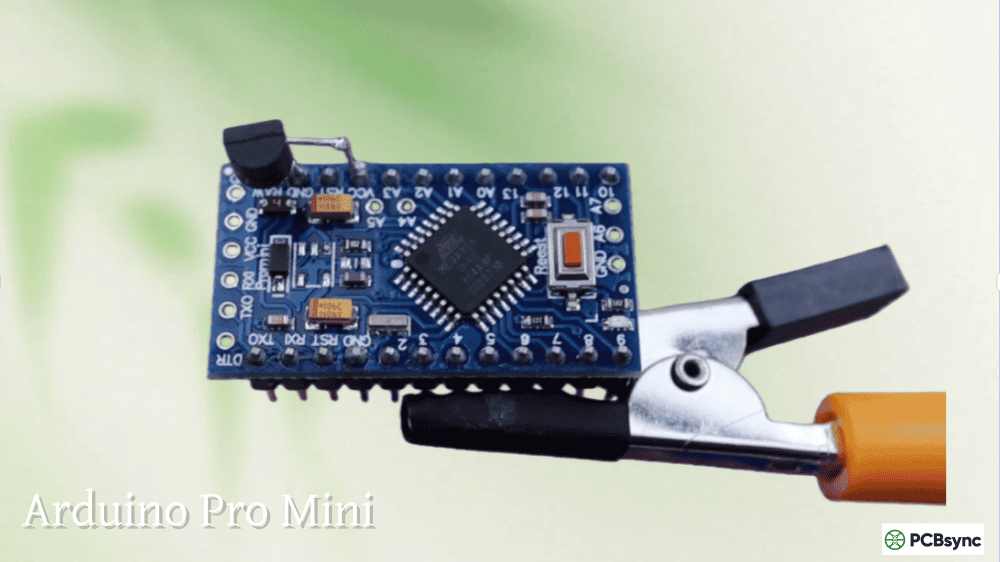
Each sensor node includes Arduino Pro Mini, RS485 transceiver, and sensor interface. The central data acquisition system (another Arduino or PLC) polls sensors periodically via Modbus RTU protocol. Data flows to SCADA systems for visualization, alarming, and historical trending.
Building Automation Systems
HVAC controls, lighting systems, and access control benefit from RS485’s long-distance multi-drop capabilities. A central Arduino RS485 controller manages multiple zones, each with local controllers handling thermostats, dampers, and zone sensors. The bus topology simplifies wiring compared to individual control runs.
The system implements custom protocols or standard Modbus for interoperability with commercial building automation equipment. Web interfaces provide monitoring and control via Ethernet-to-RS485 gateways.
Agricultural Monitoring
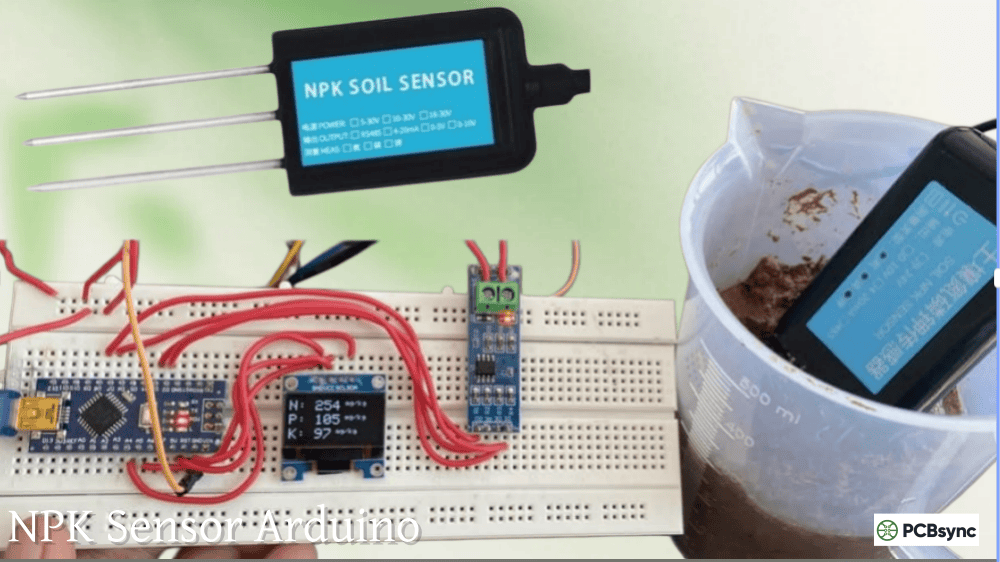
Greenhouses and farms span large areas where WiFi struggles and cellular proves expensive for numerous measurement points. RS485 cables run across properties carrying data from soil moisture sensors, weather stations, and irrigation controllers back to central locations.
Solar-powered Arduino nodes with RS485 operate for years on battery power due to the protocol’s efficient operation and low standby current. The master station aggregates data and uploads to cloud platforms for remote monitoring.
Frequently Asked Questions
Q: Can I use regular wire instead of twisted pair for Arduino RS485?
A: Regular parallel wire works only for very short distances (under 3 meters) at low data rates. Beyond trivial lengths, electromagnetic interference corrupts signals on non-twisted pairs. The twisting geometry causes magnetic fields from each wire to cancel—interference picked up by one wire is equally picked up by the other but inverted. Since RS485 receivers measure the difference, interference cancels out. Without twisting, both wires pick up interference identically, which doesn’t cancel when differentiated. Always use twisted pair—CAT5 Ethernet cable provides excellent affordable twisted pairs with consistent impedance. For industrial installations, use shielded twisted pair (STP) with the shield grounded at one end to block electric field interference.
Q: How many Arduino RS485 devices can I connect on one bus?
A: Standard RS485 allows 32 unit loads per segment. Classic MAX485 transceivers represent 1 unit load each, limiting you to 32 devices. Modern transceivers with reduced loading (1/4 or 1/8 unit load) allow 128 or 256 devices respectively on a single bus. However, practical limitations emerge before reaching theoretical maximums. With many devices, consider protocol overhead—if the master must poll each slave sequentially, update rates slow considerably. Network traffic and collision avoidance become concerns. For systems exceeding 32 devices, implement multiple RS485 segments with gateway devices bridging between them, or migrate to other protocols like CAN bus that better handle numerous nodes.
Q: Why does my Arduino RS485 communication work on the bench but fail in the field?
A: Bench testing typically involves short cable lengths (under 1 meter), low-noise environments, and single power supplies. Field installations face long cables (tens to hundreds of meters), electromagnetic interference from motors and other industrial equipment, and multiple power supplies creating ground potential differences. Field failures usually stem from missing termination resistors (essential for long cables), missing common ground connections (causing receiver errors), improper cable routing (too close to AC power lines), or insufficient shielding. To bridge bench-to-field reliability, test with full-length cables and add intentional interference sources (start a drill motor nearby) during development. Always implement termination and bias resistors before field deployment, even if they seem unnecessary during bench testing.
Q: Can Arduino RS485 and RS232 devices communicate directly?
A: No, RS485 and RS232 use incompatible electrical signaling. RS232 employs single-ended signaling with negative voltages for logic high, while RS485 uses differential signaling with both wires above ground. Connecting them directly damages equipment. Use RS232-to-RS485 converter modules bridging between protocols. These converters handle voltage level translation and single-ended to differential conversion. Some applications require protocol conversion beyond electrical—if RS232 device expects specific command formats incompatible with your RS485 protocol, implement protocol translation in microcontroller code or use intelligent protocol gateways. For new designs requiring both serial standards, use microcontrollers with multiple UARTs, one with RS232 transceiver for legacy equipment and another with RS485 transceiver for the industrial bus.
Q: What’s the difference between RS485 and RS422?
A: RS422 uses differential signaling like RS485 but operates in full-duplex mode requiring four wires (two twisted pairs)—one pair for each direction. RS485 operates half-duplex on two wires with devices sharing the same pair for both transmission and reception. RS422 allows only one driver but up to 10 receivers, suitable for point-to-multipoint communication in one direction (broadcast). RS485 supports multiple drivers (32+ devices), enabling true multi-drop bidirectional communication. Choose RS485 for multi-device networks where any device may need to transmit (industrial sensors reporting to controllers). Choose RS422 when one device broadcasts to many receivers without return communication (video distribution, clock distribution). Some transceivers support both modes via configuration, providing flexibility in application design.
Conclusion
Arduino RS485 integration opens access to industrial-grade communication that bridges hobbyist projects and professional automation systems. The protocol’s robust differential signaling, multi-drop capability, and kilometer-scale range make it ideal for applications where WiFi’s range or cellular’s recurring costs prove problematic.
Success with RS485 requires attention to details that simpler protocols forgive—proper termination, correct cable types, common ground connections, and careful DE/RE timing. These requirements aren’t arbitrary complexity but necessary responses to the physics of high-speed signaling over long cables in electrically noisy environments.
The combination of Arduino’s accessibility and RS485’s industrial pedigree creates opportunities for cost-effective solutions in agriculture, building automation, manufacturing, and beyond. Whether you’re retrofitting legacy Modbus equipment, building distributed sensor networks, or learning industrial protocols, Arduino RS485 implementations provide practical hands-on experience with communication standards that underpin modern industrial infrastructure.
Start with simple two-device configurations over short distances, master the fundamental concepts of differential signaling and half-duplex operation, then gradually expand to multi-device networks across realistic distances. The investment in understanding RS485 pays dividends throughout careers in embedded systems and industrial automation.
Inquire: Call 0086-755-23203480, or reach out via the form below/your sales contact to discuss our design, manufacturing, and assembly capabilities.
Quote: Email your PCB files to Sales@pcbsync.com (Preferred for large files) or submit online. We will contact you promptly. Please ensure your email is correct.
Notes: For PCB fabrication, we require PCB design file in Gerber RS-274X format (most preferred), *.PCB/DDB (Protel, inform your program version) format or *.BRD (Eagle) format. For PCB assembly, we require PCB design file in above mentioned format, drilling file and BOM. Click to download BOM template To avoid file missing, please include all files into one folder and compress it into .zip or .rar format.