Inquire: Call 0086-755-23203480, or reach out via the form below/your sales contact to discuss our design, manufacturing, and assembly capabilities.
Quote: Email your PCB files to Sales@pcbsync.com (Preferred for large files) or submit online. We will contact you promptly. Please ensure your email is correct.
Notes: For PCB fabrication, we require PCB design file in Gerber RS-274X format (most preferred), *.PCB/DDB (Protel, inform your program version) format or *.BRD (Eagle) format. For PCB assembly, we require PCB design file in above mentioned format, drilling file and BOM. Click to download BOM template To avoid file missing, please include all files into one folder and compress it into .zip or .rar format.
When you need to control high-power devices with your Arduino board, the reality of current and voltage limitations hits fast. Standard Arduino digital outputs max out around 40mA at 5V, which won’t even light up a decent LED strip, let alone control motors, pumps, or household appliances. That’s where the Arduino Relay Shield becomes essential for any serious embedded system project.
As a PCB engineer who’s designed control systems for everything from industrial automation to smart home installations, I can tell you that relay shields represent the most practical solution for bridging the gap between microcontroller logic and real-world power switching. They eliminate the complexity of designing custom driver circuits while providing industrial-grade switching capability in a plug-and-play package.
Understanding the Arduino Relay Shield Architecture
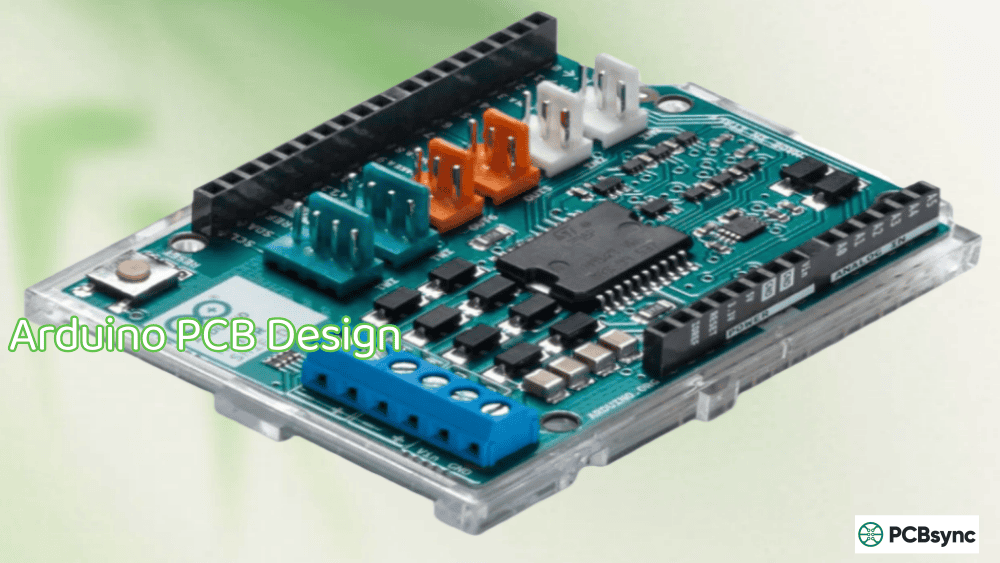
The Arduino Relay Shield is a stackable expansion board that mounts directly onto compatible Arduino boards through standard header connections. At its core, the shield integrates electromagnetic relays with driver circuitry, protection components, and terminal blocks for external connections. This pre-built solution transforms your Arduino into a capable controller for high-power AC and DC loads.
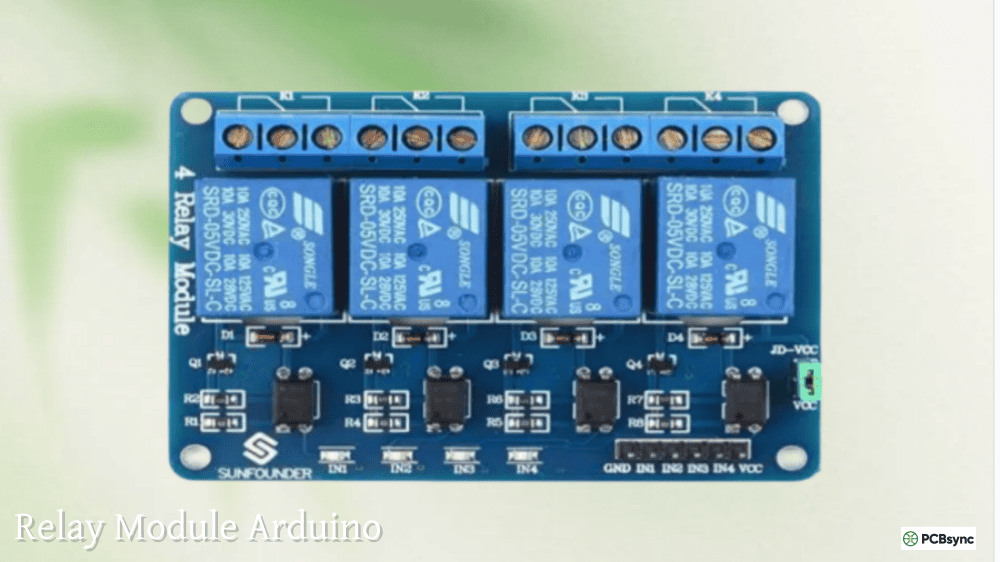
What Makes Relay Shields Different from Relay Modules
Many engineers confuse relay shields with standalone relay modules. While both serve similar functions, the implementation differs significantly:
Arduino Relay Shield:
Direct stacking onto Arduino headers
No external wiring required for control signals
Integrated power distribution from Arduino
Status LEDs built into the board
Compact footprint matching Arduino form factor
Optional prototyping areas on some models
Standalone Relay Modules:
Separate board requiring jumper wires
Manual pin configuration needed
Independent power supply often required
Flexible placement but more complex integration
Generally lower cost per relay
The shield approach prioritizes convenience and reliability over cost, which matters when you’re building systems that need to work consistently without troubleshooting connection issues.
Core Components of Relay Shield Design
Understanding what’s inside a quality relay shield helps you evaluate different options and troubleshoot issues effectively. Here’s the anatomy:
Component
Function
Engineering Significance
Electromagnetic Relays
Physical switching mechanism
SPDT configuration provides NO/NC/COM terminals
Driver Transistors
Amplify Arduino signal to relay coil current
Typically NPN BJT or N-channel MOSFET
Flyback Diodes
Suppress inductive voltage spikes
Critical for protecting driver transistors
Optocouplers (premium models)
Galvanic isolation between logic and power
Protects Arduino from high-voltage transients
Status LEDs
Visual relay state indication
Simplifies debugging and operation monitoring
Screw Terminals
High-current wire connections
Typically 10-12 AWG wire capacity
Pin Headers
Arduino interface
Standard 0.1″ pitch stackable configuration
The quality and implementation of these components vary dramatically between manufacturers, which directly impacts reliability and safety.
Arduino Relay Shield Specifications and Ratings
Different relay shields offer varying capabilities. Understanding the specifications helps you select the appropriate shield for your application requirements.
Official Arduino 4 Relays Shield
The official Arduino shield establishes the baseline specification:
Electrical Ratings:
Contact Rating: 10A @ 250V AC or 10A @ 30V DC
Relay Configuration: DPDT with contacts in parallel for higher current
Effective Contact Rating: 20A per relay (parallel configuration)
Important Design Note: The official shield uses pins 4, 7, 8, and 12 rather than consecutive pins. This non-standard assignment often confuses engineers expecting pins 4-7. Always verify pin assignments before coding.
Third-Party Relay Shield Variants
Several manufacturers produce enhanced versions with additional features:
DFRobot Relay Shield V2.1:
Optocoupler isolation on all channels
XBee socket for wireless integration
External power supply support (6-12V recommended)
Individual test buttons per relay
Extended pin breakouts for additional sensors
Seeed Studio Relay Shield V3.0:
Standard pins 4-7 assignment (more intuitive)
Status LEDs for each relay
Arduino UNO/Leonardo/Seeeduino compatible
No external power required for 4-relay operation
IOREF voltage compatibility
Keyestudio 4-Channel Relay Shield:
Active HIGH triggering (simpler logic)
Dedicated indicator LEDs
Pin mapping: D4-D7 consecutive
Cost-effective option for budget projects
Relay Contact Ratings Explained
The contact ratings require careful interpretation:
AC Voltage Rating (typically 250V AC @ 10A):
Refers to resistive loads only
Inductive loads (motors, solenoids) reduce current capacity
Power factor affects actual switching capability
Maximum: 2500VA for resistive loads
DC Voltage Rating (typically 30V DC @ 10A):
DC arc suppression more difficult than AC
Higher voltage DC switching reduces current capacity
Inductive DC loads particularly challenging
Flyback diodes essential for inductive loads
Practical Derating Guidelines:
For reliable long-term operation, derate relay contacts:
Resistive loads: Use 80% of rated current
Inductive loads: Use 50% of rated current
Motor loads: Use 40% of rated current and add snubber circuits
Lamp loads: Account for 10x inrush current during cold filament startup
Optocoupler Isolation: Safety Feature in Premium Shields
One of the most significant differentiators between basic and professional-grade relay shields is optocoupler isolation. This feature deserves special attention because it fundamentally affects system safety and reliability.
How Optocoupler Isolation Works
An optocoupler creates electrical isolation using light:
Arduino digital output drives an LED inside the optocoupler
Light from the LED activates a phototransistor
Phototransistor switches current to the relay coil
No electrical connection exists between Arduino and relay circuits
This optical coupling provides galvanic isolation, meaning zero electrical path between the low-voltage logic side and high-voltage switching side.
Engineering Benefits of Isolation
Transient Protection: When relays switch inductive loads, they generate voltage spikes that can exceed 1000V for microseconds. Without isolation, these transients can propagate back to the Arduino through driver transistors, potentially damaging the microcontroller or corrupting memory. Optocouplers block these transients completely.
Ground Loop Elimination: In systems switching AC mains power, ground potential differences between the Arduino power supply and the load can create current flow through unexpected paths. Optocouplers break these ground loops, preventing erratic behavior and reducing electromagnetic interference.
Noise Immunity: High-power loads generate electrical noise during switching. Motors, in particular, produce commutator noise that couples into nearby circuits. Optical isolation provides immunity ratings typically exceeding 1000V, ensuring clean operation even in electrically harsh environments.
Enhanced Safety: The isolation barrier provides a degree of protection if a relay contact fails short to a high-voltage conductor. While not a substitute for proper fusing and circuit protection, it adds a safety layer between high voltage and the Arduino ecosystem.
Isolation Specifications to Consider
Quality optocouplers provide:
Isolation Voltage: 2500-5000V AC (1 minute test voltage)
Common Mode Transient Immunity: 15-25 kV/μs
Current Transfer Ratio: 50-200% (efficiency of light coupling)
Response Time: <100μs for most applications
Practical Applications for Arduino Relay Shields
Understanding real-world applications helps contextualize the engineering decisions behind relay shield design. Here’s where these shields excel:
Home Automation Systems
Home automation represents the most common application:
Lighting Control:
Switch 120V/240V AC lighting loads
Support both resistive (LED, CFL) and inductive (transformer-based) fixtures
Integrate with motion sensors, timers, and scheduling systems
Enable remote control via WiFi or Bluetooth modules
HVAC Integration:
Control furnace and air conditioner relays
Switch 24V AC thermostat circuits safely
Interface with temperature sensors for automatic climate control
Reduce energy consumption through smart scheduling
Can I control multiple relay shields with a single Arduino?
Yes, you can control multiple relay shields using different GPIO pins. The first shield stacks directly onto the Arduino, while additional shields connect via jumper wires since physical stacking would conflict with the same pins. For example, if Shield #1 uses pins 4, 7, 8, and 12, you can connect Shield #2 to pins 9, 10, 11, and 13. Some advanced shields use I2C communication, which allows addressing up to 64 relay boards using only two pins (SDA and SCL). This approach is more scalable for systems requiring many relays. Remember that each relay draws 70-90mA, so power supply capacity becomes the limiting factor when adding multiple shields.
Do I need an external power supply for the relay shield?
It depends on your specific shield and application. The official Arduino Relay Shield can operate from the Arduino’s onboard 5V regulator when powered via the barrel jack (7-12V DC input), but this requires a power supply capable of delivering at least 1A. USB power is insufficient and will cause brown-outs with multiple relays active. For reliable operation, especially with all four relays and additional sensors or modules, use a dedicated 9V DC power supply rated for at least 1.5A connected to Arduino’s barrel jack. Some professional relay shields include separate power terminals and require an external supply, which actually improves reliability by isolating relay power from logic power.
What’s the difference between NO, NC, and COM terminals on the relay?
These terminals define the relay’s switching configuration. COM (Common) is the moving contact that switches between the other two terminals. NO (Normally Open) means the contact is open (disconnected from COM) when the relay is de-energized and closes when energized. NC (Normally Closed) means the contact is connected to COM when de-energized and opens when energized. For most applications, you connect your load between COM and NO so it turns on when the Arduino activates the relay. Use NC for fail-safe applications where you want the load active by default and only disabled when the Arduino specifically commands it, such as emergency lighting or alarm systems.
Can I use the Arduino Relay Shield to control DC motors directly?
Yes, but with important caveats. Relay contacts can switch DC motors, but motor starting current (inrush) can be 8-10 times the running current, which may exceed relay ratings even if running current seems safe. For example, a motor with 2A running current might draw 20A for 100-200ms during startup. Additionally, motors generate electrical noise and back-EMF that can damage relays over time. For reliable motor control, derate the relay to 40% of its rated current capacity and add a flyback diode across the motor terminals (cathode to positive). Better yet, consider using a dedicated motor driver shield for DC motors, as it provides PWM speed control and better protection. Relays work fine for simple on/off motor control at reduced ratings but aren’t optimal for frequent cycling or speed control.
Why does my relay shield work in testing but fail when connected to real loads?
This is typically a power supply issue. Many engineers test with LEDs or small devices that draw minimal current, and everything works perfectly. When they connect the intended load (pump, heater, motor), the Arduino resets or relays chatter. The problem is voltage sag. When relays energize under load, the sudden current draw causes the power supply voltage to drop below the Arduino’s minimum operating voltage (typically 6.5V on VIN or 4.5V on 5V rail), triggering a brown-out reset. The solution is upgrading to a higher-current power supply (minimum 1.5A for 4-relay shields) and adding a 1000μF capacitor across the power input to buffer voltage transients. Also verify your relay contacts can handle the load current with proper derating for inductive loads.
Conclusion
The Arduino Relay Shield represents a mature, proven solution for controlling high-power devices from microcontroller logic levels. As a pre-built switching solution, it eliminates weeks of design work and the risks associated with custom relay driver circuits, letting you focus on application logic rather than hardware debugging.
From an engineering perspective, relay shields offer the right balance of capability, convenience, and cost for the majority of control applications. The mechanical relay provides true galvanic isolation between control and load circuits, handles both AC and DC switching naturally, and offers the current capacity needed for real-world loads. Premium shields with optocoupler isolation add critical safety margins for professional and commercial applications.
Success with relay shields requires understanding their specifications, respecting electrical ratings, and implementing proper wiring practices. The current capacity ratings are real limits, not suggestions. Derating for inductive loads, using adequate power supplies, and following electrical codes aren’t optional steps but essential practices that separate functioning prototypes from reliable deployed systems.
Whether you’re building home automation systems, industrial controls, agricultural equipment, or robotic platforms, the Arduino Relay Shield provides proven switching capability in a package designed to work reliably with Arduino’s ecosystem. The extensive community support, available documentation, and variety of compatible shields ensure you can find the right solution for virtually any switching application within the relay’s electrical ratings.
Master the fundamentals covered here, select quality components from reputable manufacturers, follow best practices for wiring and programming, and your relay shield projects will deliver the reliable high-power control that microcontrollers alone cannot provide.
Inquire: Call 0086-755-23203480, or reach out via the form below/your sales contact to discuss our design, manufacturing, and assembly capabilities.
Quote: Email your PCB files to Sales@pcbsync.com (Preferred for large files) or submit online. We will contact you promptly. Please ensure your email is correct.
Notes: For PCB fabrication, we require PCB design file in Gerber RS-274X format (most preferred), *.PCB/DDB (Protel, inform your program version) format or *.BRD (Eagle) format. For PCB assembly, we require PCB design file in above mentioned format, drilling file and BOM. Click to download BOM template To avoid file missing, please include all files into one folder and compress it into .zip or .rar format.