Inquire: Call 0086-755-23203480, or reach out via the form below/your sales contact to discuss our design, manufacturing, and assembly capabilities.
Quote: Email your PCB files to Sales@pcbsync.com (Preferred for large files) or submit online. We will contact you promptly. Please ensure your email is correct.
Notes: For PCB fabrication, we require PCB design file in Gerber RS-274X format (most preferred), *.PCB/DDB (Protel, inform your program version) format or *.BRD (Eagle) format. For PCB assembly, we require PCB design file in above mentioned format, drilling file and BOM. Click to download BOM template To avoid file missing, please include all files into one folder and compress it into .zip or .rar format.
Power Over Ethernet (POE) fundamentally changes how we deploy networked Arduino projects. Instead of running separate power cables alongside network cables, POE delivers both data and power through a single Ethernet cable. This isn’t just convenient—it’s transformative for installations where running AC mains would be impractical, expensive, or dangerous. As a PCB engineer who’s designed industrial monitoring systems and remote sensor networks, I can tell you that Arduino POE Ethernet opens up deployment scenarios that would otherwise require significant electrical infrastructure.
The beauty of POE lies in its standardization. The IEEE 802.3af and 802.3at specifications ensure compatibility across manufacturers, meaning an Arduino POE device can draw power from any compliant switch or injector. This interoperability makes POE particularly valuable for commercial installations where equipment from different vendors must coexist reliably.
Understanding POE Standards and Arduino Compatibility
Before diving into specific Arduino implementations, understanding the POE standards prevents costly mistakes and ensures reliable operation.
IEEE 802.3af (POE) Standard
The original POE standard, ratified in 2003, established the foundation for power delivery over Ethernet:
Power Specifications:
Maximum power at PSE (Power Sourcing Equipment): 15.4W per port
Available power at PD (Powered Device): 12.95W
Power loss in cable: Up to 2.45W (assumes 100m Cat5 cable)
Voltage range: 44-57V DC
Maximum current: 350mA
Key Technical Requirements:
The standard mandates a detection and classification sequence before power delivery. The PSE applies a low voltage (2.8-10V) and measures resistance. A PD must present 23.75kΩ to 26.25kΩ to signal its presence. After detection, the PSE classifies power requirements (0-3), then ramps up voltage to operating range.
From an engineering perspective, this negotiation prevents damage to non-POE equipment accidentally connected to POE ports. Without proper detection circuitry, devices won’t receive power even when connected to active POE switches.
IEEE 802.3at (POE+) Standard
The 2009 update doubled available power to support devices like PTZ cameras and access points:
Enhanced Specifications:
Maximum power at PSE: 30W per port
Available power at PD: 25.5W
Voltage range: 50-57V DC (tighter than 802.3af)
Maximum current: 600mA
Backward compatible with 802.3af devices
Classification Extension:
POE+ adds Class 4 (25.5W) to the power classes. The detection mechanism remains identical to 802.3af, ensuring backward compatibility. POE+ PSEs can power both POE and POE+ devices, automatically providing appropriate power levels.
Passive POE vs. Standards-Compliant POE
Understanding this distinction is critical for Arduino implementations:
Passive POE:
No detection or negotiation
Constant voltage applied to cable (typically 12V, 24V, or 48V)
No standardized pinout (varies by manufacturer)
Simple and inexpensive
Risk of damage to non-POE devices
Common in budget equipment and DIY projects
Standards-Compliant POE (802.3af/at):
Active detection and classification
Negotiated power delivery
Standardized voltage (44-57V)
Protected against non-POE device connection
Higher cost but safer and more flexible
Required for commercial installations
Most Arduino POE solutions use passive POE for cost reasons, but understanding standards-compliant POE helps when interfacing with professional network equipment.
POE Power Delivery Modes
The IEEE standards define two power injection methods:
Mode
Power Pairs
Data Pairs
Notes
Mode A (Alternative A)
Pairs 1/2 and 3/6
Pairs 1/2 and 3/6
Power and data share same pairs via center taps
Mode B (Alternative B)
Pairs 4/5 and 7/8
Pairs 1/2 and 3/6
Power uses spare pairs (10/100Base-T only)
Pin Assignments for Mode B (Common in Passive POE):
Pin 1 (TX+): Data
Pin 2 (TX-): Data
Pin 3 (RX+): Data
Pin 4: DC+ (Power)
Pin 5: DC+ (Power)
Pin 6 (RX-): Data
Pin 7: DC- (Ground)
Pin 8: DC- (Ground)
Arduino POE implementations typically use Mode B with passive voltage on pins 4/5 (positive) and 7/8 (negative) because it’s simpler to implement and works with 10/100Base-T Ethernet that only uses two pairs for data.
Arduino POE Hardware Options
Several hardware approaches exist for adding POE capability to Arduino projects, each with different complexity and capability levels.
Arduino Ethernet Shield with POE Module
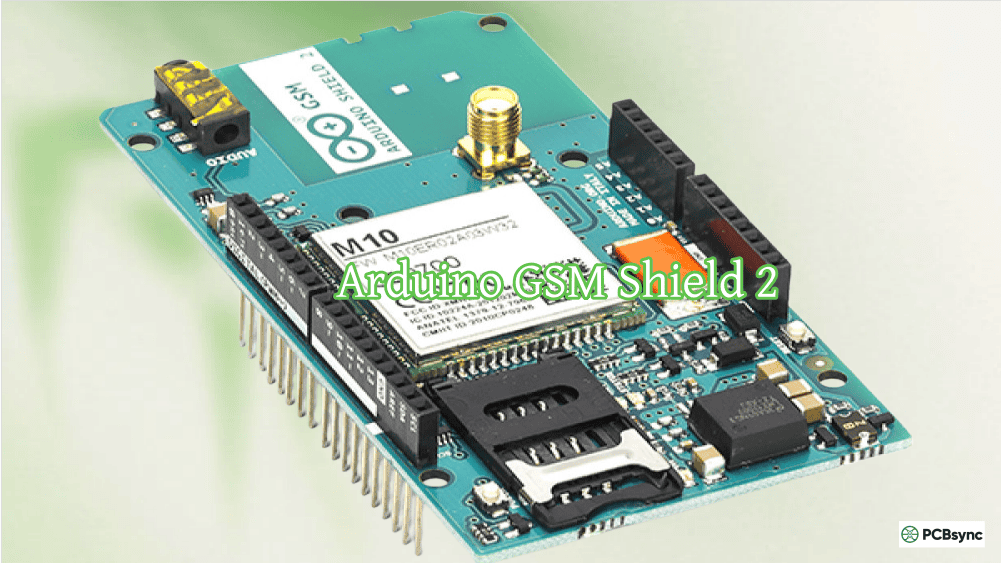
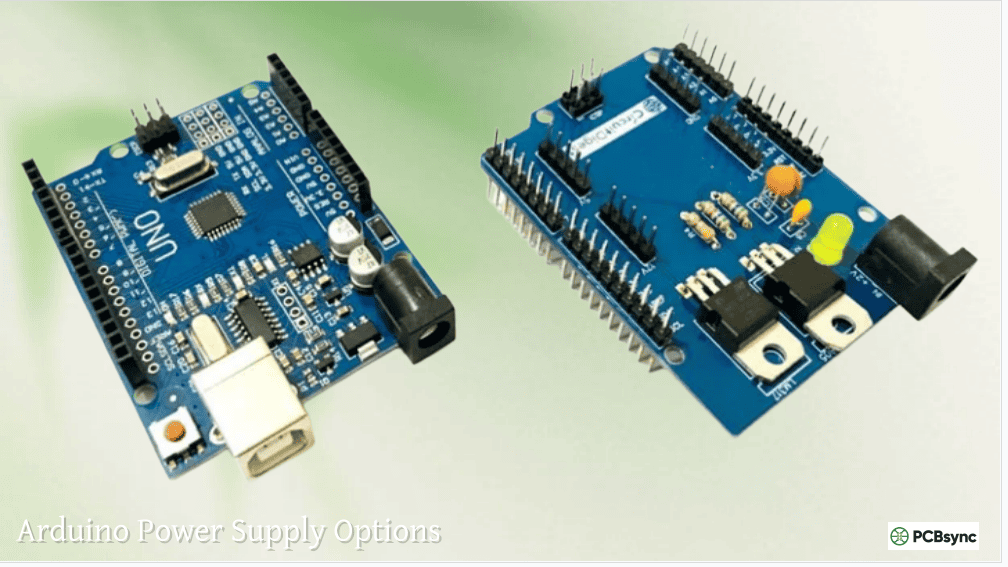
The official Arduino Ethernet Shield 2 supports an optional POE module that plugs into dedicated headers:
Hardware Specifications:
Ethernet Controller: W5500 with 32KB buffer
POE Module: Separate purchase (AG9120)
Input Voltage: 36-57V DC (IEEE 802.3af compliant)
Output to Arduino: Regulated to connect to VIN pin
Power Available: Up to 12.95W (802.3af limit)
Detection Circuit: 25kΩ signature resistor for standards compliance
POE Module Installation:
The AG9120 module mounts on the shield’s POE header, requiring no additional wiring. The module handles voltage conversion from 48V POE to a level suitable for the Arduino’s onboard regulator (typically 9-12V to VIN).
Important Note: The official POE module is IEEE 802.3af compliant, meaning it will only receive power from standard-compliant PSEs. It won’t work with passive POE injectors unless they implement proper detection circuitry.
Current Status: Arduino has discontinued the Ethernet Shield 2 with POE module. Finding genuine modules requires searching secondary markets or finding new-old-stock from distributors.
DFRobot W5500 Ethernet POE Shields
DFRobot produces several POE-capable shields that offer alternatives to the discontinued Arduino options:
DFRobot W5500 Ethernet POE Shield (DFR0850):
Technical Specifications:
Feature
Specification
Ethernet Chip
W5500 hardwired TCP/IP controller
SPI Speed
Up to 80 MHz
POE Standard
IEEE 802.3af Class 0
Input Voltage
37-57V DC
Output Power
Up to 13W available to system
Form Factor
Arduino UNO compatible
Additional Features
MicroSD card slot, multiple I/O ports
Key Differentiators:
The DFRobot shield integrates POE circuitry directly on the board rather than using a separate module. This integration provides more reliable power delivery and eliminates the module interface that can cause connection issues.
The shield includes multiple Gravity-compatible ports (I2C, UART, digital, analog), making it excellent for sensor-heavy IoT applications where POE simplifies deployment.
POE Implementation:
The onboard POE circuit uses a switching regulator rather than linear regulation, improving efficiency significantly. At 48V input and 5V/2A output, a linear regulator would dissipate over 86W as heat—completely impractical. The switching converter achieves 85-90% efficiency, reducing heat generation and allowing the shield to deliver usable power to peripherals.
Arduino Ethernet Board with POE
The Arduino Ethernet board (now discontinued but available used) integrated both Ethernet and POE into a single board rather than using a shield:
Hardware Configuration:
Microcontroller: ATmega328
Ethernet: W5100 TCP/IP controller
POE Module: Included (not optional)
Form Factor: Arduino UNO size but without USB-to-serial
Programming: Requires FTDI cable or USB-to-serial adapter
Advantages:
Compact single-board solution
Lower profile than stacked shields
Integrated POE eliminates compatibility concerns
Limitations:
No USB programming (requires external adapter)
W5100 chip less capable than newer W5500
Discontinued—availability limited
Passive POE Injectors and Splitters
For projects using standard Arduino boards without built-in POE support, passive POE injectors and splitters provide a cost-effective solution:
Typical Passive POE Setup:
Injector at Network Switch:
Input: Ethernet from switch/router
Input: 12V or 24V DC power supply
Output: Combined data + power on single Ethernet cable
Installation: Near network equipment
Splitter at Arduino Location:
Input: POE Ethernet cable
Output 1: Standard Ethernet to Arduino Ethernet Shield
Output 2: DC power (barrel jack) to Arduino VIN
Installation: Near Arduino
Passive POE Specifications:
Parameter
Typical Values
Input Voltage
12V, 24V, or 48V DC
Output Current
500mA to 2A depending on model
Power Loss
0.5-1.5W in cable
Connector Types
Screw terminals, barrel jacks, or USB
Cost
$5-20 per injector/splitter pair
Engineering Considerations:
Passive POE lacks the protection of standards-compliant systems. Connecting a passive POE cable to non-POE equipment can damage devices. Always label cables clearly and consider adding polarity protection diodes if building custom splitters.
The voltage drop in Ethernet cables becomes significant at higher currents. For a 100m Cat5e cable with 24AWG conductors:
Resistance per wire: ~8.5Ω
Round-trip resistance (two wires): ~17Ω
Voltage drop at 1A: 17V
At 12V input, output would be negative (unusable)
At 24V input, output would be 7V (marginal)
At 48V input, output would be 31V (acceptable)
This math explains why POE standards use 48V—it maintains adequate voltage even with cable losses.
This creates a simple web server accessible at the Arduino’s IP address, displaying real-time sensor data. The POE connection eliminates power supply concerns—ideal for remote monitoring installations.
Real-World Arduino POE Applications
Understanding practical use cases helps contextualize why POE matters for certain projects.
Industrial Environment Monitoring
Manufacturing facilities require environmental monitoring without disrupting production:
Typical Implementation:
Arduino with POE Ethernet in weatherproof enclosure
Temperature, humidity, and vibration sensors
Data logging to network storage
Alert system for out-of-spec conditions
Single Cat6 cable provides both network and power
Advantages:
No AC mains required at sensor location
Simplified installation (single cable)
Centralized power (UPS at network closet protects all sensors)
Easy relocation as facility layout changes
Building Automation
HVAC control, lighting management, and security integration benefit from POE:
Example System:
Multiple Arduino POE nodes throughout building
Each controls local equipment (fans, dampers, lights)
Central server coordinates based on occupancy and schedule
Power failure handling via UPS at network rack
Cost Analysis:
Traditional approach requires:
Electrical conduit to each control point: $150-300 per location
Licensed electrician installation: $500+ per location
Permits and inspection: $200-500
POE approach requires:
Cat6 cable installation: $50-100 per location
No permits required (low voltage)
IT staff can handle deployment: Included in overhead
For 10 control points, POE saves $5,000-8,000 in installation costs alone.
Remote Data Acquisition
Scientific research, agriculture, and environmental studies require data collection in locations without convenient power:
Deployment Scenario:
Weather station 200 feet from building
Solar radiation, wind speed, precipitation sensors
Available from 802.3af POE: 12.95W Safety margin: 10× (extremely comfortable)
Even with cable losses over 200 feet, adequate power remains. Without POE, running AC mains would require trenching, conduit, weatherproof boxes, and electrical permits—easily $3,000+ vs. $200 for buried Cat6.
Troubleshooting POE Arduino Installations
Field experience reveals common failure modes and their solutions.
No Power to Arduino
Symptom: Arduino doesn’t power on when connected via POE
Diagnostic Steps:
Verify POE Voltage at Cable:
Disconnect from Arduino
Measure voltage between pins 4/5 and 7/8
Should read 48V ±10% for standards POE
Should match injector voltage for passive POE
Check Shield POE Circuitry:
If using module-based shield, verify module seated properly
Check for damaged components on POE section
Measure voltage after POE converter (should be 9-12V)
Test with Standard Power:
Remove Ethernet cable
Power Arduino via USB or barrel jack
If this works, POE circuitry is faulty
If this fails, Arduino has separate problem
Common Causes:
Passive POE voltage too high/low for shield’s converter
802.3af shield connected to non-compliant passive injector (no detection)
Damaged POE converter IC from reverse polarity or overvoltage
Poor solder joints on POE module connector
Intermittent Network Connection
Symptom: Ethernet works sometimes but drops randomly
Analysis:
This typically indicates power issues rather than network problems:
Power Supply Insufficient:
POE injector can’t deliver required current
Cable too long causing excessive voltage drop
Other devices on same POE switch drawing too much power
Test: Measure Arduino’s 5V rail voltage under load:
Should remain above 4.75V
If drops below 4.5V, brown-out resets occur
If drops below 4.0V, Ethernet controller may malfunction
Solutions:
Upgrade POE injector to higher current rating
Reduce cable length or use larger gauge cable
Reduce Arduino’s power consumption (dim LEDs, remove unnecessary peripherals)
Switch to dedicated POE port (if sharing switch port with other devices)
POE Module Documentation: Detailed on tutorial page
Circuit diagrams for DIY POE implementation
IEEE Standards Documentation
POE Standards:
IEEE 802.3af: Original POE standard (2003)
IEEE 802.3at: POE+ standard (2009)
IEEE 802.3bt: Latest standard supporting up to 90W (2018)
Access through IEEE Xplore (paid) or search for tutorial summaries online.
Development and Testing Tools
Network Tools:
Wireshark: Packet capture and analysis (https://www.wireshark.org)
Advanced IP Scanner: Network device discovery
PuTTY or similar: Serial debugging interface
Hardware Tools:
Multimeter: Voltage and continuity testing
POE Tester: Verifies POE presence and voltage
Network Cable Tester: Checks cable continuity and pinout
Frequently Asked Questions
Can I use a regular Ethernet shield with a POE splitter?
Yes, absolutely. A POE splitter separates power and data from the POE cable, providing standard Ethernet to any Ethernet shield and DC power (via barrel jack or other connector) to the Arduino’s power input. This approach works with any Arduino and any Ethernet shield, making it very flexible. However, you’ll need both an injector (at the network switch) and a splitter (at the Arduino), which adds cost and takes up space. The splitter typically outputs 5V, 9V, or 12V depending on the model—verify it matches your Arduino’s power input requirements. Most output to the barrel jack, which feeds Arduino’s VIN pin through the onboard regulator.
What’s the maximum cable length for Arduino POE installations?
Ethernet standards specify a maximum of 100 meters (328 feet) per cable segment, and POE operates within this same limit. However, practical limits depend on power consumption. Higher current draw increases voltage drop in the cable’s conductors. For low-power Arduino projects (under 500mA total), 100 meters works fine with standard Cat5e cable. For higher power applications, consider using Cat6 (slightly larger conductors) or limiting distance to 50-75 meters. The voltage drop formula is: Vdrop = I × R, where R for Cat5e is approximately 0.188Ω per meter (round trip). At 500mA over 100m, you’d lose about 9.4V, which is acceptable with 48V POE but problematic with 12V passive POE.
Do I need a special network switch for Arduino POE projects?
It depends on your POE implementation. For IEEE 802.3af/at compliant Arduino boards (like those with the official POE module), you need either a POE-capable network switch or a separate POE injector. POE switches cost more but simplify installation when powering multiple devices. Single-port POE injectors ($20-50) insert inline between a standard switch and your Arduino, adding POE to one port economically. For passive POE setups, you can use any standard switch plus passive POE injectors/splitters, which are cheaper but lack the safety features of standards-compliant equipment. Managed POE switches offer additional benefits like remote port power cycling and per-port power monitoring.
How much power can I actually use for sensors and peripherals with POE?
With IEEE 802.3af POE, the maximum available at the powered device is 12.95W, but your Arduino and Ethernet shield consume some of this. A typical Arduino UNO draws about 50mA @ 5V (0.25W), while the Ethernet shield with W5500 adds roughly 150mA (0.75W), totaling 1W. The POE converter itself is typically 85% efficient, meaning it wastes about 15% of input power as heat. After all losses, you have approximately 10-11W available for sensors and peripherals. At 5V, this translates to 2A maximum current for external devices. POE+ (802.3at) provides 25.5W at the device, roughly doubling available power to 20-22W after Arduino and conversion losses. For power-hungry applications, carefully calculate your budget including peak loads, not just average consumption.
Why does my Arduino POE setup work in testing but fail in actual deployment?
This classic problem usually stems from cable quality, length, or installation issues that don’t appear in short test setups. In testing, people typically use short (1-3 meter) high-quality patch cables in a clean environment. Deployment involves longer cables (often 20-100 meters), possibly lower-quality cable, and electrical noise from nearby equipment. Long cable runs increase resistance, causing voltage drop that may push the POE converter below its minimum input voltage. Poor cable termination (bad crimps) creates intermittent connections that work until vibration or temperature changes cause failure. Electrical interference from motors, fluorescent lights, or switching power supplies can corrupt data even though power remains stable. Always test with the actual cable length and environment where deployment will occur. Use shielded Cat6 in electrically noisy environments.
Conclusion
Arduino POE Ethernet transforms how we deploy networked microcontroller projects by eliminating the need for separate power infrastructure. This single-cable solution reduces installation costs, simplifies logistics, and enables deployments in locations where running AC mains would be prohibitively expensive or impossible.
From a PCB engineering perspective, POE succeeds because it builds on proven technologies—the robust Ethernet physical layer and standardized power delivery specifications. The IEEE 802.3af and 802.3at standards ensure interoperability, while the 48V operating voltage provides sufficient margin for cable losses over the full 100-meter Ethernet distance.
Successful Arduino POE implementation requires understanding both the hardware architecture and the practical realities of power budgeting. The various options—from official Arduino POE modules to third-party shields and passive POE splitters—each serve different use cases and budgets. Standards-compliant solutions offer maximum compatibility and safety for commercial installations, while passive POE provides cost-effective alternatives for controlled environments.
The applications enabled by Arduino POE Ethernet extend far beyond simple web servers. Industrial monitoring, building automation, environmental sensing, and remote data acquisition all benefit from the simplified deployment and centralized power management that POE provides. The ability to back up an entire network of sensors from a single UPS at the network closet offers reliability impossible with distributed AC adapters.
As you plan Arduino POE projects, carefully consider power budgets, cable lengths, and whether standards-compliant or passive POE better suits your requirements. Test thoroughly with actual deployment conditions rather than relying on short-cable bench tests. The modest additional investment in POE-capable hardware pays dividends in installation simplicity and long-term reliability.
Whether you’re building a single remote sensor or deploying dozens of networked controllers throughout a facility, Arduino POE Ethernet provides the practical, proven solution for combining data and power delivery in a single standardized cable.
Inquire: Call 0086-755-23203480, or reach out via the form below/your sales contact to discuss our design, manufacturing, and assembly capabilities.
Quote: Email your PCB files to Sales@pcbsync.com (Preferred for large files) or submit online. We will contact you promptly. Please ensure your email is correct.
Notes: For PCB fabrication, we require PCB design file in Gerber RS-274X format (most preferred), *.PCB/DDB (Protel, inform your program version) format or *.BRD (Eagle) format. For PCB assembly, we require PCB design file in above mentioned format, drilling file and BOM. Click to download BOM template To avoid file missing, please include all files into one folder and compress it into .zip or .rar format.