Inquire: Call 0086-755-23203480, or reach out via the form below/your sales contact to discuss our design, manufacturing, and assembly capabilities.
Quote: Email your PCB files to Sales@pcbsync.com (Preferred for large files) or submit online. We will contact you promptly. Please ensure your email is correct.
Notes: For PCB fabrication, we require PCB design file in Gerber RS-274X format (most preferred), *.PCB/DDB (Protel, inform your program version) format or *.BRD (Eagle) format. For PCB assembly, we require PCB design file in above mentioned format, drilling file and BOM. Click to download BOM template To avoid file missing, please include all files into one folder and compress it into .zip or .rar format.
Arduino Nano vs Pro Mini: Size, Power & Use Cases Compared
Choosing between the Arduino Nano vs Pro Mini comes down to a fundamental trade-off: convenience versus optimization. Both boards pack the ATmega328P into compact form factors suitable for embedded projects, but they serve different purposes. Having used both extensively in production prototypes and battery-powered sensor networks, I can say the right choice depends entirely on your project priorities.
This guide breaks down the real differences between these two popular Arduino boards, covering specifications, power consumption, programming requirements, and practical use cases.
The Arduino Nano and Pro Mini share the same microcontroller but take fundamentally different approaches to board design. The Nano prioritizes ease of use with onboard USB programming and voltage regulation. The Pro Mini strips away everything non-essential, resulting in a smaller board with lower power consumption but requiring external components for programming.
Understanding these philosophies helps explain every difference between the boards.
Technical Specifications Comparison
Here’s a direct comparison of the key specifications:
Specification
Arduino Nano
Arduino Pro Mini
Microcontroller
ATmega328P
ATmega328P
Operating Voltage
5V
3.3V or 5V (two versions)
Clock Speed
16 MHz
8 MHz (3.3V) or 16 MHz (5V)
Flash Memory
32 KB
32 KB
SRAM
2 KB
2 KB
EEPROM
1 KB
1 KB
Digital I/O Pins
14
14
PWM Pins
6
6
Analog Input Pins
8
8 (6 on some versions)
USB Connector
Mini USB
None
Onboard USB-Serial
Yes (FTDI/CH340)
No
Voltage Regulator
Yes
Yes (minimal)
Board Dimensions
45mm x 18mm
33mm x 18mm
Weight
~7g
~2g
The specifications look nearly identical on paper, but the implementation differences significantly impact real-world usage.
Size and Form Factor Differences
Arduino Nano Dimensions
The Arduino Nano measures 45mm x 18mm, making it breadboard-compatible with standard 0.1″ pin spacing. The Mini USB connector adds height to one end, and the onboard components create a thicker profile. For breadboard prototyping, this layout works perfectly since the USB port faces outward for easy access.
Arduino Pro Mini Dimensions
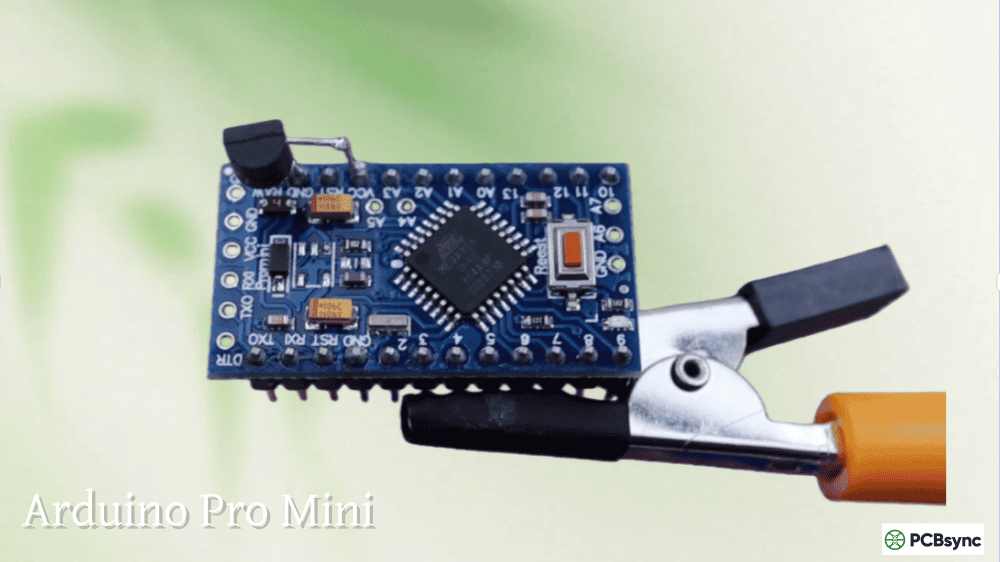
The Pro Mini is noticeably smaller at 33mm x 18mm, roughly 27% shorter than the Nano. Without the USB connector, the board maintains a lower profile. This size reduction matters significantly for projects embedding the controller into enclosures, wearables, or space-constrained applications.
Dimension
Arduino Nano
Arduino Pro Mini
Difference
Length
45mm
33mm
12mm shorter
Width
18mm
18mm
Same
Height
~8mm (with USB)
~3mm
Much thinner
Weight
~7g
~2g
71% lighter
For projects where every millimeter counts, the Pro Mini’s compact footprint provides meaningful advantages.
Power Consumption Analysis
Power consumption represents the most significant practical difference between these boards. The Pro Mini was designed with low-power applications in mind, while the Nano prioritizes convenience.
Arduino Nano Power Draw
The Arduino Nano draws approximately 15-19mA when running a basic sketch at 5V. Several factors contribute to this consumption:
USB-to-Serial converter chip (FTDI FT232RL or CH340) continuously powered
Power LED always illuminated
Voltage regulator quiescent current
16MHz clock speed
Even with the microcontroller in sleep mode, the Nano continues drawing 5-10mA due to the always-on USB bridge chip.
Arduino Pro Mini Power Draw
The 3.3V Pro Mini draws approximately 4-5mA under normal operation. The 5V version draws around 16-18mA. However, the Pro Mini’s real advantage appears in low-power modes:
Power State
Arduino Nano
Pro Mini 3.3V
Pro Mini 5V
Active
15-19mA
4-5mA
16-18mA
Idle
10-15mA
1.5mA
8mA
Sleep Mode
5-10mA
50-100µA
50-100µA
Modified Sleep
N/A
4-7µA
N/A
The Pro Mini achieves dramatically lower sleep current because it lacks the USB bridge chip that remains powered on the Nano. With modifications like removing the power LED and replacing the voltage regulator, makers have achieved sleep currents under 10 microamps.
Battery Life Implications
For battery-powered projects, these differences translate directly to runtime:
Power Source
Arduino Nano
Pro Mini 3.3V (Modified)
2x AA Batteries (3000mAh)
~1 month
2+ years
CR2032 Coin Cell (220mAh)
~12 hours
~6 months
18650 Li-Ion (3000mAh)
~1 month
2+ years
These calculations assume the board spends most time in sleep mode with periodic wake-ups for sensor readings, a common pattern for remote monitoring applications.
Programming and Connectivity
Arduino Nano Programming
The Arduino Nano includes an onboard USB-to-Serial converter, making programming straightforward:
Connect Nano to computer via Mini USB cable
Select “Arduino Nano” in Arduino IDE
Choose the correct processor (ATmega328P or ATmega328P Old Bootloader)
Click Upload
No additional hardware required. The onboard chip handles all communication between your computer and the ATmega328P.
Arduino Pro Mini Programming
The Pro Mini lacks USB connectivity, requiring an external programmer:
Required Hardware:
FTDI USB-to-Serial adapter (FT232RL) or similar
6-pin programming cable
Soldering equipment (for permanent headers)
Programming Process:
Connect FTDI adapter to Pro Mini’s 6-pin header (DTR, TXO, RXI, VCC, GND, GND)
Ensure FTDI adapter voltage matches Pro Mini version (3.3V or 5V)
Select “Arduino Pro or Pro Mini” in Arduino IDE
Choose correct processor and voltage option
Click Upload
The DTR pin enables auto-reset during upload. Without proper DTR connection, you’ll need to manually press the reset button at the right moment during upload.
Programming Aspect
Arduino Nano
Arduino Pro Mini
USB Required
Built-in
External adapter
Setup Complexity
Plug and play
Requires configuration
Additional Cost
None
$3-10 for FTDI adapter
Ongoing Convenience
High
Lower
Production Flexibility
Lower
Higher
Voltage Options and Compatibility
Arduino Nano Voltage
The Nano operates exclusively at 5V with a 16MHz clock. This simplifies sensor compatibility since many common components expect 5V logic levels. The onboard regulator accepts 7-12V input on the Vin pin, or you can power directly via USB.
Arduino Pro Mini Voltage Options
The Pro Mini comes in two versions:
3.3V Version (8MHz)
Ideal for battery power and modern sensors
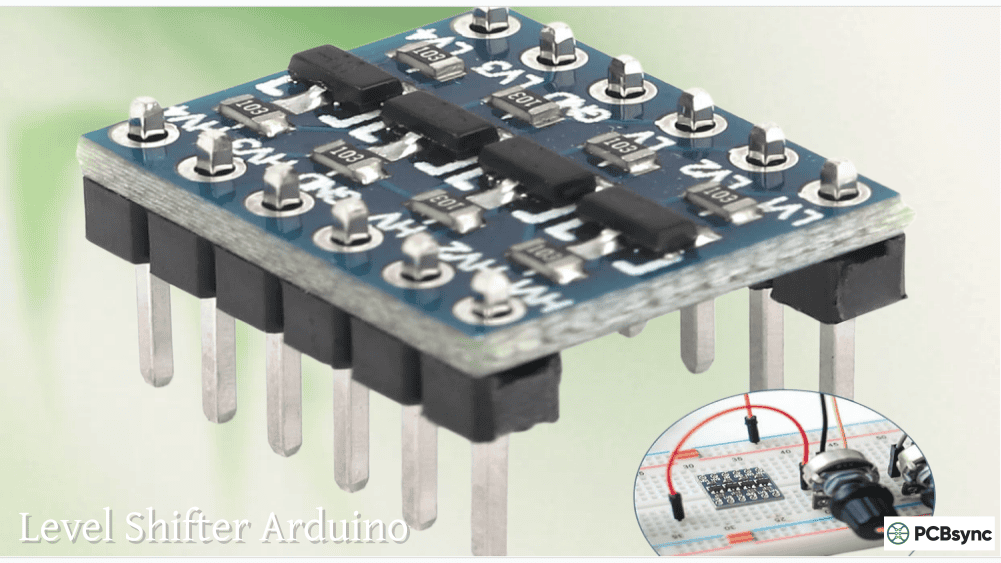
Compatible with 3.3V peripherals without level shifting
Lower power consumption
Reduced processing speed
5V Version (16MHz)
Compatible with 5V sensors and legacy components
Higher processing speed
More power consumption
Similar to Nano performance
Choosing the wrong voltage version can damage your Pro Mini or connected sensors. Always verify your version before connecting power or peripherals.
Use Cases for Arduino Nano
The Arduino Nano excels in scenarios where convenience matters more than size or power:
Breadboard Prototyping: The USB connectivity and integrated voltage regulation make the Nano ideal for developing and testing circuits before committing to a final design.
Desktop/Powered Projects: Applications with reliable power sources benefit from the Nano’s simplicity. USB connection provides both power and programming in one cable.
Educational Settings: Beginners appreciate not needing additional hardware to get started. The straightforward setup reduces barriers to learning.
Frequent Reprogramming: Projects requiring regular code updates benefit from the always-available USB port.
Quick Proof of Concept: When you need something working fast without worrying about optimization, the Nano delivers with minimal setup.
Use Cases for Arduino Pro Mini
The Pro Mini shines in optimization-focused applications:
Battery-Powered Sensors: Remote monitoring stations, environmental sensors, and data loggers benefit from the Pro Mini’s low sleep current. With modifications, battery life extends to years rather than weeks.
Wearable Electronics: The smaller size and lighter weight make the Pro Mini suitable for clothing-integrated electronics, fitness trackers, and cosplay projects.
Embedded Systems: Products embedding a microcontroller permanently benefit from the Pro Mini’s compact footprint. No need for USB access after initial programming.
Space-Constrained Installations: Projects fitting into small enclosures, model vehicles, or existing equipment housings appreciate every millimeter saved.
Low-Power Wireless Nodes: Combined with radio modules like NRF24L01 or LoRa transceivers, the Pro Mini creates efficient wireless sensor networks.
Production Prototypes: When designing products for manufacturing, the Pro Mini’s form factor better represents final custom PCB dimensions.
Can I use the same code on both Arduino Nano and Pro Mini?
Yes, both boards use the ATmega328P microcontroller with identical memory and peripherals. Code written for one board generally works on the other without modification. However, timing-sensitive code may behave differently on the 3.3V Pro Mini running at 8MHz versus the 16MHz Nano. Also, remember to select the correct board and processor settings in the Arduino IDE before uploading.
Which board is better for beginners?
The Arduino Nano is generally better for beginners. Its onboard USB eliminates the need for additional programming hardware, reducing initial investment and potential connection issues. The plug-and-play experience lets newcomers focus on learning programming and electronics rather than troubleshooting programmer connections. Once comfortable with Arduino concepts, transitioning to the Pro Mini becomes straightforward.
How do I power an Arduino Pro Mini from batteries?
For the 3.3V Pro Mini, connect a 3.7V LiPo battery or two AA batteries (3V) directly to the VCC and GND pins, bypassing the onboard regulator. For longer battery life, remove the power LED and consider using the Low-Power library for sleep modes. The 5V version can use the RAW pin with 5-12V input through the regulator, though this reduces efficiency. For optimal battery life, the 3.3V version with direct VCC power is recommended.
Can I remove the USB chip from an Arduino Nano to reduce power consumption?
Technically possible but not recommended. Removing the USB-Serial chip requires advanced soldering skills and permanently eliminates USB programming capability. You would then need an external programmer like the Pro Mini requires. If low power is essential, purchasing a Pro Mini provides the same outcome without destroying a Nano. The Pro Mini’s design already optimizes for this use case.
Why does the 3.3V Pro Mini run slower than the 5V version?
The ATmega328P’s maximum reliable clock speed depends on operating voltage. At 3.3V, the datasheet specifies a maximum of 8MHz for stable operation. Running at 16MHz with 3.3V can cause unpredictable behavior, random resets, or calculation errors. Arduino designed the 3.3V Pro Mini with an 8MHz crystal to ensure reliability. The reduced speed rarely impacts typical sensor-reading and data-logging applications but matters for computationally intensive tasks.
Making Your Decision
The Arduino Nano vs Pro Mini choice ultimately reflects your project priorities. The Nano trades size and power efficiency for convenience and accessibility. The Pro Mini sacrifices USB connectivity for a smaller footprint and dramatically better battery performance.
For most hobbyist projects with available power, the Nano’s convenience wins. For battery-powered, space-constrained, or production-oriented applications, the Pro Mini’s optimizations justify the additional programming complexity.
Many experienced makers keep both boards in their parts drawer. They prototype on Nanos for quick iteration, then transition to Pro Minis for final implementations where size and power matter. This hybrid approach leverages each board’s strengths while avoiding their limitations.
Inquire: Call 0086-755-23203480, or reach out via the form below/your sales contact to discuss our design, manufacturing, and assembly capabilities.
Quote: Email your PCB files to Sales@pcbsync.com (Preferred for large files) or submit online. We will contact you promptly. Please ensure your email is correct.
Notes: For PCB fabrication, we require PCB design file in Gerber RS-274X format (most preferred), *.PCB/DDB (Protel, inform your program version) format or *.BRD (Eagle) format. For PCB assembly, we require PCB design file in above mentioned format, drilling file and BOM. Click to download BOM template To avoid file missing, please include all files into one folder and compress it into .zip or .rar format.