Inquire: Call 0086-755-23203480, or reach out via the form below/your sales contact to discuss our design, manufacturing, and assembly capabilities.
Quote: Email your PCB files to Sales@pcbsync.com (Preferred for large files) or submit online. We will contact you promptly. Please ensure your email is correct.
Notes: For PCB fabrication, we require PCB design file in Gerber RS-274X format (most preferred), *.PCB/DDB (Protel, inform your program version) format or *.BRD (Eagle) format. For PCB assembly, we require PCB design file in above mentioned format, drilling file and BOM. Click to download BOM template To avoid file missing, please include all files into one folder and compress it into .zip or .rar format.
Arduino Mega 2560: Ultimate Guide for Large Projects
When your project outgrows the Arduino Uno, there’s really only one logical step up in the Arduino ecosystem. The Arduino Mega 2560 has earned its reputation as the go-to board for complex builds, and after spending years designing PCBs and embedded systems, I can tell you exactly why this board sits at the heart of so many 3D printers, CNC machines, and automation systems worldwide.
This guide breaks down everything you need to know about the Arduino Mega 2560, from technical specifications to real-world applications. Whether you’re building your first large-scale project or upgrading from an Uno, you’ll find practical information that actually helps you get things working.
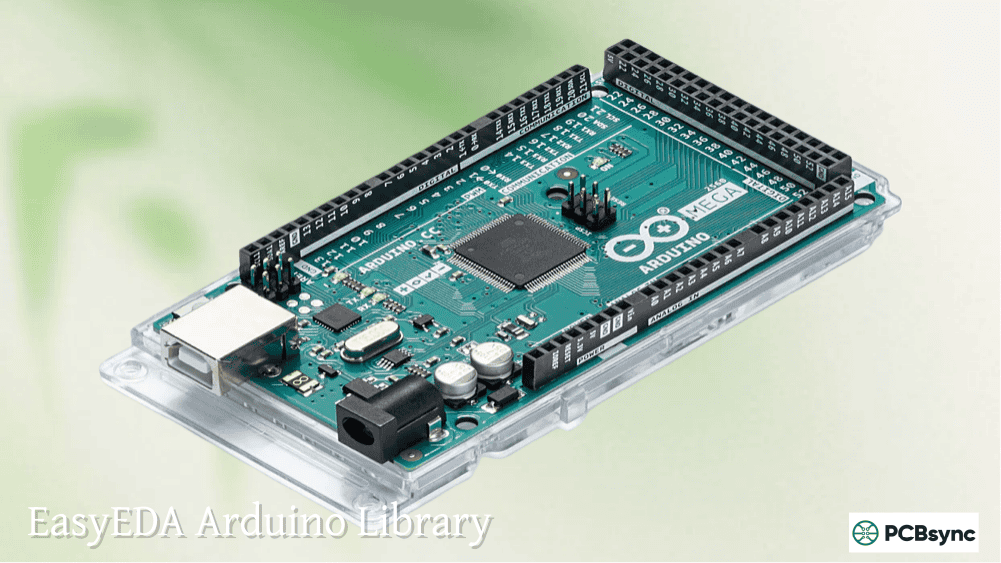
The Arduino Mega 2560 is a microcontroller board based on the ATmega2560 chip. First released in 2010, it was designed specifically for projects that demand more GPIO pins, more memory, and more processing headroom than the standard Uno can provide.
Think of the Mega as the Uno’s bigger, more capable sibling. Where the Uno gives you 14 digital pins and 32KB of flash memory, the Mega delivers 54 digital pins and 256KB of flash. That’s not just a minor upgrade—it’s a fundamental expansion of what’s possible with your projects.
The board measures approximately 101.5mm × 53.3mm, making it roughly twice the size of an Uno. This larger footprint accommodates the additional pin headers and the more powerful ATmega2560 microcontroller, which runs at 16MHz and delivers reliable performance for demanding applications.
Arduino Mega 2560 Technical Specifications
Understanding the specifications helps you determine whether this board matches your project requirements. Here’s the complete breakdown:
Specification
Value
Microcontroller
ATmega2560
Operating Voltage
5V
Input Voltage (recommended)
7-12V
Input Voltage (limits)
6-20V
Digital I/O Pins
54 (15 provide PWM output)
Analog Input Pins
16
DC Current per I/O Pin
20mA (40mA max)
DC Current for 3.3V Pin
50mA
Flash Memory
256KB (8KB used by bootloader)
SRAM
8KB
EEPROM
4KB
Clock Speed
16MHz
USB Connection
Type-B
Dimensions
101.5mm × 53.3mm
Weight
~37g
The ATmega2560 is an 8-bit AVR RISC-based microcontroller that executes most instructions in a single clock cycle. This architecture provides an effective balance between power consumption and processing speed, making it suitable for projects that need to run continuously without excessive heat generation.
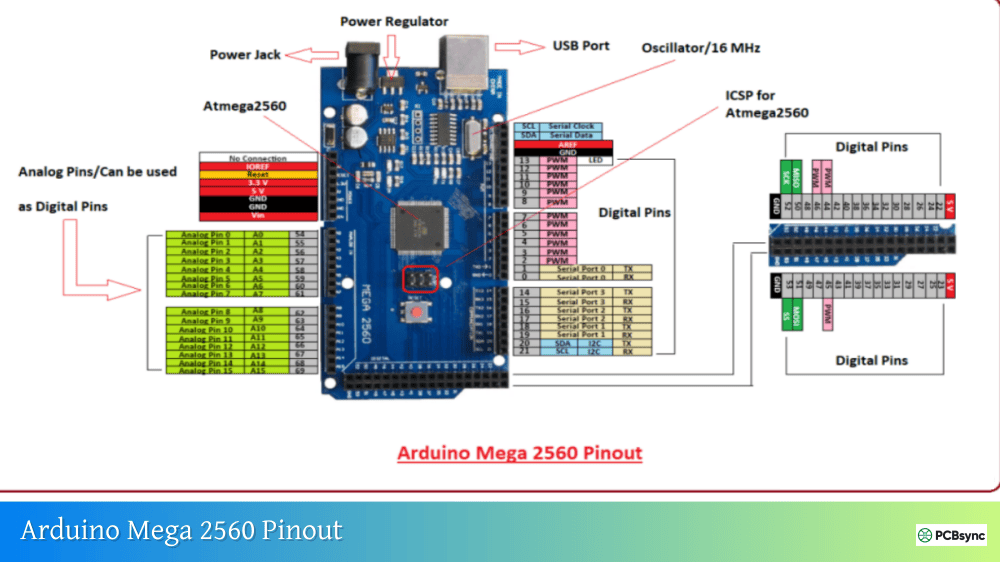
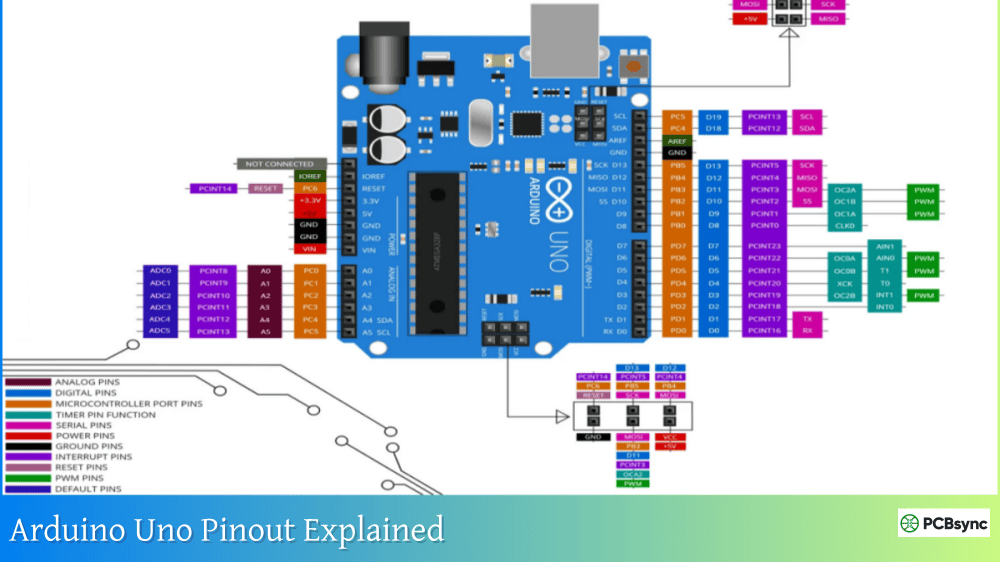
Arduino Mega 2560 Pinout Explained
The pinout configuration is where the Mega really shows its strength. Having designed multiple custom shields and expansion boards, I can tell you that proper understanding of the pin layout saves hours of debugging time.
Digital Pins (D0-D53)
The Mega provides 54 digital I/O pins that can be configured as inputs or outputs using the pinMode(), digitalWrite(), and digitalRead() functions. Each pin operates at 5V and can source or sink up to 20mA safely.
Key pin assignments include:
Pin Range
Primary Function
D0 (RX0), D1 (TX0)
Serial0 (USB communication)
D14 (TX3), D15 (RX3)
Serial3
D16 (TX2), D17 (RX2)
Serial2
D18 (TX1), D19 (RX1)
Serial1
D20 (SDA), D21 (SCL)
I2C communication
D50 (MISO), D51 (MOSI), D52 (SCK), D53 (SS)
SPI communication
D2, D3, D18, D19, D20, D21
External interrupts
PWM Pins
The Mega offers 15 PWM-capable pins: D2-D13 and D44-D46. These pins can generate analog-like output signals using the analogWrite() function, which is essential for motor control, LED dimming, and servo positioning.
Analog Input Pins (A0-A15)
Sixteen analog input pins provide 10-bit resolution ADC capabilities, meaning each pin can read 1024 discrete voltage levels between 0V and 5V. This resolution is adequate for most sensor applications, including temperature monitoring, light sensing, and potentiometer reading.
Communication Interfaces
One significant advantage over the Uno is the Mega’s four hardware serial ports (UARTs). This allows simultaneous communication with multiple serial devices without relying on software serial libraries that consume processing cycles.
The I2C interface uses pins 20 (SDA) and 21 (SCL), while SPI communication uses pins 50-53. Both protocols enable connection with a wide range of sensors, displays, and expansion modules.
When to Choose Arduino Mega 2560 Over Arduino Uno
The decision between Mega and Uno isn’t always straightforward. Here’s my practical guidance based on project requirements:
Choose the Mega When:
Your project needs more than 14 digital pins or 6 analog inputs. This is the most common reason for upgrading. Once you’re connecting multiple sensors, actuators, displays, and control elements, the Uno’s pin count becomes a limiting factor.
Your code exceeds 32KB. Large projects with extensive libraries, multiple communication protocols, or complex state machines quickly fill the Uno’s flash memory. The Mega’s 256KB gives you room to grow.
You need multiple serial connections. Projects interfacing with GPS modules, Bluetooth modules, and serial displays simultaneously benefit enormously from the Mega’s four hardware UARTs.
Memory-intensive applications are involved. The Mega’s 8KB SRAM (versus 2KB on Uno) prevents crashes when working with large arrays, buffers, or string operations.
Stick with the Uno When:
The project is simple and cost-sensitive. For basic projects with fewer components, the Uno’s lower cost and smaller footprint make more sense.
Physical size is constrained. The Mega’s larger dimensions may not fit in compact enclosures designed for smaller boards.
Comparison Table: Arduino Mega vs Arduino Uno
Feature
Arduino Mega 2560
Arduino Uno R3
Digital I/O Pins
54
14
Analog Input Pins
16
6
PWM Pins
15
6
Flash Memory
256KB
32KB
SRAM
8KB
2KB
EEPROM
4KB
1KB
Serial Ports
4
1
Board Size
101.5 × 53.3mm
68.6 × 53.4mm
Price (approx.)
$35-45
$20-28
Best Arduino Mega 2560 Project Applications
The Mega’s capabilities make it the preferred choice for several demanding application categories. Based on real-world implementations, here are the areas where this board excels.
3D Printers and CNC Machines
The 3D printing community has essentially standardized on the Arduino Mega 2560 as the controller brain. Combined with the RAMPS 1.4 shield, the Mega drives stepper motors for X, Y, and Z axes plus the extruder, manages heating elements, monitors temperature sensors, processes G-code, and handles user interface displays.
The firmware options are mature and well-tested. Marlin, Repetier, and Sprinter all run smoothly on the Mega, benefiting from the 256KB flash for feature-rich configurations.
Robotics and Motion Control
Multi-axis robots require precise control of numerous motors and sensors. The Mega’s abundant I/O pins accommodate motor drivers, encoders, limit switches, and various sensors without running out of connections.
A typical 6-DOF robotic arm might use 6 PWM pins for servos, 12 pins for encoder feedback, several pins for limit switches, and additional pins for gripper control. Try fitting that on an Uno.
Home Automation Systems
Smart home projects often involve controlling multiple relays, reading various environmental sensors, managing displays, and communicating with network modules. The Mega handles all these requirements while leaving room for future expansion.
Projects commonly include gas leak detection, temperature and humidity monitoring, RFID access control, motion sensing, and remote control via Wi-Fi or Bluetooth modules.
Data Logging and Environmental Monitoring
When you need to sample multiple sensors continuously and store data to SD cards, the Mega’s memory becomes crucial. Buffer management for SD writes, multiple analog readings, and timestamp handling all consume SRAM rapidly.
LED Displays and Installations
Large LED matrix displays or individually addressable LED strips (WS2812B) require significant memory for frame buffers. The Mega’s 8KB SRAM supports displays that would crash an Uno.
Getting Started with Arduino Mega 2560 Programming
Programming the Mega follows the same workflow as other Arduino boards, with a few board-specific considerations.
Initial Setup Steps
First, download and install the Arduino IDE from the official Arduino website. Connect your Mega to your computer using a USB Type-B cable (the same type used for many printers).
In the Arduino IDE:
Navigate to Tools > Board and select “Arduino Mega or Mega 2560”
Go to Tools > Processor and confirm “ATmega2560 (Mega 2560)” is selected
Select the appropriate COM port under Tools > Port
The Mega comes with a pre-installed bootloader, so you can immediately upload sketches without additional hardware.
Your First Sketch
Start with the classic Blink example to verify everything works:
void setup() {
pinMode(13, OUTPUT); // Built-in LED on pin 13
}
void loop() {
digitalWrite(13, HIGH);
delay(1000);
digitalWrite(13, LOW);
delay(1000);
}
If the onboard LED blinks, your setup is complete and you’re ready for more complex projects.
Mega-Specific Programming Tips
When migrating code from Uno to Mega, watch for pin-specific references. SPI pins, for instance, are on different physical pins (50-53 on Mega vs 10-13 on Uno). Most libraries handle this automatically, but custom bit-banging code may need adjustment.
Take advantage of the multiple serial ports. Instead of software serial (which consumes CPU cycles), use Serial1, Serial2, or Serial3 for peripheral communication while keeping Serial0 available for debugging output.
One question I get frequently: “Will my Uno shields work on the Mega?”
The answer is mostly yes. The Mega was designed with backward compatibility in mind. Digital pins 0-13, analog inputs 0-5, the power header, and the ICSP header are positioned identically to the Uno. Most shields designed for the Uno plug directly into the Mega without modification.
Popular Compatible Shields
Shield Type
Compatibility Notes
Motor/Stepper Shields
Fully compatible
Ethernet Shields
Compatible, may need pin mapping for some
LCD Shields
Generally compatible
Relay Shields
Fully compatible
Sensor Shields
Fully compatible
WiFi Shields
Compatible with proper library configuration
RAMPS 1.4
Designed specifically for Mega
Potential Compatibility Issues
Some shields that use hardware SPI may require attention since the Mega’s SPI pins are in different locations. The Mega provides duplicate SPI connections on both the standard shield pins and on pins 50-53. Most modern shields and libraries detect the board type and adjust automatically.
For I2C shields designed before the R3 standard, you may need to add jumper wires from the shield’s SDA/SCL connections to pins 20/21 on the Mega.
Troubleshooting Common Arduino Mega 2560 Problems
After years of working with these boards, I’ve encountered most of the common issues. Here’s how to resolve them quickly.
Board Not Recognized by Computer
This usually indicates a driver issue or faulty cable. First, try a different USB cable—data cables look identical to charge-only cables but behave very differently. Next, check Device Manager (Windows) or System Information (Mac) to see if the board appears. For clone boards using the CH340 USB chip instead of the ATmega16U2, you’ll need to install CH340 drivers separately.
Upload Fails with Timeout Error
If you see “avrdude: stk500_2_ReceiveMessage(): timeout” errors, try pressing the reset button on the board just as the upload begins. This can help synchronize the bootloader timing. Also verify you’ve selected the correct board and port in the IDE.
Board Draws Excessive Current or Gets Hot
This typically indicates a short circuit or voltage regulator failure. Disconnect all peripherals and test with just USB power. If the board still overheats, the onboard voltage regulator may need replacement. A common repair involves replacing the damaged regulator with a standard 7805 with an appropriate heatsink.
Sketch Runs Erratically or Freezes
Memory issues cause most random crashes. Use the F() macro for string literals to keep them in flash memory rather than consuming SRAM. Check for buffer overflows in array operations, and ensure you’re not running out of stack space in deeply nested functions.
Useful Resources and Downloads
Having reliable resources accelerates development. Here are the essential links for Arduino Mega 2560 work:
Resource
Description
Arduino Official Documentation
docs.arduino.cc/hardware/mega-2560
ATmega2560 Datasheet
Complete microcontroller reference
Arduino IDE Download
arduino.cc/en/software
ELEGOO Starter Kit Tutorial
Comprehensive beginner projects
RAMPS 1.4 Documentation
For 3D printer builds
Arduino Forum
Community troubleshooting support
GitHub Arduino Libraries
Thousands of contributed libraries
For schematic and PCB design work, the official Arduino EAGLE files are freely available, allowing you to create custom derivatives or reference designs.
Frequently Asked Questions
What is the difference between Arduino Mega 2560 and Arduino Uno?
The Mega 2560 offers substantially more resources than the Uno. It provides 54 digital I/O pins compared to the Uno’s 14, 16 analog inputs versus 6, 256KB flash memory instead of 32KB, and 8KB SRAM rather than 2KB. The Mega also includes four hardware serial ports while the Uno has only one. The tradeoff is physical size and cost—the Mega is larger and approximately $10-15 more expensive.
Can I run Arduino Uno code on an Arduino Mega 2560?
Yes, in most cases. The Mega maintains backward compatibility with Uno code. Any sketch written for the Uno should compile and run on the Mega without modification, as long as it doesn’t contain hardware-specific references to pin locations that differ between boards. The Mega simply provides additional capabilities that Uno code won’t utilize unless you modify it.
Is Arduino Mega 2560 good for beginners?
While the Mega works well for beginners, the Uno typically makes a better starting point due to its lower cost and simpler form factor. Most beginner tutorials use the Uno as the reference board. However, if you’re starting a project that you know will require many pins or substantial memory, beginning with the Mega avoids a mid-project migration later.
What power supply does the Arduino Mega 2560 need?
The Mega can receive power through USB (5V), the DC barrel jack (7-12V recommended, 6-20V limits), or the VIN pin (same specifications as the barrel jack). For most development work, USB power suffices. For standalone operation or when driving motors and other current-hungry loads, use an external supply in the 9-12V range through the DC jack.
Why is Arduino Mega 2560 used for 3D printers?
The 3D printing application demands multiple stepper motor controls, temperature sensor readings, heater management, endstop monitoring, and user interface handling—all simultaneously. The Mega’s 54 I/O pins, 256KB flash memory, and multiple serial ports provide exactly what sophisticated firmware like Marlin requires. Combined with the RAMPS shield, the Mega offers a proven, well-supported controller platform that the 3D printing community has refined over many years.
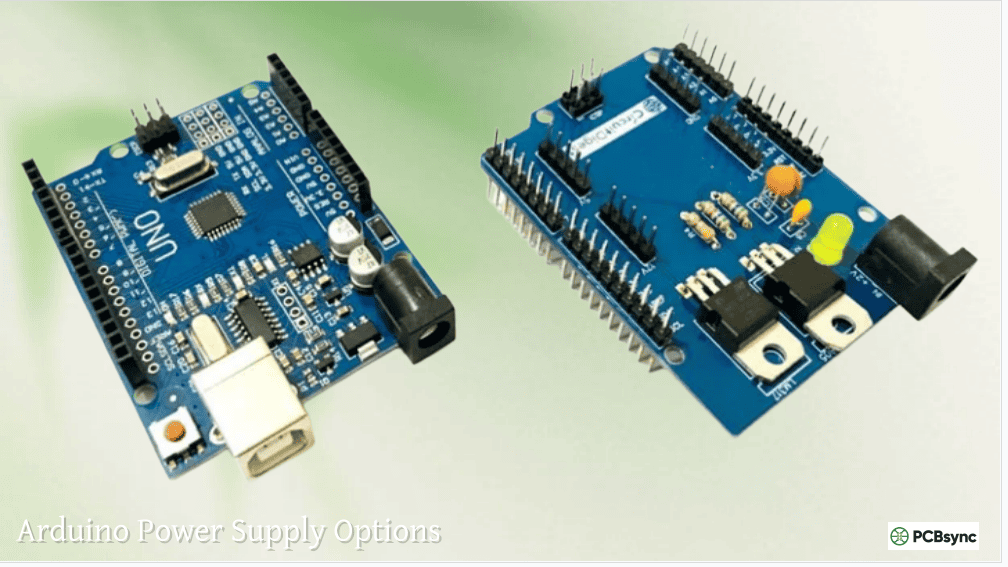
Power Supply Options for Arduino Mega 2560
Proper power management is often overlooked but critical for reliable operation. The Mega offers three power input options, each suited to different scenarios.
USB Power (5V)
USB power through the Type-B connector provides 5V directly from your computer or a USB power adapter. This method is convenient for development and testing but limited to approximately 500mA current draw. When your project includes motors, multiple LEDs, or other power-hungry components, USB power alone won’t suffice.
DC Barrel Jack (7-12V Recommended)
The 2.1mm center-positive DC jack accepts voltages from 6-20V, though 7-12V provides optimal performance. The onboard voltage regulator converts input power to the stable 5V and 3.3V rails that the microcontroller and peripherals require.
Staying within the recommended 7-12V range prevents the regulator from overheating while ensuring sufficient headroom for stable 5V output. Higher input voltages work but generate more heat, potentially requiring additional cooling.
VIN Pin Direct Input
For battery-powered or embedded applications, the VIN pin accepts the same voltage range as the barrel jack. This option is useful when integrating the Mega into custom enclosures or when a barrel jack connector would be impractical.
Power Considerations for Complex Projects
When designing systems with significant current requirements, consider these guidelines:
Component Type
Typical Current
Notes
Arduino Mega itself
~50mA
Baseline consumption
Standard servo
100-250mA
Per servo, under load
Stepper motor
300-2000mA
Depends on driver current setting
Relay module
15-20mA
Per relay coil
LCD display
25-200mA
Backlight dependent
WiFi module
70-350mA
Peak during transmission
For projects exceeding 500mA total current draw, use an external power supply rated appropriately and connect peripheral power directly rather than drawing through the Arduino’s onboard regulators.
Recommended Arduino Mega 2560 Starter Kits
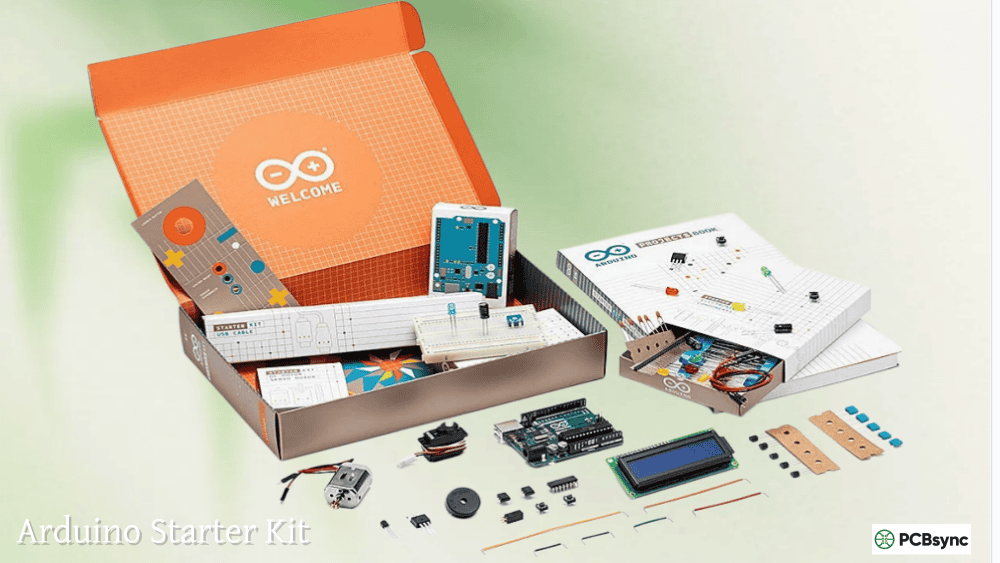
If you’re purchasing your first Mega or building a learning kit, several excellent starter options provide everything needed to explore the board’s capabilities.
Complete Starter Kit Options
Kit
Contents
Best For
ELEGOO Mega 2560 Complete Starter Kit
Mega board, 200+ components, sensors, modules
Comprehensive learning
SunFounder Mega 2560 Project Kit
Mega board, 250+ components, detailed tutorials
Structured learning path
Adeept Ultimate Starter Kit
Mega board, 180+ components, 33 experiments
Hands-on projects
These kits typically include breadboards, jumper wires, resistors, LEDs, various sensors (temperature, humidity, ultrasonic distance, light), motors, servos, LCD displays, and detailed tutorial documentation.
For 3D Printer Builds
The RAMPS 1.4 kit specifically pairs with the Arduino Mega 2560 for 3D printer construction:
Kit Component
Purpose
Arduino Mega 2560
Main controller
RAMPS 1.4 Shield
Motor driver and power distribution
A4988/DRV8825 Drivers
Stepper motor control (typically 4-5 drivers)
LCD 12864/2004
User interface display
Endstop switches
Axis limit detection
This combination runs firmware like Marlin out of the box and supports most Cartesian, Delta, and CoreXY printer configurations.
Final Thoughts on the Arduino Mega 2560
The Arduino Mega 2560 remains a cornerstone board for projects that exceed basic prototyping requirements. Its combination of abundant I/O, generous memory, multiple communication interfaces, and mature ecosystem support makes it the logical choice for 3D printers, CNC machines, complex robotics, and large-scale automation.
When evaluating whether the Mega fits your project, consider your pin requirements, memory needs, and expansion plans. If your current project uses most of an Uno’s resources or you’re planning features that will grow over time, the Mega’s extra headroom will pay dividends in development flexibility and reduced troubleshooting time.
The investment in understanding the Mega’s capabilities translates directly into more ambitious, more capable projects. And given its compatibility with existing Arduino code, shields, and libraries, transitioning from smaller boards requires minimal adjustment to your existing skills and tools.
Inquire: Call 0086-755-23203480, or reach out via the form below/your sales contact to discuss our design, manufacturing, and assembly capabilities.
Quote: Email your PCB files to Sales@pcbsync.com (Preferred for large files) or submit online. We will contact you promptly. Please ensure your email is correct.
Notes: For PCB fabrication, we require PCB design file in Gerber RS-274X format (most preferred), *.PCB/DDB (Protel, inform your program version) format or *.BRD (Eagle) format. For PCB assembly, we require PCB design file in above mentioned format, drilling file and BOM. Click to download BOM template To avoid file missing, please include all files into one folder and compress it into .zip or .rar format.