Inquire: Call 0086-755-23203480, or reach out via the form below/your sales contact to discuss our design, manufacturing, and assembly capabilities.
Quote: Email your PCB files to Sales@pcbsync.com (Preferred for large files) or submit online. We will contact you promptly. Please ensure your email is correct.
Notes: For PCB fabrication, we require PCB design file in Gerber RS-274X format (most preferred), *.PCB/DDB (Protel, inform your program version) format or *.BRD (Eagle) format. For PCB assembly, we require PCB design file in above mentioned format, drilling file and BOM. Click to download BOM template To avoid file missing, please include all files into one folder and compress it into .zip or .rar format.
Arduino LED Cube 4x4x4: Complete 3D LED Display Project Guide
After building countless LED projects over the years, the Arduino LED Cube 4x4x4 remains one of my favorite recommendations for anyone looking to level up their soldering skills while creating something genuinely impressive. This 64-LED three-dimensional display teaches fundamental concepts in multiplexing, persistence of vision, and microcontroller programming—all while producing a mesmerizing desktop light show.
Why the Arduino LED Cube 4x4x4 Is the Perfect Intermediate Project
The beauty of a 4x4x4 configuration lies in its balance between complexity and achievability. Smaller 3x3x3 cubes feel too basic once completed, while 8x8x8 versions require hundreds of solder joints and significantly more sophisticated driver circuitry. The 4x4x4 sweet spot gives you 64 individually addressable LEDs using only 20 I/O pins on your Arduino board.
From a PCB design perspective, this project demonstrates why multiplexing matters. Without this technique, you’d need 64 separate control lines—impossible on any standard microcontroller. Instead, by organizing LEDs into 4 horizontal layers (anodes connected) and 16 vertical columns (cathodes connected), you reduce pin requirements dramatically while maintaining individual LED control.
The persistence of vision (POV) principle makes this possible. Your Arduino rapidly cycles through each layer, turning on only the appropriate column LEDs for that layer, then immediately switching to the next. This happens faster than your eyes can perceive, creating the illusion that multiple LEDs across different layers illuminate simultaneously.
Complete Components List for Your Arduino LED Cube 4x4x4
Before heating up the soldering iron, gather everything you’ll need. Missing components mid-project kills momentum and leads to abandoned builds.
Component
Quantity
Specifications
Notes
LEDs
64
5mm, diffused recommended
Same color/batch for uniform brightness
Arduino Uno/Nano
1
ATmega328P based
Nano saves space
Resistors
16
100-220Ω (depends on LED)
One per column
Perfboard/PCB
1
At least 7x7cm
Base for mounting
Wire
~2 meters
22-24 AWG solid core
Various colors help
Female headers
1 strip
2.54mm pitch
Optional: for removable Arduino
Solder
–
60/40 or lead-free
Rosin core preferred
LED Selection Tips: Diffused LEDs create better visual effects than clear/water-clear types because light spreads more evenly. Test every LED before soldering using a coin cell battery—discovering a dead LED after completing a layer wastes significant time.
Tools You’ll Need
Beyond basic hand tools, certain items make this project dramatically easier:
Tool
Purpose
Essential?
Soldering iron
25-40W with fine tip
Yes
Soldering jig/template
LED alignment
Highly recommended
Needle-nose pliers
Lead bending
Yes
Wire cutters
Trimming leads
Yes
Multimeter
Testing continuity
Yes
Helping hands
Holding work
Recommended
Flux pen
Clean joints
Recommended
Building the LED Jig Template
The jig makes or breaks your cube’s appearance. Uneven LED spacing looks terrible and creates structural weakness. Spend time here—your future self will thank you.
Cut a piece of medium-density fiberboard, plywood, or thick cardboard approximately 10x10cm. Mark a precise 4×4 grid with 25mm (1 inch) spacing between holes. Drill 5mm holes at each intersection—the diameter should allow LEDs to slide in snugly without wobbling, yet release without excessive force.
Test your template by inserting all 16 LEDs. They should stand perpendicular to the board at uniform heights. If holes are too loose, wrap LED bases with a single layer of tape. If too tight, enlarge carefully with a round file.
Step-by-Step Layer Assembly Process
Each layer consists of 16 LEDs with their anodes (positive leads, longer legs) soldered together in a grid pattern. The cathodes (negative leads, shorter legs) remain separate—these become your 16 columns.
Preparing the LEDs
Identify the anode and cathode on each LED. Beyond leg length differences, most LEDs have a flat spot on the cathode side of the plastic housing. Bend all cathode leads 90 degrees at the same point (approximately 3mm from the LED base) using pliers against a straight edge for consistency.
Soldering the First Layer
Insert 16 LEDs into your jig, ensuring all cathodes point the same direction (I use “cathodes toward me” as a standard)
Bend anode leads to connect horizontally across rows
Solder each anode-to-anode connection with minimal solder—large blobs add weight and look unprofessional
Add perpendicular anode connections to complete the grid
The cathode leads should point straight up, untouched
Test immediately using a 3V coin cell. Touch positive to the layer’s anode network and negative to individual cathode leads. Every LED should illuminate. Mark and replace any failures now.
Building Remaining Layers
Construct three more identical layers. Consistency matters—use the same bend points, spacing, and orientation across all four. Stack layers temporarily to verify alignment before proceeding.
Connecting Layers Into the Cube Structure
This stage requires patience and steady hands. You’re soldering cathode leads from layer to layer, creating 16 vertical columns while maintaining proper spacing between layers.
Use spacers (9V batteries work perfectly at roughly 25mm height) between layers during assembly. Starting with corner LEDs provides the most stability:
Place Layer 1 (bottom) on your work surface
Position Layer 2 above it with spacers maintaining even height
Solder the four corner cathode connections first
Check alignment from multiple angles
Complete remaining cathode connections for Layer 2
Repeat for Layers 3 and 4
After each layer addition, test again. Finding a cold solder joint or short is exponentially easier with three completed connections than sixty-four.
Arduino LED Cube 4x4x4 Wiring and Circuit Diagram
The electrical design follows a common-anode multiplexing scheme. Each layer’s anode network connects to an Arduino digital pin through a current-limiting resistor. Each column’s cathode connects directly to another Arduino pin.
Pin Assignment Table
Cube Element
Arduino Pin
Function
Layer 0 (bottom)
A0
Anode control
Layer 1
A1
Anode control
Layer 2
A2
Anode control
Layer 3 (top)
A3
Anode control
Column (1,1)
D0
Cathode control
Column (2,1)
D1
Cathode control
Column (3,1)
D2
Cathode control
Column (4,1)
D3
Cathode control
Column (1,2)
D4
Cathode control
Column (2,2)
D5
Cathode control
Column (3,2)
D6
Cathode control
Column (4,2)
D7
Cathode control
Column (1,3)
D8
Cathode control
Column (2,3)
D9
Cathode control
Column (3,3)
D10
Cathode control
Column (4,3)
D11
Cathode control
Column (1,4)
D12
Cathode control
Column (2,4)
D13
Cathode control
Column (3,4)
A4
Cathode control
Column (4,4)
A5
Cathode control
Resistor Placement and Values
Current-limiting resistors protect both your LEDs and the Arduino’s output pins. Calculate using: R = (Vsource – Vf) / If
For typical blue/white LEDs (Vf ≈ 3.2V) at 20mA with 5V supply: R = (5V – 3.2V) / 0.020A = 90Ω → use 100Ω
For red/yellow LEDs (Vf ≈ 2.0V): R = (5V – 2.0V) / 0.020A = 150Ω → use 150Ω or 180Ω
Place resistors between Arduino layer pins and cube layer anodes. Some builders place resistors on columns instead—both approaches work, but layer-side placement means only 4 resistors versus 16.
Programming Your Arduino LED Cube 4x4x4
The software continuously cycles through layers while controlling which column LEDs illuminate within each layer. This happens so rapidly (typically 100+ Hz refresh rate) that all selected LEDs appear constantly lit.
Basic Multiplexing Code Structure
// Pin definitions
int layerPins[] = {A0, A1, A2, A3};
int columnPins[] = {0,1,2,3,4,5,6,7,8,9,10,11,12,13,A4,A5};
// Pattern storage – each byte represents one layer
Animations consist of frames displayed sequentially. Each frame defines which LEDs illuminate across all four layers. The binary representation makes visualization intuitive—1 means LED on, 0 means off.
Once basic multiplexing works, explore these classic patterns:
Animation
Description
Difficulty
Layer sweep
Single layer moves up/down
Beginner
Rain effect
Random LEDs fall from top
Beginner
Propeller
Diagonal plane rotates
Intermediate
Wave
Sinusoidal pattern across cube
Intermediate
Snake
LED trail moves through 3D space
Advanced
Game of Life
Cellular automata in 3D
Advanced
The rain effect creates particularly impressive visuals with minimal code. Randomly select column positions on the top layer, then shift those positions downward each frame while generating new random positions above.
Expanding Your Arduino LED Cube 4x4x4 Design
After mastering the basic build, consider these enhancements:
Shift Register Expansion: Using 74HC595 ICs reduces Arduino pin usage from 20 to just 7, freeing pins for additional features like audio input or wireless control.
RGB Upgrade: Common-anode RGB LEDs increase complexity significantly (48 column connections instead of 16) but enable full-color animations. TLC5940 PWM drivers provide per-LED brightness control.
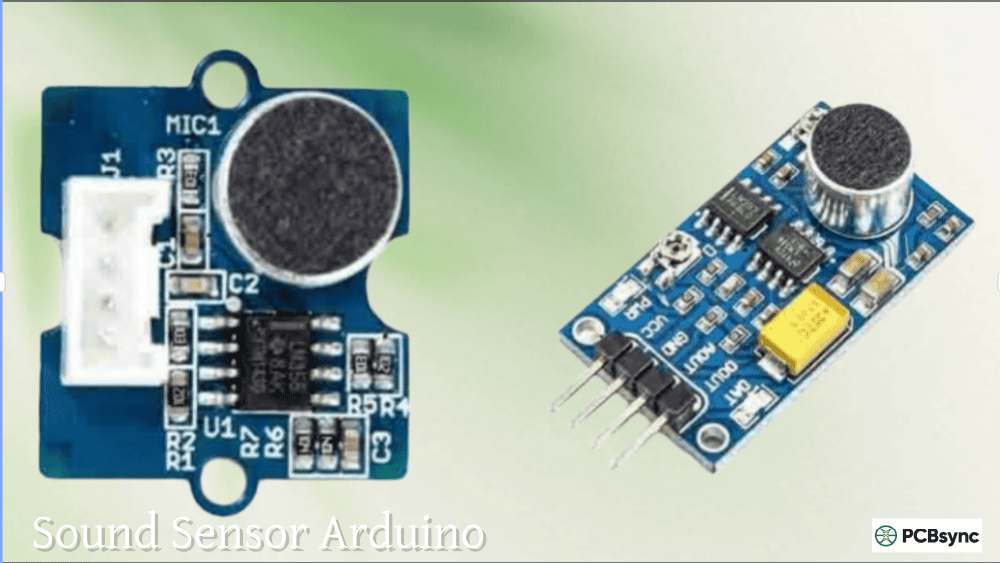
Sound Reactivity: Adding a microphone module and basic spectrum analysis creates music-visualizing displays that respond to ambient audio.
Wireless Control: ESP8266 or Bluetooth modules enable smartphone app control, pattern uploads, and IoT integration.
Troubleshooting Common Arduino LED Cube 4x4x4 Problems
Even careful builders encounter issues. Here’s what I’ve learned diagnosing failed cubes:
Symptom
Likely Cause
Solution
Entire layer dead
Cold solder joint on layer connection
Reflow layer pin solder joint
Single LED always off
Dead LED or broken column connection
Test LED directly; check column continuity
LEDs dim
Insufficient current/wrong resistor
Recalculate resistor value
Flickering
Refresh rate too slow
Reduce delay between layer switches
Wrong LEDs lighting
Pin assignment mismatch
Verify wiring matches code
Random behavior
Loose connections
Check all solder joints; secure wiring
Testing Methodology: Isolate problems systematically. Disconnect the cube from Arduino and test layers individually with a bench supply. Then verify each column responds correctly before reconnecting to the microcontroller.
Useful Resources and Downloads
Code Repositories:
Arduino Project Hub LED Cube collection: projecthub.arduino.cc
LED Cube Code Generator: github.com/mariugul/LED-Cube-Code
Cube 3D Pattern Visualizer: Available through the LED-Cube-Code repository
Component Suppliers:
Mouser Electronics: mouser.com
DigiKey: digikey.com
AliExpress (budget option): aliexpress.com
Learning Resources:
Arduino Official Documentation: arduino.cc/reference
LED Resistor Calculator: led.linear1.org/led.wiz
Instructables LED Cube Collection: instructables.com/circuits/leds/projects
Software Tools:
Arduino IDE: arduino.cc/en/software
Fritzing (circuit design): fritzing.org
KiCad (PCB design): kicad.org
Taking Your Skills Further
The Arduino LED Cube 4x4x4 opens doors to larger projects. The same multiplexing principles scale to 8x8x8 cubes (512 LEDs), LED matrices, POV displays, and volumetric displays. Understanding how to address individual elements within a three-dimensional grid translates directly to more advanced display technologies.
Many builders report this project as the turning point where abstract electronics concepts became tangible. Watching code translate into physical light patterns creates a feedback loop that accelerates learning. The debugging process—systematically isolating which layer, column, or code segment causes unexpected behavior—builds troubleshooting skills applicable across all electronics work.
Consider documenting your build with photos and code modifications. The maker community thrives on shared knowledge, and your unique solutions might help someone else overcome the exact obstacle you faced.
Advanced Integration Ideas
Once comfortable with the basic Arduino LED Cube 4x4x4, integration with external sensors opens creative possibilities. Temperature sensors can drive color-changing patterns on RGB variants—cool blues transitioning to warm reds as ambient temperature rises. Motion sensors trigger attention-grabbing animations when someone approaches your desk. Real-time clock modules enable time-display functionality, turning your cube into a three-dimensional digital clock.
For networked applications, ESP32 boards provide WiFi and Bluetooth alongside sufficient GPIO for direct cube driving. This enables smartphone control, weather-data visualization, notification alerts, and even multiplayer games where friends control opposing cube quadrants.
The PCB design skills developed here transfer directly to professional applications. Surface-mount LED arrays, shift-register cascading, and multiplexed display drivers appear throughout commercial electronics. What starts as a weekend project becomes foundational knowledge for career development in embedded systems and display technology.
Frequently Asked Questions
How long does it take to build an Arduino LED Cube 4x4x4?
Expect 6-10 hours for a first build, spread across multiple sessions. Rushing leads to mistakes—particularly cold solder joints that fail days later. Experienced builders complete cubes in 3-4 hours, but the learning process shouldn’t be hurried. Break the project into logical stages: LED testing, layer construction, cube assembly, wiring, and programming.
Can I use an Arduino Nano instead of an Uno for the LED cube?
Absolutely. The Arduino Nano uses the same ATmega328P microcontroller with identical I/O capabilities. Its smaller footprint actually makes it preferable for compact cube bases. Pin mappings remain the same—D0-D13 plus A0-A5 provide the 20 required I/O lines. Some builders solder the Nano directly to their base PCB for a cleaner final appearance.
Why are some LEDs dimmer than others in my completed cube?
Brightness variations usually indicate either mismatched LED batches or inconsistent solder joint quality. LEDs from different manufacturing runs can have noticeably different forward voltage and luminosity specifications even with identical part numbers. Cold or high-resistance solder joints reduce current flow through specific paths. Test suspect joints with a multimeter’s continuity mode—good connections show near-zero resistance.
Do I need transistors to drive the Arduino LED Cube 4x4x4?
For a 4x4x4 cube using standard 20mA LEDs, transistors are optional. The Arduino’s 40mA per-pin maximum handles single-LED multiplexed operation safely since only one LED per column illuminates at any instant. However, larger cubes (8x8x8) or high-brightness LEDs benefit from transistor-driven layers to source adequate current without stressing the microcontroller’s output stages.
What’s the best way to create custom animation patterns?
Several approaches work well. The Cube 3D pattern generator provides a graphical interface where you click LEDs to toggle their state, then exports Arduino-compatible code. For simpler patterns, sketch designs on paper using a 4×4 grid for each layer, convert to binary (1=on, 0=off), then translate to code. Advanced users write algorithmic animations using mathematical functions to generate dynamic patterns programmatically rather than storing static frame sequences.
Final Thoughts on Your LED Cube Journey
Building an Arduino LED Cube 4x4x4 teaches patience, precision, and problem-solving in ways that simpler projects cannot. The satisfaction of watching your handmade creation spring to life with dancing light patterns makes every tedious solder joint worthwhile.
Start simple with basic layer animations, then progressively add complexity as your confidence grows. The code examples and resources linked throughout this guide provide solid starting points, but don’t hesitate to experiment. Some of the most impressive cube animations emerged from builders asking “what if I tried this instead?”
The debugging skills you develop here—methodically testing individual components, isolating failures, verifying signal paths—apply to every electronics project you’ll tackle in the future. Each problem solved strengthens your diagnostic intuition.
Your cube will likely sit on your desk for years, impressing visitors and reminding you what you’re capable of creating. And when someone asks how it works, you’ll have the knowledge to explain every wire, every LED, and every line of code that makes it possible. More importantly, you’ll have the confidence to tackle your next project knowing that with patience and systematic problem-solving, complex electronics become achievable.
The maker community welcomes questions and celebrates builds at all skill levels. Share your progress, ask for help when stuck, and eventually pay it forward by helping the next person starting their LED cube adventure.
Inquire: Call 0086-755-23203480, or reach out via the form below/your sales contact to discuss our design, manufacturing, and assembly capabilities.
Quote: Email your PCB files to Sales@pcbsync.com (Preferred for large files) or submit online. We will contact you promptly. Please ensure your email is correct.
Notes: For PCB fabrication, we require PCB design file in Gerber RS-274X format (most preferred), *.PCB/DDB (Protel, inform your program version) format or *.BRD (Eagle) format. For PCB assembly, we require PCB design file in above mentioned format, drilling file and BOM. Click to download BOM template To avoid file missing, please include all files into one folder and compress it into .zip or .rar format.