Inquire: Call 0086-755-23203480, or reach out via the form below/your sales contact to discuss our design, manufacturing, and assembly capabilities.
Quote: Email your PCB files to Sales@pcbsync.com (Preferred for large files) or submit online. We will contact you promptly. Please ensure your email is correct.
Notes: For PCB fabrication, we require PCB design file in Gerber RS-274X format (most preferred), *.PCB/DDB (Protel, inform your program version) format or *.BRD (Eagle) format. For PCB assembly, we require PCB design file in above mentioned format, drilling file and BOM. Click to download BOM template To avoid file missing, please include all files into one folder and compress it into .zip or .rar format.
Getting started with Arduino doesn’t have to be intimidating. As a PCB engineer who’s guided countless beginners through their first projects, I can tell you that the Arduino LED Blink is the perfect entry point into embedded systems. This tutorial walks you through every step, from understanding the hardware to writing your first program.
Why Start with Arduino LED Blink?
After years of working with microcontrollers on PCB designs, I’ve learned that the Arduino LED Blink project teaches you three critical concepts simultaneously: circuit construction, digital I/O control, and program structure. Unlike jumping straight into complex sensors or motors, this project isolates the fundamental skills you’ll use in every Arduino project.
The beauty of this project lies in its immediate visual feedback. When that LED starts blinking, you’ve successfully bridged the gap between software and hardware—something that took me weeks to grasp when I started with bare AVR chips.
Before diving into the Arduino LED Blink project, gather these components:
Component
Specification
Quantity
Notes
Arduino Uno
ATmega328P-based
1
R3 recommended
LED
5mm, any color
1
Red has ~2V forward voltage
Resistor
220Ω to 1kΩ
1
220Ω standard for most LEDs
Breadboard
Half-size or full
1
Solderless prototyping
Jumper Wires
Male-to-male
2
22 AWG solid core
USB Cable
Type A to B
1
For programming and power
The Critical Role of Current-Limiting Resistors
Here’s something many beginners miss: connecting an LED directly to an Arduino pin will likely damage both components. From my PCB design experience, I’ve seen countless burned-out GPIO pins from this mistake.
The Arduino outputs 5V, but LEDs typically have a forward voltage (Vf) of 1.8-2.2V for red, and can safely handle 20mA maximum current. Using Ohm’s Law, we calculate the required resistance:
Resistor Calculation for Arduino LED Blink:
Voltage across resistor: 5V – 2V (LED forward voltage) = 3V
Desired current: 15-20mA (safe operating range)
Required resistance: R = V/I = 3V / 0.020A = 150Ω
The 220Ω resistor is standard because it’s the nearest common value in the E24 series, providing about 13.6mA—well within safe limits. Here’s a practical reference table:
Resistor Value
Current (mA)
LED Brightness
Application
220Ω
13.6
Bright
Standard projects
330Ω
9.1
Medium
Battery-powered
470Ω
6.4
Dim
Status indicators
1kΩ
3.0
Very dim
Low-power applications
Building Your Arduino LED Blink Circuit
Physical Wiring Configuration
As someone who’s debugged hundreds of breadboard circuits, I recommend this methodical approach for your Arduino LED Blink setup:
Step 1: Identify LED Polarity LEDs have polarity—connect them backward and they won’t work (no damage, just no light). The longer leg is the anode (+), and the shorter leg is the cathode (-). On new LEDs, you’ll also notice a flat edge on the cathode side.
Step 2: Wire the Circuit
Insert your LED into the breadboard with legs in separate rows
Connect the LED anode (long leg) to digital pin 13 via the 220Ω resistor
Connect the LED cathode (short leg) directly to Arduino GND
Double-check all connections before powering up
Pro tip from the field: I always use red wire for positive connections and black for ground. This color coding has saved me countless hours of troubleshooting over the years.
Using the Built-in LED First
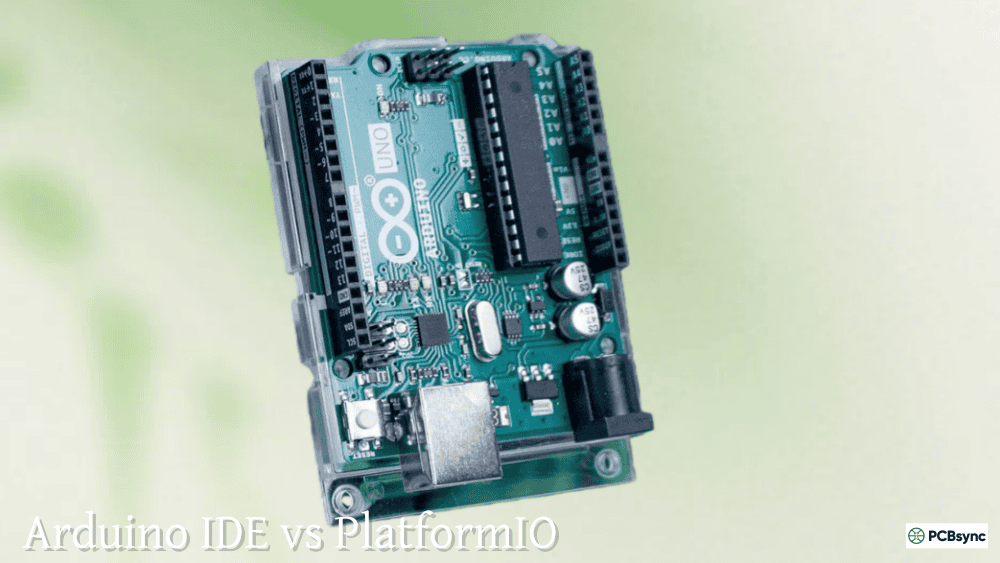
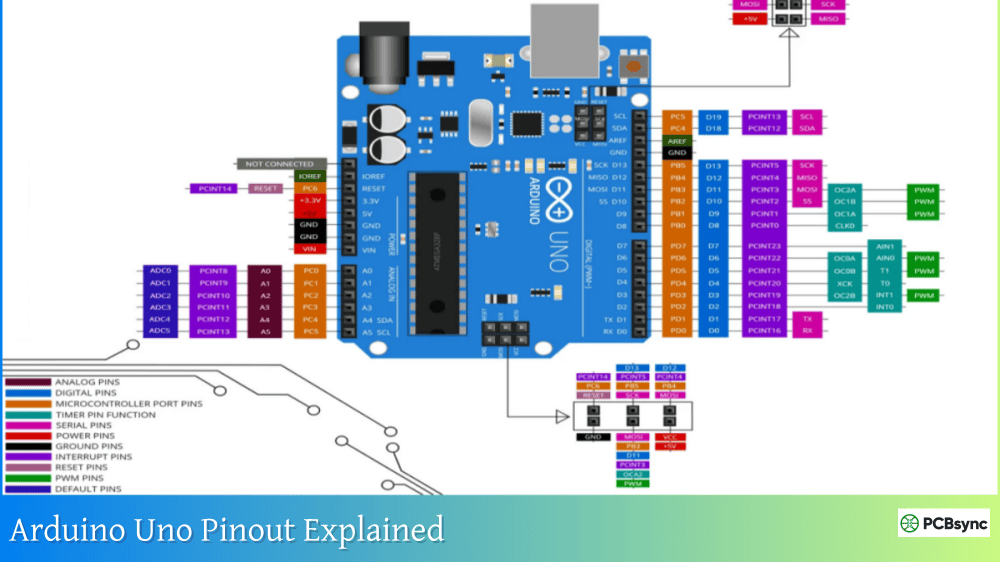
Every Arduino Uno has an LED connected to pin 13 (marked “L” on the board). I strongly recommend testing your Arduino LED Blink code with this built-in LED first. This isolates potential wiring issues—if the built-in LED blinks but your external one doesn’t, you know the problem is in your circuit, not your code.
Writing Your First Arduino LED Blink Program
Setting Up the Arduino IDE
Download the Arduino IDE from arduino.cc. After installation:
Connect your Arduino via USB
Select Tools > Board > Arduino Uno
Select Tools > Port and choose your Arduino’s COM port (usually highest number)
The Complete Arduino LED Blink Code
// Arduino LED Blink – Basic Example
// Pin 13 has an LED connected on most Arduino boards
void setup() {
// Initialize digital pin 13 as an output
pinMode(13, OUTPUT);
}
void loop() {
digitalWrite(13, HIGH); // Turn the LED on (5V)
delay(1000); // Wait for 1000 milliseconds (1 second)
digitalWrite(13, LOW); // Turn the LED off (0V)
delay(1000); // Wait for 1000 milliseconds (1 second)
}
Code Breakdown: How Arduino LED Blink Works
Let me break down each function from a hardware engineer’s perspective:
Function
Purpose
Technical Detail
pinMode(13, OUTPUT)
Configures pin direction
Sets GPIO as current source (max 40mA per pin)
digitalWrite(13, HIGH)
Sets pin to 5V
Sources current to LED circuit
digitalWrite(13, LOW)
Sets pin to 0V
Stops current flow, LED turns off
delay(1000)
Pauses execution
Blocking delay, no other code runs
Understanding setup() and loop():
setup() runs once when Arduino powers up or resets
loop() runs continuously, creating the blinking pattern
Think of loop() as a while(true) function—it never exits
Advanced Arduino LED Blink Variations
Once you’ve mastered basic blinking, try these modifications:
Official Arduino Examples: File > Examples > 01.Basics > Blink in IDE
Datasheet Library: ATmega328P datasheet for understanding pin limitations
PCB Layout Guidelines: Good practices transfer from breadboard to production
Frequently Asked Questions About Arduino LED Blink
Q1: Can I connect multiple LEDs to one Arduino pin?
From a current-sourcing perspective, yes, but with limitations. Each Arduino pin can safely source 40mA maximum, with a 200mA total limit across all pins. For multiple LEDs, wire them in parallel with individual resistors, keeping total current under 40mA per pin. For more LEDs, use separate pins or consider a transistor driver.
Q2: Why does my LED blink before uploading code?
Most Arduinos ship with the Blink sketch pre-loaded as a factory test. This is normal behavior and confirms your board works. Your new code will overwrite this default program.
Q3: What if I don’t have a 220Ω resistor?
Any resistor between 150Ω and 1kΩ works for the Arduino LED Blink project. I’ve successfully used 330Ω, 470Ω, and even 1kΩ resistors—the LED just gets progressively dimmer. Never go below 100Ω without careful current calculations.
Q4: Can I power Arduino LED Blink projects with batteries?
Absolutely. The Arduino accepts 7-12V through the barrel jack (9V battery works great) or 5V through the USB connector. For mobile projects, a 9V battery with a barrel jack adapter provides 4-6 hours of runtime depending on load.
Q5: How do I control LED brightness in Arduino LED Blink projects?
Use PWM (Pulse Width Modulation) on pins marked with “~” (3, 5, 6, 9, 10, 11). Replace digitalWrite() with analogWrite(pin, value) where value ranges from 0 (off) to 255 (full brightness). This creates the illusion of variable brightness by rapidly switching the LED on/off at different duty cycles.
Conclusion: Your Arduino LED Blink Journey Begins Here
Mastering the Arduino LED Blink project might seem trivial, but you’ve actually learned the foundation of embedded systems: configuring GPIO, controlling outputs, and understanding program flow. Every complex Arduino project—from robots to IoT devices—builds on these exact principles.
From my perspective as a PCB engineer, the skills you’ve gained here translate directly to professional development. The same digitalWrite() commands control relay modules, the timing concepts apply to motor control, and the circuit principles extend to designing custom PCBs.
Your next steps could include: adding button input, creating multi-LED patterns, or exploring PWM for brightness control. The Arduino LED Blink tutorial you’ve just completed is your foundation—build on it confidently.
Inquire: Call 0086-755-23203480, or reach out via the form below/your sales contact to discuss our design, manufacturing, and assembly capabilities.
Quote: Email your PCB files to Sales@pcbsync.com (Preferred for large files) or submit online. We will contact you promptly. Please ensure your email is correct.
Notes: For PCB fabrication, we require PCB design file in Gerber RS-274X format (most preferred), *.PCB/DDB (Protel, inform your program version) format or *.BRD (Eagle) format. For PCB assembly, we require PCB design file in above mentioned format, drilling file and BOM. Click to download BOM template To avoid file missing, please include all files into one folder and compress it into .zip or .rar format.