Inquire: Call 0086-755-23203480, or reach out via the form below/your sales contact to discuss our design, manufacturing, and assembly capabilities.
Quote: Email your PCB files to Sales@pcbsync.com (Preferred for large files) or submit online. We will contact you promptly. Please ensure your email is correct.
Notes: For PCB fabrication, we require PCB design file in Gerber RS-274X format (most preferred), *.PCB/DDB (Protel, inform your program version) format or *.BRD (Eagle) format. For PCB assembly, we require PCB design file in above mentioned format, drilling file and BOM. Click to download BOM template To avoid file missing, please include all files into one folder and compress it into .zip or .rar format.
When WiFi isn’t available and your project needs to communicate from anywhere—whether it’s a remote weather station in a field, a vehicle tracking system, or an agricultural monitoring device—the Arduino GSM Shield 2 becomes your lifeline to the outside world. This shield transforms your Arduino board from a simple microcontroller into a cellular-connected device capable of sending SMS messages, making voice calls, and accessing the internet through GPRS. As a PCB engineer who’s designed cellular IoT devices for industrial deployments, I can tell you that understanding the hardware limitations, power requirements, and communication protocols of GSM shields is crucial for building reliable field-deployable systems.
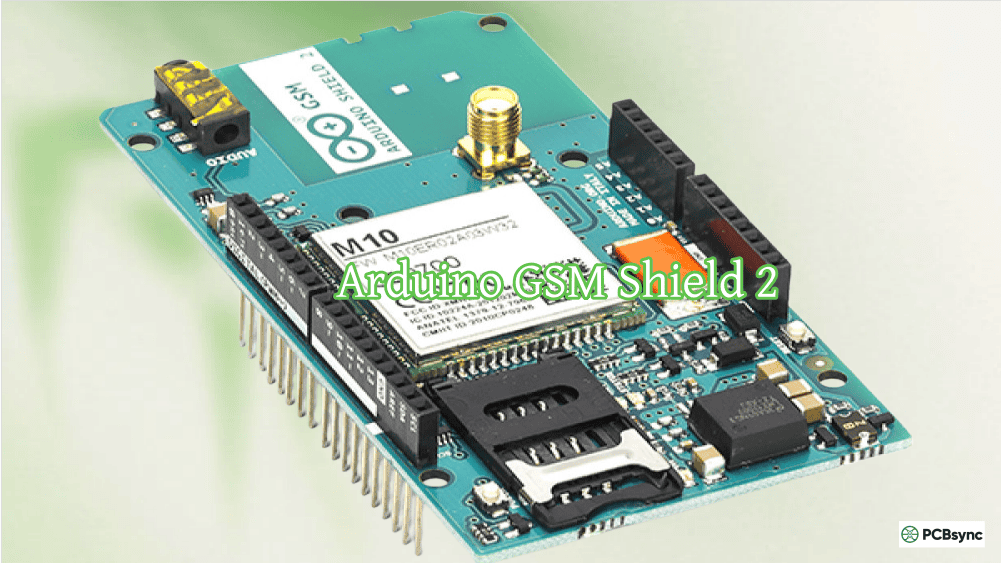
The Arduino GSM Shield 2 centers around the Quectel M10 quad-band GSM/GPRS modem—a compact surface-mount module that handles all cellular communication protocols. Unlike first-generation shields that used larger, older modems, the M10 represents a more modern, power-efficient design suitable for embedded applications.
Technical Specifications:
Specification
Details
Engineering Significance
Modem Chip
Quectel M10
SMD module, 29mm x 29mm footprint
Frequency Bands
GSM850, GSM900, DCS1800, PCS1900
Quad-band = global coverage
Network Type
2G GSM/GPRS
No 3G/4G/LTE support
Data Speed
85.6 kbps max (downlink/uplink)
GPRS Class 10
Voice Capability
Full duplex
Requires external headset/mic
Operating Voltage
3.4V – 4.5V (M10 module)
Shield provides voltage regulation
Current Draw
216mA (voice call), 80mA (network), 2A peak
Critical for power supply design
Serial Interface
Software Serial (pins 2, 3)
Uses SoftwareSerial library
Power Control
Pin 7 (PWRKEY)
Software and button control
Power Supply Architecture:
From a PCB design perspective, the power supply circuit on the shield deserves careful examination. The M10 modem operates at 3.4-4.5V, while Arduino provides 5V. The shield incorporates a Micrel MIC29302WU voltage regulator that steps down the 5V to a stable 3.8-4.2V for the modem.
The critical design challenge is current delivery. GSM transmission occurs in bursts—the modem transmits data in 577µs time slots at high power, creating current spikes up to 2A. These spikes would cause voltage sag on the power rail if not properly buffered. The shield addresses this with a large electrolytic capacitor (typically 100µF to 220µF low-ESR) positioned close to the modem’s power pins, providing local energy storage for these transmission bursts.
Component Breakdown:
Component
Part/Specification
Function
Critical Parameters
Modem Module
Quectel M10
Cellular communication
29x29mm SMD, 64-pin
Voltage Regulator
MIC29302WU or equivalent
5V to ~4V conversion
3A capability, low dropout
Bulk Capacitor
100-220µF electrolytic
Current spike buffering
Low ESR (<0.1Ω) essential
Ceramic Bypass
0.1µF-1µF MLCC
High-frequency noise filtering
X7R dielectric, close placement
Antenna Connector
U.FL or SMA
RF interface
50Ω impedance match
SIM Holder
Mini-SIM socket
Network authentication
Push-push or hinged type
Audio Jack
3.5mm stereo
Voice input/output
TRRS configuration
Pin Configuration and Arduino Interface
The Arduino GSM Shield 2 communicates with the Arduino through software serial on pins 2 and 3, deliberately avoiding hardware Serial (pins 0 and 1) to allow USB programming without shield removal.
Shield Pin Assignment:
Arduino Pin
Shield Function
Signal Direction
Notes
Pin 2
M10 TX → Arduino RX
Input to Arduino
Interrupt-capable on UNO
Pin 3
Arduino TX → M10 RX
Output from Arduino
Software serial transmit
Pin 7
PWRKEY (Power Control)
Output from Arduino
Module power on/off control
5V
Shield Power Input
Power
Regulated to ~4V for M10
GND
Common Ground
Ground
Critical for signal integrity
IOREF
Logic Level Reference
Reference
5V on UNO, 3.3V on Due
Board Compatibility Considerations:
Arduino Board
Direct Compatibility
Required Modifications
Best Alternative
UNO R3
Yes
None
Recommended platform
Leonardo
Partial
Jumper wire: Pin 2 → Pin 8, bend Pin 2 header
Use jumper modification
Yun
Partial
Same as Leonardo
Use jumper modification
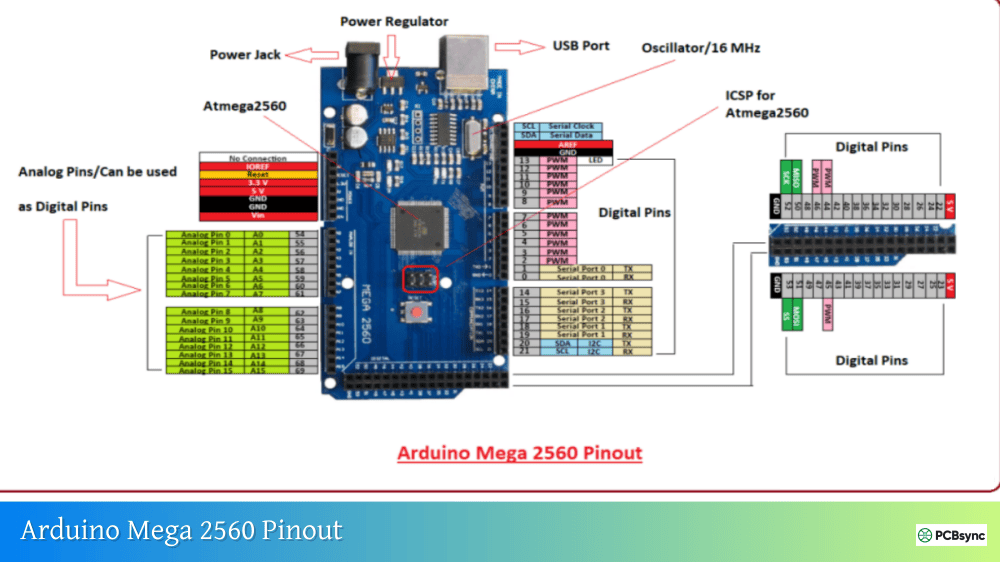
Mega 2560
Partial
Jumper wire: Pin 2 → Pin 10, bend Pin 2 header
Use Pin 10 for RX
Due
No
Voltage level incompatibility
Not supported (3.3V vs 5V)
Nano/Mini
No
Form factor incompatible
Use standalone M10 module
The Leonardo, Yun, and Mega modifications are necessary because the GSM library’s SoftwareSerial implementation requires an interrupt-capable pin for receiving data. On the UNO, pin 2 provides this interrupt capability, but Leonardo, Yun, and Mega have different interrupt pin mappings.
SIM Card Requirements and Configuration
The shield accepts mini-SIM cards (25mm x 15mm)—the standard size before micro-SIM and nano-SIM became common in smartphones. If you have a smaller SIM, you’ll need an adapter, though I recommend obtaining a properly-sized SIM from your carrier to avoid connection issues from poor adapter contact.
SIM Card Specifications:
Parameter
Requirement
Engineering Reason
Physical Size
Mini-SIM (2FF)
Shield socket designed for this form factor
Network Type
2G GSM support
M10 modem is 2G only (no 3G/4G)
Activation
Pre-activated
Shield cannot complete carrier activation process
PIN Code
Known or disabled
Required for network authentication
Credit/Plan
Active prepaid or contract
Data/SMS/voice must be provisioned
APN Settings
Obtained from carrier
Required for GPRS data connections
Critical 2G Network Availability Warning:
Many carriers worldwide have shut down or are phasing out 2G GSM networks. Before purchasing this shield, verify that your carrier still operates 2G service in your deployment area. In the United States, AT&T shut down 2G in 2017, and T-Mobile deactivated 2G in 2022. Verizon never offered GSM service. This makes the Arduino GSM Shield 2 increasingly difficult to use in North America. International markets, particularly in Europe, Asia, and Africa, still maintain robust 2G coverage, but always verify before committing to this technology.
Setting Up the Arduino GSM Shield 2
Hardware Installation
Step-by-Step Assembly:
Prepare the SIM Card
Insert SIM into shield’s push-push socket
Ensure metal contacts face down toward PCB
Push until it clicks and locks
Test lock by gently pulling—card should not release
Attach Antenna
Connect appropriate antenna to connector (U.FL or SMA depending on shield variant)
For U.FL connectors: press straight down until snap is felt
Never operate shield without antenna—can damage RF amplifier
For testing: quarter-wave wire antenna (17.3cm for GSM900, 8.2cm for GSM1800) works adequately
Stack Shield onto Arduino
Align all header pins carefully
Apply even pressure to seat shield fully
Verify no bent or misaligned pins
Confirm Power and Status LEDs are visible
Configure Power Supply
Connect external 5V power supply capable of 2A minimum
Use Arduino barrel jack (7-12V) with onboard regulator, or
Use dedicated 5V supply to Arduino 5V pin (bypasses regulator—more efficient)
Never rely solely on USB power—insufficient current capacity
Power Supply Design Considerations:
USB 2.0 ports provide maximum 500mA (900mA for USB 3.0). The M10 modem can draw 2A during transmission bursts. While the large capacitor on the shield stores energy for these bursts, prolonged operation on USB power will cause brownouts, resets, and failed transmissions.
Recommended Power Supply Configurations:
Power Source
Voltage
Current Rating
Suitability
Notes
USB alone
5V
500mA
Poor
Only for initial testing, expect resets
9V wall adapter
9V
1A
Good
Arduino regulator converts to 5V
5V switching supply
5V
2A+
Excellent
Most efficient, direct 5V input
LiPo battery (2S)
7.4V nominal
2Ah+ capacity
Excellent
Portable applications, use protection circuit
AA batteries (6x)
9V nominal
Depends on type
Marginal
Alkaline drain quickly, NiMH better
Software Configuration and Libraries
The Arduino IDE includes the GSM library (version 1.0.4 and later), providing high-level functions for SMS, voice calls, and GPRS data connections.
If compilation succeeds, the library is properly installed.
Essential AT Commands:
While the GSM library abstracts most operations, understanding the underlying AT commands is crucial for troubleshooting and advanced features:
AT Command
Function
Response
Usage
AT
Test communication
OK
Verify modem is responding
AT+CPIN?
Check SIM PIN status
+CPIN: READY or +CPIN: SIM PIN
SIM authentication status
AT+CREG?
Check network registration
+CREG: 0,1 (registered)
Verify network connection
AT+CSQ
Signal quality
+CSQ: 10-31,0
Higher = better signal
AT+CMGF=1
SMS text mode
OK
Set SMS to text (vs PDU mode)
AT+COPS?
Current operator
+COPS: operator name
Verify connected network
AT+CGATT?
GPRS attachment status
+CGATT: 1 (attached)
Check data connection
AT+CIFSR
Get IP address
IP address or ERROR
Verify GPRS session active
Programming the Arduino GSM Shield 2
Sending SMS Messages
SMS functionality is the most reliable feature of the Arduino GSM Shield 2 and works even with minimal signal strength. Here’s production-quality code with proper error handling:
prepaidgsm.net: Prepaid SIM card options by country
Code Examples Repository
The Arduino GSM library includes extensive examples in File → Examples → GSM:
SendSMS – Basic SMS transmission
ReceiveSMS – SMS reception and parsing
MakeVoiceCall – Initiate phone calls
ReceiveVoiceCall – Answer incoming calls
WebClient – HTTP GET requests
WebServer – Simple web server on GSM
Frequently Asked Questions
1. Why does my Arduino reset when the GSM shield tries to connect to the network?
This is almost always a power supply problem. The M10 modem draws up to 2A during transmission bursts, and if your power supply can’t deliver this current, the voltage sags below the Arduino’s brownout detection threshold (typically 4.5V), triggering a reset. The shield includes a large capacitor to buffer these spikes, but it can only help if the power supply can recharge it between bursts. Solutions: First, never power the shield from USB alone—use an external supply of at least 7-12V 1A to the Arduino barrel jack, or better yet, a 5V 2A+ supply directly to the Arduino’s 5V pin. Second, ensure your power cables are thick enough (18-22 AWG) and connections are solid—thin wires and poor contacts add resistance that causes voltage drops. Third, add additional bulk capacitance (470µF to 1000µF electrolytic) across the Arduino’s 5V and GND pins, positioned as close to the shield as possible. Finally, check that your wall adapter is actually rated for its labeled current—many cheap adapters are overrated and can’t sustain their stated output.
2. Can I use the Arduino GSM Shield 2 with 3G or 4G networks?
No, the Quectel M10 modem is strictly a 2G GSM/GPRS device and cannot connect to 3G UMTS, 4G LTE, or 5G networks. This is a hardware limitation—the M10’s radio frequency circuitry and baseband processor are designed specifically for 2G protocols. This matters increasingly as carriers worldwide shut down 2G networks to repurpose spectrum for 4G and 5G. Before purchasing this shield, verify that your target carrier maintains 2G service in your deployment area. In North America, 2G options are extremely limited (AT&T and T-Mobile both shut down 2G). In Europe, Asia, Africa, and South America, 2G remains more widely available but is gradually being phased out. For future-proof projects, consider newer shields or modules based on 4G LTE-M or NB-IoT technology, such as the Arduino MKR GSM 1400 (which is actually an LTE-M/NB-IoT board despite the “GSM” name), or third-party modules based on SIM7000, SIM7600, or Quectel BG96 chips. These provide backward compatibility where 2G still exists while supporting modern networks.
3. How much does it cost to operate an Arduino GSM Shield 2 project with SMS and data?
Costs vary widely by country, carrier, and usage patterns, but here’s what to expect: For SMS-only applications (like alert systems), prepaid SIM cards in many countries offer pay-as-you-go SMS at $0.05-0.20 per message. If you’re sending 10 alerts per day, that’s $1.50-6.00 per month. For GPRS data, many M2M (Machine-to-Machine) or IoT-specific SIM plans offer 1-10MB per month for $2-10, which is plenty for sensor data uploads (a typical sensor JSON payload is 100-500 bytes, so 1MB supports 2000-10000 transmissions). Consumer mobile plans are usually more expensive and may restrict or block M2M devices. Carrier-specific considerations: In Europe, providers like Vodafone and Orange offer IoT SIM plans specifically for embedded devices with favorable rates. In developing markets, prepaid SIMs are extremely cheap—sometimes under $1/month for basic service. In the US where 2G is largely defunct, you’ll need to use an international roaming SIM or specialized IoT carrier. Hidden costs to watch for: Some carriers charge monthly line access fees ($5-15) even with no usage, roaming charges if your SIM connects to different networks, and activation fees. Always test with a prepaid SIM first before committing to monthly contracts.
4. Can I send data from the Arduino GSM Shield to cloud services like AWS, Azure, or ThingSpeak?
Yes, the Arduino GSM Shield 2 can send data to any cloud service that accepts HTTP or HTTPS connections, though there are important limitations. For HTTP (unencrypted), the shield works well with RESTful APIs—you make standard HTTP POST or GET requests just like a web browser. Services like ThingSpeak, Adafruit IO, and custom web servers are straightforward to integrate. However, HTTPS (encrypted) is extremely problematic. The M10 modem and Arduino have very limited processing power and memory for SSL/TLS encryption. While technically possible with specialized libraries, it’s unreliable and consumes massive amounts of memory (often exceeding the UNO’s 2KB RAM). Most cloud services now require HTTPS for security, making direct integration difficult. Workarounds: First, use an intermediary server that accepts HTTP and forwards to HTTPS endpoints (essentially a local proxy). Second, use cloud services that still offer HTTP endpoints (ThingSpeak and some others). Third, send data to a web server you control, then have that server forward to cloud services. Fourth, upgrade to a more capable cellular module with built-in SSL support like SIM7000 or SIM7600 series. For AWS IoT, Azure IoT Hub, and Google Cloud IoT, you’ll realistically need a more powerful board (ESP32 with cellular module) or a purpose-built IoT gateway.
5. What’s the maximum range for the Arduino GSM Shield 2 from a cell tower?
GSM networks are designed for mobile phone users moving at vehicle speeds, so range is surprisingly good compared to WiFi or Bluetooth. Theoretical maximum range for GSM is approximately 35km (22 miles) under ideal conditions—flat terrain, clear line-of-sight, and tall tower. Practical ranges vary dramatically: In dense urban areas with many towers, usable range is 1-5km but you’re never far from a tower anyway. In suburban areas, expect 5-15km. In rural areas, successful connections at 20-30km are common. The world record for a GSM connection is over 300km using specialized equipment, but consumer devices won’t achieve this. Factors affecting your range: Antenna quality is critical—the tiny chip antenna on many shields works adequately in strong signal areas but struggles in marginal coverage. External antennas dramatically improve range; a properly installed 3dBi gain antenna can double effective range. Elevation helps enormously—a shield at ground level might get no signal while the same setup 10 meters up connects fine. Frequency band matters—GSM900 (900MHz) propagates much farther than DCS1800 (1800MHz) due to physics of radio waves. Obstructions like buildings, hills, and dense forests attenuate signals. Power output is fixed by regulation, so you can’t boost transmission power. To maximize range: use the best external antenna you can, mount it as high as practical, orient it vertically (GSM uses vertical polarization), and if possible, position your device in line-of-sight to known tower locations.
Conclusion
The Arduino GSM Shield 2 brings cellular connectivity to Arduino projects, enabling remote communication in locations where WiFi and Ethernet are impractical or impossible. While the shield’s reliance on 2G GSM/GPRS networks presents challenges as carriers worldwide phase out this technology, it remains viable in many international markets and excels at applications that need ubiquitous connectivity with modest data requirements.
From a PCB engineering perspective, the shield demonstrates sophisticated power management necessary for cellular modules—from voltage regulation to burst current buffering with low-ESR capacitors. Understanding these hardware requirements separates successful deployments from frustrating failures. The 2A peak current draw isn’t a suggestion; it’s a hard requirement that must be designed into your power supply from the beginning.
The Quectel M10 modem, while dated by current standards, offers excellent quad-band global compatibility and straightforward AT command control. The GSM library abstracts most complexity, but knowledge of underlying AT commands becomes invaluable during troubleshooting and advanced feature implementation.
For new projects in 2026, carefully evaluate whether 2G coverage exists in your target deployment area. If 2G networks are still operational, the Arduino GSM Shield 2 provides an economical and well-documented solution for SMS alerts, remote monitoring, and basic IoT connectivity. For future-proofing or North American deployments, investigate LTE-M and NB-IoT alternatives that support modern cellular networks while maintaining the low-power operation essential for embedded applications.
Whether you’re building a remote weather station, agricultural sensor network, vehicle tracker, or security alert system, mastering cellular connectivity transforms your Arduino from a standalone device into a globally-connected IoT platform capable of communicating from virtually anywhere on Earth.
Inquire: Call 0086-755-23203480, or reach out via the form below/your sales contact to discuss our design, manufacturing, and assembly capabilities.
Quote: Email your PCB files to Sales@pcbsync.com (Preferred for large files) or submit online. We will contact you promptly. Please ensure your email is correct.
Notes: For PCB fabrication, we require PCB design file in Gerber RS-274X format (most preferred), *.PCB/DDB (Protel, inform your program version) format or *.BRD (Eagle) format. For PCB assembly, we require PCB design file in above mentioned format, drilling file and BOM. Click to download BOM template To avoid file missing, please include all files into one folder and compress it into .zip or .rar format.