Inquire: Call 0086-755-23203480, or reach out via the form below/your sales contact to discuss our design, manufacturing, and assembly capabilities.
Quote: Email your PCB files to Sales@pcbsync.com (Preferred for large files) or submit online. We will contact you promptly. Please ensure your email is correct.
Notes: For PCB fabrication, we require PCB design file in Gerber RS-274X format (most preferred), *.PCB/DDB (Protel, inform your program version) format or *.BRD (Eagle) format. For PCB assembly, we require PCB design file in above mentioned format, drilling file and BOM. Click to download BOM template To avoid file missing, please include all files into one folder and compress it into .zip or .rar format.
When a client approached me about automating irrigation across 200 acres of farmland with no reliable power or cellular coverage, I initially thought we’d need to piece together solar controllers, industrial PLCs, and custom communication systems. Then I discovered the Arduino Edge Control—a single board specifically designed for exactly this kind of remote agricultural monitoring challenge. After deploying multiple units across that farm, I can say this board fundamentally changes what’s practical for precision agriculture and environmental monitoring in isolated locations.
The Arduino Edge Control isn’t another general-purpose microcontroller adapted for outdoor use. It’s purpose-built from the ground up for agricultural automation, with dedicated inputs for soil moisture sensors, outputs for latching valves, solar charging capabilities, and connectivity options that work where cell towers don’t reach. For anyone working on smart farming, greenhouse automation, or remote environmental monitoring, this board deserves serious attention.
The Arduino Edge Control is a remote monitoring and control solution optimized for outdoor environments. Unlike typical development boards that need extensive external circuitry for real-world applications, the Edge Control arrives ready for deployment with all the I/O, power management, and protection circuitry needed for agricultural and environmental monitoring installations.
Developed under Arduino’s Pro lineup, the Edge Control targets Agriculture 4.0 applications—the integration of IoT, data analytics, and automation into farming operations. It can collect data from soil sensors, weather stations, and water level monitors, then automatically control irrigation valves, ventilation systems, and other actuators based on that data or remote commands from the Arduino IoT Cloud.
The board’s design philosophy centers on three key requirements: ultra-low power consumption for solar-powered operation, robust I/O for agricultural sensors and actuators, and flexible connectivity for locations where traditional networking isn’t available.
Arduino Edge Control Technical Specifications
Understanding the Edge Control’s capabilities reveals how thoroughly it’s optimized for remote agricultural deployment:
Specification
Details
Microcontroller
Nordic nRF52840
Processor
ARM Cortex-M4F @ 64 MHz
On-board Flash
1 MB
QSPI Flash
2 MB
Connectivity
Bluetooth (built-in)
Security
ARM CryptoCell CC310
Power Input
12V DC (battery/solar)
Sleep Current
200 µA
Operating Temperature
-40°C to +85°C
The nRF52840’s combination of processing power and ultra-low sleep current makes it ideal for duty-cycled agricultural applications where the system wakes periodically to take measurements and transmit data before returning to sleep.
Input/Output Capabilities for Agriculture
The Edge Control’s I/O configuration directly addresses common agricultural automation requirements:
Sensor Inputs
Input Type
Quantity
Specification
Watermark Sensor Inputs
16
Hydrostatic soil moisture
4-20mA Analog Inputs
4
Industrial sensor standard
0-5V Analog Inputs
8
General analog sensors
Digital Wake-up Pins
6
Edge-sensitive interrupts
The 16 dedicated watermark sensor inputs are specifically designed for Irrometer-style soil moisture sensors commonly used in precision irrigation. These resistive sensors measure soil water tension, providing accurate data for irrigation scheduling. The Edge Control handles the AC excitation these sensors require, eliminating external circuitry typically needed.
Actuator Outputs
Output Type
Quantity
Specification
Latching Relay Outputs (with drivers)
8
For motorized valves
Latching Relay Outputs (without drivers)
8
High-impedance loads
Solid-State Relays
4
60V/2.5A galvanically isolated
The latching relay outputs deserve special attention. Agricultural irrigation valves are typically latching (bistable) types that maintain their position without continuous power—they receive a brief pulse to open and another to close. The Edge Control provides dedicated dual-channel outputs (P and N) for these valves, with configurable pulse duration. This eliminates the H-bridge driver circuits you’d normally need to add.
Power Management and Solar Operation
The Edge Control’s power system is designed for true off-grid deployment:
Power Feature
Specification
Input Voltage
11-13.3V (12V nominal)
Battery Type
Lead-acid SLA
Charging IC
LT3652HV
Solar Panel Support
Direct connection
Sleep Current
200 µA
Battery Life (5Ah)
Up to 34 months
The integrated LT3652HV battery charger IC handles solar panel MPPT (Maximum Power Point Tracking) charging automatically. Connect a 12V solar panel and a lead-acid battery, and the Edge Control manages charging, load balancing, and low-voltage protection without external charge controllers.
Arduino quotes 34-month operation on a 12V/5Ah battery under typical duty cycles—waking periodically to take measurements, transmitting data, and returning to sleep. In practice, actual runtime depends on measurement frequency, connectivity usage, and actuator operations, but the 200µA sleep current provides genuine long-term autonomous operation capability.
Connectivity Options for Remote Locations
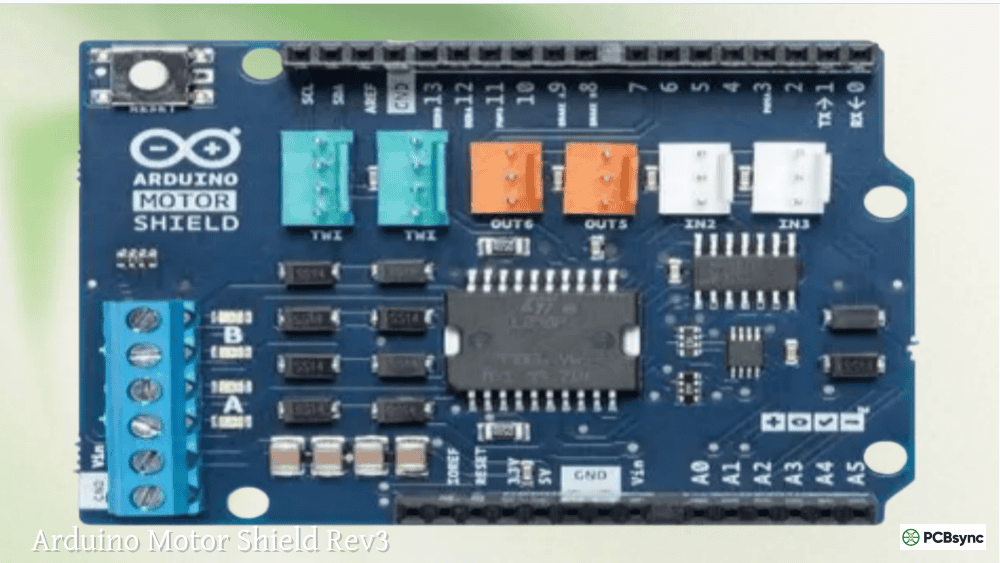
While the Edge Control includes built-in Bluetooth, its real connectivity flexibility comes from the dual MKR board slots:
Connectivity Option
MKR Board
Best For
WiFi
MKR WiFi 1010
Areas with WiFi coverage
Cellular 2G/3G
MKR GSM 1400
Legacy cellular networks
LTE Cat-M1/NB-IoT
MKR NB 1500
Modern LPWAN cellular
LoRaWAN
MKR WAN 1300/1310
Long-range rural coverage
Sigfox
MKR FOX 1200
Ultra-low-power messaging
For agricultural deployments, LoRaWAN and cellular IoT (Cat-M1/NB-IoT) are typically the most practical options. LoRaWAN can reach 10+ kilometers in rural environments with a single gateway, while Cat-M1/NB-IoT leverages existing cellular infrastructure with much better building/ground penetration than traditional cellular.
The dual MKR slots allow combining connectivity options—for example, LoRaWAN for regular data transmission with cellular as a backup, or GPS positioning alongside your primary communication link.
Smart Agriculture Applications
The Edge Control enables sophisticated agricultural automation:
Precision Irrigation Systems
Component
Edge Control Feature
Soil Moisture Sensing
16 watermark sensor inputs
Valve Control
Latching relay outputs
Weather Integration
4-20mA inputs for weather stations
Scheduling
RTC with interrupt wake-up
Remote Management
Arduino IoT Cloud
A typical precision irrigation deployment uses multiple watermark sensors per zone to map soil moisture variation across a field. The Edge Control processes this data locally, making irrigation decisions based on programmed thresholds, crop requirements, and weather forecasts. Latching valves open and close zones independently, delivering water only where and when needed.
Challenge Agriculture’s Irriduo system demonstrates this approach at scale—six sensors per field providing 4,000+ measurements over crop cycles, with automated irrigation responding in real-time to changing conditions. In drought-affected regions with strict water allocation rules, this precision makes the difference between viable crops and failure.
Greenhouse Automation
Parameter
Sensors
Actuators
Temperature
4-20mA temperature probes
Ventilation, heating
Humidity
Capacitive humidity sensors
Misting, dehumidifiers
CO2 Levels
4-20mA CO2 sensors
CO2 injection
Light
0-5V light sensors
Shade cloths, supplemental lighting
Irrigation
Watermark sensors
Drip systems
Greenhouse environments demand precise control over multiple parameters simultaneously. The Edge Control’s combination of diverse input types and substantial output capacity enables comprehensive automation—maintaining optimal growing conditions while minimizing energy consumption and labor.
Hydroponics and Aquaponics
Parameter
Monitoring
Control
pH
4-20mA pH probe
Dosing pumps
EC/TDS
4-20mA conductivity
Nutrient injection
Water Temperature
Temperature sensors
Heaters/chillers
Water Level
Float switches
Pumps
Dissolved Oxygen
DO sensors
Aerators
Soilless growing systems require continuous monitoring and adjustment—conditions can deteriorate rapidly without intervention. The Edge Control’s ability to monitor multiple parameters and respond with precise actuator control makes it suitable for these demanding applications, whether hobby-scale or commercial aquaponics operations.
Environmental Monitoring Applications
Beyond agriculture, the Edge Control serves broader environmental monitoring needs:
Water Quality Monitoring
Application
Sensors
Deployment
River/Stream Monitoring
pH, DO, turbidity, temperature
Remote watershed stations
Groundwater Monitoring
Conductivity, level, temperature
Well monitoring networks
Stormwater Management
Flow, level, quality
Urban drainage systems
Weather Stations
Measurement
Sensor Type
Input Used
Temperature
RTD or thermistor
4-20mA or 0-5V
Humidity
Capacitive
0-5V
Barometric Pressure
Pressure transducer
4-20mA
Wind Speed/Direction
Pulse/analog anemometer
Digital/analog
Rainfall
Tipping bucket
Digital interrupt
Solar Radiation
Pyranometer
4-20mA
The Edge Control’s industrial-grade inputs accept standard meteorological sensors directly, enabling deployment of professional weather monitoring stations in remote locations without grid power.
Edge Control Enclosure Kit
For field deployment, Arduino offers the Edge Control Enclosure Kit:
Feature
Specification
IP Rating
IP40
Mounting
DIN rail compatible
Display
2-row LCD with backlight
Interface
Programmable push-button
Cable Management
Integrated terminal access
The enclosure provides weather protection, local display of sensor data, and professional mounting options. The LCD display enables on-site verification of sensor readings without requiring laptop connection—useful during installation and troubleshooting.
Sensor Integration Examples: Available in Arduino_EdgeControl library
Cloud Integration
Arduino IoT Cloud: cloud.arduino.cc
Dashboard Creation: docs.arduino.cc/arduino-cloud
Community Resources
Arduino Forum: forum.arduino.cc
Arduino Project Hub: projecthub.arduino.cc
FAQs About Arduino Edge Control
What sensors are compatible with the Edge Control’s watermark inputs?
The 16 watermark inputs are designed for resistive soil moisture sensors that use AC excitation, primarily Irrometer Watermark sensors (200SS series). These sensors measure soil water tension in centibars (kPa), providing reliable irrigation scheduling data. The Edge Control generates the required AC excitation signal and handles the resistance-to-moisture conversion internally. Other resistive soil sensors may work but require calibration. For capacitive soil moisture sensors, use the 0-5V analog inputs instead—they output a DC voltage proportional to moisture content and don’t require AC excitation.
Can the Edge Control operate year-round in extreme climates?
The Edge Control is rated for -40°C to +85°C operating temperature, covering most agricultural environments. However, the lead-acid battery’s performance degrades significantly below freezing and above 40°C. For extreme cold, use AGM batteries with better cold tolerance or insulated enclosures with heating elements controlled by the Edge Control itself. For extreme heat, shade the enclosure and consider lithium batteries with appropriate charge profiles. The electronics will survive, but battery selection and thermal management become critical for reliable year-round operation in harsh climates.
How does the Edge Control compare to industrial PLCs for agricultural automation?
The Edge Control offers several advantages over traditional PLCs for agricultural applications: purpose-built I/O for soil sensors and latching valves eliminates external modules, integrated solar charging removes separate charge controllers, Arduino ecosystem provides easier programming than ladder logic, and the price point (around $200) is fraction of comparable PLC systems. However, industrial PLCs offer advantages in regulatory certification, hazardous environment ratings, deterministic real-time response, and established industrial support networks. For most smart agriculture deployments, the Edge Control provides professional-grade capability at accessible cost; for food processing facilities requiring industrial certification, traditional PLCs may remain necessary.
What’s the practical range of LoRaWAN connectivity for agricultural deployments?
LoRaWAN range depends heavily on terrain, antenna height, and gateway placement. In flat agricultural land with elevated gateway antennas (10+ meters), ranges of 10-15 kilometers are achievable. Hilly terrain, tree cover, and ground-level device placement reduce this significantly—expect 2-5 kilometers in challenging conditions. For large farm deployments, plan gateway placement based on actual site surveys rather than theoretical maximums. A single gateway typically covers multiple Edge Control nodes, so the infrastructure investment scales well. The MKR WAN 1310’s Class C support enables faster downlink response than Class A devices, useful when remote command latency matters.
Can I use the Edge Control for applications other than agriculture?
Absolutely. While designed for agriculture, the Edge Control’s capabilities apply to any remote monitoring and control application. Water utilities use it for remote pump station monitoring, construction sites for equipment tracking and access control, pool maintenance companies for remote water quality management, and researchers for environmental monitoring stations. The combination of solar power, multiple connectivity options, industrial-grade I/O, and weatherproof enclosure makes it suitable for virtually any outdoor automation challenge. The agricultural focus is a design emphasis, not a limitation—the underlying hardware handles diverse industrial sensing and control requirements.
Final Thoughts on Arduino Edge Control
After deploying the Edge Control across multiple agricultural projects, I’ve come to appreciate how much specialized engineering went into this board. The dedicated watermark sensor inputs alone save hours of circuit design and calibration compared to generic microcontroller approaches. The integrated solar charging eliminates a separate subsystem. The latching valve outputs work directly with standard irrigation hardware. These aren’t just conveniences—they’re the difference between a prototype that works on the bench and a system that survives seasons in the field.
The Edge Control represents Arduino’s commitment to professional applications where reliability and practicality matter more than feature counts. It doesn’t try to do everything—it does agricultural monitoring and control exceptionally well. For engineers and integrators working on smart farming, greenhouse automation, or remote environmental monitoring, the Arduino Edge Control provides a production-ready foundation that dramatically accelerates deployment while maintaining the accessibility Arduino is known for.
Inquire: Call 0086-755-23203480, or reach out via the form below/your sales contact to discuss our design, manufacturing, and assembly capabilities.
Quote: Email your PCB files to Sales@pcbsync.com (Preferred for large files) or submit online. We will contact you promptly. Please ensure your email is correct.
Notes: For PCB fabrication, we require PCB design file in Gerber RS-274X format (most preferred), *.PCB/DDB (Protel, inform your program version) format or *.BRD (Eagle) format. For PCB assembly, we require PCB design file in above mentioned format, drilling file and BOM. Click to download BOM template To avoid file missing, please include all files into one folder and compress it into .zip or .rar format.