Inquire: Call 0086-755-23203480, or reach out via the form below/your sales contact to discuss our design, manufacturing, and assembly capabilities.
Quote: Email your PCB files to Sales@pcbsync.com (Preferred for large files) or submit online. We will contact you promptly. Please ensure your email is correct.
Notes: For PCB fabrication, we require PCB design file in Gerber RS-274X format (most preferred), *.PCB/DDB (Protel, inform your program version) format or *.BRD (Eagle) format. For PCB assembly, we require PCB design file in above mentioned format, drilling file and BOM. Click to download BOM template To avoid file missing, please include all files into one folder and compress it into .zip or .rar format.
Arduino Due: 32-bit ARM Power for Advanced Projects
When you hit the ceiling with 8-bit microcontrollers, the Arduino Due opens up an entirely different world of possibilities. As the first Arduino board built on a 32-bit ARM architecture, the Due delivers processing power that leaves traditional AVR-based boards in the dust—literally running circles around them at 84 MHz while offering features like true analog output that simply don’t exist on lesser platforms.
I’ve used the Due in projects where the Mega 2560 couldn’t keep up, particularly in real-time signal processing and high-speed data acquisition. This guide covers everything you need to know about the Arduino Due, from its technical specifications to practical considerations for incorporating it into your advanced projects.
The Arduino Due is a microcontroller board based on the Atmel SAM3X8E ARM Cortex-M3 processor. Released in 2012, it marked Arduino’s transition from 8-bit AVR microcontrollers to the 32-bit ARM architecture that powers modern embedded systems.
Unlike the Uno or Mega, which run ATmega chips at 16 MHz, the Due operates at 84 MHz with 32-bit data processing. This five-fold clock speed increase, combined with the architectural efficiency of ARM cores, translates to roughly 7-8 times faster computation for most tasks.
The board maintains the familiar Arduino form factor and programming environment while delivering capabilities previously reserved for more expensive industrial controllers. For projects demanding real-time performance, extensive memory, or true analog output, the Due represents a significant step forward.
Arduino Due Technical Specifications
Understanding the specifications helps you evaluate whether the Due fits your project requirements. Here’s the complete technical breakdown:
Specification
Value
Microcontroller
Atmel SAM3X8E ARM Cortex-M3
Operating Voltage
3.3V
Input Voltage (recommended)
7-12V
Clock Speed
84 MHz
Flash Memory
512 KB (2 blocks of 256 KB)
SRAM
96 KB (64 KB + 32 KB)
Digital I/O Pins
54 (12 PWM capable)
Analog Input Pins
12
Analog Output Pins (DAC)
2
ADC Resolution
12-bit (4096 levels)
DAC Resolution
12-bit (4096 levels)
Serial Ports (UART)
4
USB Ports
2 (Programming + Native)
CAN Bus
Yes (2 channels)
Board Dimensions
101.5mm × 53.3mm
The SAM3X8E processor is the same chip family used in industrial automation equipment, providing reliability and documentation depth that benefits serious project development.
Arduino Due Pinout Overview
The Due follows the Arduino 1.0 pinout standard, maintaining physical compatibility with most shields while adding ARM-specific capabilities.
Digital Pins Configuration
Pin Range
Function
Special Features
D0-D1
Digital I/O
Serial0 (RX/TX)
D2-D13
Digital I/O
PWM output capable
D14-D15
Digital I/O
Serial3 (TX3/RX3)
D16-D17
Digital I/O
Serial2 (TX2/RX2)
D18-D19
Digital I/O
Serial1 (TX1/RX1)
D20-D21
Digital I/O
I2C (SDA/SCL)
D22-D53
Digital I/O
General purpose
Analog and DAC Pins
Pin
Function
Resolution
A0-A11
Analog Input
12-bit (0-4095)
DAC0
Analog Output
12-bit (0-4095)
DAC1
Analog Output
12-bit (0-4095)
The DAC outputs provide true analog voltage (not PWM approximation) ranging from approximately 0.55V to 2.75V, making them ideal for audio generation and precision control applications.
Key Features That Set Arduino Due Apart
32-bit ARM Cortex-M3 Processor
The ARM Cortex-M3 core fundamentally changes what’s possible with an Arduino. Beyond raw speed, the 32-bit architecture handles mathematical operations—especially floating-point calculations—far more efficiently than 8-bit AVR processors.
In practical terms, operations that might take 50-100 clock cycles on an ATmega2560 often complete in 5-10 cycles on the SAM3X8E. For applications involving sensor fusion, PID control loops, or digital signal processing, this efficiency matters enormously.
True Analog Output (DAC)
The Due’s two 12-bit DAC channels output genuine analog voltages, not the PWM approximations other Arduino boards provide. This capability enables:
Application
Why DAC Matters
Audio synthesis
Generate clean waveforms without filtering
Arbitrary waveform generation
Create custom signal shapes
Precision motor control
Smooth voltage control without PWM noise
Sensor calibration
Output reference voltages
The Arduino Audio library takes advantage of these DACs for WAV and audio playback directly from the board.
USB Host Capability
The Due includes USB On-The-Go (OTG) functionality through its Native USB port, allowing the board to act as a USB host. This means you can connect:
USB keyboards and mice
USB flash drives for data storage
USB cameras and webcams
Android devices (ADK support)
MIDI controllers
This capability opens project possibilities that simply don’t exist on other Arduino boards without additional hardware.
High-Resolution ADC
While the Uno and Mega provide 10-bit analog resolution (1024 levels), the Due offers 12-bit resolution (4096 levels). For sensor applications requiring precision, this four-fold increase in resolution translates to significantly more accurate measurements.
The ADC also operates faster than AVR-based boards, supporting higher sample rates for signal processing applications.
CAN Bus Interface
The Due includes two CAN (Controller Area Network) channels for automotive and industrial communication protocols. While not fully supported by standard Arduino libraries, this hardware capability makes the Due suitable for vehicle diagnostics, industrial automation, and other applications requiring robust networked communication.
Arduino Due vs Arduino Mega 2560
Choosing between the Due and Mega depends on your specific project requirements. Here’s how they compare:
Projects where extensive library support is critical
Critical 3.3V Considerations
The most important thing to understand about the Arduino Due is its 3.3V operating voltage. Unlike most Arduino boards that run at 5V, the Due’s I/O pins cannot tolerate voltages above 3.3V.
Voltage Compatibility Issues
Connecting a 5V sensor or module directly to the Due’s pins will damage the board. This affects:
Component Type
5V Risk
Logic-level sensors
Output voltages may exceed 3.3V
5V shields
Direct connection can destroy the Due
Serial communication
TTL levels may be 5V
I2C pull-ups
Must be referenced to 3.3V
Solutions for 5V Components
When you must use 5V peripherals with the Due:
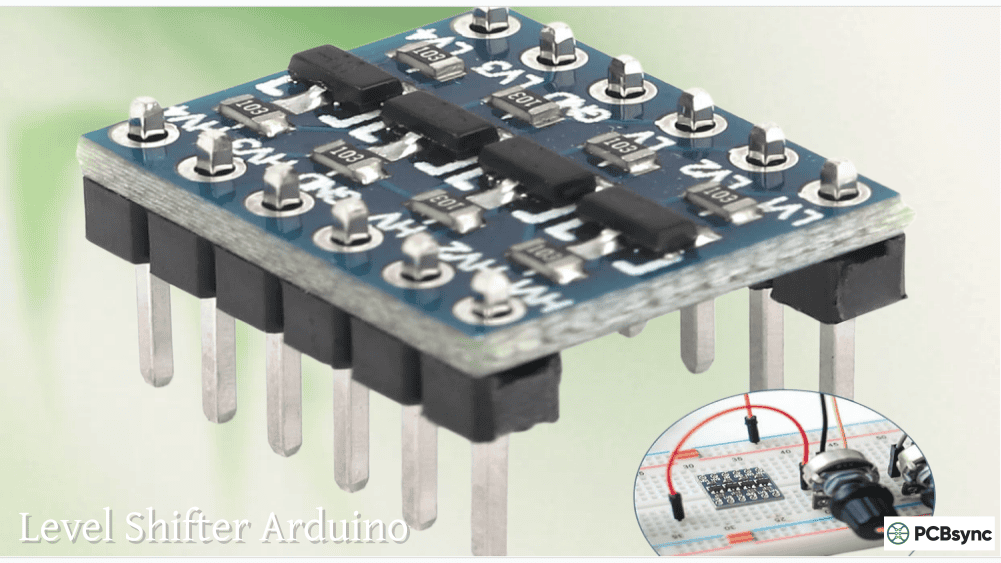
Level Shifters: Bidirectional logic level converters (like the TXS0108E or BSS138-based modules) translate between 3.3V and 5V logic safely.
Voltage Dividers: For input-only signals, simple resistor dividers can reduce 5V to acceptable levels. A 10kΩ/20kΩ divider converts 5V to 3.3V.
3.3V-Compatible Components: Many sensors and modules now come in 3.3V versions. When starting new projects, selecting these from the outset eliminates compatibility issues.
Shield Compatibility
Not all Arduino shields work with the Due. Check for:
Shields explicitly rated for 3.3V operation
Shields that read the IOREF pin and adjust their voltage accordingly
Library compatibility with ARM architecture (some AVR-specific libraries won’t compile)
Programming the Arduino Due
Programming the Due uses the standard Arduino IDE with a few specific considerations.
IDE Setup
Open Arduino IDE (version 1.5 or later required)
Navigate to Tools > Board > Boards Manager
Search for “Arduino SAM Boards”
Install the SAM boards package
Select Arduino Due (Programming Port) or Arduino Due (Native USB Port)
Two USB Ports Explained
The Due has two USB ports with different purposes:
Port
Location
Primary Use
Programming Port
Near DC jack
Uploading sketches, Serial Monitor
Native USB Port
Near reset button
USB host functions, faster transfers
For most development work, use the Programming Port. The Native Port connects directly to the SAM3X8E and supports USB host functionality but handles uploads differently.
Extended Resolution Functions
The Due supports resolution beyond standard Arduino functions:
// Set ADC to 12-bit resolution
analogReadResolution(12);
// Set PWM/DAC to 12-bit resolution
analogWriteResolution(12);
// Now analog operations use 0-4095 range
int sensorValue = analogRead(A0); // Returns 0-4095
analogWrite(DAC0, 2048); // Outputs ~1.65V
Arduino Due Project Applications
The Due’s capabilities make it ideal for specific application categories:
Audio and Signal Processing
The combination of fast processing, true DAC output, and high-resolution ADC enables:
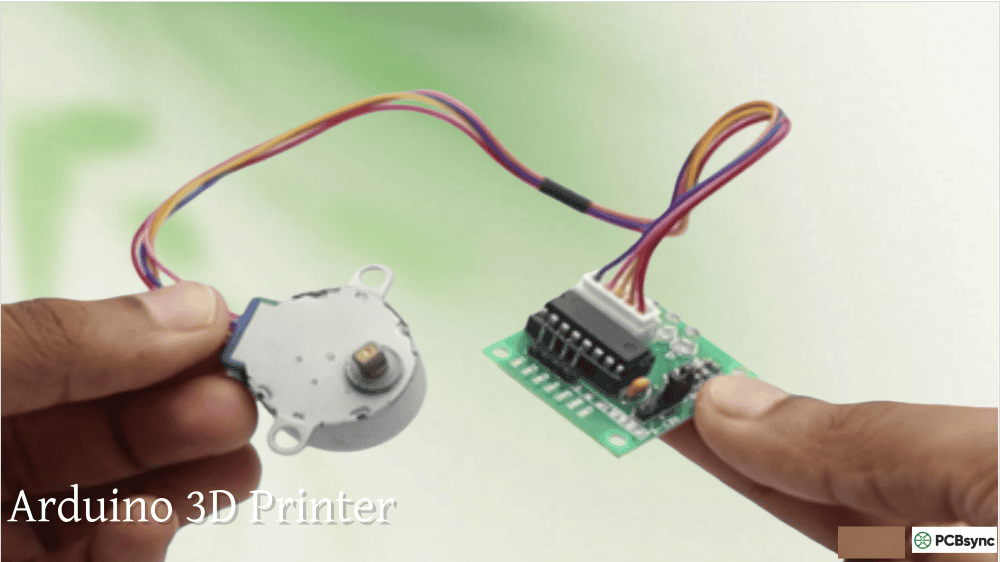
The Due powers many 3D printer firmware implementations requiring:
Fast stepper motor pulse generation
Complex motion planning calculations
Multiple extruder control
High-resolution positioning
Useful Arduino Due Resources
Resource
Description
Arduino Due Documentation
docs.arduino.cc/hardware/due
SAM3X8E Datasheet
Complete processor specifications
Arduino IDE Download
arduino.cc/en/software
Due Pinout Diagram
Official PDF from Arduino
Arduino Forum (Due section)
Community troubleshooting
GitHub Arduino Core
SAM board definitions and libraries
Troubleshooting Common Arduino Due Issues
Board Not Recognized
If your computer doesn’t detect the Due:
Try both USB ports
Install SAM boards package in IDE
Press the ERASE button, then RESET before uploading
Check USB cable (some cables are charge-only)
Upload Failures
The Due’s upload process differs from AVR boards:
Flash memory must be erased before reprogramming
The bootloader runs from ROM, not flash
If uploads consistently fail, use the ERASE button to clear flash
Damaged Board from Overvoltage
If you’ve connected 5V to I/O pins:
Some pins may be individually damaged
Test each pin you need with simple input/output sketches
If the board powers on but behaves erratically, specific GPIO may be destroyed
Frequently Asked Questions
What is the difference between Arduino Due and Arduino Mega?
The Arduino Due uses a 32-bit ARM Cortex-M3 processor running at 84 MHz with 512 KB flash and 96 KB SRAM, while the Mega uses an 8-bit AVR ATmega2560 at 16 MHz with 256 KB flash and 8 KB SRAM. The Due also features two true analog outputs (DAC), USB host capability, and CAN bus support that the Mega lacks. However, the Due operates at 3.3V while the Mega runs at 5V, affecting component compatibility.
Can I use 5V sensors with Arduino Due?
Not directly. The Arduino Due operates at 3.3V and applying 5V to any I/O pin will damage the board. To use 5V sensors, you need level shifters or voltage dividers to reduce the voltage to safe levels. Many sensors now come in 3.3V versions, which are directly compatible with the Due.
Does Arduino Due have EEPROM?
No, the Arduino Due lacks built-in EEPROM. The SAM3X8E processor doesn’t include EEPROM memory. For non-volatile storage, you can write to a reserved section of flash memory using the DueFlashStorage library, or use an external EEPROM chip connected via I2C or SPI.
Why does Arduino Due have two USB ports?
The Programming Port connects through an ATmega16U2 (like other Arduino boards) and provides reliable uploading and Serial Monitor communication. The Native USB Port connects directly to the SAM3X8E, enabling USB host functionality where the Due can control USB devices like keyboards, mice, and storage drives. Use the Programming Port for development and the Native Port for USB host applications.
Is Arduino Due good for beginners?
The Arduino Due is generally not recommended for beginners. Its 3.3V operation creates compatibility issues with many common components and shields designed for 5V Arduino boards. The possibility of damaging the board by connecting standard 5V peripherals makes it less forgiving than an Uno or Mega. However, for users comfortable with voltage level considerations, the Due offers capabilities unmatched by entry-level boards.
Proper power management ensures stable operation for the Arduino Due, especially in demanding applications.
Power Input Options
The Due accepts power through multiple sources:
Power Source
Voltage Range
Notes
USB (either port)
5V
Current limited by USB specification
DC Barrel Jack
7-12V (6-20V limits)
Recommended for standalone operation
VIN Pin
7-12V
Same as barrel jack
5V Pin
5V regulated
Bypasses onboard regulator
Current Capacity
The Due’s 3.3V regulator supplies up to 800mA for the processor and connected peripherals. When powering multiple sensors, displays, or communication modules, calculate total current draw to avoid brownouts or regulator overheating.
For projects exceeding the onboard regulator capacity, use an external 3.3V regulator with adequate current rating and connect directly to the 3.3V pin.
Recommended Power Configurations
For development: USB power through the Programming Port provides sufficient current for basic testing and debugging.
For deployment: A quality 9V or 12V DC adapter through the barrel jack offers stable, reliable power for autonomous operation with adequate headroom for peripherals.
Summary
The Arduino Due represents a significant capability jump for makers and engineers who’ve outgrown 8-bit microcontrollers. Its 84 MHz ARM processor, 512 KB flash memory, true analog outputs, and USB host functionality enable project categories that simply aren’t possible with AVR-based Arduino boards.
The critical consideration is voltage compatibility. The Due’s 3.3V operation requires careful attention to component selection and may necessitate level shifting for 5V peripherals. This added complexity is the tradeoff for accessing ARM processing power within the Arduino ecosystem.
For projects involving audio synthesis, high-speed data acquisition, complex mathematical operations, or USB host functionality, the Arduino Due delivers capabilities that justify learning to work within its 3.3V environment. When your application demands more than 8-bit processing can provide, the Due offers a well-documented, community-supported path to 32-bit ARM development.
Inquire: Call 0086-755-23203480, or reach out via the form below/your sales contact to discuss our design, manufacturing, and assembly capabilities.
Quote: Email your PCB files to Sales@pcbsync.com (Preferred for large files) or submit online. We will contact you promptly. Please ensure your email is correct.
Notes: For PCB fabrication, we require PCB design file in Gerber RS-274X format (most preferred), *.PCB/DDB (Protel, inform your program version) format or *.BRD (Eagle) format. For PCB assembly, we require PCB design file in above mentioned format, drilling file and BOM. Click to download BOM template To avoid file missing, please include all files into one folder and compress it into .zip or .rar format.