Inquire: Call 0086-755-23203480, or reach out via the form below/your sales contact to discuss our design, manufacturing, and assembly capabilities.
Quote: Email your PCB files to Sales@pcbsync.com (Preferred for large files) or submit online. We will contact you promptly. Please ensure your email is correct.
Notes: For PCB fabrication, we require PCB design file in Gerber RS-274X format (most preferred), *.PCB/DDB (Protel, inform your program version) format or *.BRD (Eagle) format. For PCB assembly, we require PCB design file in above mentioned format, drilling file and BOM. Click to download BOM template To avoid file missing, please include all files into one folder and compress it into .zip or .rar format.
Types of Analog Integrated Circuits: Complete Guide
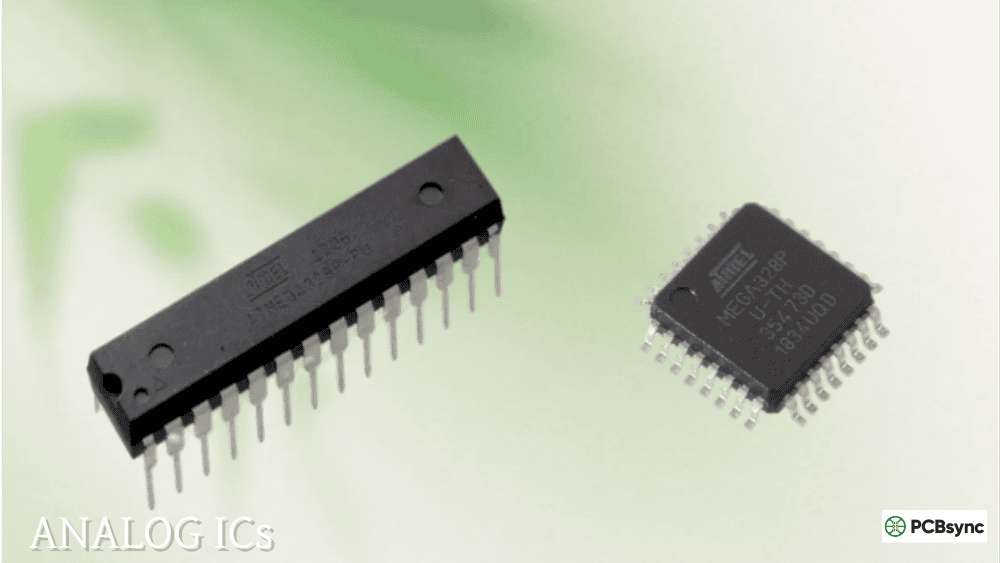
Working with analog integrated circuits has taught me that these chips are the unsung heroes of electronics. While digital ICs get most of the attention, every smartphone, medical device, and automotive system depends on analog IC types to interface with the real world. Without them, digital processors would have nothing meaningful to process.
This analog IC guide covers the complete spectrum of analog integrated circuits—from fundamental building blocks like operational amplifiers to sophisticated power management systems. Whether you’re selecting components for a new design or expanding your knowledge of IC technology, understanding these categories is essential.
Analog integrated circuits are semiconductor devices designed to process continuous signals—voltages and currents that can take any value within a defined range. Unlike digital ICs that work with discrete logic levels (0s and 1s), analog ICs manipulate the full waveform of signals representing real-world phenomena like sound, light, temperature, and motion.
The distinction matters because we live in an analog world. Every sensor produces analog signals. Every actuator responds to analog control. Every communication system ultimately transmits and receives analog waveforms. Digital processing is powerful, but it requires analog circuits at both ends of the signal chain.
Analog vs Digital ICs: Key Differences
Characteristic
Analog ICs
Digital ICs
Signal Type
Continuous
Discrete (0/1)
Precision
Subject to noise
Noise-tolerant
Design Complexity
High (hand-crafted)
Moderate (automated)
Process Sensitivity
Very sensitive
Less sensitive
Power Efficiency
Often higher
Varies
Typical Components
Transistors, resistors, capacitors
Logic gates, flip-flops
Analog IC design remains more art than science compared to digital design. Each circuit requires careful attention to transistor matching, thermal effects, and parasitic elements that digital designers can often ignore.
Major Categories of Analog IC Types
The analog IC types landscape encompasses numerous categories, each optimized for specific functions. Understanding these categories helps you select the right component for your application.
Operational Amplifiers (Op-Amps)
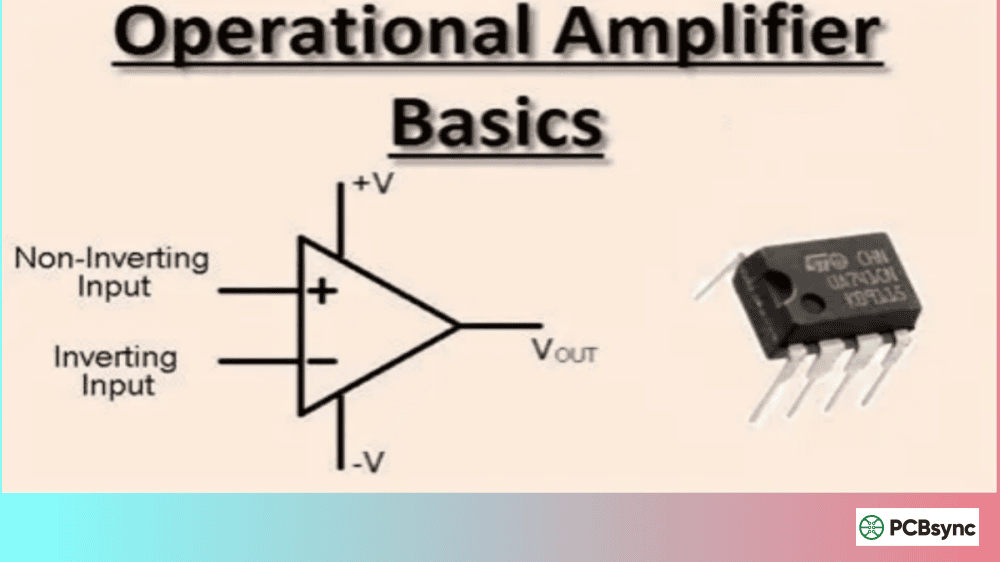
Operational amplifiers are the fundamental building blocks of analog circuit design. These high-gain differential amplifiers can be configured for countless applications through external feedback networks.
Key Op-Amp Characteristics:
Parameter
Description
Typical Range
Open-Loop Gain
Amplification without feedback
100,000 – 1,000,000
Input Offset Voltage
DC error at input
10µV – 10mV
Input Bias Current
Current into input terminals
1pA – 1µA
Gain-Bandwidth Product
Speed limitation
1MHz – 1GHz
Slew Rate
Maximum output voltage change rate
0.5 – 1000 V/µs
CMRR
Common-mode rejection
70 – 120 dB
Common Op-Amp Configurations:
Inverting Amplifier: Output inverted relative to input
Non-Inverting Amplifier: Output in phase with input
Voltage Follower: Unity gain buffer
Differential Amplifier: Amplifies difference between inputs
Integrator: Output proportional to integral of input
Differentiator: Output proportional to derivative of input
The classic µA741 op-amp, designed by David Fullagar in 1968, remains one of the most recognized analog integrated circuits in history. While modern alternatives offer vastly superior performance, the 741’s architecture established principles still used today.
Popular Op-Amp Families:
Series
Characteristics
Best Applications
LM741
General purpose, classic design
Education, non-critical
LM358
Dual, single supply
Battery-powered
TL072
Low noise, JFET input
Audio
OPA2134
High performance audio
Professional audio
AD8628
Auto-zero, rail-to-rail
Precision measurement
LMV324
Low voltage, rail-to-rail
Portable devices
Comparators
Comparators are specialized analog ICs that compare two input voltages and produce a digital output indicating which is larger. While op-amps can function as comparators, dedicated comparator ICs offer superior switching speed and logic-compatible outputs.
Comparator vs Op-Amp:
Feature
Comparator
Op-Amp as Comparator
Output Type
Digital-compatible
Analog rails
Switching Speed
Fast (ns)
Slow (µs)
Recovery Time
Minimal
Long saturation recovery
Hysteresis
Often built-in
External required
Intended Use
Threshold detection
Linear amplification
Common Comparator ICs:
LM311: Single comparator, versatile output
LM339: Quad comparator, open-collector output
LM393: Dual comparator, low power
MAX9042: Micropower, 1µA supply current
Comparators find applications in level detection, zero-crossing detection, window comparators, and analog-to-digital conversion. They serve as the bridge between analog signal processing and digital logic domains.
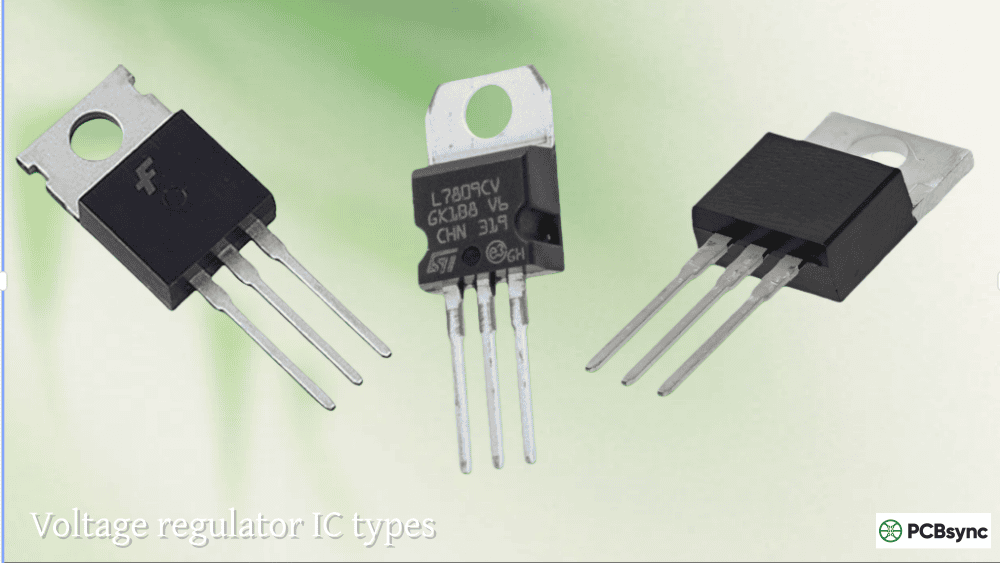
Voltage Regulators
Voltage regulators maintain constant output voltage despite variations in input voltage and load current. These essential analog integrated circuits ensure stable power for sensitive electronic systems.
Types of Voltage Regulators:
Regulator Type
Efficiency
Noise
Complexity
Applications
Linear (LDO)
30-60%
Very low
Simple
Noise-sensitive
Buck (Step-Down)
80-95%
Higher
Moderate
Battery systems
Boost (Step-Up)
80-95%
Higher
Moderate
LED drivers
Buck-Boost
75-90%
Higher
Complex
Wide input range
SEPIC
75-88%
Moderate
Complex
Inverting/non-inverting
Popular Linear Regulators:
Part Number
Output Voltage
Max Current
Features
7805
Fixed 5V
1A
Classic, robust
7812
Fixed 12V
1A
Standard
LM317
Adjustable 1.25-37V
1.5A
Versatile
LM1117
Fixed/Adjustable
800mA
Low dropout
AMS1117
Fixed/Adjustable
1A
Very low dropout
TPS7A4501
Adjustable
1.5A
Ultra-low noise
Linear regulators dissipate excess voltage as heat, making them inefficient when input-output voltage differential is large. However, their simplicity and low noise make them essential for precision analog circuits where switching noise is unacceptable.
Data Converters: ADCs and DACs
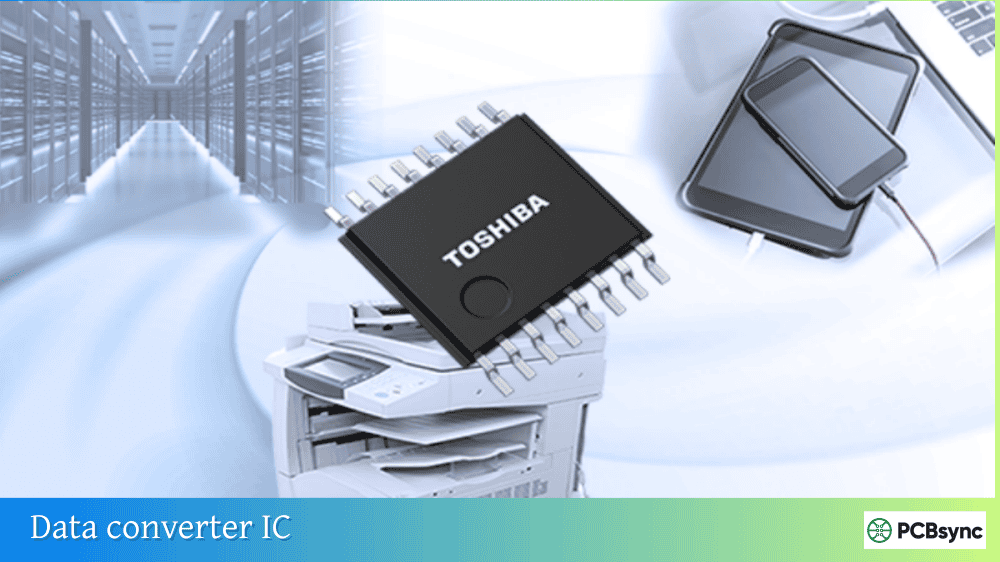
Data converters bridge the analog and digital domains. Analog-to-Digital Converters (ADCs) digitize analog signals for processing, while Digital-to-Analog Converters (DACs) reconstruct analog signals from digital data.
ADC Architectures:
Architecture
Resolution
Speed
Power
Applications
Flash
6-8 bits
Very fast (GHz)
High
Oscilloscopes, radar
SAR
8-20 bits
Medium (MSPS)
Low
Sensors, portable
Delta-Sigma
16-24 bits
Slow (kSPS)
Low
Audio, precision
Pipeline
10-16 bits
Fast (MSPS)
Medium
Video, communications
Dual-Slope
12-22 bits
Very slow
Very low
DMMs, instrumentation
Key ADC Parameters:
Resolution: Number of output bits (determines quantization step)
Sampling Rate: Samples per second
SNR: Signal-to-noise ratio
THD: Total harmonic distortion
INL/DNL: Linearity errors
ENOB: Effective number of bits
DAC Considerations:
DACs convert digital codes back to analog voltages or currents. Performance parameters mirror ADCs, with additional focus on:
Glitch Energy: Transient during code transitions
Settling Time: Time to reach final value
Output Drive: Ability to source/sink current
Notable Data Converter ICs:
Part
Type
Resolution
Speed
Manufacturer
ADS1115
ADC
16-bit
860 SPS
Texas Instruments
AD7606
ADC
16-bit
200 kSPS
Analog Devices
MCP3008
ADC
10-bit
200 kSPS
Microchip
PCM5102
DAC
32-bit
384 kHz
Texas Instruments
AD5761
DAC
16-bit
1 µs
Analog Devices
Amplifier ICs Beyond Op-Amps
While op-amps dominate general-purpose amplification, specialized amplifier ICs address specific needs more effectively.
Instrumentation Amplifiers:
Instrumentation amplifiers provide high-precision differential amplification with excellent common-mode rejection. Three op-amps in a specific configuration achieve performance unattainable with single op-amps.
Part
CMRR
Gain Range
Applications
INA128
120 dB
1-10,000
Medical, strain gauge
AD620
100 dB
1-10,000
Bridge sensors
INA333
100 dB
1-1,000
Low power
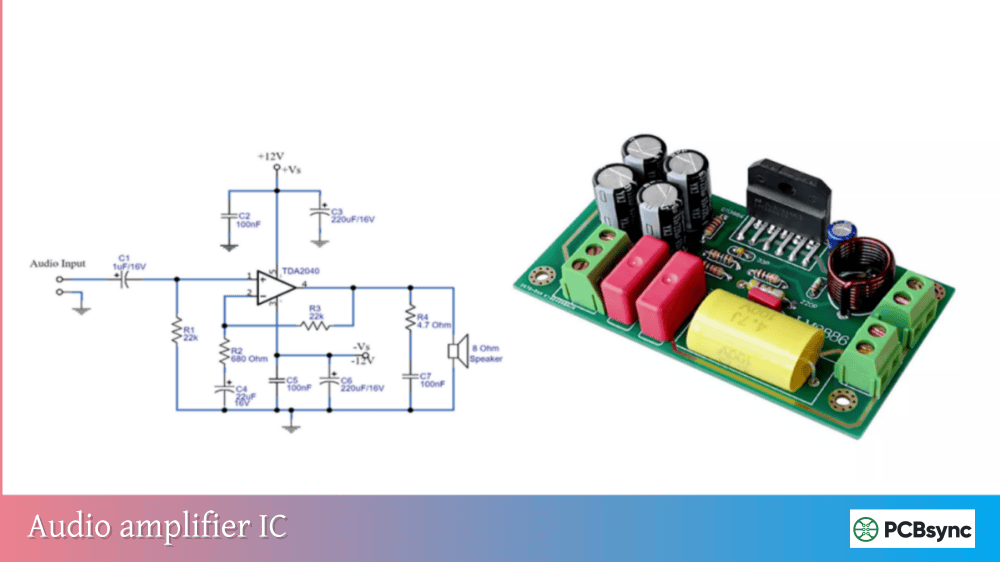
Audio Amplifier ICs:
Dedicated audio amplifiers optimize for music and voice reproduction:
Class A/B: Traditional linear, low distortion
Class D: Switching, high efficiency
Class G/H: Variable supply, improved efficiency
Part
Class
Power
THD+N
Features
LM386
AB
0.7W
0.2%
Classic, simple
TPA3116
D
2×50W
0.03%
High efficiency
MAX98357
D
3W
0.03%
I2S input
RF Amplifiers:
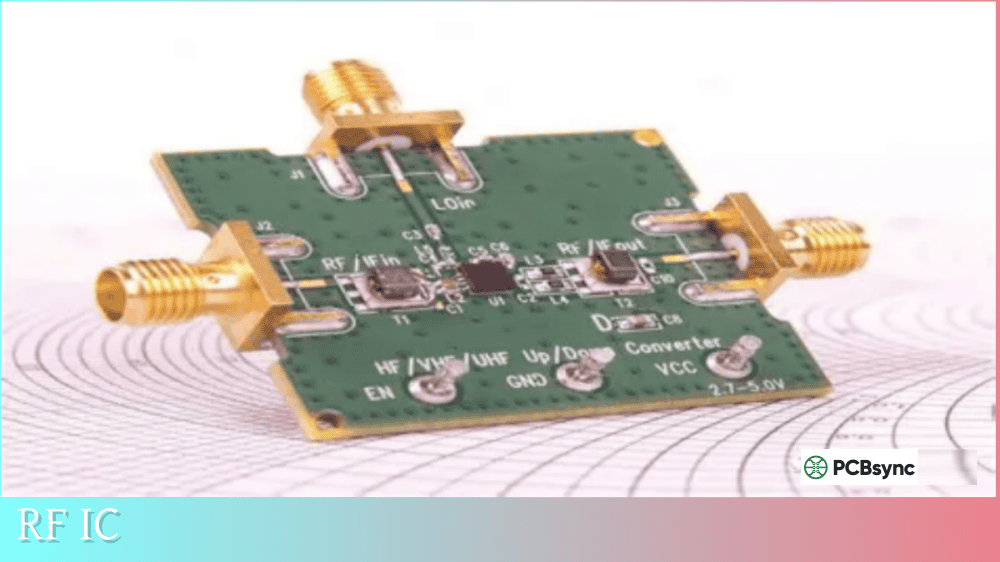
Radio frequency amplifiers handle signals from MHz to GHz ranges:
VGA (Variable Gain Amplifier): Automatic gain control
Phase-Locked Loops (PLLs)
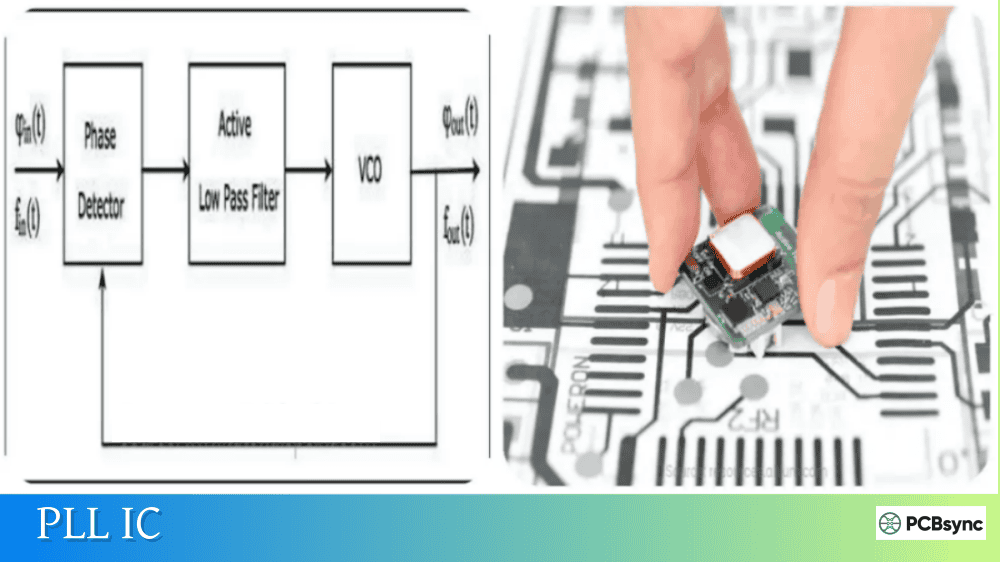
PLLs synchronize output frequency and phase to a reference signal. These complex analog integrated circuits enable frequency synthesis, clock recovery, and demodulation.
PLL Applications:
Frequency synthesis (generating multiple frequencies from one reference)
Clock and data recovery in communications
FM demodulation
Motor speed control
Frequency modulation
The classic NE565 PLL and CD4046 CMOS PLL introduced many engineers to these concepts, while modern PLLs like the ADF4351 synthesize frequencies to 4.4 GHz with sub-Hz resolution.
Timers and Oscillators
Timer ICs generate precise timing intervals and oscillations. The 555 timer, designed by Hans Camenzind in 1971, remains one of the highest-volume analog integrated circuits ever produced.
555 Timer Modes:
Mode
Function
External Components
Astable
Continuous oscillation
2 resistors, 1 capacitor
Monostable
Single pulse
1 resistor, 1 capacitor
Bistable
Flip-flop
None required
Modern Timer/Oscillator Options:
Part
Type
Frequency Range
Accuracy
NE555
Timer
DC-500 kHz
±1%
LMC555
CMOS Timer
DC-3 MHz
±1%
Si5351
Clock Generator
8 kHz-160 MHz
±10 ppm
DS1307
RTC
32.768 kHz
Crystal dependent
Voltage Reference ICs
Precision voltage references provide stable, accurate voltage outputs independent of supply voltage, temperature, and load variations. These analog integrated circuits serve as the accuracy foundation for data converters, calibration systems, and precision measurements.
Voltage Reference Types:
Type
Accuracy
Temperature Coefficient
Cost
Bandgap
0.1-1%
10-100 ppm/°C
Low
Buried Zener
0.01-0.1%
1-10 ppm/°C
Medium
XFET
0.02-0.05%
1-5 ppm/°C
High
Common Voltage Reference ICs:
Part
Voltage
Initial Accuracy
Temp Coeff
Manufacturer
LM4040
2.5V, 4.096V
0.1%
100 ppm/°C
Texas Instruments
REF5050
5.0V
0.05%
3 ppm/°C
Texas Instruments
ADR4550
5.0V
0.02%
2 ppm/°C
Analog Devices
MAX6126
2.5V, 4.096V
0.02%
3 ppm/°C
Maxim
LTC6655
2.5V, 5.0V
0.025%
2 ppm/°C
Analog Devices
When selecting voltage references, consider initial accuracy, temperature coefficient, long-term drift, noise, and load regulation. High-precision applications may require references costing $10+ while general-purpose needs can use $0.20 bandgap references.
Analog Switches and Multiplexers
Analog switches route analog signals under digital control, while multiplexers select one of multiple inputs to route to a single output. These components enable signal routing, data acquisition, and reconfigurable analog systems.
Key Switch Parameters:
On-Resistance (Ron): Resistance when closed (1Ω to 1kΩ)
Off-Leakage: Current when open (typically pA to nA)
Charge Injection: Charge transferred during switching
Bandwidth: Signal frequency capability
Break-Before-Make: Prevents momentary shorts
Popular Analog Switch/Mux ICs:
Part
Configuration
Ron
Bandwidth
Supply
CD4066
Quad SPST
125Ω
40 MHz
3-15V
DG408
8:1 Mux
100Ω
25 MHz
±15V
MAX4617
8:1 Mux
10Ω
250 MHz
2-5.5V
ADG1608
8:1 Mux
4.5Ω
280 MHz
±15V
TS5A3159
SPDT
1Ω
300 MHz
1.65-5.5V
Low on-resistance matters for signal integrity, while low charge injection is critical for sample-and-hold circuits. High-frequency applications demand switches with adequate bandwidth and minimal parasitic capacitance.
Sensor Interface ICs
Sensor interface ICs condition signals from various transducers, handling amplification, linearization, and often digitization.
Temperature Sensor ICs:
Part
Output Type
Range
Accuracy
LM35
Analog voltage
-55 to +150°C
±0.5°C
TMP36
Analog voltage
-40 to +125°C
±2°C
DS18B20
Digital (1-Wire)
-55 to +125°C
±0.5°C
MAX31865
RTD interface
-200 to +850°C
±0.5°C
Other Sensor Interface ICs:
Strain gauge amplifiers: INA125, AD8221
Current sense amplifiers: INA219, MAX9611
Accelerometer interfaces: ADXL345, MPU6050
Hall effect interfaces: DRV5032, A1302
Power Management ICs (PMICs)
Modern systems integrate multiple power management functions into single chips, reducing board space and simplifying design.
Typical PMIC Functions:
Multiple switching regulators
Multiple LDOs
Battery charging
Power sequencing
Supervisory functions
Power path management
PMIC Examples:
Part
Functions
Target Application
BQ25895
Charger + buck-boost
Smartphone
AXP209
Complete PMIC
Tablet/SBC
TPS65218
Multi-rail PMIC
Industrial
STPMIC1
STM32MP1 companion
Embedded Linux
Selecting Analog ICs for Your Design
Choosing the right analog IC types requires balancing multiple factors:
Performance vs Cost
High-performance analog ICs command premium prices. A precision op-amp with 10µV offset might cost $5, while a general-purpose alternative costs $0.10. Match specifications to actual requirements—don’t over-specify.
Power Consumption
Battery-powered applications demand careful attention to quiescent current. Modern “micropower” and “nanopower” analog ICs enable years of battery life in IoT applications.
Package Considerations
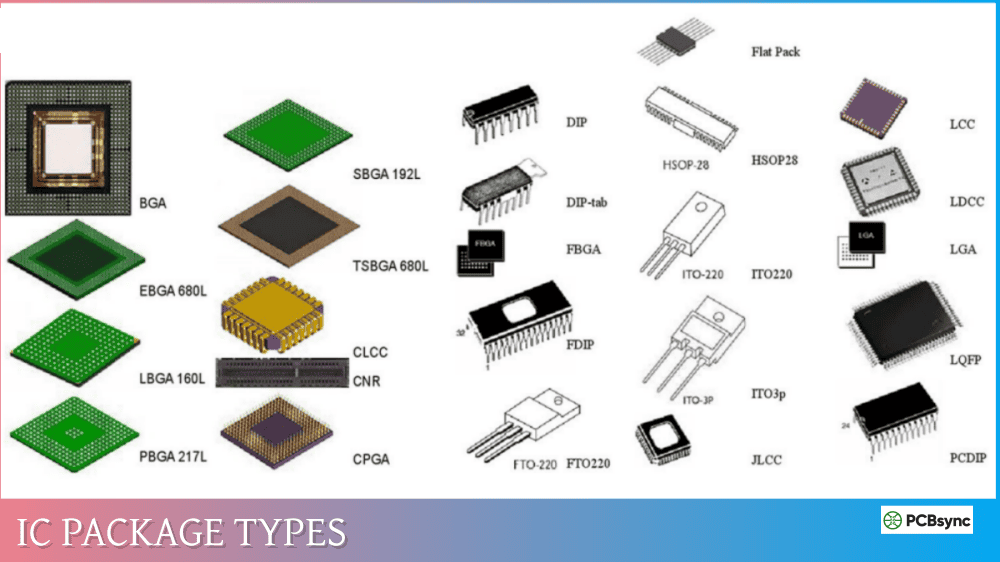
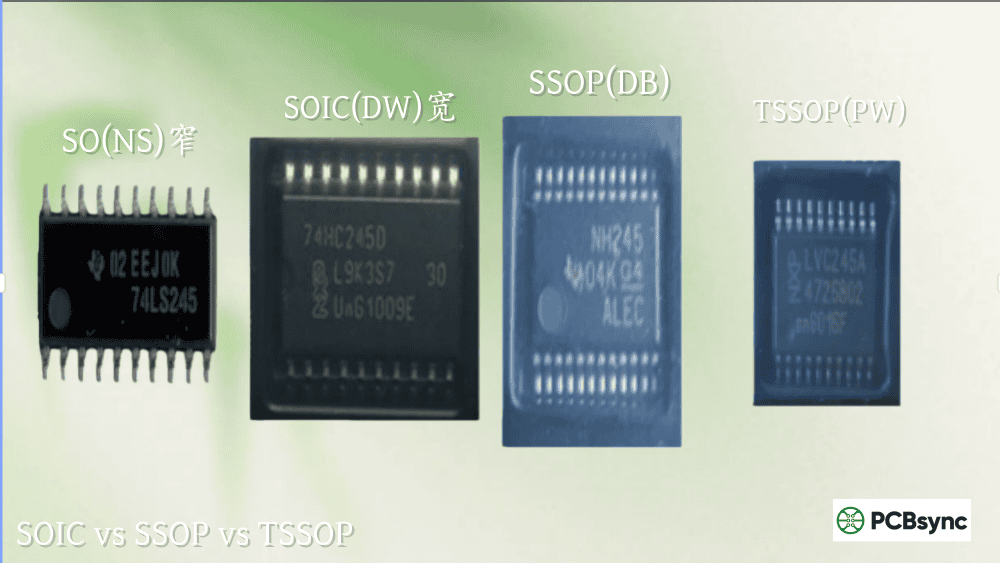
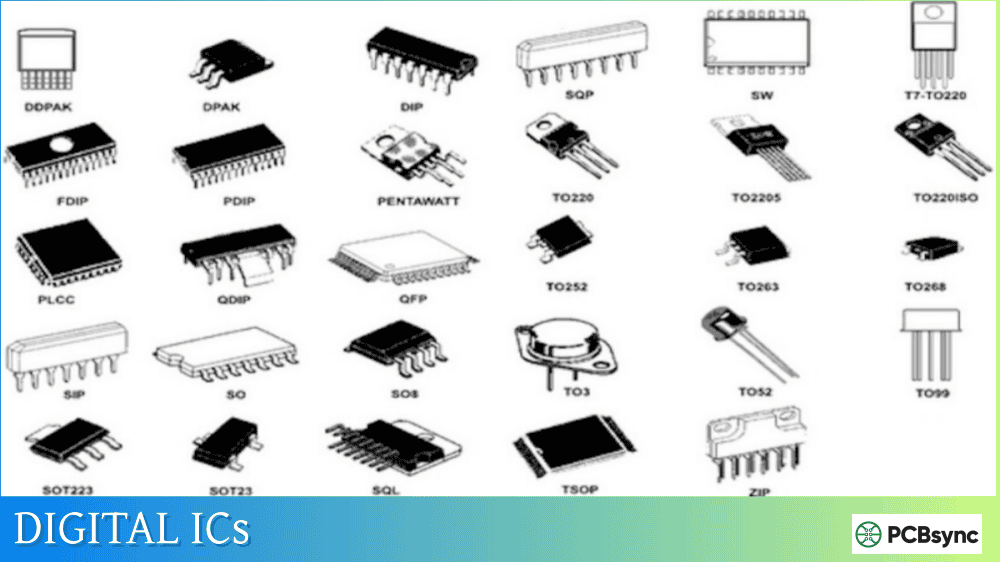
Modern analog integrated circuits come in increasingly small packages:
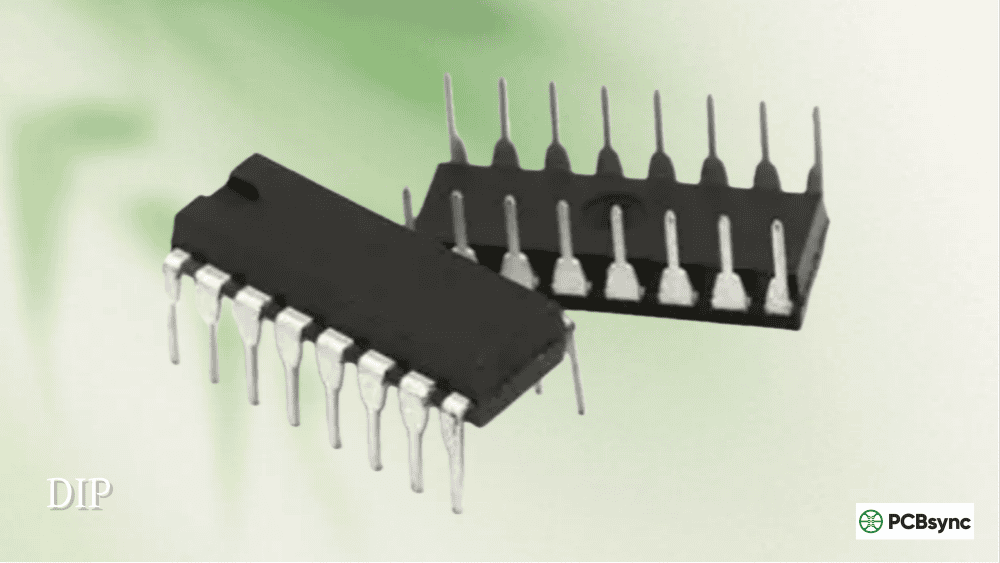
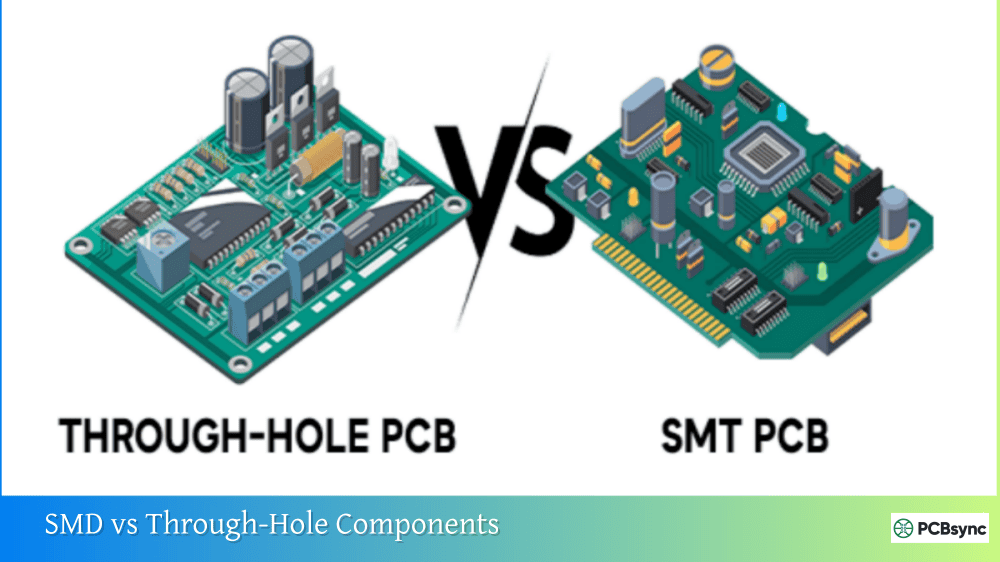
Through-hole: DIP, TO-220 (easy prototyping)
Standard SMD: SOIC, TSSOP, QFP
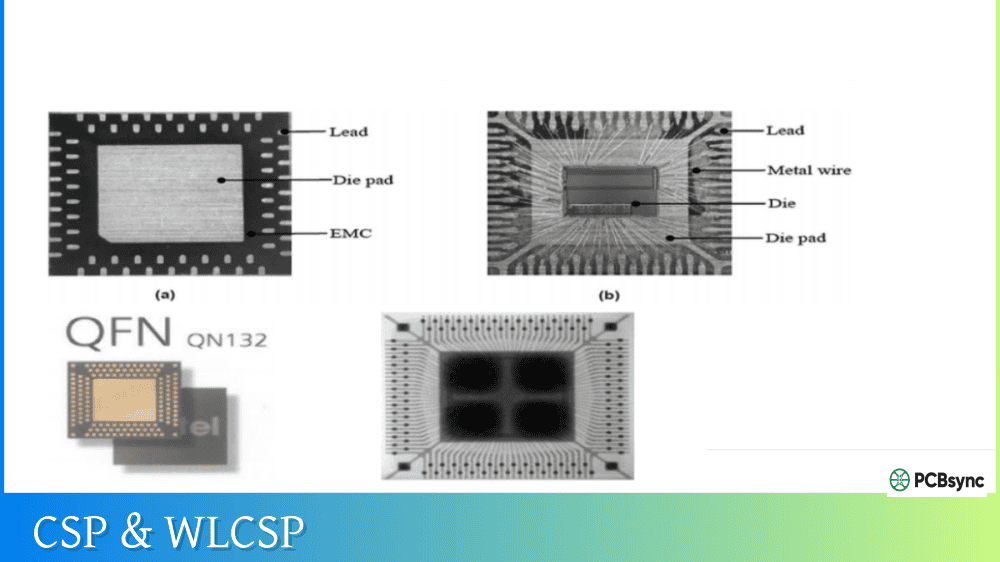
Fine-pitch: QFN, BGA, WLCSP
Smaller packages offer board space savings but complicate hand assembly and thermal management.
Supply Voltage Compatibility
Match IC supply requirements to your system:
Legacy 5V logic: Many classic analog ICs
3.3V systems: Growing selection
1.8V and below: Limited but expanding
Rail-to-rail input/output capability becomes essential at low supply voltages where headroom is limited.
Analog circuit performance depends heavily on PCB layout:
Ground Management:
Use solid ground planes
Separate analog and digital grounds
Connect at single point near power entry
Minimize ground loop area
Power Supply Decoupling:
Place bypass capacitors close to IC power pins
Use multiple capacitor values (100nF + 10µF typical)
Consider ferrite beads for additional filtering
Signal Routing:
Keep analog traces short
Avoid running near digital signals
Use guard traces for high-impedance signals
Match trace lengths for differential pairs
Thermal Considerations
Power-dissipating analog ICs require thermal management:
Calculate power dissipation accurately
Check thermal resistance specifications
Use thermal vias and copper pours
Consider heatsinks for high-power devices
EMI/EMC Design
Analog circuits are susceptible to electromagnetic interference:
Shield sensitive circuits
Use filtering on signal inputs
Twist differential pairs
Consider shielded cables for external connections
Frequently Asked Questions
What is the difference between analog and linear ICs?
The terms are often used interchangeably, though “linear IC” technically refers to circuits designed for linear (proportional) operation. Analog integrated circuits encompass both linear devices (amplifiers, regulators) and non-linear devices (comparators, oscillators, PLLs). The linear IC designation originated when analog circuits primarily performed linear amplification functions. Today, “analog IC” is the preferred broader term covering all continuous-signal processing devices, including those with intentionally non-linear behavior.
How do I choose between a linear regulator and switching regulator?
Linear regulators (LDOs) offer simplicity, low noise, and fast transient response but waste power as heat when input-output voltage differential is large. Choose linear regulators when: noise sensitivity is critical (precision analog, RF), dropout voltage is small (<1V), load current is low (<500mA), or simplicity matters most. Switching regulators achieve 80-95% efficiency but generate switching noise. Choose switching regulators when: efficiency is critical (battery systems), heat dissipation is limited, or large voltage conversion is needed. Many designs use both—a switcher for bulk conversion followed by an LDO for final low-noise regulation.
Can I use an op-amp as a comparator?
Technically yes, but with significant limitations. Op-amps designed for linear operation take microseconds to recover from output saturation, while dedicated comparators switch in nanoseconds. Op-amps lack the output stages designed for driving logic levels directly. Op-amps don’t include built-in hysteresis that comparators often provide. For non-critical, slow-speed applications, op-amps can work as comparators. For any application requiring fast response, clean switching, or direct logic interfacing, use dedicated comparator ICs like the LM393 or LM311.
What does “rail-to-rail” mean in analog ICs?
Rail-to-rail refers to an analog integrated circuit’s ability to operate with input or output voltages extending to the supply rails (power and ground). Traditional op-amps might only swing within 1-2V of each rail due to internal transistor saturation requirements. Rail-to-rail designs use complementary input stages and optimized output stages to approach the rails within millivolts. This capability is essential for low-voltage systems (3.3V, 1.8V) where limited supply voltage makes every millivolt of swing valuable. Specifications may indicate “rail-to-rail input” (RRI), “rail-to-rail output” (RRO), or both (RRIO).
How do I reduce noise in analog IC circuits?
Noise reduction in analog integrated circuits involves multiple strategies. First, choose low-noise ICs—specifications list input voltage noise (nV/√Hz) and current noise (pA/√Hz). Second, optimize circuit topology—differential configurations reject common-mode noise better than single-ended. Third, implement proper PCB layout—use ground planes, short traces, and adequate decoupling. Fourth, filter power supplies—switching regulator noise often couples into analog circuits. Fifth, shield sensitive nodes—guard rings and physical shielding reduce interference. Sixth, limit bandwidth—filter out frequencies beyond those needed. Finally, consider operating point—many op-amps exhibit minimum noise at specific source impedances and bias conditions.
Future Trends in Analog IC Technology
The analog IC landscape continues evolving:
Integration: More analog functions integrate with digital processors as mixed-signal SoCs proliferate. Standalone analog ICs remain essential where performance requirements exceed integrated capabilities.
Low Power: IoT and wearable applications drive development of nanopower analog ICs operating on microwatts. Energy harvesting applications push this further toward zero quiescent current.
High Speed: 5G, automotive radar, and high-speed communications demand analog ICs operating at ever-higher frequencies with maintained precision.
Automotive Grade: Autonomous vehicles require analog ICs meeting stringent reliability standards (AEC-Q100) while handling harsh temperature ranges and electromagnetic environments.
AI Integration: Some analog ICs now incorporate machine learning capabilities for adaptive signal processing, predictive maintenance, and intelligent power management.
Conclusion
Understanding analog IC types is fundamental to electronics design. These chips perform the essential work of interfacing digital systems with the physical world—amplifying sensor signals, regulating power, converting between analog and digital domains, and generating precise timing.
This analog IC guide has covered the major categories from operational amplifiers through power management ICs, but the field is vast. Each category contains dozens of specialized devices optimized for specific applications. The key is matching IC capabilities to your actual requirements—not over-specifying when standard parts suffice, but recognizing when precision or specialized features justify premium components.
As you develop expertise with analog integrated circuits, you’ll find that seemingly simple functions often involve subtle design considerations. The difference between a working prototype and a production-ready design often lies in understanding these analog nuances—noise, thermal effects, power supply rejection, and PCB layout sensitivity.
The resources listed throughout this guide provide starting points for deeper exploration. Manufacturer application notes are particularly valuable—they contain hard-won practical knowledge that complements theoretical understanding. Whether you’re selecting your first op-amp or designing a complex mixed-signal system, mastering analog ICs expands your capabilities as an electronics engineer.
Inquire: Call 0086-755-23203480, or reach out via the form below/your sales contact to discuss our design, manufacturing, and assembly capabilities.
Quote: Email your PCB files to Sales@pcbsync.com (Preferred for large files) or submit online. We will contact you promptly. Please ensure your email is correct.
Notes: For PCB fabrication, we require PCB design file in Gerber RS-274X format (most preferred), *.PCB/DDB (Protel, inform your program version) format or *.BRD (Eagle) format. For PCB assembly, we require PCB design file in above mentioned format, drilling file and BOM. Click to download BOM template To avoid file missing, please include all files into one folder and compress it into .zip or .rar format.