Inquire: Call 0086-755-23203480, or reach out via the form below/your sales contact to discuss our design, manufacturing, and assembly capabilities.
Quote: Email your PCB files to Sales@pcbsync.com (Preferred for large files) or submit online. We will contact you promptly. Please ensure your email is correct.
Notes: For PCB fabrication, we require PCB design file in Gerber RS-274X format (most preferred), *.PCB/DDB (Protel, inform your program version) format or *.BRD (Eagle) format. For PCB assembly, we require PCB design file in above mentioned format, drilling file and BOM. Click to download BOM template To avoid file missing, please include all files into one folder and compress it into .zip or .rar format.
If you’ve worked on base station antenna projects or high-frequency RF designs, you’ve likely encountered the challenge of selecting the right substrate material. The wrong choice can mean months of redesign work, failed EMC testing, or antennas that perform fine in the lab but fall apart in real-world deployments.
After testing dozens of laminates over the years—from budget-friendly options to premium aerospace-grade materials—I keep coming back to Rogers AD300D for applications where PIM performance and signal integrity can’t be compromised. It hits that sweet spot between high-end performance and practical manufacturability that production engineers actually appreciate.
This guide covers everything you need to know about AD300D—from its core specifications to practical design considerations that will save you time and rework cycles. Whether you’re evaluating materials for a new 5G antenna project or troubleshooting an existing design, you’ll find actionable information here.
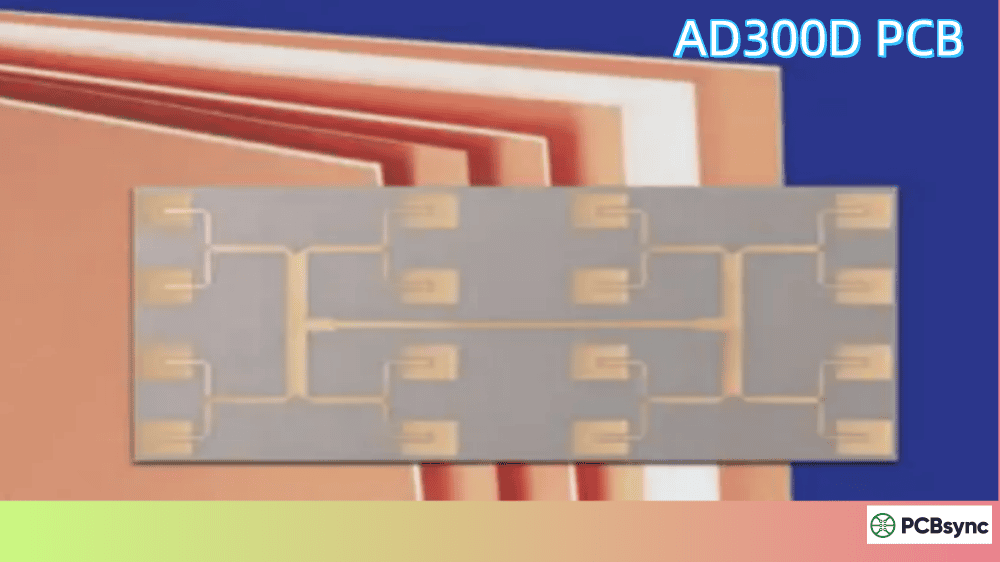
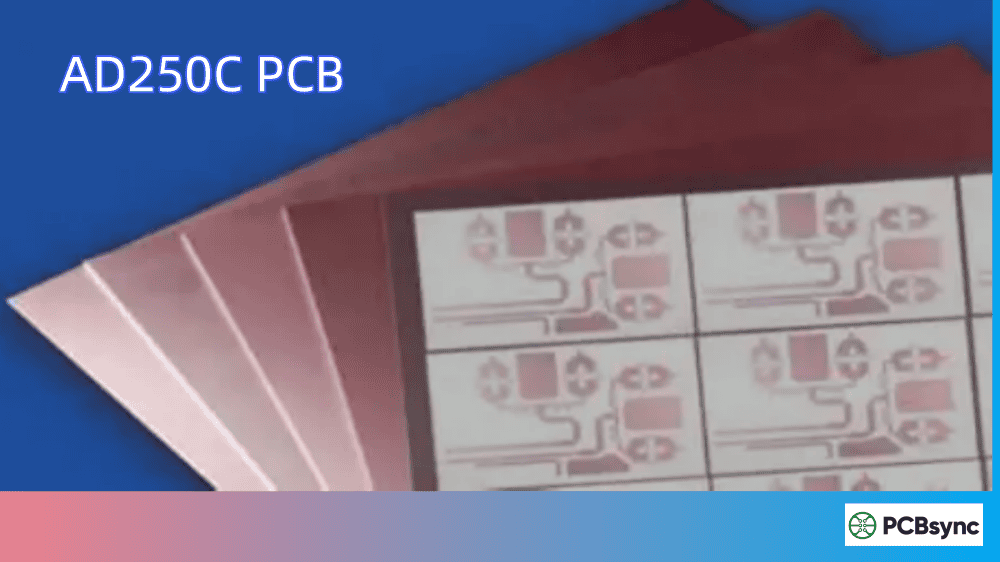
AD300D is a fourth-generation, ceramic-filled, glass-reinforced PTFE laminate developed by Rogers Corporation specifically for wireless antenna applications. It belongs to the AD Series antenna materials family, which includes AD250C, AD255C, and AD350A.
What makes AD300D stand out is its combination of:
Controlled dielectric constant (Dk = 2.94 ± 0.05)
Extremely low loss tangent (Df = 0.0021 at 10GHz)
Superior passive intermodulation (PIM) performance (-159 dBc at 30 mils)
Standard PTFE fabrication compatibility
Rogers designed this material to bridge the gap between high-performance RF substrates and cost-effective manufacturing—something that wasn’t easy to achieve with earlier generation materials.
AD300D Material Properties & Specifications
Here’s the complete specification table for AD300D. I’ve included both nominal values and tolerances because the tight tolerances are part of what makes this material valuable for production runs.
Electrical Properties
Property
Value
Test Condition
Dielectric Constant (Dk)
2.94 ± 0.05
10 GHz, 23°C
Dissipation Factor (Df)
0.0021
10 GHz, 23°C, 50% RH
PIM Performance
-159 dBc (typical)
30 mils thickness, S1 foil
Volume Resistivity
>10^7 MΩ·cm
C-96/35/90
Surface Resistivity
>10^7 MΩ
C-96/35/90
Thermal Properties
Property
Value
Notes
CTE (X-axis)
24 ppm/°C
-55°C to 288°C
CTE (Y-axis)
23 ppm/°C
-55°C to 288°C
CTE (Z-axis)
98 ppm/°C
-55°C to 288°C
Decomposition Temperature (Td)
>500°C
TGA
Thermal Conductivity
0.44 W/m/K
–
Mechanical Properties
Property
Value
Test Method
Copper Peel Strength
18.3 pli (min)
1 oz ED copper
Moisture Absorption
0.04%
D24/23
Flammability
UL 94 V-0
–
Time to Delamination
>60 minutes
T-288
Available Thicknesses
AD300D comes in standard thicknesses ranging from 20 mils (0.508mm) to 60 mils (1.524mm). The most commonly specified thickness for antenna applications is 30 mils (0.762mm) and 40 mils (1.016mm).
Why AD300D Matters for Antenna Design
Understanding why certain materials become industry standards helps you make better decisions. Here’s what makes AD300D particularly valuable for antenna engineers:
Low and Stable Dielectric Constant
The Dk value of 2.94 with ±0.05 tolerance means your antenna dimensions stay consistent from prototype to production. I’ve seen projects where engineers specified cheaper materials with ±0.10 Dk tolerance, only to face resonance frequency shifts that required redesigning the feed network. That “savings” on material cost turned into six-figure engineering costs and missed product launch dates.
A lower Dk also allows for wider trace widths in your transmission lines, which simplifies manufacturing and improves yield rates. Wider traces mean less sensitivity to etching variations—something your fabricator will thank you for.
For reference, the Dk tolerance directly affects your antenna’s center frequency. A ±0.05 tolerance on a 2.94 Dk translates to roughly ±0.85% frequency variation. For a 2.4 GHz antenna, that’s about ±20 MHz—manageable with proper bandwidth design. With ±0.10 tolerance materials, you’re looking at ±40 MHz variation, which can push your antenna out of spec in production.
Exceptional PIM Performance
Passive intermodulation is the enemy of modern wireless systems. When two or more signals mix at a non-linear junction, they create intermodulation products that fall into your receive band and degrade system sensitivity. In a crowded spectrum environment—which describes every commercial wireless deployment today—poor PIM can render an otherwise well-designed antenna unusable.
AD300D’s -159 dBc PIM rating (with standard ED copper) makes it suitable for most 4G/5G base station requirements. To put this in perspective, carrier specifications typically require -153 dBc or better for macro cell antennas. The -159 dBc performance gives you 6 dB of margin to account for connector interfaces, cable assemblies, and manufacturing variations.
If you need even better PIM performance, Rogers offers the IM Series option with reverse-treated copper foil, achieving -166 dBc at 30 mils. This ultra-low PIM option targets applications like stadium DAS systems or high-density urban deployments where interference management is critical.
Thermal Stability
The temperature coefficient of dielectric constant (TCDk) determines how much your antenna’s resonant frequency shifts with temperature. AD300D maintains stable electrical properties across the typical outdoor operating range of -40°C to +85°C, which translates to predictable antenna gain and bandwidth over environmental extremes.
I’ve tested antenna assemblies through thermal cycling from -30°C to +70°C without measurable performance degradation. Compare this to some economy materials that show visible performance drift after just a few hundred thermal cycles.
Dimensional Stability Under Processing
One often-overlooked advantage of AD300D is its dimensional stability during fabrication. The woven glass reinforcement provides mechanical rigidity that prevents warping during drilling, routing, and lamination processes. This translates to better registration accuracy in multilayer builds and more consistent impedance control across the panel.
Based on the datasheet specifications and real-world deployment data, AD300D finds its sweet spot in these applications:
Cellular Infrastructure
4G/LTE base station antennas
5G massive MIMO antenna arrays
Small cell antennas
Distributed antenna systems (DAS)
The combination of low PIM, controlled Dk, and cost-effectiveness makes AD300D the go-to material for commercial cellular deployments.
Automotive Telematics
Vehicle-to-everything (V2X) antennas
Telematics control unit (TCU) antennas
GPS/GNSS antenna elements
Cellular vehicle connectivity
Automotive applications demand materials that withstand temperature cycling without delamination or performance drift.
Satellite Communications
Commercial satellite radio antennas
Low-earth orbit (LEO) terminal antennas
Maritime VSAT systems
Ground station feed networks
For satellite applications, the low loss at higher frequencies (up to 10 GHz) combined with environmental stability makes AD300D a reliable choice.
Other RF Applications
Point-to-point microwave links
Wireless backhaul systems
IoT gateway antennas
RFID reader antennas
AD300D vs Other Rogers Materials
Choosing between Rogers materials can be confusing. Here’s how AD300D compares to alternatives you might consider:
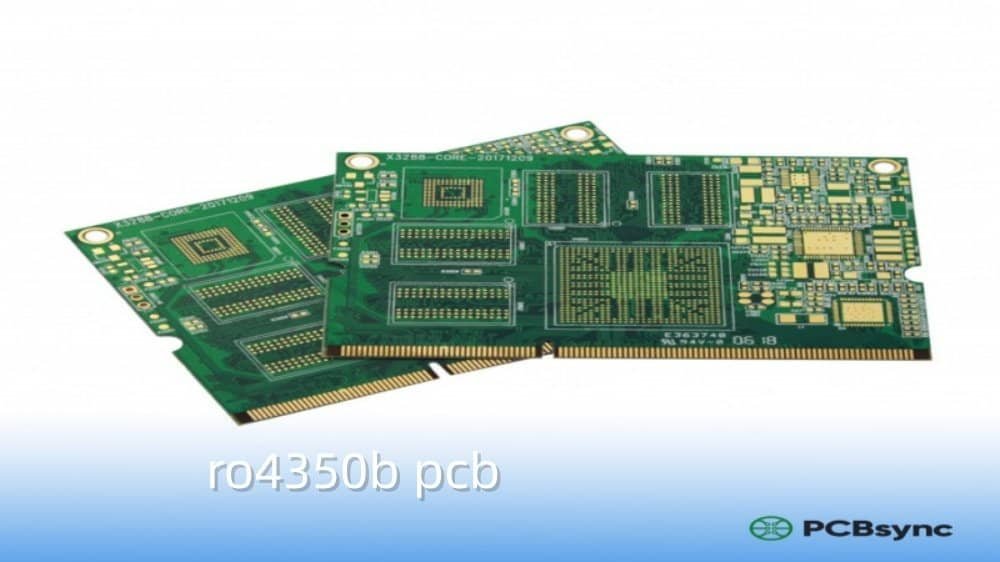
AD300D vs RO4350B
Parameter
AD300D
RO4350B
Dielectric Constant
2.94
3.48
Loss Tangent
0.0021
0.0037
Material Type
PTFE-based
Hydrocarbon ceramic
PIM Performance
-159 dBc
Not specified
Processing
PTFE methods
FR-4 compatible
Cost
Higher
Moderate
Best For
Antenna substrates
General RF circuits
My take: Use AD300D when PIM performance matters (antennas, filters). Use RO4350B for power amplifiers, couplers, and general RF circuits where ease of fabrication is more important than ultra-low PIM.
AD300D vs AD300C
AD300D is the fourth-generation evolution of AD300C. The main differences:
AD300D has tighter Dk tolerance (±0.05 vs ±0.10)
Improved PIM performance
Better lot-to-lot consistency
Same fabrication process
If you’re starting a new design, go with AD300D. If you’re maintaining a legacy product on AD300C, evaluate whether the performance improvement justifies requalification.
AD300D vs AD255C
Parameter
AD300D
AD255C
Dielectric Constant
2.94
2.55
Best Application
Moderate miniaturization
Larger antenna elements
AD255C’s lower Dk results in wider traces and larger antenna elements. Choose based on your size constraints and impedance requirements.
PCB Design Guidelines for AD300D
Stack-Up Recommendations
For a typical 2-layer AD300D antenna board:
Layer 1: Copper (1 oz ED or RT)Core: AD300D (30 mil or 40 mil)Layer 2: Copper (1 oz ED)
For higher layer counts, work with your fabricator on bonding solutions. Rogers offers compatible prepregs, though many fabricators prefer low-flow bonding films for multilayer PTFE constructions.
Trace Width and Impedance
Use an impedance calculator or field solver that properly accounts for:
The actual Dk value at your operating frequency
Copper thickness after plating
Etch compensation factors
For 50Ω microstrip on 30-mil AD300D with 1 oz copper, expect trace widths around 80-85 mils. Always verify with your fabricator’s design rule check.
Via Design
Standard through-hole vias work well with AD300D. Key considerations:
Minimum via diameter: 8 mils (0.2mm) finished
Annular ring: 5 mils minimum
Aspect ratio: Keep below 10:1 for reliable plating
Avoid blind or buried vias unless absolutely necessary—they add cost and complexity with PTFE materials.
Surface Finish Selection
For AD300D antenna applications, I recommend:
Surface Finish
Best For
PIM Impact
ENIG
General antenna applications
Good
Immersion Silver
Cost-sensitive designs
Good
OSP
Prototype only
Variable
Hard Gold
Edge connectors
Excellent
ENIG (Electroless Nickel Immersion Gold) offers the best balance of PIM performance, solderability, and shelf life for production builds.
Fabrication Considerations
Successful AD300D fabrication requires understanding how PTFE materials differ from standard FR-4. Here’s what you need to communicate to your fabricator and verify during production.
Working with PTFE Materials
AD300D processes similarly to other PTFE-based laminates, but keep these points in mind:
Drilling: Use carbide drills with high helix angles. PTFE is soft and can smear if drill speeds or feeds are wrong. Expect your fabricator to charge more for PTFE drilling than standard FR-4. The key parameters are:
Entry speed: 180-220 SFM (surface feet per minute)
Chip load: 0.002-0.003 inches per revolution
Use backer materials designed for PTFE to prevent exit burrs
Copper Adhesion: The ceramic-filled PTFE composition provides good copper adhesion without special surface treatments. Peel strength exceeds 18 pli with standard ED copper. However, if you’re using the IM Series foils for ultra-low PIM, discuss adhesion verification with your fabricator—the smoother copper surface can reduce peel strength slightly.
Lamination: For multilayer builds, work with fabricators experienced in PTFE lamination. Temperature and pressure cycles differ from standard epoxy materials. Typical AD300D lamination parameters:
Temperature: 350-375°F (177-190°C)
Pressure: 200-300 PSI
Cycle time: 60-90 minutes depending on stack thickness
Solder Mask: Apply solder mask within 12 hours of etching. Some fabricators skip solder mask entirely on antenna boards where it might affect PIM or add unnecessary loss. If your design requires solder mask, specify a high-frequency compatible material and verify it won’t degrade PIM performance.
Panel Layout: Leave adequate clearance from panel edges—at least 0.5″ is recommended. PTFE materials can be more prone to edge delamination during routing if boards are too close to panel borders.
Quality Control for AD300D Builds
Request these tests from your fabricator for critical antenna applications:
Test
What It Verifies
When Required
Impedance testing
Trace width accuracy
Every lot
Cross-section analysis
Plating thickness, registration
First article
Peel strength
Copper adhesion
First article
Dk verification
Material conformance
On request
PIM testing
System-level performance
Production builds
Typical Lead Times
Expect longer lead times compared to FR-4:
Prototype (2-4 layers): 2-3 weeks
Production quantity: 4-6 weeks
With IM Series copper: Add 1-2 weeks
Plan accordingly and maintain relationships with fabricators who stock AD300D material. Having a backup fabricator qualified on your design prevents single-source dependency issues.
Cost Considerations
AD300D costs more than FR-4 or standard high-frequency materials, but the total cost impact depends on your design complexity:
Board Complexity
AD300D Premium vs FR-4
2-layer, simple
3-5x material cost
4-layer antenna
2-3x material cost
Hybrid FR-4/AD300D
1.5-2x material cost
For hybrid constructions, you can route RF sections on AD300D layers while using FR-4 for digital/power layers—reducing overall material cost while maintaining RF performance where it matters.
Useful Resources & Downloads
Here are the official resources for AD300D design work:
Resource
Description
Link
AD Series Datasheet
Official specifications for AD250C, AD255C, AD300D, AD350A
What is the maximum operating frequency for AD300D?
AD300D performs well up to 10 GHz based on published loss tangent data. For higher frequencies (above 10 GHz), consider Rogers RT/duroid 5880 or similar ultra-low-loss materials. Most cellular and wireless antenna applications fall well within AD300D’s optimal range.
Can AD300D be processed using standard FR-4 equipment?
Not entirely. While AD300D is compatible with standard PTFE fabrication processes, it requires different drilling parameters, lamination cycles, and handling procedures compared to FR-4. Work with a fabricator experienced in PTFE materials to avoid costly mistakes.
What copper foil options are available for AD300D?
Rogers offers standard electrodeposited (ED) copper and reverse-treated (RT) copper. For applications requiring the absolute best PIM performance, the IM Series option provides ultra-smooth copper foil with PIM values reaching -166 dBc. Standard ED copper achieves -159 dBc, which meets most commercial requirements.
How does moisture affect AD300D performance?
With only 0.04% moisture absorption, AD300D maintains stable electrical properties even in humid environments. This is significantly better than FR-4 (0.1-0.3%) and makes AD300D suitable for outdoor antenna installations without special environmental protection beyond standard radomes.
Is AD300D RoHS compliant?
Yes, AD300D materials are manufactured to be RoHS compliant. However, always verify current compliance status with your supplier, especially if your product requires specific regulatory certifications.
Final Thoughts
AD300D has earned its place as a workhorse material for commercial antenna applications. Its combination of controlled electrical properties, excellent PIM performance, and reasonable cost makes it hard to beat for cellular base station and wireless infrastructure designs.
The key to success with AD300D—like any specialty material—is understanding its strengths and limitations, then designing accordingly. Partner with fabricators who have genuine PTFE experience, validate your design with proper prototyping, and you’ll have a reliable antenna that performs from prototype through volume production.
If you’re transitioning from FR-4 or cheaper high-frequency materials to AD300D, expect a learning curve on fabrication. The drilling, handling, and lamination processes require adjustments that experienced fabricators handle routinely, but can trip up shops more familiar with standard materials. Budget time for fabricator qualification if you’re working with a new supplier.
For engineers evaluating AD300D against alternatives:
Choose AD300D when PIM performance is specified, when you need predictable lot-to-lot consistency, or when your application requires stable performance across temperature extremes.
Consider alternatives if cost is the primary driver and PIM isn’t specified, if you’re working at frequencies above 10 GHz where other materials may offer advantages, or if your fabricator lacks PTFE experience and timeline doesn’t allow for qualification.
The wireless industry’s move toward higher frequencies, denser deployments, and more demanding PIM specifications suggests materials like AD300D will remain relevant for years to come. Investing time to understand this material pays dividends across multiple projects and product generations.
Inquire: Call 0086-755-23203480, or reach out via the form below/your sales contact to discuss our design, manufacturing, and assembly capabilities.
Quote: Email your PCB files to Sales@pcbsync.com (Preferred for large files) or submit online. We will contact you promptly. Please ensure your email is correct.
Notes: For PCB fabrication, we require PCB design file in Gerber RS-274X format (most preferred), *.PCB/DDB (Protel, inform your program version) format or *.BRD (Eagle) format. For PCB assembly, we require PCB design file in above mentioned format, drilling file and BOM. Click to download BOM template To avoid file missing, please include all files into one folder and compress it into .zip or .rar format.