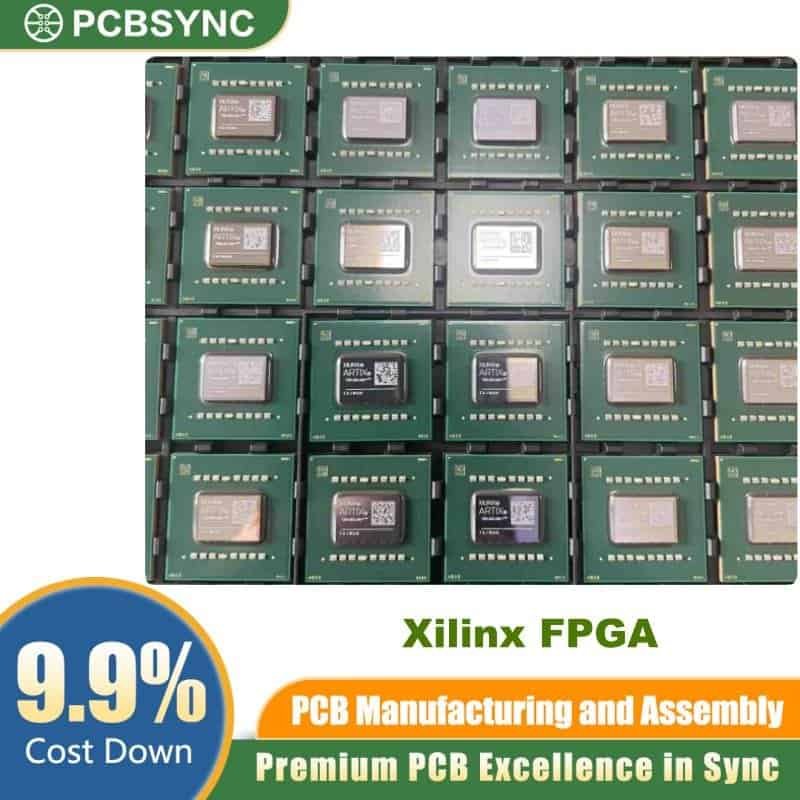
The AMD XC2S200-6FGG479C is a high-performance Field Programmable Gate Array from the renowned Spartan-II FPGA family. This cost-effective programmable logic device delivers exceptional functionality with 200,000 system gates, making it an ideal solution for engineers seeking reliable digital design capabilities without the overhead costs of custom ASICs.
Overview of AMD XC2S200-6FGG479C FPGA
The XC2S200-6FGG479C represents the flagship device within the Spartan-II series, offering the highest logic density available in this product line. Built on mature 0.18μm CMOS technology with a 2.5V core voltage, this FPGA provides proven reliability for mission-critical embedded applications. The device operates at frequencies up to 263 MHz, ensuring adequate performance for demanding digital signal processing and control system implementations.
Engineers worldwide choose the Xilinx FPGA platform for its combination of flexibility, performance, and comprehensive development ecosystem. The Spartan-II architecture continues to serve countless industrial, automotive, and consumer electronics applications where proven reliability matters most.
Key Specifications of XC2S200-6FGG479C
Logic Resources and Capacity
The XC2S200-6FGG479C delivers substantial programmable logic resources suitable for complex digital designs:
- System Gates: 200,000 equivalent gates (including logic and RAM)
- Logic Cells: 5,292 configurable logic cells
- CLB Array: 28 × 42 matrix providing 1,176 total CLBs
- Slices: 2,352 logic slices for flexible resource allocation
Memory Architecture Specifications
This Spartan-II FPGA incorporates both distributed and block RAM configurations:
- Distributed RAM: 75,264 bits of flexible LUT-based memory
- Block RAM: 56 Kbits organized in dedicated memory columns
- Dual-Port Capability: Block RAM supports true dual-port operation
- Maximum RAM Bandwidth: Synchronous read and write operations
I/O Features and Connectivity
The XC2S200-6FGG479C provides extensive I/O capabilities:
- Maximum User I/O: 284 programmable pins
- Package Type: Fine-pitch Ball Grid Array (FBGA)
- I/O Standards: Support for 16+ industry-standard interfaces including LVTTL, LVCMOS, PCI, GTL, and SSTL
Clocking and Timing Resources
- Delay-Locked Loops: 4 integrated DLLs for clock management
- Clock Distribution: Global clock networks with low-skew routing
- Maximum Frequency: Up to 263 MHz system clock support
Speed Grade Explanation for -6 Designation
The “-6” suffix in XC2S200-6FGG479C indicates the fastest commercially available speed grade for Spartan-II devices. This speed grade is exclusively offered in the commercial temperature range (0°C to +85°C), providing optimal timing performance for applications where maximum operating frequency is critical.
Speed Grade Comparison
| Speed Grade |
Availability |
Performance Level |
| -6 |
Commercial Only |
Highest |
| -5 |
Commercial and Industrial |
Standard |
Package Information: FGG479 BGA Configuration
Physical Package Characteristics
The FGG479 designation indicates a Fine-pitch Ball Grid Array package with Pb-free (lead-free) solder ball composition. The “G” character in the part number confirms RoHS compliance through lead-free manufacturing:
- Package Style: Fine-pitch BGA
- Ball Count: 479 solder balls
- Ball Pitch: 1.0 mm
- Package Dimensions: 23 mm × 23 mm footprint
- Environmental Compliance: RoHS compliant (Pb-free)
Thermal Considerations
Proper thermal management ensures reliable operation:
- Junction Temperature Range: 0°C to +85°C (commercial)
- Thermal Resistance: Optimized BGA thermal path
- Power Dissipation: Design-dependent, requires thermal analysis
Industrial Applications for XC2S200-6FGG479C FPGA
Protocol Bridging and Interface Conversion
The Spartan-II architecture excels at implementing protocol translation between different communication standards. Common bridging applications include:
- Legacy-to-modern interface conversion
- Multi-protocol gateway implementations
- Custom bus interface adapters
- Real-time data format translation
Motor Control and Industrial Automation
Engineers deploy the XC2S200-6FGG479C in industrial control systems requiring:
- PWM generation for motor drives
- Encoder interface processing
- PID controller implementations
- Safety interlock logic
Consumer Electronics Integration
The cost-optimized nature of Spartan-II makes it suitable for:
- Display controller applications
- Audio processing systems
- Video timing generators
- Peripheral interface expansion
Automotive Infotainment Systems
Vehicle electronics benefit from Spartan-II capabilities in:
- Display interface management
- Audio routing and processing
- Communication gateway functions
- Sensor data aggregation
Design Tool Support and Development Environment
ISE Design Suite Compatibility
The XC2S200-6FGG479C is fully supported by the ISE Design Suite, providing a complete development workflow:
- Schematic capture and HDL entry
- Synthesis and implementation tools
- Timing analysis and verification
- Bitstream generation and programming
HDL Language Support
Designers can implement their logic using industry-standard languages:
- Verilog HDL for hardware description
- VHDL for complex system modeling
- Mixed-language projects supported
- IP core integration capabilities
Simulation and Verification
Comprehensive verification tools ensure design correctness:
- Behavioral simulation
- Post-synthesis timing verification
- Post-implementation analysis
- Hardware debugging support
Advantages Over Custom ASIC Solutions
Cost-Effective Development
The XC2S200-6FGG479C eliminates significant ASIC-related expenses:
- No mask charges or NRE costs
- Reduced development timeline
- Lower minimum order quantities
- Simplified inventory management
Design Flexibility Benefits
Programmable logic provides inherent advantages:
- Field-upgradable functionality
- Last-minute design changes possible
- Multiple design iterations without hardware changes
- Rapid prototyping capabilities
Risk Mitigation
Choosing FPGA over ASIC reduces project risks:
- Proven silicon eliminates fabrication uncertainty
- Shorter time-to-market
- Design reuse across product variants
- Simplified qualification process
Ordering Information and Part Number Breakdown
Part Number Structure Explained
XC2S200-6FGG479C decodes as follows:
| Segment |
Meaning |
| XC2S |
Spartan-II device family |
| 200 |
200,000 system gate density |
| -6 |
Fastest speed grade |
| FG |
Fine-pitch BGA package |
| G |
Pb-free (lead-free) option |
| 479 |
Pin count |
| C |
Commercial temperature range |
Alternative Part Numbers
Related devices in the same family include:
- XC2S200-5FGG456I (industrial temperature, -5 speed)
- XC2S200-5FGG456C (commercial, -5 speed)
- XC2S200-6PQG208C (PQFP package option)
Technical Documentation Resources
Essential Reference Documents
Engineers should consult the following resources:
- Spartan-II Family Data Sheet (DS001)
- Spartan-II User Guide
- Package Pinout Specifications
- ISE Design Suite Documentation
Design Support Materials
Additional resources for successful implementation:
- Application notes and design examples
- Reference designs for common applications
- PCB layout guidelines
- Thermal design recommendations
Migration and Long-Term Support Considerations
Product Lifecycle Status
AMD (formerly Xilinx) has demonstrated commitment to supporting Spartan-II devices. Engineers should verify current product status and consider:
- Long-term availability requirements
- Migration paths to newer FPGA families
- Last-time-buy notifications
- Alternative sourcing options
Upgrade Path Options
For new designs requiring enhanced capabilities, consider:
- Spartan-6 for similar cost optimization
- Artix-7 for improved performance
- Spartan-7 for latest-generation features
Conclusion: Why Choose XC2S200-6FGG479C
The AMD XC2S200-6FGG479C Spartan-II FPGA remains a viable solution for embedded applications requiring proven reliability, adequate logic density, and cost-effective programmable logic. Its combination of 200,000 system gates, comprehensive I/O support, and mature development tools makes it particularly suitable for industrial control, protocol bridging, and legacy system maintenance applications.
For engineers maintaining existing products or implementing well-defined functionality without cutting-edge requirements, the Spartan-II family continues to deliver value through its established track record and available design resources.