Inquire: Call 0086-755-23203480, or reach out via the form below/your sales contact to discuss our design, manufacturing, and assembly capabilities.
Quote: Email your PCB files to Sales@pcbsync.com (Preferred for large files) or submit online. We will contact you promptly. Please ensure your email is correct.
Notes: For PCB fabrication, we require PCB design file in Gerber RS-274X format (most preferred), *.PCB/DDB (Protel, inform your program version) format or *.BRD (Eagle) format. For PCB assembly, we require PCB design file in above mentioned format, drilling file and BOM. Click to download BOM template To avoid file missing, please include all files into one folder and compress it into .zip or .rar format.
So you want to design your own printed circuit board. Maybe you’re tired of messy breadboard prototypes that fall apart when you look at them wrong. Or perhaps you’ve got a product idea that needs to move beyond the prototype stage. Whatever brought you here, you’re in the right place.
I’ve been designing PCBs professionally for over a decade, and I still remember the overwhelming feeling of opening my first PCB design software. Layers, footprints, DRC errors, Gerber files—it felt like learning a new language. But here’s the thing: PCB design isn’t as complicated as it seems once you understand the fundamentals.
This guide covers everything from choosing your first design software to getting your boards manufactured. Whether you’re a hobbyist building an Arduino shield or an engineer working on your startup’s first product, you’ll find practical, actionable information here.
A printed circuit board is the backbone of virtually every electronic device you use. Your smartphone, laptop, car dashboard, smart thermostat—they all rely on PCBs to connect electronic components and make circuits work reliably.
PCB design is the process of creating the layout that determines where components sit and how they connect electrically. Unlike breadboards or perfboards, a properly designed PCB offers several advantages:
Feature
Breadboard
Perfboard
Custom PCB
Reliability
Low (loose connections)
Medium
High
Size
Large
Medium
Compact
Production Ready
No
No
Yes
Cost per Unit (volume)
High
Medium
Low
Professional Appearance
No
No
Yes
Repeatability
Poor
Fair
Excellent
When you design your own PCB, you’re creating something that can be manufactured thousands of times with identical results. That’s powerful.
Understanding PCB Basics: Anatomy of a Circuit Board
Before jumping into software, let’s make sure you understand what you’re actually designing. A PCB consists of several key elements.
The Substrate (Base Material)
Most PCBs use FR-4, a fiberglass-reinforced epoxy laminate. It’s the green (or whatever color you choose) material that forms the board’s foundation. FR-4 works great for most applications, but specialized designs might require different materials:
Material
Best For
Relative Cost
FR-4 (Standard TG)
General purpose, consumer electronics
$
FR-4 (High TG)
Higher temperature applications
$$
Rogers/High-Frequency
RF circuits, antennas, 5G applications
$$$
Polyimide
Flexible circuits
$$$
Aluminum/Metal Core
High-power LEDs, power electronics
$$
Copper Layers
Copper traces carry electrical signals between components. The number of layers determines your routing options:
Single-layer boards have copper on one side only. They’re cheap but limited—you can’t cross traces without jumper wires.
Double-layer boards have copper on both sides with plated through-holes (vias) connecting them. This is the sweet spot for most hobbyist and simple commercial projects.
Multi-layer boards (4, 6, 8+ layers) sandwich internal copper layers between the outer layers. High-speed digital designs, dense layouts, and anything requiring solid ground/power planes typically need four or more layers.
Other Critical Layers
Solder Mask: The colored coating (usually green) that covers copper and prevents solder bridges during assembly.
Silkscreen: White text and symbols identifying components, pin 1 markers, board name, and other reference information.
Paste Stencil Layer: Defines where solder paste gets applied for surface-mount assembly.
PCB Design Software: Choosing Your Tool
The software you choose matters, but probably less than you think. I’ve seen excellent boards designed in free software and terrible boards designed in expensive professional tools. What matters more is understanding your tool and following good design practices.
Free and Open Source Options
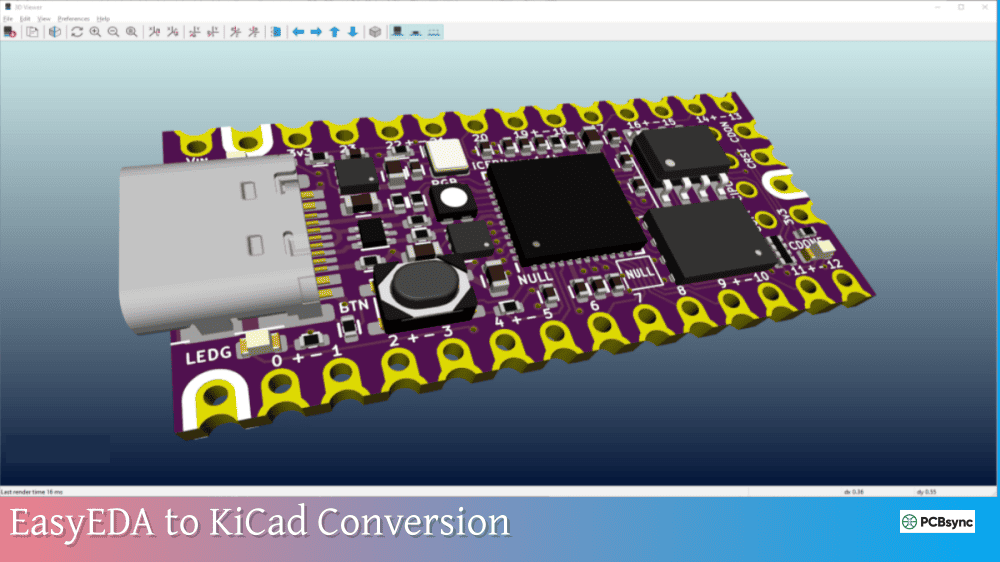
KiCad has become the go-to recommendation for serious hobbyists and professionals who want capable software without licensing costs. It runs on Windows, Mac, and Linux, has no artificial limitations on board size or layers, and has a thriving community creating libraries and plugins.
Learning curve: Moderate. The interface takes some getting used to, but documentation is solid.
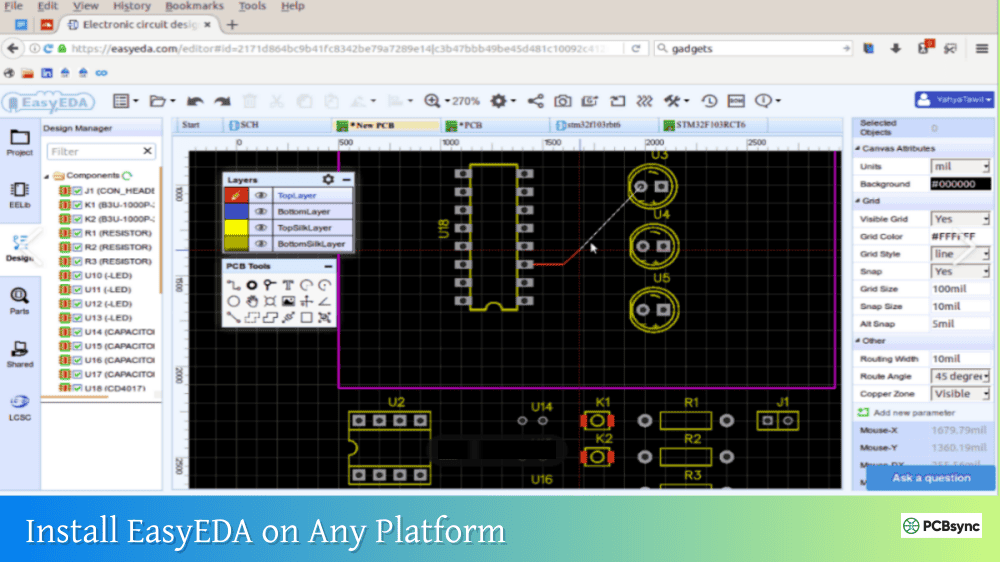
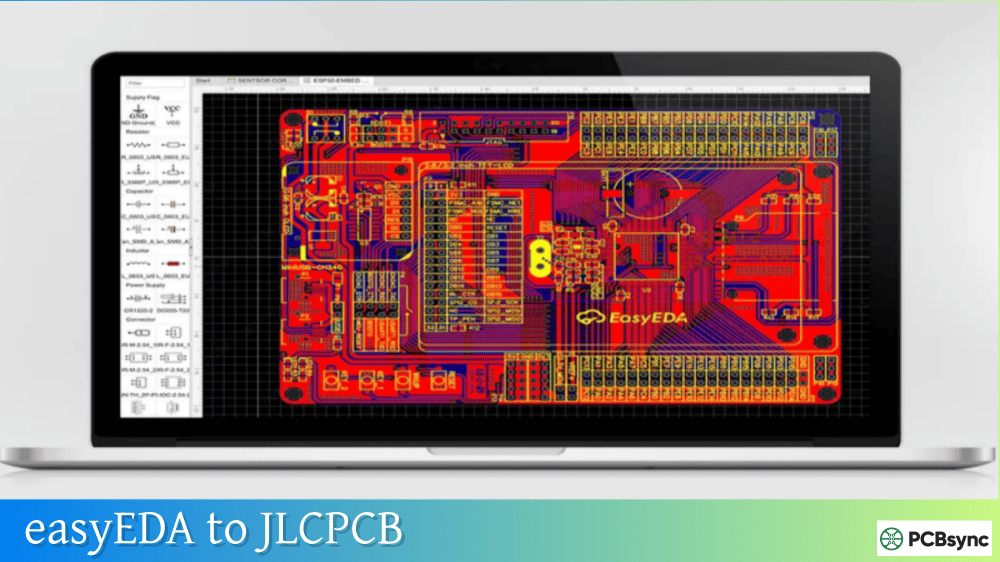
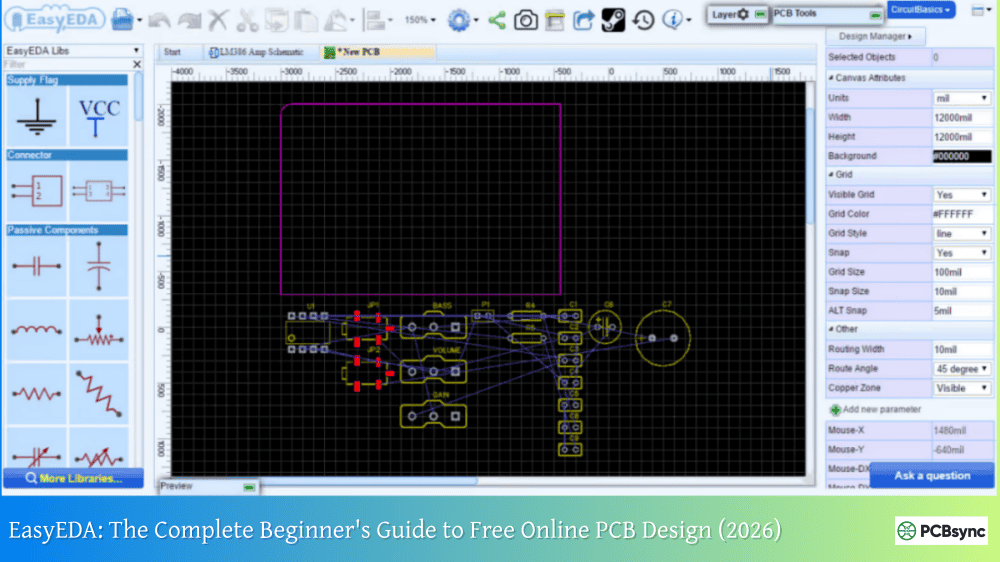
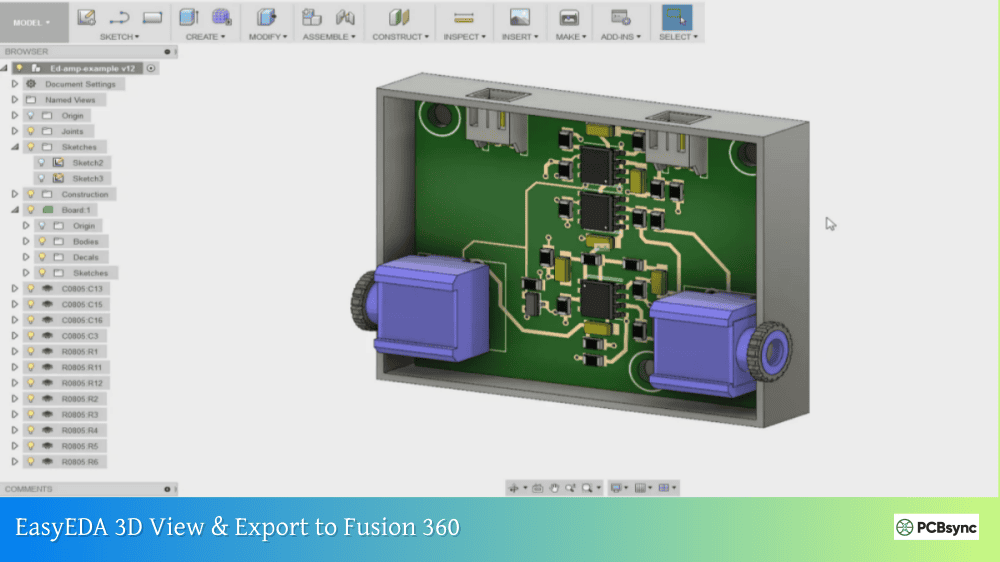
EasyEDA is browser-based, which means you can design from any computer without installing software. It integrates directly with JLCPCB and LCSC for seamless ordering.
Strengths: Zero installation, huge component library linked to real parts you can buy, easy for beginners.
Limitations: Requires internet connection, less capable for complex designs, your designs live on someone else’s servers.
Professional Software
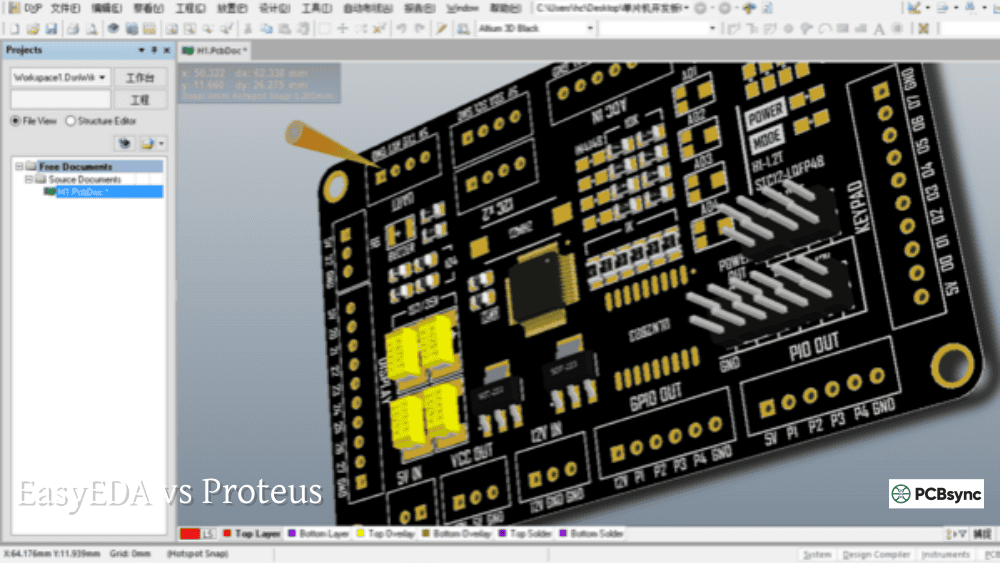
Altium Designer is the industry standard in many companies. It’s powerful, well-integrated, and has features like real-time supply chain data.
Cost: Around $7,000+ per year for a subscription, or $12,000+ for a perpetual license.
Best for: Professional engineers, companies with budget, complex multi-board designs.
Cadence OrCAD/Allegro is another professional heavyweight, particularly strong in signal integrity analysis and large-scale designs.
Autodesk EAGLE used to be the hobbyist favorite before KiCad matured. Still widely used with lots of existing libraries and tutorials.
Software Comparison Table
Software
Cost
Best For
Layer Limit (Free)
Platform
KiCad
Free
Hobbyists to professionals
Unlimited
Win/Mac/Linux
EasyEDA
Free
Beginners, quick prototypes
Unlimited
Browser
Altium Designer
$7,000+/yr
Professional teams
N/A (paid only)
Windows
Cadence Allegro
Enterprise
Large companies, complex designs
N/A (paid only)
Windows/Linux
EAGLE
Free tier available
Small boards, existing projects
2 layers, 80cm²
Win/Mac/Linux
Fusion 360 Electronics
Subscription
Mechanical + electrical integration
Limited
Win/Mac
My recommendation for beginners: Start with KiCad or EasyEDA. Both are free, both are capable enough for most projects, and skills transfer reasonably well if you later need to switch.
Every successful PCB design follows a similar workflow. Let me walk you through it.
Step 1: Define Your Requirements
Before opening any software, answer these questions:
What does this board need to do? List every function, every connector, every interface.
What’s the operating environment? Temperature range, humidity, vibration, and EMI concerns all affect design decisions.
What are the size constraints? Does this need to fit in an existing enclosure?
What’s your budget and volume? A hundred prototype boards versus ten thousand production units require different optimization strategies.
Step 2: Create the Schematic
The schematic is your circuit’s logical diagram. It shows how components connect electrically without worrying about physical placement.
Good schematic practices include:
Organize by function. Group related circuits together. Power supply in one area, microcontroller in another, sensors in a third.
Use consistent naming. R1, R2, R3 for resistors, C1, C2 for capacitors. Don’t skip numbers randomly.
Add net labels. Instead of drawing wires across the entire sheet, use net labels like “VCC”, “GND”, “MOSI”, “SDA”.
Include decoupling capacitors. Every IC needs them, typically 100nF ceramic close to each power pin.
Document your design. Add notes explaining non-obvious choices. Future you will thank present you.
Step 3: Component Selection and Footprint Assignment
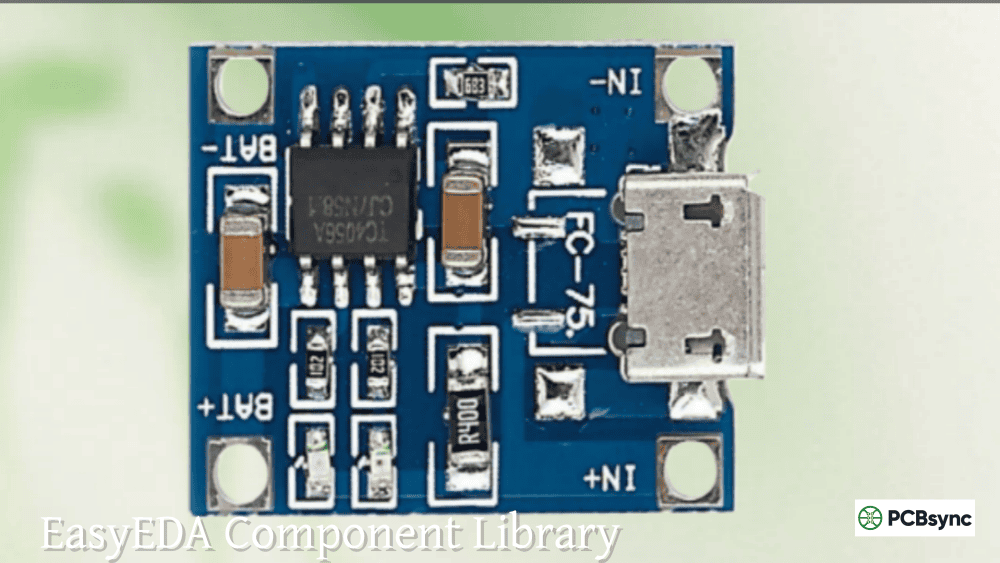
Every schematic symbol needs a physical footprint—the actual copper pattern the component solders onto.
This is where beginners often make costly mistakes. That resistor symbol could be a tiny 0402 package or a through-hole part three times the size. Double-check every footprint against your actual components.
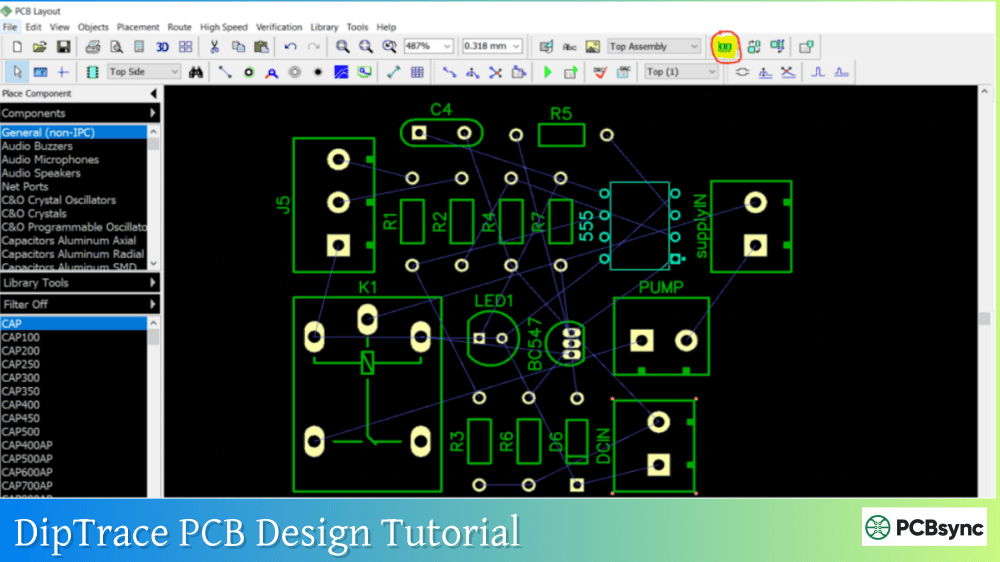
Now we transition from schematic (logical) to layout (physical).
Define your board outline. Most software lets you import DXF files if you have mechanical constraints.
Configure your layer stack-up:
2-layer: Top copper, bottom copper
4-layer typical: Signal, Ground, Power, Signal
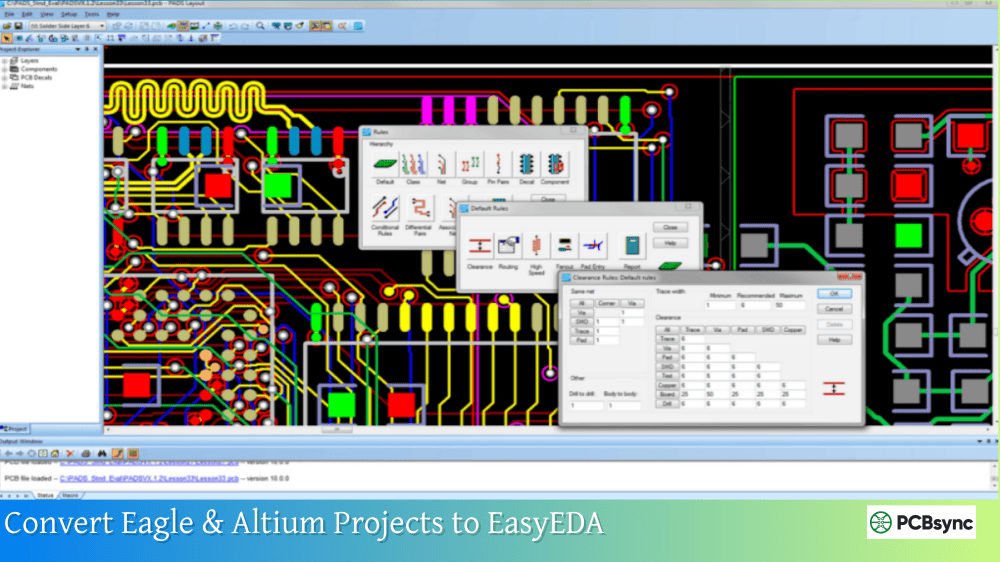
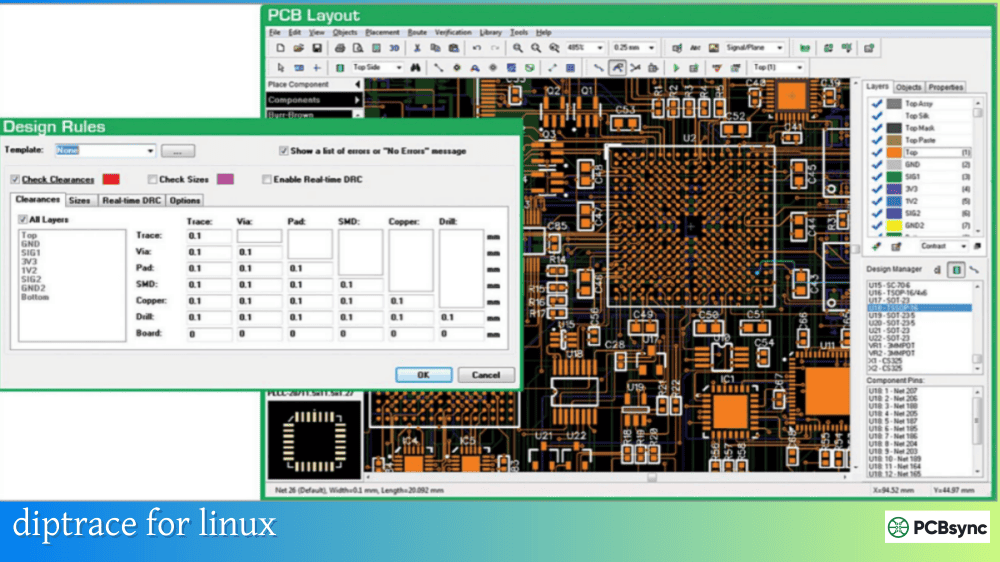
Set your design rules. These define minimum trace widths, clearances, via sizes, and other constraints your manufacturer can achieve. Common values for standard PCB fabrication:
Going below these values typically costs more and reduces yield.
Step 5: Component Placement
Placement determines 80% of your routing success. Rush this step, and you’ll fight the router for hours.
General placement guidelines:
Start with constrained components. Connectors go where they need to interface with the outside world. Mounting holes have fixed positions. LEDs need to be visible.
Keep related components together. A voltage regulator and its input/output capacitors should cluster tightly.
Consider signal flow. Input on one side, output on the other. Signals should flow logically across the board.
Mind the heat. Power components generate heat. Don’t put temperature-sensitive parts nearby.
Think about assembly. Through-hole components on one side make hand soldering easier. Mixed assemblies can complicate automated manufacturing.
Step 6: Routing
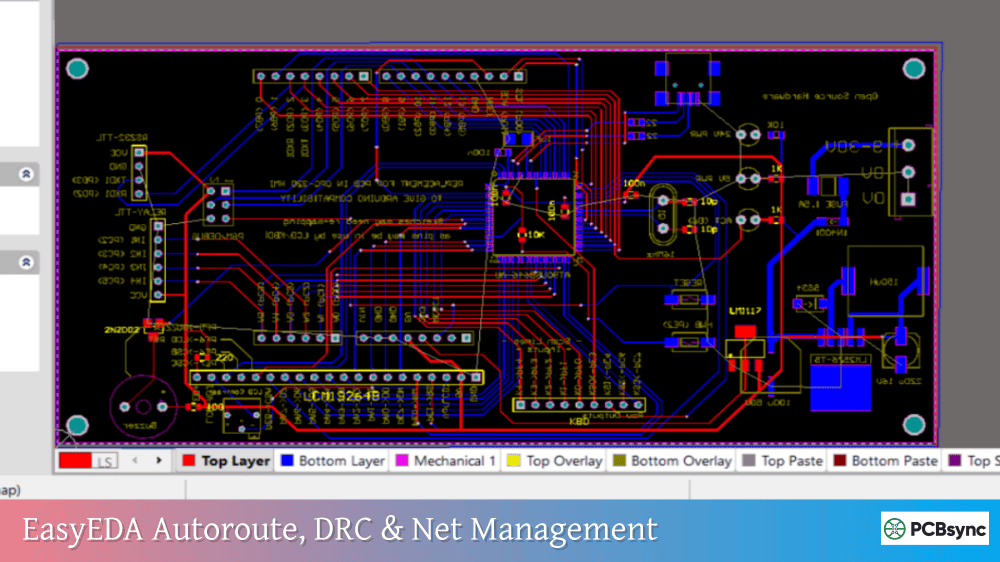
Routing connects the copper traces according to your schematic. This is where beginners spend most of their time, and where experience really shows.
Fundamental routing principles:
Keep traces short and direct. Longer traces mean more resistance, more inductance, and more opportunity for noise pickup.
Avoid 90-degree angles. Use 45-degree corners or curves. Sharp corners can cause acid traps during manufacturing and affect high-frequency signals.
Maintain consistent trace widths. Don’t neck down traces unless absolutely necessary, and never narrow a trace in the middle of a run.
Use ground planes. On a 2-layer board, dedicate most of the bottom layer to ground. This provides low-impedance return paths and shields against noise.
Route critical signals first. High-speed signals, clock lines, and sensitive analog traces should get priority.
Power routing needs width. Calculate trace width based on current. A 1A trace needs approximately 0.5mm width for acceptable temperature rise.
Step 7: Design Rule Check (DRC)
Every PCB software includes a DRC tool. Run it. Fix every error.
Common DRC errors:
Clearance violations (traces too close together)
Unconnected nets (missing connections)
Via too close to pad
Silkscreen overlapping pads
Board outline clearance
Some warnings can be ignored with good reason, but errors must be resolved.
Step 8: Generate Manufacturing Files
Your manufacturer needs specific file formats to build your board.
Gerber files are the industry standard. Each layer gets its own Gerber file:
Top copper
Bottom copper
Top solder mask
Bottom solder mask
Top silkscreen
Bottom silkscreen
Board outline
Drill files (Excellon format) specify hole positions and sizes.
Pick-and-place files tell assembly machines where each component goes.
Bill of Materials (BOM) lists every component with manufacturer part numbers.
Most PCB software has “CAM” or “Plot” features specifically for generating these files. Double-check them with a free Gerber viewer before ordering.
Common PCB Design Mistakes and How to Avoid Them
After reviewing hundreds of designs, I see the same mistakes repeatedly. Learn from others’ errors.
Mistake 1: Inadequate Decoupling
Every digital IC needs decoupling capacitors placed as close as possible to the power pins. “Close” means millimeters, not centimeters. Connect them with short, wide traces or direct via connections.
Mistake 2: Ignoring Return Paths
Current flows in loops. If you don’t provide a clear return path, current finds its own way—often through unintended routes that create EMI problems.
On a 4-layer board, run signals over continuous ground planes. On a 2-layer board, avoid splitting the ground plane and think carefully about where return currents flow.
Mistake 3: Wrong Footprints
Triple-check footprints against actual components. Measure if you have samples. A footprint that’s off by 0.5mm can make assembly impossible.
Mistake 4: Insufficient Thermal Management
Power dissipation happens whether you plan for it or not. Calculate heat generation from your major components and provide thermal relief paths—copper pours, thermal vias, or heatsinks as needed.
Mistake 5: Not Consulting the Manufacturer
Every PCB manufacturer has different capabilities. What’s standard for one might be expensive or impossible for another. Review their design guidelines before finalizing your layout.
PCB Design Cost: What to Expect
Understanding costs helps you make better design decisions.
Design Software Costs
Option
Annual Cost
KiCad
Free
EasyEDA
Free
EAGLE Free
Free (limited)
Altium Designer
$7,000+
OrCAD Professional
$5,000+
Prototype Manufacturing Costs
For a standard 2-layer board (100mm x 100mm, 5 pieces):
Panelize small boards. Multiple small boards on one panel maximize material usage.
Use standard specifications. Default trace widths, standard via sizes, and common materials keep costs down.
Minimize board size. Material cost scales with area.
Avoid special finishes unless needed. HASL is cheapest; ENIG costs more but works better for fine-pitch components.
Useful Resources for PCB Designers
Learning Resources
YouTube Channels:
Phil’s Lab (excellent KiCad tutorials)
Robert Feranec (professional design techniques)
EEVblog (practical electronics and PCB discussions)
Books:
“The Art of Electronics” by Horowitz and Hill
“High Speed Digital Design: A Handbook of Black Magic” by Johnson and Graham
“PCB Design for Real-World EMI Control” by Archambeault
Component Sources
Distributor
Strengths
Digi-Key
Massive inventory, fast shipping, datasheets
Mouser
Similar to Digi-Key, good international shipping
LCSC
Low prices, ideal for JLCPCB assembly
Newark/Farnell
Good for industrial/commercial projects
PCB Manufacturers
Manufacturer
Best For
JLCPCB
Low cost prototypes, quick assembly
PCBWay
Good quality, reasonable prices
OSH Park
US-based, unique purple boards
Advanced Circuits
Professional US manufacturing
Eurocircuits
European manufacturing
Free Design Tools
Tool
Purpose
Saturn PCB Toolkit
Trace width, via current, impedance calculations
Gerber Viewer (online)
Verify manufacturing files
SnapEDA
Free component footprints
Octopart
Compare component prices across distributors
Getting Started: Your First PCB Project
Theory only takes you so far. The best way to learn is by doing.
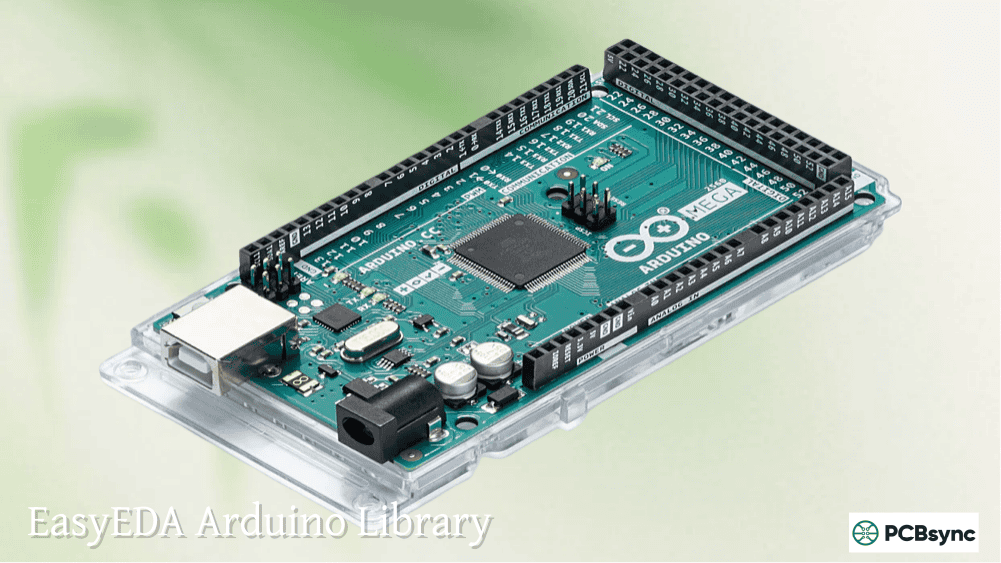
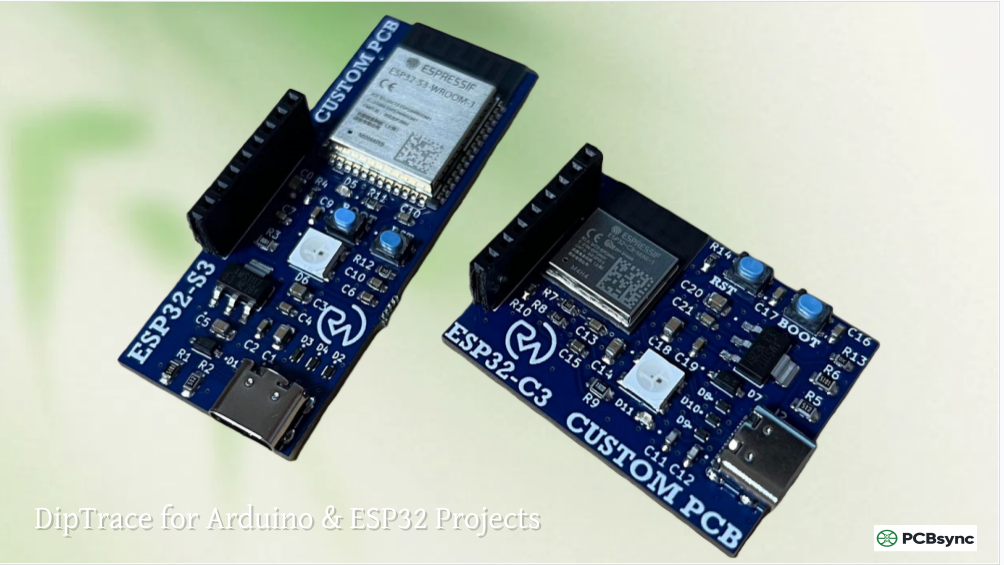
For your first project, I recommend something simple with practical value. A breakout board for a sensor you want to use, an LED driver, or a simple Arduino shield. Keep it to two layers, use through-hole components if you’re uncomfortable with SMD soldering, and don’t try to pack too much functionality in.
Document your process. Take screenshots of your schematic and layout at various stages. When something doesn’t work (and something always doesn’t work the first time), you’ll want to trace back through your decisions.
Order your boards and build them. The gap between design on screen and physical board in hand teaches lessons no tutorial can.
Frequently Asked Questions About PCB Design
How long does it take to learn PCB design?
You can design a simple working board within a few weeks of dedicated learning. Developing the intuition for complex designs takes years. Most engineers become competent enough for professional work after 6-12 months of regular practice.
Can I design PCBs on a Mac or Linux?
Yes. KiCad runs natively on Mac, Linux, and Windows. EasyEDA works in any browser. Altium is Windows-only but can run in virtual machines.
What’s the minimum order for PCB prototypes?
Most manufacturers have minimum orders of 5 pieces for standard boards. Some, like OSH Park, will make as few as 3. For specialized requirements, minimums might be higher.
Do I need to understand electronics to design PCBs?
PCB design is one skill; circuit design is another. You need enough electronics knowledge to create valid schematics, but you don’t need to be an expert. Many PCB designers work from schematics created by circuit engineers.
How do I know if my design will work before manufacturing?
Simulation helps for analog circuits (SPICE) and signal integrity (specific tools for high-speed). For digital logic, you mostly rely on following datasheet recommendations and good design practices. Prototype early—finding problems in a $10 prototype is much cheaper than finding them in production.
Moving Forward with PCB Design
PCB design is a skill that keeps growing. After you master the basics, there’s always more to learn—high-speed design, RF techniques, flexible circuits, HDI manufacturing, and countless specialized applications.
The most important thing is to start. Pick a project, choose a tool, and begin. Your first board won’t be perfect, and that’s fine. Each design teaches you something new.
I’ve seen complete beginners go from zero to shipping products within a year of serious effort. The resources are available, the manufacturing is affordable, and the only thing between you and your first PCB is getting started.
Inquire: Call 0086-755-23203480, or reach out via the form below/your sales contact to discuss our design, manufacturing, and assembly capabilities.
Quote: Email your PCB files to Sales@pcbsync.com (Preferred for large files) or submit online. We will contact you promptly. Please ensure your email is correct.
Notes: For PCB fabrication, we require PCB design file in Gerber RS-274X format (most preferred), *.PCB/DDB (Protel, inform your program version) format or *.BRD (Eagle) format. For PCB assembly, we require PCB design file in above mentioned format, drilling file and BOM. Click to download BOM template To avoid file missing, please include all files into one folder and compress it into .zip or .rar format.