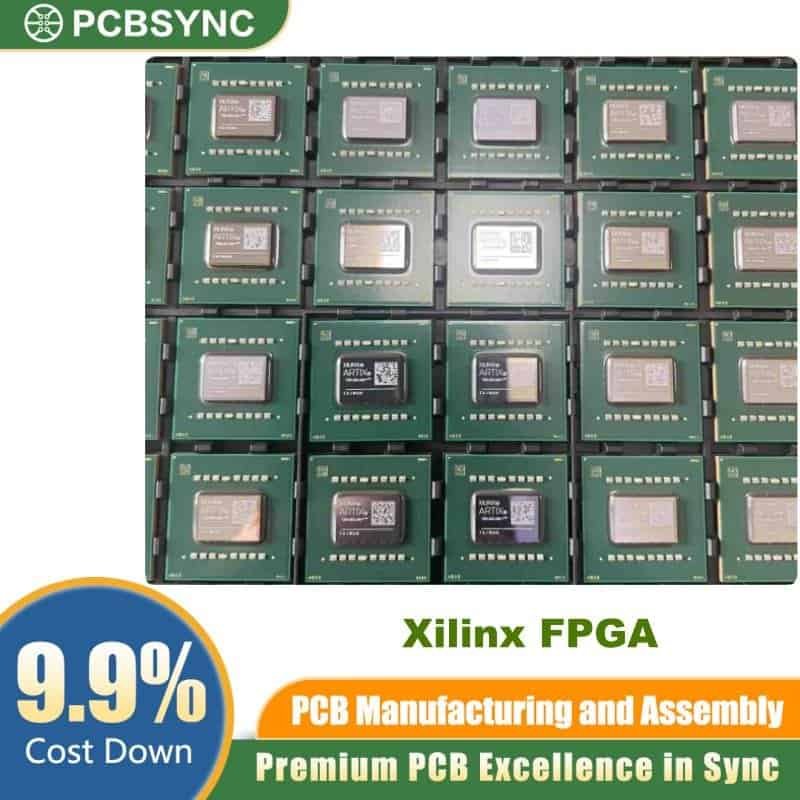
Overview of XCS30-4TQ144C Field Programmable Gate Array
The XCS30-4TQ144C is a versatile Field Programmable Gate Array (FPGA) from AMD Xilinx’s renowned Spartan series, designed to deliver exceptional performance for embedded system designs and digital logic applications. This FPGA component combines flexibility, reliability, and cost-effectiveness, making it an ideal choice for engineers and designers seeking programmable logic solutions.
As part of the Spartan FPGA family, the XCS30-4TQ144C offers a compelling alternative to traditional ASIC designs, providing the programmability needed for rapid prototyping and product development cycles while maintaining competitive pricing for high-volume production runs.
Key Features and Technical Specifications
Core Performance Characteristics
The XCS30-4TQ144C stands out with its robust technical capabilities that address modern embedded design requirements:
| Specification |
Value |
Benefits |
| Logic Gates |
30,000 gates |
Sufficient logic capacity for complex digital designs |
| Logic Elements |
1,368 cells |
Flexible configurable logic blocks for custom implementations |
| Maximum Frequency |
166 MHz |
High-speed operation for demanding applications |
| On-Chip RAM |
18,432 bits |
Integrated memory for data buffering and storage |
| I/O Pins |
113 user I/Os |
Extensive connectivity options for peripheral interfaces |
| Operating Voltage |
2.5V |
Low-power consumption design |
| Package Type |
144-pin TQFP |
Surface-mount package for automated assembly |
Package and Physical Specifications
| Parameter |
Details |
| Package Style |
TQFP (Thin Quad Flat Pack) |
| Pin Count |
144 pins |
| Mounting Type |
Surface Mount Technology (SMT) |
| Temperature Grade |
Commercial (-4 speed grade) |
| Lead-Free Status |
RoHS Compliant |
Technical Architecture and Design Capabilities
FPGA Configuration and Logic Resources
The <a href=”https://pcbsync.com/xilinx-fpga/”>Xilinx FPGA</a> XCS30-4TQ144C incorporates advanced configurable logic blocks (CLBs) that provide designers with exceptional flexibility. Each logic element can be configured to implement various combinational and sequential logic functions, enabling the creation of custom digital circuits tailored to specific application requirements.
The device supports multiple configuration modes, allowing system designers to choose the most appropriate method for their application environment, whether through JTAG boundary-scan, serial PROM, or parallel configuration interfaces.
Memory and Storage Architecture
With 18,432 bits of distributed RAM integrated directly into the FPGA fabric, the XCS30-4TQ144C eliminates the need for external memory components in many applications. This on-chip memory can be utilized for:
- Data buffering and FIFO implementations
- Look-up table storage
- Small embedded memory requirements
- State machine data storage
Speed Grade and Performance
The “-4” speed grade designation indicates this device is optimized for standard performance applications, offering a maximum system frequency of 166 MHz. This speed grade strikes an excellent balance between performance and power consumption, making it suitable for a wide range of commercial applications.
Application Areas and Use Cases
Digital Signal Processing Applications
The XCS30-4TQ144C excels in digital signal processing (DSP) implementations, including:
- Digital filtering and signal conditioning
- Audio processing and codec implementations
- Communication protocol handlers
- Data acquisition systems
Industrial Control Systems
For industrial automation and control applications, this FPGA provides:
- Motor control algorithms
- PLC (Programmable Logic Controller) functionality
- Sensor interface implementations
- Real-time control systems
Communication and Interface Applications
The abundant I/O resources make the XCS30-4TQ144C ideal for:
- Serial communication protocols (UART, SPI, I2C)
- Parallel bus interfaces
- Custom protocol implementations
- Bridge and gateway applications
Embedded System Integration
As an embedded component, the XCS30-4TQ144C serves effectively in:
- System-on-Chip (SoC) designs
- Co-processor implementations
- Hardware acceleration modules
- Custom peripheral controllers
Design Tools and Development Support
Xilinx ISE Design Suite
The XCS30-4TQ144C is fully supported by Xilinx’s ISE (Integrated Software Environment) Design Suite, which provides:
- HDL synthesis and implementation
- Timing analysis and optimization
- Place and route tools
- Configuration bitstream generation
Programming Languages Support
Designers can implement their designs using industry-standard HDL languages:
- VHDL: IEEE standard hardware description language
- Verilog: Popular HDL for digital design
- Schematic Entry: Graphical design capture tools
Comparison with Related Spartan Devices
Spartan Family Positioning
| Model |
Gates |
I/O Pins |
RAM (bits) |
Typical Applications |
| XCS10 |
10,000 |
77 |
6,144 |
Simple glue logic, basic interfaces |
| XCS20 |
20,000 |
97 |
12,288 |
Medium complexity designs |
| XCS30-4TQ144C |
30,000 |
113 |
18,432 |
Complex digital systems |
| XCS40 |
40,000 |
142 |
24,576 |
High-density applications |
Quality and Reliability Standards
Manufacturing Excellence
The XCS30-4TQ144C is manufactured using advanced semiconductor processes, ensuring:
- Consistent electrical performance
- High reliability and longevity
- Low defect rates
- RoHS compliance for environmental standards
Testing and Qualification
Each device undergoes rigorous testing procedures:
- Functionality verification
- Speed grade testing
- Temperature cycling
- Electrical parameter validation
Design Considerations and Best Practices
Power Supply Requirements
When implementing the XCS30-4TQ144C in your design, consider:
- 2.5V core voltage with ±5% tolerance
- Adequate decoupling capacitors (typically 0.1µF ceramic)
- Power plane design for noise reduction
- Current capacity planning (varies by design utilization)
Thermal Management
While the TQFP package provides adequate thermal performance for most applications:
- Monitor junction temperature in high-utilization designs
- Consider airflow in enclosed systems
- Use thermal simulation tools for complex implementations
- Add heat sinks if operating near maximum specifications
PCB Layout Guidelines
For optimal performance and reliability:
- Maintain controlled impedance on high-speed signals
- Use ground and power planes
- Keep configuration signals short and direct
- Follow Xilinx PCB design guidelines
- Provide adequate clearance around the TQFP package
Ordering Information and Package Options
Part Number Breakdown
Understanding the XCS30-4TQ144C part number:
- XCS30: Spartan family, 30,000 gate device
- -4: Speed grade (standard performance)
- TQ144: Package type (144-pin TQFP)
- C: Commercial temperature range
Availability and Lifecycle Status
The XCS30-4TQ144C is classified as a mature product in Xilinx’s portfolio. While it has been superseded by newer Spartan generations (Spartan-3, Spartan-6, Spartan-7), it remains available for:
- Legacy design support
- Cost-optimized applications
- Proven design migrations
- Long-term availability programs
Migration Path and Future-Proofing
Upgrade Options
For designs requiring additional resources or newer features:
- Spartan-3 Series: Enhanced performance and density
- Spartan-6 Series: Advanced I/O standards and DSP blocks
- Spartan-7 Series: Latest generation with improved power efficiency
Design Portability
When planning for future migrations:
- Use industry-standard HDL coding practices
- Modularize design architecture
- Document design constraints thoroughly
- Consider pin compatibility when selecting packages
Technical Support and Documentation
Available Resources
Comprehensive technical documentation includes:
- Product datasheet with electrical specifications
- User guide for architecture and features
- Application notes for specific implementations
- Reference designs and example projects
Community and Support
Access to technical support through:
- Xilinx/AMD technical support channels
- Online forums and user communities
- Third-party FPGA design resources
- Training materials and tutorials
Competitive Advantages of the XCS30-4TQ144C
Cost-Effectiveness
The XCS30-4TQ144C offers exceptional value through:
- Competitive pricing in the 30K gate category
- Reduced time-to-market compared to ASIC development
- No NRE (Non-Recurring Engineering) costs
- Field-upgradeable functionality
Proven Technology
Benefits of the mature Spartan architecture:
- Extensive design ecosystem
- Well-characterized performance
- Proven reliability in production
- Abundant design resources and examples
Flexibility and Scalability
The programmable nature provides:
- Rapid prototype development
- Easy design modifications
- In-field updates capability
- Risk mitigation through iterative development
Conclusion: Why Choose the XCS30-4TQ144C
The XCS30-4TQ144C represents an excellent choice for embedded system designers seeking a reliable, cost-effective FPGA solution. With 30,000 gates of logic capacity, 113 I/O pins, and integrated memory resources, this device provides the perfect balance of functionality and affordability for a wide range of digital design applications.
Whether you’re developing industrial control systems, communication interfaces, or custom digital logic implementations, the XCS30-4TQ144C delivers the performance and flexibility needed for successful product development. Its mature architecture, extensive tool support, and proven reliability make it a trusted component for both new designs and legacy system maintenance.
For engineers and designers looking to leverage programmable logic technology without the complexity and cost of larger FPGAs, the XCS30-4TQ144C from <a href=”https://pcbsync.com/xilinx-fpga/”>Xilinx FPGA</a> family stands as a compelling solution that continues to serve the embedded systems community effectively.