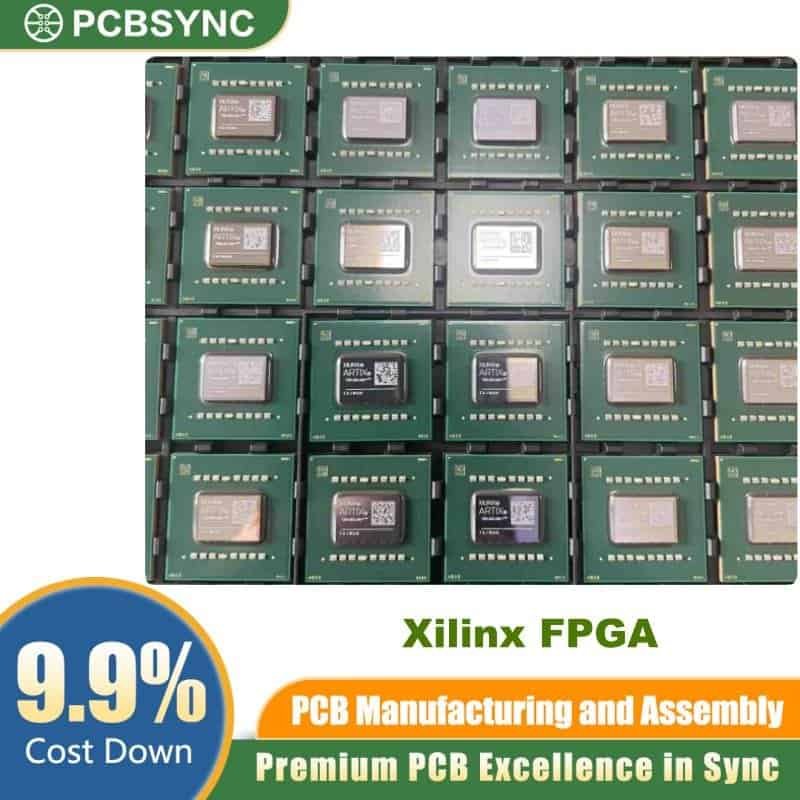
Overview of the XCS30XL-4BG256C FPGA
The XCS30XL-4BG256C is a member of AMD’s (formerly Xilinx) renowned Spartan-XL family of field programmable gate arrays. This versatile FPGA delivers robust performance for embedded systems, industrial control, and digital signal processing applications. With 192 I/O pins packaged in a compact 256-ball BGA configuration, this device offers an excellent balance of logic density, processing power, and cost-effectiveness for designers seeking reliable programmable logic solutions.
As part of the legacy Spartan-XL architecture, the XCS30XL-4BG256C provides proven reliability for long-lifecycle applications where field-proven technology is essential. Whether you’re developing communications equipment, automotive electronics, or industrial automation systems, this FPGA delivers the flexibility and performance your project demands.
Key Technical Specifications
| Parameter |
Specification |
| Part Number |
XCS30XL-4BG256C |
| Manufacturer |
AMD (formerly Xilinx) |
| Product Family |
Spartan-XL FPGA |
| Logic Elements |
1,368 |
| Logic Blocks (CLBs) |
576 |
| Total RAM Bits |
18,432 |
| I/O Count |
192 |
| Package Type |
256-PBGA (Ball Grid Array) |
| Supply Voltage |
3.0V to 3.6V |
| Speed Grade |
-4 |
| Operating Temperature |
Commercial |
Core Features and Capabilities
Logic Architecture
The XCS30XL-4BG256C incorporates 576 Logic Array Blocks (LABs)/Configurable Logic Blocks (CLBs) and 1,368 logic elements, providing substantial logic resources for complex digital designs. This architecture enables designers to implement sophisticated control algorithms, state machines, and data processing functions within a single device.
Memory Resources
With 18,432 total RAM bits for on-chip memory, the XCS30XL-4BG256C offers embedded memory resources ideal for buffering, lookup tables, and small data storage requirements. This on-chip RAM reduces the need for external memory components, simplifying board design and reducing system cost.
Power and Performance
Operating from a 3V to 3.6V supply voltage, this FPGA maintains compatibility with standard 3.3V logic families while offering flexibility for battery-powered and low-voltage applications. The -4 speed grade indicates optimized performance characteristics suitable for demanding real-time applications.
Package and I/O Configuration
The 256-PBGA package provides excellent thermal performance and signal integrity in a compact footprint. With 192 user-configurable I/O pins, designers have abundant connectivity options for interfacing with sensors, actuators, communication buses, and other system components.
Detailed Component Specifications
| Category |
Details |
| Family Architecture |
Spartan-XL (XC3000XL Series) |
| Configuration Memory |
SRAM-based (requires external configuration) |
| User I/O Pins |
192 |
| System Gates |
Approximately 30,000 |
| Maximum User RAM |
18 Kbits |
| Global Clock Networks |
8 |
| Operating Junction Temperature |
0°C to +85°C (Commercial) |
| Lead Status |
Lead-free options available |
| Mounting Type |
Surface Mount |
Primary Application Areas
Industrial Automation and Control
The XCS30XL-4BG256C excels in industrial environments where reliable, deterministic logic control is essential. Applications include:
- Motor control systems
- PLC (Programmable Logic Controller) interfaces
- Process automation equipment
- Sensor data acquisition and processing
- Real-time monitoring systems
Communications Infrastructure
With its high I/O count and flexible logic resources, this FPGA is well-suited for communications applications such as:
- Protocol converters and bridges
- Data packet processing
- Serial-to-parallel conversion
- Interface controllers
- Network equipment
Digital Signal Processing
The combination of logic elements and embedded memory makes the XCS30XL-4BG256C appropriate for DSP tasks including:
- Digital filtering
- Audio and video processing
- Signal conditioning
- Data compression algorithms
- Transform computations
Automotive Electronics
In automotive applications, this FPGA serves functions such as:
- Infotainment system controllers
- Advanced driver-assistance systems (ADAS) interfaces
- Dashboard and instrument cluster logic
- CAN bus interfaces
- Electronic control unit (ECU) prototyping
Embedded System Development
For embedded systems designers, the XCS30XL-4BG256C provides:
- Custom peripheral interfaces
- Complex state machine implementation
- Glue logic and system integration
- Legacy system interface adaptation
- Prototype-to-production solutions
Comparison with Related Products
| Part Number |
Logic Elements |
I/O Count |
Package |
Key Difference |
| XCS30XL-4BG256C |
1,368 |
192 |
256-BGA |
Standard commercial version |
| XCS30XL-4PQG208C |
1,368 |
169 |
208-PQFP |
Lower I/O count, PQFP package |
| XCS30XL-5BG256C |
1,368 |
192 |
256-BGA |
Slower speed grade (-5) |
| XCS40XL-4BG256C |
1,872 |
192 |
256-BGA |
Higher logic density |
| XCS20XL-4BG256C |
952 |
192 |
256-BGA |
Lower logic density |
Design Considerations and Best Practices
Configuration Requirements
The XCS30XL-4BG256C uses SRAM-based configuration, requiring an external configuration source such as:
- Serial PROM
- Parallel EPROM
- Microcontroller with configuration software
- JTAG programming interface
Power Supply Design
Proper power distribution is critical for reliable FPGA operation. Design considerations include:
- Adequate decoupling capacitors near power pins
- Separate analog and digital power planes when applicable
- Current capacity planning for I/O switching
- Voltage regulation with minimal ripple
Thermal Management
While the -4 speed grade offers good performance, designers should consider:
- Adequate airflow for convection cooling
- Thermal vias in the PCB under the BGA package
- Heatsink attachment for high-utilization designs
- Junction temperature monitoring in critical applications
Signal Integrity
The 256-BGA package requires careful PCB design:
- Controlled impedance routing for high-speed signals
- Proper via design for BGA breakout
- Ground plane integrity
- Length matching for critical signal groups
Sourcing and Availability
The XCS30XL-4BG256C is available through authorized distributors including DigiKey, Mouser, Arrow, and other major electronics component suppliers. While this product is considered mature technology, it remains available for existing designs and applications requiring long-term component stability.
Procurement Considerations
When sourcing the XCS30XL-4BG256C, consider:
- Lead time verification with suppliers
- Minimum order quantities
- Pricing for various volume tiers
- Availability of engineering samples
- Alternative package options within the family
Learn More About Xilinx FPGA Technology
For comprehensive information about Xilinx FPGA families, design resources, development tools, and application guidance, visit our dedicated Xilinx FPGA resource center. You’ll find detailed tutorials, reference designs, and technical documentation to help maximize the capabilities of your Spartan-XL FPGA implementation.
Development Tools and Support Resources
Design Software
The XCS30XL-4BG256C is supported by:
- Xilinx ISE Design Suite (legacy software)
- HDL synthesis tools (VHDL, Verilog)
- Timing analysis and simulation software
- Configuration generation utilities
Evaluation and Prototyping
Development resources include:
- Reference designs and application notes
- Evaluation boards (third-party options)
- Programming cables and adapters
- Technical support documentation
Documentation and Datasheets
Essential technical documents for the XCS30XL-4BG256C include:
- Product datasheet with electrical specifications
- Package mechanical drawings
- Configuration guide
- Application notes for common implementations
Advantages of the XCS30XL-4BG256C
Proven Reliability
As a mature product with extensive field history, the XCS30XL-4BG256C offers:
- Well-characterized performance parameters
- Established manufacturing processes
- Extensive application experience
- Known design methodologies
Cost-Effectiveness
For appropriate applications, this FPGA provides:
- Competitive pricing for the logic density offered
- Reduced need for external components
- Lower total system cost
- Good value for legacy design support
Design Flexibility
The Spartan-XL architecture enables:
- Rapid design iterations
- Field upgradability through reconfiguration
- Custom logic implementation
- Easy design migration within the family
Technical Support and Design Resources
When implementing the XCS30XL-4BG256C in your design, leverage available resources:
- Manufacturer application notes
- Community forums and discussion groups
- Third-party design consulting services
- University research and reference implementations
Conclusion: Is the XCS30XL-4BG256C Right for Your Project?
The XCS30XL-4BG256C FPGA represents a solid choice for embedded systems, industrial control, and communications applications where moderate logic density, proven reliability, and cost-effectiveness are priorities. With 1,368 logic elements, 192 I/O pins, and 18 Kbits of embedded RAM in a compact 256-BGA package, this device delivers the flexibility designers need for complex digital implementations.
While newer FPGA families offer higher performance and additional features, the XCS30XL-4BG256C remains relevant for applications requiring long product lifecycles, design continuity, or compatibility with existing Spartan-XL architectures. Its 3.0V to 3.6V operating voltage, -4 speed grade performance, and comprehensive I/O capabilities make it suitable for diverse industrial and embedded applications.
Whether you’re maintaining an existing design, developing new industrial equipment, or prototyping custom digital logic solutions, the XCS30XL-4BG256C provides the proven performance and reliability that AMD’s (formerly Xilinx) Spartan-XL family is known for. Contact authorized distributors for current availability, pricing, and technical support to integrate this versatile FPGA into your next project.