Inquire: Call 0086-755-23203480, or reach out via the form below/your sales contact to discuss our design, manufacturing, and assembly capabilities.
Quote: Email your PCB files to Sales@pcbsync.com (Preferred for large files) or submit online. We will contact you promptly. Please ensure your email is correct.
Notes: For PCB fabrication, we require PCB design file in Gerber RS-274X format (most preferred), *.PCB/DDB (Protel, inform your program version) format or *.BRD (Eagle) format. For PCB assembly, we require PCB design file in above mentioned format, drilling file and BOM. Click to download BOM template To avoid file missing, please include all files into one folder and compress it into .zip or .rar format.
km away already 20 dB below the noise floor. Any layout mistake—wrong ground plane size, poor shielding, inadequate matching—and your device simply won’t get a position fix. I’ve debugged plenty of GPS boards where the antenna looked fine but the layout killed performance.
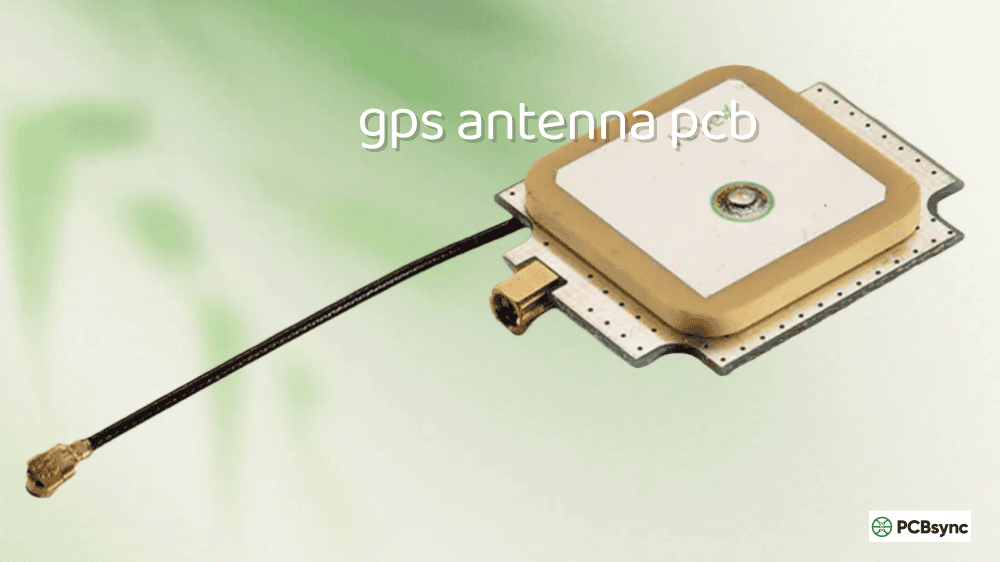
This guide covers everything you need to design a working GPS antenna PCB from the ground up. I’ll provide specific dimensions for ceramic patch, chip, helix, and PCB trace antennas, explain the ground plane requirements that trip up most designers, and detail the layout rules that ensure reliable satellite reception. Whether you’re building an asset tracker, drone, or vehicle navigation system, these practical guidelines will help you achieve consistent GPS performance.
Before selecting an antenna, you need to understand which frequency bands your application requires. GPS is just one of several Global Navigation Satellite Systems (GNSS), and modern receivers often support multiple constellations for improved accuracy and availability.
GNSS Constellation Frequency Bands
Constellation
Region
L1 Band (MHz)
L2 Band (MHz)
L5 Band (MHz)
GPS
USA
1575.42
1227.60
1176.45
GLONASS
Russia
1602.00
1246.00
—
Galileo
Europe
1575.42
1278.75
1176.45
BeiDou
China
1561.10
1207.14
1176.45
Common GPS Antenna PCB Frequency Configurations
Configuration
Frequencies
Typical Applications
L1 only
1575.42 MHz
Consumer GPS, basic tracking
L1 + GLONASS
1575.42 + 1602 MHz
Improved availability
L1 + L5
1575.42 + 1176.45 MHz
High precision, RTK
Multi-band
L1 + L2 + L5
Survey grade, cm accuracy
Wavelength and Physical Size
Band
Center Frequency
Free Space λ
Quarter Wave
FR4 Quarter Wave
L5
1176.45 MHz
255 mm
64 mm
49 mm
L2
1227.60 MHz
244 mm
61 mm
47 mm
L1
1575.42 MHz
190 mm
48 mm
37 mm
GLONASS L1
1602.00 MHz
187 mm
47 mm
36 mm
The L1 band at 1575.42 MHz is the most common for consumer applications. At this frequency, a quarter wavelength is approximately 48 mm in free space, which directly affects both antenna size and ground plane requirements.
GPS Antenna Types for PCB Integration
Selecting the right antenna type depends on your size constraints, performance requirements, and whether you can accommodate a ground plane. Each type has distinct tradeoffs.
Ceramic patch antennas dominate GPS antenna PCB designs due to their compact size, good gain, and circular polarization. The high dielectric constant of the ceramic (εr = 20-80) shrinks the antenna significantly compared to FR4-based designs.
Ceramic Patch Size
Typical Gain
Recommended Ground
Applications
36×36×7.7 mm
5.0 dBic
100×100 mm
High performance
25×25×4 mm
4.0 dBic
70×70 mm
Standard GPS
18×18×4 mm
3.0 dBic
50×50 mm
Compact
15×15×2 mm
2.5 dBic
50×50 mm
Space-constrained
12×12×4 mm
2.0 dBic
40×40 mm
Ultra-compact
Chip Antenna
Chip antennas offer the smallest footprint but require careful attention to the keep-out area and ground plane. They’re typically LTCC (Low-Temperature Co-fired Ceramic) or LDS (Laser Direct Structuring) construction.
Chip Antenna Size
Keep-Out Area
Peak Gain
Efficiency
3.2×1.6×0.65 mm
5.0×5.8 mm
1.4-1.8 dBi
>55%
3.0×5.0×4.0 mm
4.0×6.0 mm
1.1 dBi
>50%
5.0×5.0×4.0 mm
6.0×8.0 mm
2.0 dBi
>60%
Helix Antenna
Helix antennas provide good RHCP performance without requiring a large ground plane, making them ideal for handheld devices. However, their three-dimensional structure increases assembly complexity.
Helix Type
Dimensions
Gain
Ground Requirement
Molex molded
3×5×4 mm
1.1 dBi
Minimal
Standard helix
8×8×13 mm
3.0 dBic
None required
Quadrifilar helix
15×15×25 mm
4.0 dBic
None required
PCB Trace Antenna
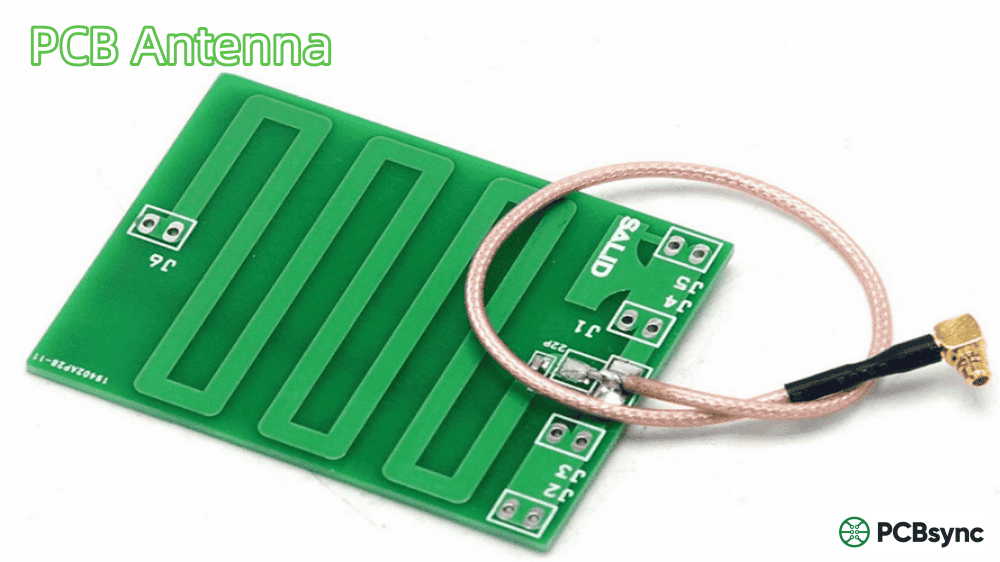
For cost-sensitive applications, a GPS antenna can be etched directly on the PCB. However, the low dielectric constant of FR4 (εr ≈ 4.4) results in larger dimensions.
PCB Trace Type
Size on FR4
Gain
Notes
Truncated corner patch
45×45 mm
3.0 dBi
RHCP capable
Microstrip patch
50×50 mm
2.5 dBi
Linear polarization
Meander line
30×10 mm
1.0 dBi
Requires matching
GPS Antenna PCB Ground Plane Requirements
The ground plane is arguably the most critical and most frequently misunderstood aspect of GPS antenna PCB design. For ceramic patch antennas, the ground plane acts as a reflector that shapes the radiation pattern and enables proper circular polarization.
Ground Plane Size Requirements by Antenna Type
Antenna Type
Minimum Ground
Recommended Ground
Optimal Ground
25×25 mm ceramic patch
50×50 mm
70×70 mm
100×100 mm
18×18 mm ceramic patch
40×40 mm
50×50 mm
70×70 mm
15×15 mm ceramic patch
35×35 mm
50×50 mm
60×60 mm
Chip antenna
Per datasheet
+20%
+50%
Helix
Not required
20×20 mm improves
—
Ground Plane Shape Considerations
GPS signals use Right-Hand Circular Polarization (RHCP). For optimal axial ratio and multipath rejection, a symmetric ground plane is essential.
Ground Shape
Axial Ratio
Multipath Rejection
Recommendation
Circular
Best
Best
Optimal for GPS
Square
Good
Good
Most practical
Rectangular
Fair
Fair
Avoid if possible
Irregular
Poor
Poor
Not recommended
Ground Plane Effect on Center Frequency
Changing ground plane size shifts the antenna’s resonant frequency. This is critical when integrating commercial ceramic patch antennas.
Ground Plane Size
Frequency Shift
Impact
30×30 mm
+15 to +25 MHz
Severe detuning
50×50 mm
+5 to +10 MHz
Moderate shift
70×70 mm
±2 MHz
Nominal tuning
100×100 mm
-2 to -5 MHz
Slight low shift
110×110 mm
-5 to -10 MHz
Retuning needed
Most ceramic patch antennas are factory-tuned for a 70×70 mm ground plane. Using a significantly different size requires antenna retuning or matching network adjustment.
Active vs Passive GPS Antenna Selection
Choosing between active and passive antennas affects your entire GPS antenna PCB architecture, including power supply design, noise budget, and achievable sensitivity.
Active vs Passive Comparison
Parameter
Active Antenna
Passive Antenna
Built-in LNA
Yes
No
Typical gain
25-35 dB
2-5 dBi
Power required
3.0-5.0 V, 5-20 mA
None
Cable length tolerance
Excellent
Poor
Cost
Higher
Lower
Integration complexity
Moderate
Higher
Best for
External/remote
On-board
When to Use Active Antennas
Scenario
Recommendation
Reason
External antenna with cable
Active
Compensates cable loss
Cable length > 10 cm
Active
Maintains sensitivity
High interference environment
Active
SAW filter + LNA
Vehicle roof mount
Active
Long cable runs
Indoor/urban use
Active
Weak signal recovery
When to Use Passive Antennas
Scenario
Recommendation
Reason
Antenna on same PCB as receiver
Passive
Short trace, external LNA
Battery-powered devices
Passive
Power savings
Very compact designs
Passive
No LNA space/power
Cost-sensitive
Passive
Lower BOM
LNA Requirements for Passive Antennas
When using passive antennas, the receiver’s front-end LNA becomes critical. The LNA should be placed as close to the antenna as possible.
LNA Parameter
Recommended Value
Impact
Noise figure
< 1.5 dB
Directly affects sensitivity
Gain
15-20 dB
Signal level to receiver
IP3
> 0 dBm
Interference rejection
Current
3-10 mA
Power budget
Understanding RHCP Circular Polarization
GPS satellites transmit Right-Hand Circular Polarization (RHCP) signals. Using an RHCP antenna provides a 3 dB advantage over linearly polarized antennas and helps reject multipath signals, which flip to Left-Hand Circular Polarization (LHCP) upon reflection.
For PCB trace antennas on FR4, the truncated corner patch is the most practical RHCP implementation. The corner truncation dimension is typically 5-10% of the patch side length.
GPS Antenna PCB Layout Guidelines
Proper PCB layout is essential for achieving specified GPS antenna PCB performance. GPS signals are extremely weak, and layout mistakes can easily reduce sensitivity by 10 dB or more.
Antenna Placement Rules
Rule
Specification
Why It Matters
PCB edge placement
Antenna at corner or edge
Clear sky view
Ground clearance under patch
No ground void under ceramic
Required for operation
Component clearance
15 mm from patch edge
Avoid detuning
Metal housing clearance
10 mm minimum
Pattern distortion
LCD/display distance
20 mm minimum
EMI source
Battery distance
15 mm minimum
Metal interference
Keep-Out Zone Requirements
Antenna Type
Top Side Keep-Out
Bottom Ground
Notes
Ceramic patch
5 mm all sides
Solid under patch
No traces in keep-out
Chip antenna
Per datasheet (typ. 5×8 mm)
Partial opening
Critical dimension
Helix
3 mm radius
Optional
Less sensitive
RF Trace Design for GPS
Parameter
2-Layer PCB
4-Layer PCB
Notes
Impedance
50 Ω
50 Ω
Must maintain
Trace width (1.6mm FR4)
2.9 mm
0.3-0.5 mm
Depends on stackup
Maximum length
< 20 mm
< 30 mm
Shorter is better
Via count
Avoid
Minimize
+10 Ω per via
Layer transitions
Avoid
1 maximum
Each via adds inductance
Ground Plane and Shielding
Design Element
Requirement
Purpose
Continuous ground
Under entire RF section
Return path
Ground stitching vias
Every 5 mm around antenna
Prevent slot radiation
RF/digital ground split
Single point connection
Isolate noise
Shielding can
Over receiver section
EMI protection
Matching Network Design for GPS Antennas
Most commercial GPS antennas are pre-tuned for 50 Ω impedance with a specific ground plane size. When your PCB differs, a matching network can compensate.
Pi-Network Matching Topology
Component
Position
Typical Range
Function
C1 (shunt)
Antenna side
1-10 pF
Impedance transformation
L1 (series)
Middle
5-15 nH
Resonance tuning
C2 (shunt)
Receiver side
1-10 pF
Fine tuning
SAW Filter Integration
For passive antenna designs, a Surface Acoustic Wave (SAW) filter between the LNA and receiver improves selectivity.
Parameter
GPS L1 SAW Filter
Notes
Center frequency
1575.42 MHz
±1 MHz
Bandwidth
2-4 MHz
Covers GPS L1
Insertion loss
1.5-2.5 dB
Affects sensitivity
Out-of-band rejection
> 30 dB
Removes interference
Common SAW Filter Part Numbers
Manufacturer
Part Number
Insertion Loss
Package
Murata
SAFFB1G57KA0F0A
1.8 dB
1.4×1.0 mm
TDK
DEA162450BT-1294C1
2.0 dB
1.6×0.8 mm
Qualcomm
B39162B9419U410
1.5 dB
1.1×0.9 mm
Common GPS Antenna PCB Design Mistakes
These are the most frequent problems I encounter when reviewing GPS designs.
Mistake 1: Undersized Ground Plane
Problem: Using a 40×40 mm ground plane with a 25×25 mm ceramic patch. Effect: Center frequency shifts up 15-25 MHz, gain drops 3-5 dB, poor axial ratio. Solution: Use minimum 70×70 mm ground plane or select antenna tuned for smaller ground.
Problem: 40 mm RF trace from antenna to receiver with 3 vias. Effect: +30 Ω impedance mismatch, significant signal loss. Solution: Keep traces under 20 mm, avoid vias, maintain 50 Ω impedance.
Mistake 4: Ignoring Noise Coupling
Problem: GPS antenna placed near switching power supply or high-speed digital signals. Effect: Elevated noise floor, reduced sensitivity, intermittent position fixes. Solution: Isolate GPS section, use shielding, separate ground planes with single-point connection.
Mistake 5: Wrong Antenna Orientation
Problem: Ceramic patch antenna mounted vertically or facing downward. Effect: No sky view, can’t receive satellite signals. Solution: Mount patch antenna horizontally with ceramic facing upward toward sky.
GPS Module Integration Guidelines
Most designs use integrated GPS modules from u-blox, Quectel, or similar vendors. These modules simplify RF design but still require proper antenna integration.
Popular GPS/GNSS Modules
Module
Manufacturer
Constellations
Sensitivity
Antenna Type
NEO-M8N
u-blox
GPS/GLONASS
-167 dBm
Active/Passive
NEO-M9N
u-blox
GPS/GLONASS/Galileo/BeiDou
-167 dBm
Active/Passive
L76K
Quectel
GPS/GLONASS/Galileo/BeiDou
-165 dBm
Active/Passive
L86
Quectel
GPS/GLONASS/Galileo
-165 dBm
Integrated patch
MAX-M8Q
u-blox
GPS/GLONASS
-167 dBm
Active/Passive
Module Antenna Interface Requirements
Parameter
Active Antenna
Passive Antenna
DC bias voltage
3.0-5.0 V
Not applicable
Current limit
15-50 mA typical
—
DC block capacitor
Not required
100 pF
ESD protection
Recommended
Recommended
Impedance
50 Ω
50 Ω
Useful Resources for GPS Antenna PCB Design
Application Notes and Design Guides
Resource
Source
Content
GNSS Antenna Application Note
u-blox (UBX-15030289)
Comprehensive antenna guide
Patch Antenna Application Note
Abracon
Ceramic patch integration
GNSS Antenna Integration Guide
Quectel
Module antenna matching
Ground Plane Design
Tallysman
Ground plane requirements
Design Tools
Tool
Purpose
Cost
Antenna Placement Tool
Antenova
Antenna selection
PCB Calculator
Saturn PCB
Trace impedance
AppCAD
Keysight
RF calculations
openEMS
EM simulation
Open source
GPS Antenna Manufacturers
Manufacturer
Antenna Types
Website
Taoglas
Patch, chip, helix, FPC
taoglas.com
Abracon
Ceramic patch, chip
abracon.com
Molex
Chip, helix, FPC
molex.com
Linx Technologies
Patch, chip
linxtechnologies.com
Antenova
Chip, FPC, SMD
antenova.com
Test Equipment
Equipment
Purpose
Budget Option
VNA
Return loss, impedance
NanoVNA (~$60)
Spectrum analyzer
Interference hunting
TinySA (~$60)
GPS simulator
Controlled testing
Outsource
Anechoic chamber
Pattern measurement
Outsource
Frequently Asked Questions
What size ground plane do I need for a GPS ceramic patch antenna?
For a standard 25×25 mm ceramic patch antenna, you need a minimum 70×70 mm ground plane for proper operation. This size provides the antenna’s specified gain, correct center frequency tuning, and good RHCP axial ratio. Using a smaller ground plane—even 50×50 mm—will shift the center frequency upward by 5-15 MHz and degrade gain by 2-3 dB. If your PCB is smaller than 70×70 mm, consider using a chip antenna or helix antenna, which have less stringent ground plane requirements. Alternatively, select a ceramic patch specifically tuned for your smaller ground plane size—some manufacturers offer variants tuned for 40×40 mm or 50×50 mm ground planes.
Should I use an active or passive GPS antenna for my design?
Use an active antenna when the antenna is remote from the receiver (cable length > 10 cm), when operating in challenging environments (indoor, urban canyon), or when the antenna is external to the device enclosure. The built-in LNA compensates for cable loss and boosts weak signals. Use a passive antenna when the antenna is mounted directly on the same PCB as the GPS receiver, in battery-powered applications where power consumption matters, or in cost-sensitive designs. With passive antennas, ensure the receiver’s LNA has good noise figure (< 1.5 dB) and place it as close to the antenna feed point as possible to minimize signal degradation before amplification.
Why does my GPS antenna work on the evaluation board but not on my custom PCB?
This is almost always a ground plane issue. Evaluation boards typically use 70×70 mm or larger ground planes that match the antenna’s tuning. Your custom PCB likely has a different ground plane size, irregular shape, or cutouts that shift the antenna’s resonant frequency. Other common causes include: RF trace impedance mismatch (not 50 Ω), vias in the RF trace adding inductance, missing ground stitching vias around the antenna, noise coupling from nearby switching regulators or digital circuits, or metal components (battery, LCD frame, shielding cans) too close to the antenna. Measure the antenna’s return loss with a VNA on your actual PCB—you’ll likely see the resonance has shifted from 1575 MHz.
Can I design a GPS PCB trace antenna instead of using a ceramic patch?
Yes, but with significant tradeoffs. A GPS patch antenna on standard FR4 (εr ≈ 4.4) requires approximately 45×45 mm for a truncated corner RHCP design at 1575 MHz—much larger than a 25×25 mm ceramic patch. You’ll also need to account for FR4’s relatively high loss tangent (0.02) which reduces efficiency compared to ceramic. The main advantages are lower BOM cost (no separate antenna component) and no placement tolerance issues. For best results, use a low-loss substrate material if available, simulate the design before fabrication, and plan for matching network tuning. This approach works for non-critical applications but won’t match the performance of a properly integrated ceramic patch antenna.
How do I troubleshoot a GPS design that gets time but no position fix?
Getting time without position indicates the receiver is seeing some satellites but not enough for a position solution (minimum 4 satellites required). First, verify antenna orientation—the ceramic patch must face upward toward the sky. Check for metal obstructions within 10 mm of the antenna. Measure the antenna’s return loss at 1575 MHz; it should be better than -10 dB (VSWR < 2:1). Verify the ground plane meets minimum size requirements. Check for noise coupling from switching power supplies, USB interfaces, or high-speed digital circuits—add shielding if needed. Use the receiver’s diagnostic output (C/N0 values for each satellite) to assess signal quality. If C/N0 values are below 30 dB-Hz, you have a sensitivity problem likely caused by antenna detuning, poor matching, or excessive noise.
Conclusion
Successful GPS antenna PCB design requires attention to several interconnected factors: proper antenna selection for your size and performance requirements, adequate ground plane dimensions (typically 70×70 mm minimum for ceramic patch antennas), careful PCB layout to maintain 50 Ω impedance and minimize noise coupling, and appropriate active versus passive antenna selection based on your system architecture.
The most common failure modes—undersized ground planes, RF trace issues, and noise coupling—are all preventable with proper planning. Start your design by defining the ground plane area before placing other components. Use the dimension tables in this guide to select appropriate antenna sizes, and follow the layout guidelines to maintain signal integrity from antenna to receiver.
For critical applications, invest in proper measurement during prototyping. A NanoVNA can quickly verify antenna return loss and identify tuning problems. Combined with the receiver’s diagnostic outputs (C/N0 values), you can systematically troubleshoot any GPS performance issues. The resources listed in this guide provide detailed application notes from antenna manufacturers and GPS module vendors—these are invaluable references for optimizing your specific design.
Inquire: Call 0086-755-23203480, or reach out via the form below/your sales contact to discuss our design, manufacturing, and assembly capabilities.
Quote: Email your PCB files to Sales@pcbsync.com (Preferred for large files) or submit online. We will contact you promptly. Please ensure your email is correct.
Notes: For PCB fabrication, we require PCB design file in Gerber RS-274X format (most preferred), *.PCB/DDB (Protel, inform your program version) format or *.BRD (Eagle) format. For PCB assembly, we require PCB design file in above mentioned format, drilling file and BOM. Click to download BOM template To avoid file missing, please include all files into one folder and compress it into .zip or .rar format.