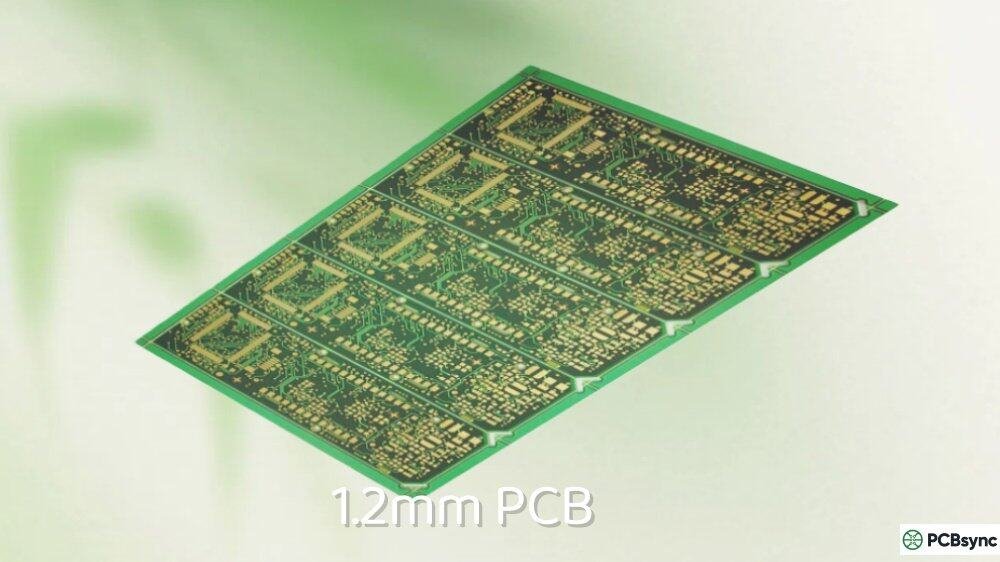
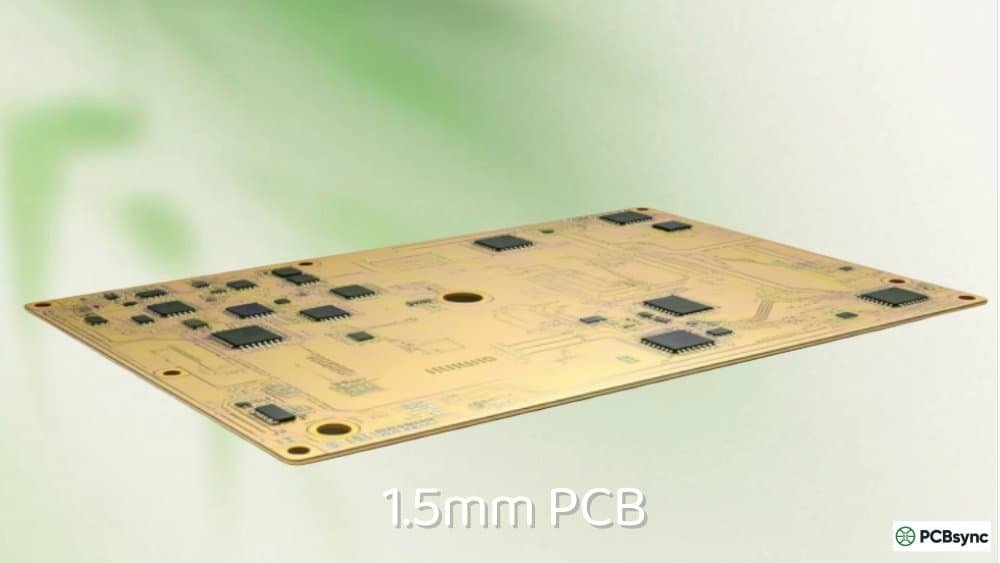
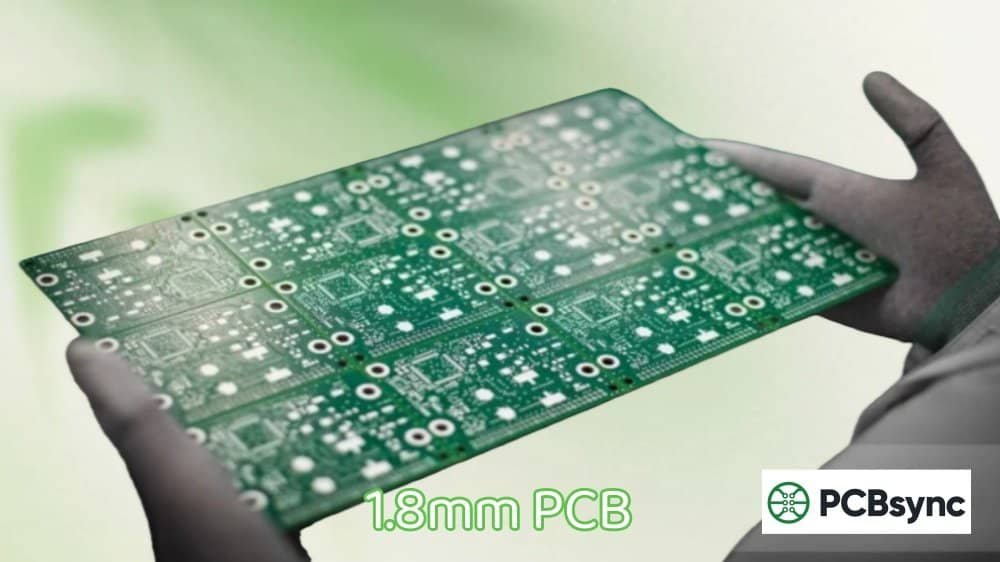
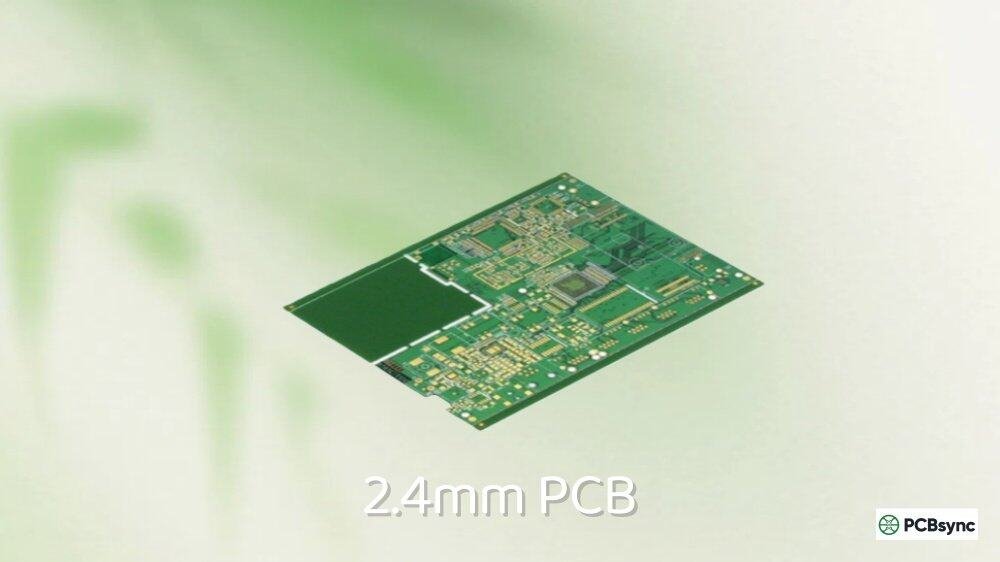
Inquire: Call 0086-755-23203480, or reach out via the form below/your sales contact to discuss our design, manufacturing, and assembly capabilities.
Quote: Email your PCB files to Sales@pcbsync.com (Preferred for large files) or submit online. We will contact you promptly. Please ensure your email is correct.
Notes: For PCB fabrication, we require PCB design file in Gerber RS-274X format (most preferred), *.PCB/DDB (Protel, inform your program version) format or *.BRD (Eagle) format. For PCB assembly, we require PCB design file in above mentioned format, drilling file and BOM. Click to download BOM template To avoid file missing, please include all files into one folder and compress it into .zip or .rar format.
If you’re specifying a 4.0mm PCB for your next project, you’ve officially stepped into backplane territory. After fifteen years of designing everything from consumer electronics to telecom infrastructure, I can tell you that 4.0mm marks a critical threshold in PCB manufacturing – it’s where standard fabrication ends and specialized processing begins.
A 4.0mm PCB (157 mil or 0.157″) represents the dividing line between conventional thick boards and true backplane construction. This thickness enables press-fit connector mounting, supports 20-32 layer counts, and provides the mechanical rigidity required for high-reliability applications. But it also demands specialized manufacturing techniques that not every fabricator can handle.
In this guide, I’ll walk you through everything you need to know about 4.0mm PCB design and manufacturing – from stack-up configurations to aspect ratio management, and from press-fit requirements to cost considerations.
Why 4.0mm PCB Thickness Matters in Modern Electronics
The 4.0mm PCB thickness isn’t arbitrary. Industry documentation from major manufacturers explicitly states that boards 4.0mm and above with typical crimp hole designs are classified as backplanes. This classification matters because it triggers different manufacturing processes, quality standards, and pricing structures.
Thickness Range
Classification
Typical Layer Count
Primary Applications
1.6mm – 2.4mm
Standard Thick
4-12 layers
Industrial, Automotive
2.4mm – 3.2mm
Heavy-Duty
10-20 layers
Servers, Power Electronics
3.2mm – 4.0mm
Ultra-Thick
16-24 layers
High-Layer Applications
4.0mm+
Backplane
20-40 layers
Telecom, Data Centers
When your design hits 4.0mm, you’re typically looking at applications where multiple daughter cards connect through press-fit connectors, high current distribution is required, or extreme mechanical stability is non-negotiable.
4.0mm PCB Applications: Where This Thickness Excels
Backplane and Midplane Systems
The most common application for 4.0mm PCB construction is backplane systems in telecommunications and data center equipment. These boards serve as the central interconnection point for multiple line cards or processor modules.
Application
Typical Board Size
Layer Count
Key Requirements
Telecom Backplanes
600mm × 400mm
24-32 layers
High-speed signal integrity
Server Midplanes
500mm × 350mm
20-28 layers
Power distribution
Industrial Controllers
400mm × 300mm
16-24 layers
Press-fit connectors
Test Equipment
450mm × 350mm
20-30 layers
Precision hole tolerances
High-Layer Count Designs
A 4.0mm PCB provides adequate dielectric thickness to support 24-32 layers while maintaining reasonable aspect ratios for through-hole vias. The math works out favorably – you can achieve proper impedance control with sufficient prepreg and core thicknesses between signal layers.
Press-Fit Connector Applications
Press-fit technology requires PCBs thick enough to provide adequate copper sleeve length for reliable gas-tight connections. A 4.0mm PCB offers optimal conditions for press-fit pins, with sufficient material depth to distribute insertion forces without risking delamination.
4.0mm PCB Stack-Up Design Considerations
Stack-up design for a 4.0mm PCB requires balancing multiple factors: signal integrity, power distribution, manufacturing feasibility, and cost. Here’s a practical 24-layer stack-up example I’ve used successfully in production.
24-Layer 4.0mm PCB Stack-Up Example
Layer
Function
Material
Thickness (mm)
L1
Signal (Top)
Copper 1oz
0.035
PP
Prepreg 2116
FR-4
0.127
L2
Ground
Copper 1oz
0.035
Core
Core
FR-4
0.100
L3
Signal
Copper 0.5oz
0.018
PP
Prepreg 1080×2
FR-4
0.152
L4
Power
Copper 1oz
0.035
Core
Core
FR-4
0.100
L5-L20
Signal/Power/Ground
Various
~2.8
Core
Core
FR-4
0.100
L21
Power
Copper 1oz
0.035
PP
Prepreg 1080×2
FR-4
0.152
L22
Signal
Copper 0.5oz
0.018
Core
Core
FR-4
0.100
L23
Ground
Copper 1oz
0.035
PP
Prepreg 2116
FR-4
0.127
L24
Signal (Bottom)
Copper 1oz
0.035
Total
~4.0mm
The key principle is symmetry – your stack-up must be balanced around the center to prevent warpage during lamination and thermal cycling.
Aspect Ratio Challenges in 4.0mm PCB Drilling
Aspect ratio is the relationship between hole depth and diameter, and it’s one of the most critical factors in 4.0mm PCB manufacturing. The standard formula is:
Aspect Ratio = Board Thickness ÷ Drill Diameter
For a 4.0mm board with a 0.4mm drill, you get a 10:1 aspect ratio – right at the edge of what most fabricators can reliably plate.
4.0mm PCB Via Size Guidelines
Via Type
Minimum Diameter
Aspect Ratio
Plating Difficulty
Standard PTH
0.40mm (16 mil)
10:1
Moderate
Recommended PTH
0.45mm (18 mil)
8.9:1
Standard
Conservative PTH
0.50mm (20 mil)
8:1
Easy
Component Holes
0.80mm+
5:1
Standard
My recommendation for 4.0mm PCB designs: use 0.45mm minimum via diameter to stay within the 10:1 aspect ratio limit while leaving margin for manufacturing variation.
Diamond Drilling for 4.0mm PCB
Standard mechanical drilling struggles with 4.0mm boards because drill bits can deflect over such depth, causing misalignment between entry and exit points. Many backplane manufacturers use diamond drilling (also called sequential drilling from both sides) to address this:
Drill controlled-depth holes from the top side
Flip the panel and register to alignment features
Drill through from the bottom side to meet the first holes
This technique requires precise positioning systems and adds cost, but it’s often necessary for achieving the tight hole tolerances required for press-fit connectors.
Press-Fit Connector Requirements for 4.0mm PCB
Press-fit connectors create gas-tight electrical connections without soldering, making them ideal for backplane applications where reliability is paramount. However, they impose specific requirements on the PCB.
The press-fit process creates a cold weld between the connector pin and the hole barrel copper. This requires extremely uniform plating – any thin spots can lead to high resistance connections or mechanical failure.
Press-Fit Zone Design Rules
When designing press-fit areas on a 4.0mm PCB, maintain these clearances:
Feature
Minimum Distance from Press-Fit Hole
Board Edge
4.0mm
SMD Components
4.0mm
Other PTH
2.5mm
Copper Features
Per connector specification
Manufacturing Considerations for 4.0mm PCB
Fabricator Selection
Not every PCB manufacturer can handle 4.0mm boards. When selecting a fabricator for your 4.0mm PCB project, verify these capabilities:
Capability
Requirement
Why It Matters
Maximum Thickness
4.0mm+
Obviously essential
Aspect Ratio
10:1 minimum
For reliable via plating
Press-Fit Experience
Documented
Hole tolerance control
Panel Size
Match your board dimensions
Large backplanes need large panels
Diamond Drilling
Available if needed
For tight tolerances
Lamination Challenges
Thick boards require extended lamination cycles to ensure complete resin cure throughout the stack. Incomplete cure leads to:
Delamination during thermal cycling
Poor via reliability
Inconsistent dielectric properties
Quality fabricators use controlled-temperature lamination profiles specifically developed for thick boards.
Plating Uniformity
Achieving uniform copper plating in high aspect ratio holes requires advanced plating processes. Look for fabricators using:
Pulse-reverse plating for better throwing power
Agitated plating baths
Precise process control systems
4.0mm PCB Cost Analysis
Moving to 4.0mm thickness significantly impacts project costs. Here’s what to expect compared to standard 1.6mm boards:
Cost Factor
Impact vs 1.6mm
Explanation
Material
+100-150%
More laminate, more copper
Processing
+80-120%
Extended cycle times
Drilling
+50-100%
Specialized tooling/techniques
Plating
+40-80%
Higher aspect ratio challenges
Testing
+30-50%
More complex verification
Total PCB Cost
+100-150%
Typical range
For a 24-layer, 4.0mm backplane, expect to pay 2-2.5× the cost of an equivalent 1.6mm board (if such a thing existed).
Lead Time Considerations
4.0mm PCB projects typically require extended lead times:
Phase
Standard PCB
4.0mm PCB
Engineering Review
1-2 days
3-5 days
Material Procurement
Stock
1-2 weeks (often)
Fabrication
5-10 days
15-25 days
Total
1-2 weeks
3-5 weeks
Plan accordingly – rushing a 4.0mm PCB project rarely ends well.
The substantial thickness of a 4.0mm PCB makes it an excellent candidate for heavy copper integration, typically 3-6oz on power layers.
Heavy Copper Stack-Up Considerations
Copper Weight
Thickness Added
Best Use Case
1oz (35μm)
0.035mm
Signal layers
2oz (70μm)
0.070mm
Standard power/ground
3oz (105μm)
0.105mm
High current distribution
4oz (140μm)
0.140mm
Power backplanes
6oz (210μm)
0.210mm
Extreme current needs
When combining heavy copper with 4.0mm thickness, work closely with your fabricator to develop a stack-up that maintains symmetry and accounts for the copper weight in total thickness calculations.
Design Tips for 4.0mm PCB Success
Based on my experience with dozens of 4.0mm PCB projects, here are the practices that consistently lead to success:
Pre-Design Checklist
Before starting your 4.0mm PCB layout:
Confirm fabricator capabilities – Get written confirmation they can handle your specifications
Request stack-up recommendation – Let the fabricator propose a proven stack-up
Verify material availability – Special thicknesses may have long lead times
Define via strategy – Plan blind/buried vias if needed to manage aspect ratios
Establish press-fit requirements – Get connector specifications early
Isola Material Selector – FR-4 and high-performance laminates
Rogers Corporation – High-frequency materials
Panasonic Megtron Series – Low-loss options for high-speed
Ventec Material Database – Comprehensive laminate data
Frequently Asked Questions About 4.0mm PCB
What is the maximum layer count for a 4.0mm PCB?
A 4.0mm PCB typically supports 24-32 layers depending on copper weights and dielectric requirements. With thin cores (0.1mm) and standard 1oz copper, you can achieve 28-32 layers. With heavy copper (2-3oz) on power layers, expect 20-26 layers maximum.
Can standard PCB fabricators produce 4.0mm boards?
Most standard quick-turn PCB shops cannot reliably produce 4.0mm boards. This thickness requires specialized equipment for lamination, drilling, and plating. Look for fabricators with explicit backplane manufacturing experience and verify their capabilities before committing to a design.
What via size should I use for a 4.0mm PCB?
For through-hole vias on a 4.0mm PCB, use 0.45mm (18 mil) minimum diameter to achieve a manageable 8.9:1 aspect ratio. If you need smaller vias, consider blind/buried via structures or sequential lamination to reduce effective drilling depth.
How does 4.0mm PCB compare to 3.2mm for backplane applications?
While 3.2mm (125 mil) is the traditional “maximum standard” thickness, 4.0mm provides additional benefits: better mechanical rigidity for large boards, improved press-fit reliability due to longer copper sleeve engagement, and capacity for higher layer counts. The trade-off is 20-30% higher cost and longer lead times.
What surface finish is best for 4.0mm PCB with press-fit connectors?
Immersion tin (ImSn) is the preferred surface finish for 4.0mm PCBs with press-fit connectors. Hot Air Solder Leveling (HASL) is not recommended for boards thicker than 2.4mm due to thermal stress concerns. ENIG can work but may cause higher insertion forces during press-fit assembly.
Thermal Management for 4.0mm PCB
Thick boards present unique thermal challenges. The increased material mass means slower heat transfer, and the higher layer counts typical of 4.0mm PCB designs often carry more power.
Thermal Design Strategies
Strategy
Implementation
Benefit
Thermal Vias
0.3mm vias under hot components
Direct heat path to inner planes
Heavy Copper Planes
2-3oz on power/ground layers
Improved lateral heat spreading
Copper Coin Inserts
Solid copper slugs in critical areas
Maximum heat extraction
Distributed Power
Multiple power layers
Reduced current density
For high-power applications, consider thermal simulation before finalizing your 4.0mm PCB stack-up. The thermal mass of a 4.0mm board means it will warm slowly but also retain heat longer than thinner alternatives.
Signal Integrity in 4.0mm PCB High-Speed Designs
Modern backplanes often carry signals at 10+ Gbps, making signal integrity critical. A 4.0mm PCB requires careful attention to via stub management.
Back-Drilling Requirements
Via stubs act as antenna structures that cause reflections and resonances at high frequencies. For a 4.0mm PCB carrying high-speed signals:
Signal Speed
Maximum Stub Length
Action Required
<3 Gbps
2.0mm acceptable
May not need back-drilling
3-10 Gbps
<1.0mm
Back-drilling recommended
>10 Gbps
<0.5mm
Back-drilling required
Back-drilling is a controlled-depth drilling process that removes unused via barrel sections. It adds cost but is essential for maintaining signal integrity in high-speed 4.0mm PCB applications.
Conclusion: Is a 4.0mm PCB Right for Your Project?
Specifying a 4.0mm PCB means entering the world of specialized backplane manufacturing. This thickness makes sense when you need:
Press-fit connector support with optimal reliability
High layer counts (20+ layers) with proper signal integrity
Extreme mechanical rigidity for large-format boards
A foundation for daughter card interconnection systems
Before committing to 4.0mm, evaluate whether 3.2mm or 3.6mm might meet your requirements at lower cost. But when your application truly demands backplane-class construction, 4.0mm provides the proven thickness that the industry has standardized around.
Work closely with your fabricator from the earliest design stages – the complexity of 4.0mm PCB manufacturing means that decisions made during schematic capture can significantly impact manufacturability and cost months later.
Inquire: Call 0086-755-23203480, or reach out via the form below/your sales contact to discuss our design, manufacturing, and assembly capabilities.
Quote: Email your PCB files to Sales@pcbsync.com (Preferred for large files) or submit online. We will contact you promptly. Please ensure your email is correct.
Notes: For PCB fabrication, we require PCB design file in Gerber RS-274X format (most preferred), *.PCB/DDB (Protel, inform your program version) format or *.BRD (Eagle) format. For PCB assembly, we require PCB design file in above mentioned format, drilling file and BOM. Click to download BOM template To avoid file missing, please include all files into one folder and compress it into .zip or .rar format.