Inquire: Call 0086-755-23203480, or reach out via the form below/your sales contact to discuss our design, manufacturing, and assembly capabilities.
Quote: Email your PCB files to Sales@pcbsync.com (Preferred for large files) or submit online. We will contact you promptly. Please ensure your email is correct.
Notes: For PCB fabrication, we require PCB design file in Gerber RS-274X format (most preferred), *.PCB/DDB (Protel, inform your program version) format or *.BRD (Eagle) format. For PCB assembly, we require PCB design file in above mentioned format, drilling file and BOM. Click to download BOM template To avoid file missing, please include all files into one folder and compress it into .zip or .rar format.
If you’ve been searching for information on 0.9mm PCB thickness, you’ve probably noticed something: it’s not listed in most manufacturers’ standard options. That’s not a mistake—0.9mm falls between the common 0.8mm and 1.0mm thicknesses, making it a custom specification that requires special ordering.
I’ve worked with engineers who needed precisely 0.9mm boards for enclosure fit requirements or legacy product compatibility. While it takes extra planning, getting a custom 0.9mm PCB manufactured is absolutely possible. This guide explains when non-standard thickness makes sense, how manufacturers create custom boards, and what you need to know before placing an order.
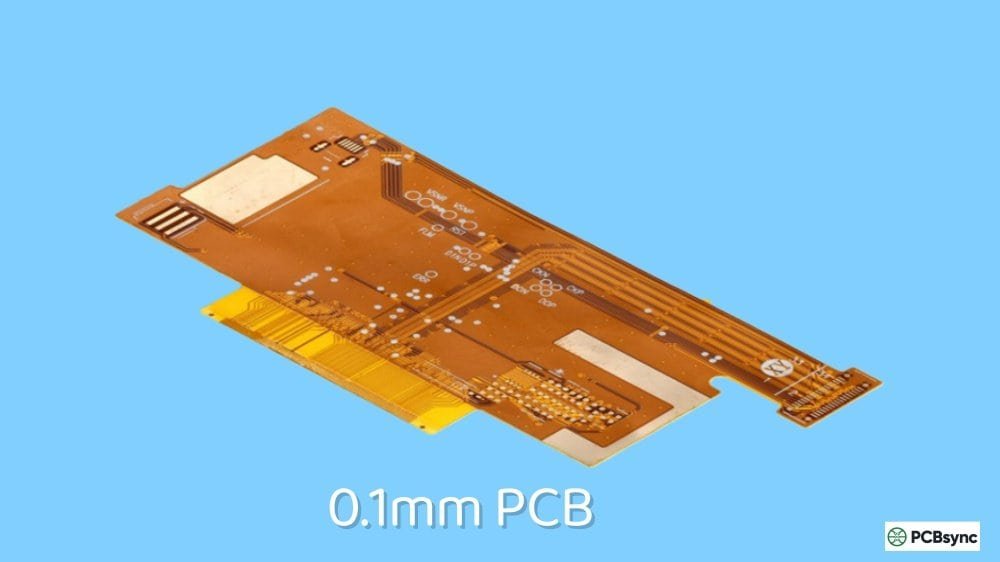
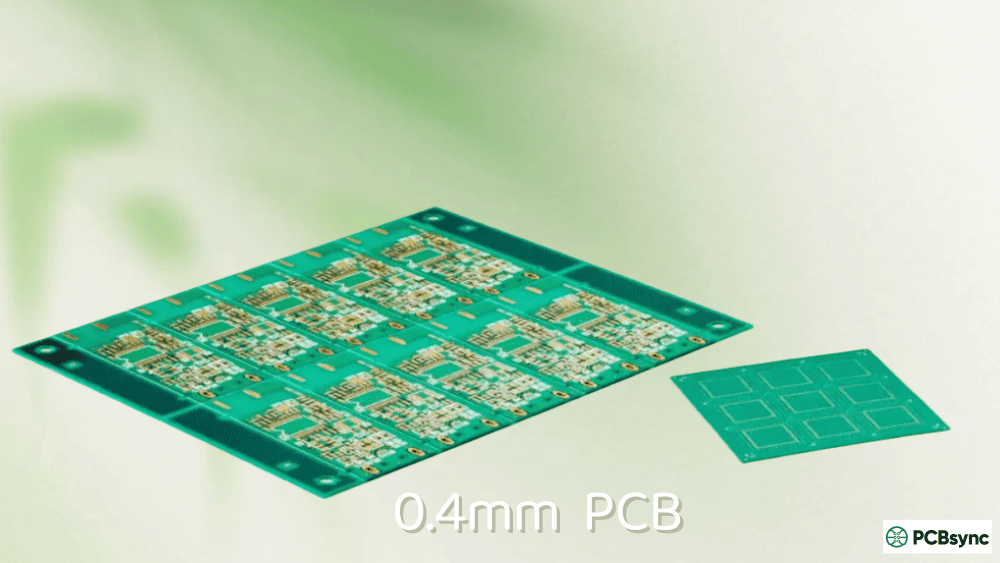
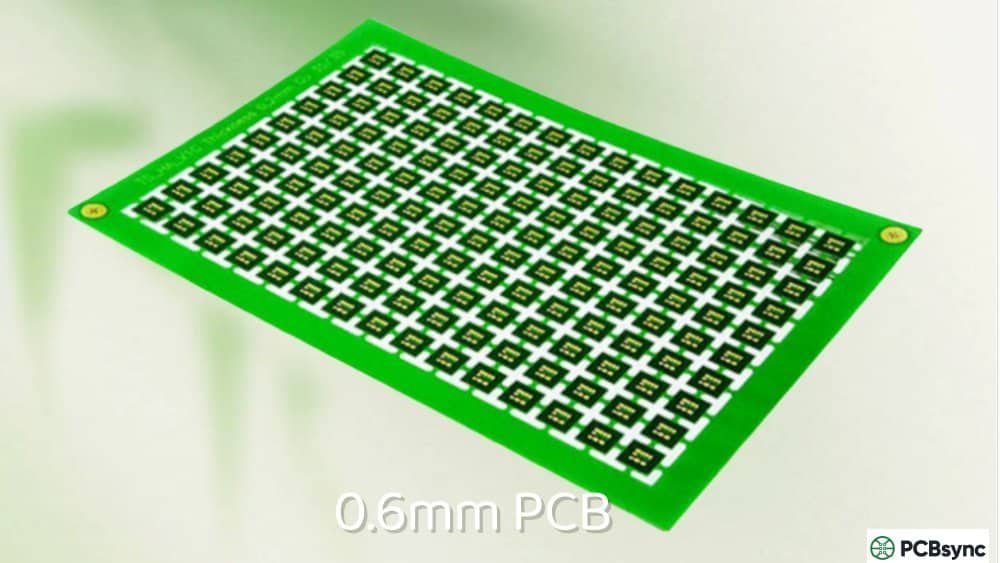
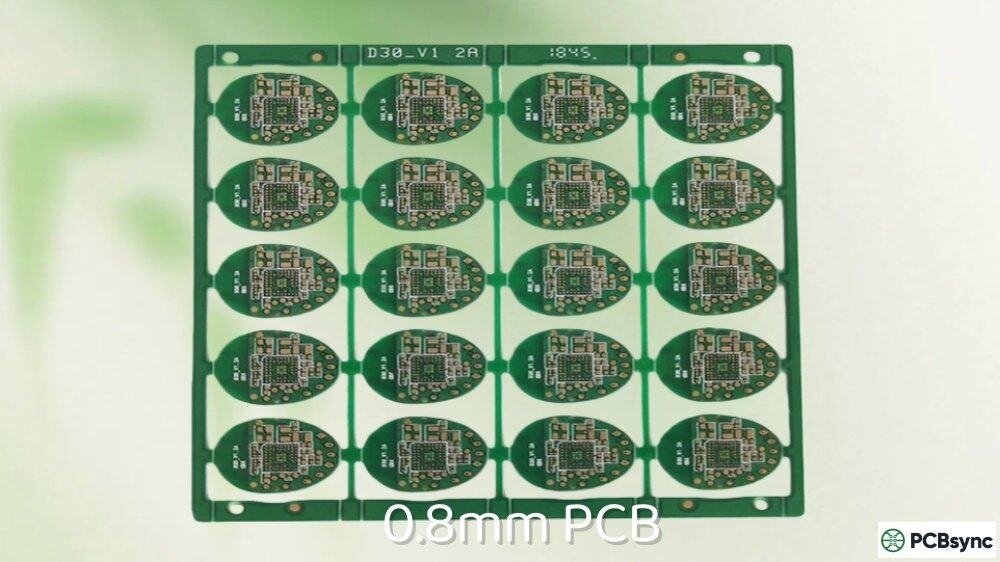
Let me be direct: 0.9mm PCB is not a standard thickness option at most fabrication houses. When you look at manufacturer catalogs, you’ll see offerings like 0.4mm, 0.6mm, 0.8mm, 1.0mm, 1.2mm, and 1.6mm—but rarely 0.9mm.
Why is this? Standard thicknesses evolved from commonly available core materials that manufacturers stock in bulk. These materials come in specific dimensions that allow efficient production. When you order a standard thickness, the fabricator likely has the exact core material ready to go.
Standard vs Non-Standard PCB Thickness Options
Here’s how 0.9mm compares to what manufacturers typically offer:
Thickness
Standard?
Availability
Typical Lead Time
0.6mm
✅ Yes
Stock material
Standard
0.8mm
✅ Yes
Stock material
Standard
0.9mm
❌ No
Custom stackup required
+2-5 days
1.0mm
✅ Yes
Stock material
Standard
1.2mm
✅ Yes
Stock material
Standard
The gap between 0.8mm and 1.0mm exists because most applications fit comfortably into one of these two standard options. However, certain situations genuinely require something in between.
When Does a 0.9mm PCB Make Sense?
You might be wondering: why not just use 0.8mm or 1.0mm instead? Fair question. Here are legitimate scenarios where specifying 0.9mm PCB thickness is justified:
Enclosure Compatibility Requirements
The most common reason for non-standard thickness is enclosure fit. If you’re designing a replacement board for an existing product—or your mechanical engineer has already finalized an enclosure with tight tolerances—you may need exactly 0.9mm to fit properly. A 0.1mm difference might seem trivial, but in card-edge connectors or slot-mounted boards, it matters.
Legacy Product Replacement
When replacing boards in older equipment, you sometimes encounter non-standard dimensions that were common decades ago. Rather than redesigning the entire mechanical assembly, ordering a custom thickness board is often more practical.
Impedance Control Requirements
In RF and high-speed digital designs, the dielectric thickness between signal layers and reference planes directly affects trace impedance. Sometimes the math works out to require a specific overall thickness that doesn’t match standard options. A 0.9mm PCB might be the result of impedance calculations that don’t align with 0.8mm or 1.0mm stackups.
Connector Specifications
Certain board-to-board connectors and card-edge interfaces specify exact PCB thickness tolerances. If your connector datasheet calls for 0.85mm-0.95mm board thickness, a 0.9mm target makes more sense than hoping your 1.0mm board comes in at the low end of tolerance.
How Manufacturers Create Custom 0.9mm PCB Thickness
Understanding how fabricators achieve non-standard thicknesses helps you communicate effectively when ordering. Here’s what happens behind the scenes:
The Building Blocks of PCB Thickness
Every PCB is constructed from layers of material stacked together:
To achieve a specific total thickness like 0.9mm, the manufacturer selects core and prepreg combinations that add up correctly. For a 2-layer 0.9mm PCB, they might use:
0.8mm core
0.035mm copper (1oz) × 2 sides = 0.070mm
Solder mask and finish ≈ 0.030mm
Total: ~0.9mm
For multilayer boards, the math gets more complex, combining multiple thin cores with prepreg layers.
Custom Stackup Process
When you order a non-standard thickness, the manufacturer’s engineering team:
Reviews your thickness requirement against available materials
Calculates a stackup using available cores and prepregs
Verifies the combination meets your other specs (impedance, layer count)
May request approval of the proposed stackup before production
This engineering review adds time to your order but ensures the board meets specifications.
0.9mm PCB vs Standard Alternatives: Which Should You Choose?
Before committing to custom thickness, honestly evaluate whether 0.8mm or 1.0mm could work. Here’s a practical comparison:
My recommendation: If your mechanical tolerance allows ±0.1mm, seriously consider using 0.8mm or 1.0mm instead. You’ll save money, reduce lead time, and have more supplier options. Reserve custom 0.9mm PCB for situations where the exact thickness is genuinely non-negotiable.
Volume production (1000+ pcs): 5-10% premium (materials can be stocked)
The percentage decreases with volume because material costs become a smaller portion of the total, and manufacturers can justify stocking your specific materials.
Design Tips for 0.9mm PCB Projects
If you’re proceeding with a 0.9mm design, keep these practical tips in mind:
Tip 1: Design for Tolerance
The ±10% thickness tolerance on a 0.9mm board means you could receive boards from 0.81mm to 0.99mm. Design your mechanical interfaces (connectors, enclosures) to accommodate this range.
Tip 2: Limit Layer Count
Achieving exactly 0.9mm becomes increasingly difficult as layer count increases. For 2-layer boards, it’s straightforward. For 4-layer boards, it’s manageable. Beyond 4 layers at 0.9mm, you’re severely constraining the stackup options.
Tip 3: Communicate Early with Your Manufacturer
Don’t wait until you’ve finalized your design to discuss custom thickness. Reach out early, share your requirements, and get their recommended stackup before you start layout.
Tip 4: Consider Prototyping at Standard Thickness First
If your design allows, prototype at 0.8mm or 1.0mm to validate electrical functionality. Then switch to 0.9mm for production runs once you’ve confirmed the design works. This saves money during the iteration phase.
Useful Resources for Custom PCB Thickness Orders
Here are tools and references for working with non-standard thicknesses:
Online Stackup Calculators
Saturn PCB Toolkit – Free Windows app for stackup and impedance calculations
JLCPCB Impedance Calculator – Shows available stackup options
Sierra Circuits Stackup Planner – Interactive multilayer planning
Manufacturer Custom Thickness Services
MacroFab – 0.2mm to 6.3mm in 0.01mm increments
PCBWay – Custom stackup service with engineering support
Advanced Circuits – Dedicated custom thickness program
Design Standards
IPC-2221B – Generic Standard on Printed Board Design
IPC-6012E – Qualification and Performance Specification for Rigid PCBs
Frequently Asked Questions About 0.9mm PCB
Can I order 0.9mm PCB from any manufacturer?
Not all manufacturers accept custom thickness orders. Budget fabricators focusing on quick-turn standard boards may not accommodate 0.9mm. Look for manufacturers that explicitly offer custom stackup services or thickness specification in fine increments. Expect to pay a premium compared to standard thickness options, and plan for additional lead time for engineering review and potential material procurement.
What is the thickness tolerance for 0.9mm PCB?
Industry-standard thickness tolerance is ±10% per IPC-6012 specifications. For a 0.9mm PCB, this means your boards could measure anywhere from 0.81mm to 0.99mm and still be within specification. If your application requires tighter tolerance, discuss this with your manufacturer—tighter specs are possible but add cost and may require 100% thickness verification.
How many layers can I have in a 0.9mm PCB?
For a 0.9mm total thickness, 2-layer and 4-layer configurations are practical. Six layers at 0.9mm is theoretically possible but severely limits your dielectric thickness options, potentially compromising impedance control and signal integrity. If you need more than 4 layers, consider whether 1.0mm or 1.2mm thickness could work for your application instead.
Is 0.9mm PCB more expensive than 0.8mm or 1.0mm?
Yes. Custom 0.9mm PCB typically costs 10-25% more than standard 0.8mm or 1.0mm boards. The premium comes from engineering review time, potential material procurement delays, and inability to panelize with other customer orders. The cost difference decreases with higher volumes but never fully disappears.
Why would I choose 0.9mm instead of a standard thickness?
The main reasons to specify 0.9mm are: exact enclosure fit requirements where 0.8mm is too thin and 1.0mm is too thick; legacy product replacement where the original used non-standard dimensions; specific connector requirements with tight thickness tolerances; or impedance calculations that don’t align with standard stackups. If none of these apply, using 0.8mm or 1.0mm will save time and money.
Conclusion
Ordering a 0.9mm PCB is absolutely possible, but it requires understanding that you’re requesting a custom specification. Unlike standard thicknesses that manufacturers produce routinely, 0.9mm falls in a gap that requires special engineering attention and potentially non-stock materials.
Before committing to this non-standard thickness, honestly evaluate whether 0.8mm or 1.0mm could meet your requirements. If the answer is no—due to enclosure constraints, connector specs, or legacy compatibility—then proceed with custom ordering, but budget extra time and money accordingly.
The key to success with custom thickness boards is communication. Discuss your requirements with your manufacturer early, request stackup confirmation before production, and design your mechanical interfaces to accommodate the standard ±10% thickness tolerance.
When you genuinely need exactly 0.9mm, it’s achievable. Just go in with realistic expectations about cost, lead time, and the ordering process.
Inquire: Call 0086-755-23203480, or reach out via the form below/your sales contact to discuss our design, manufacturing, and assembly capabilities.
Quote: Email your PCB files to Sales@pcbsync.com (Preferred for large files) or submit online. We will contact you promptly. Please ensure your email is correct.
Notes: For PCB fabrication, we require PCB design file in Gerber RS-274X format (most preferred), *.PCB/DDB (Protel, inform your program version) format or *.BRD (Eagle) format. For PCB assembly, we require PCB design file in above mentioned format, drilling file and BOM. Click to download BOM template To avoid file missing, please include all files into one folder and compress it into .zip or .rar format.