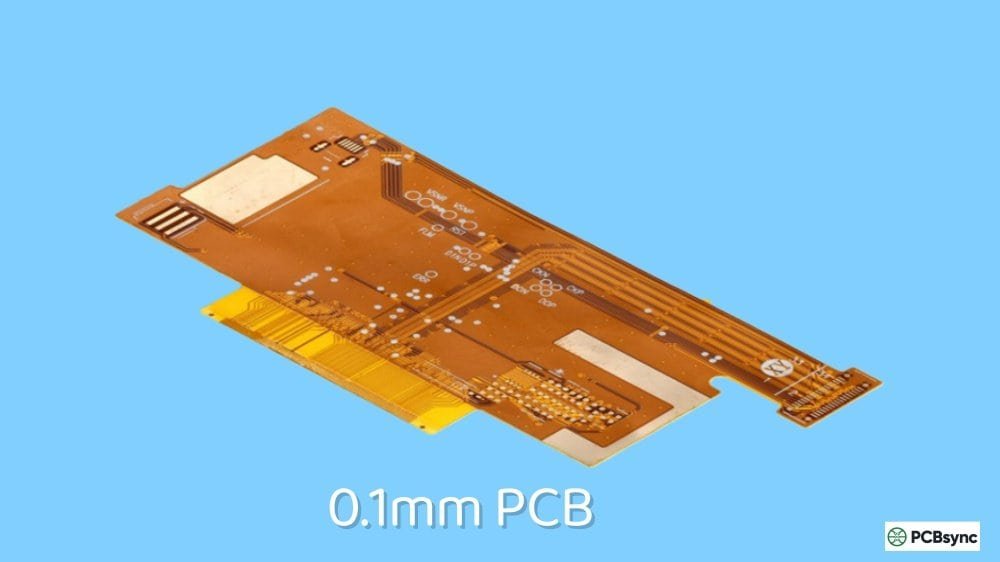
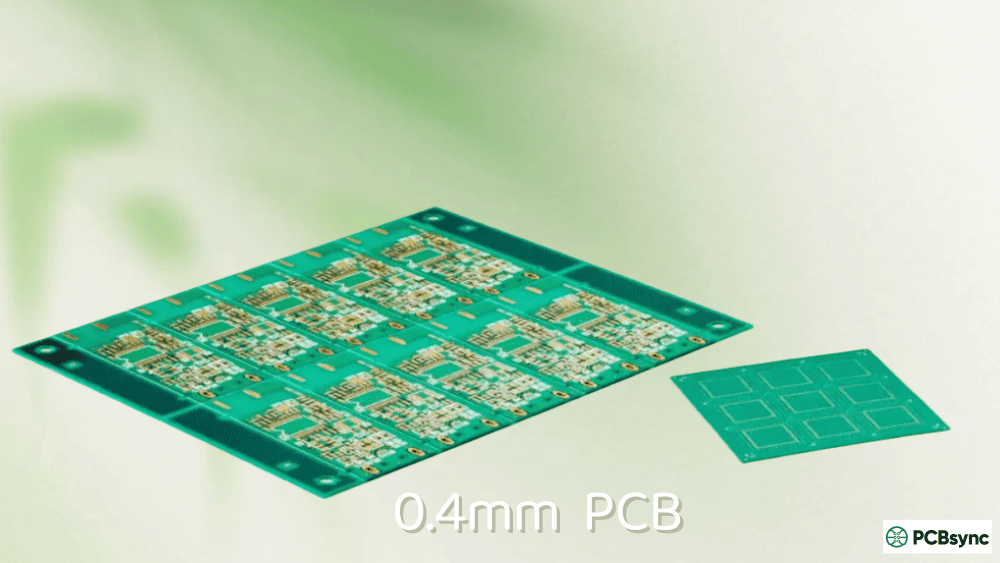
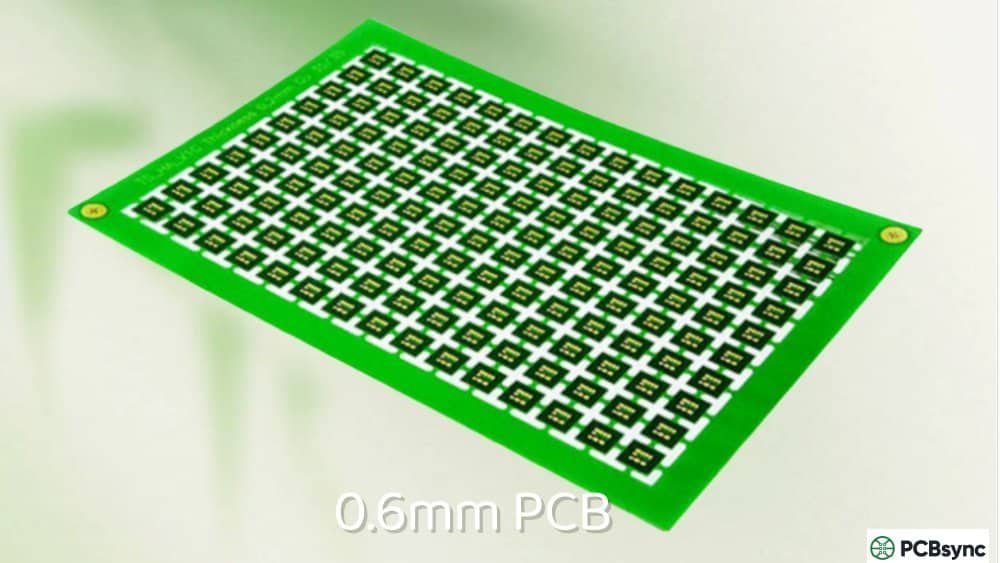
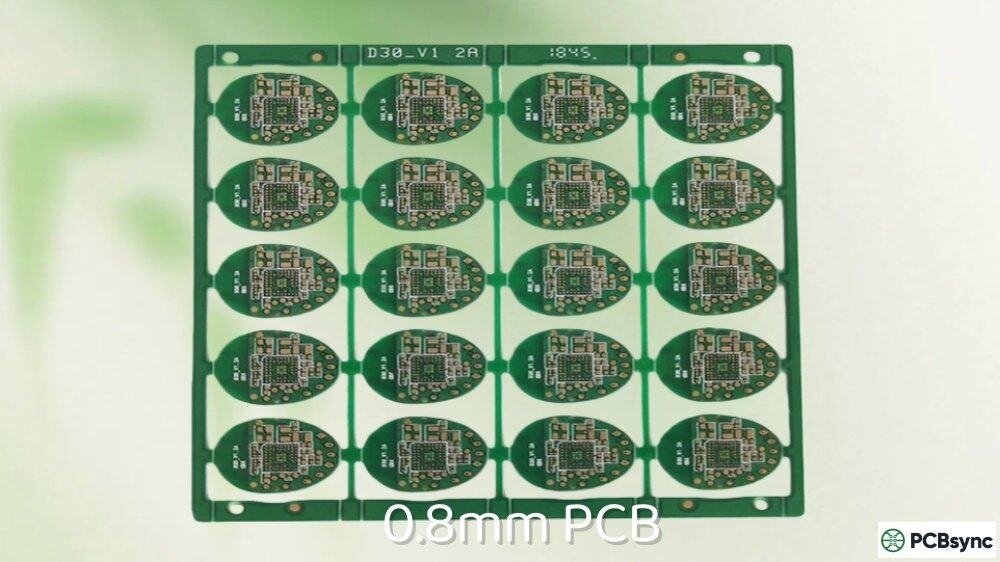
Inquire: Call 0086-755-23203480, or reach out via the form below/your sales contact to discuss our design, manufacturing, and assembly capabilities.
Quote: Email your PCB files to Sales@pcbsync.com (Preferred for large files) or submit online. We will contact you promptly. Please ensure your email is correct.
Notes: For PCB fabrication, we require PCB design file in Gerber RS-274X format (most preferred), *.PCB/DDB (Protel, inform your program version) format or *.BRD (Eagle) format. For PCB assembly, we require PCB design file in above mentioned format, drilling file and BOM. Click to download BOM template To avoid file missing, please include all files into one folder and compress it into .zip or .rar format.
When engineers ask me about the thinnest rigid PCB they can reliably manufacture, the answer is almost always 0.2mm PCB. This thickness represents the practical minimum that most fabricators can produce with standard processes while maintaining acceptable yields. Having designed dozens of products using 0.2mm boards—from SIM card modules to camera assemblies—I’ve learned that working at this thickness requires a different mindset than standard 1.6mm designs. The margins are tighter, the material choices matter more, and the manufacturing tolerances can make or break your project.
This guide covers everything engineers need to know about 0.2mm thin PCB design and manufacturing. Whether you’re specifying boards for smart cards, miniaturized sensors, or space-constrained consumer electronics, you’ll find practical guidance based on real production experience.
A 0.2mm PCB is a printed circuit board with a total finished thickness of approximately 0.2 millimeters (200 micrometers or about 0.008 inches). This makes it roughly 8 times thinner than the industry-standard 1.6mm thickness that most engineers work with daily.
The PCB industry categorizes board thickness into several tiers:
Classification
Thickness Range
Typical Use Cases
Standard PCB
1.0mm – 1.6mm
General electronics, industrial controls
Thin PCB
0.4mm – 0.8mm
Smartphones, tablets, laptops
Ultra-Thin PCB
0.2mm – 0.4mm
SIM cards, sensors, wearables
Extra-Thin PCB
0.1mm – 0.2mm
Specialty flex applications
At 0.2mm, you’re working at what most PCB manufacturers consider their minimum standard thickness—the thinnest board they can produce using conventional rigid PCB processes. Anything thinner typically requires specialized equipment or flexible circuit materials.
Why 0.2mm Matters in PCB Design
The 0.2mm thickness has become a critical specification point in the industry for several reasons. First, it represents the practical limit for double-sided rigid FR4 boards that can still be handled by standard assembly equipment. Second, it enables applications like smart cards and RFID tags that must fit within strict dimensional envelopes. Third, many surface finish processes—including the popular ENIG finish—work reliably at 0.2mm but struggle with thinner substrates.
0.2mm PCB Materials and Substrate Selection
Material selection at 0.2mm thickness directly impacts your board’s mechanical stability, electrical performance, and manufacturability. The wrong choice here can result in warped panels, failed assemblies, or boards that simply cannot be fabricated.
FR4 Material for 0.2mm PCB
FR4 remains the workhorse material for 0.2mm rigid PCBs. At this thickness, FR4 exhibits noticeable flexibility—you can actually bend it slightly without permanent deformation—while retaining more rigidity than true flexible circuits.
Property
FR4 at 0.2mm Specification
Dielectric Constant (Dk)
4.2 – 4.8 at 1MHz
Glass Transition Temp (Tg)
130°C – 180°C
Thermal Conductivity
0.25 – 0.35 W/m·K
Flexural Strength
Reduced vs. standard thickness
CTE (Z-axis)
45-65 ppm/°C
For 0.2mm FR4 boards that will experience any mechanical stress, always specify high-Tg material (170°C or higher). The improved dimensional stability during thermal cycling significantly reduces warpage and delamination risks.
Polyimide (PI) for 0.2mm PCB
When your application requires repeated bending or must survive harsh thermal environments, polyimide-based 0.2mm PCBs offer superior performance:
Property
Polyimide Specification
Dielectric Constant (Dk)
3.2 – 3.5
Temperature Range
-269°C to +400°C
Flex Endurance
100,000+ cycles
Moisture Absorption
1.3% – 2.8%
Chemical Resistance
Excellent
Polyimide costs roughly 2-3x more than FR4 but delivers genuine flexibility that FR4 cannot match. For wearables, medical devices, and applications requiring dynamic flexing, the additional cost is usually justified.
Comparing Material Options for 0.2mm PCB
Material
Cost
Flexibility
Thermal Performance
Best Applications
Standard FR4
$
Limited bend
Good
SIM cards, static thin boards
High-Tg FR4
$$
Limited bend
Better
Camera modules, sensors
Polyimide
$$$
Excellent
Excellent
Wearables, flex applications
BT Resin
$$$$
Limited
Best
High-frequency, IC substrates
Manufacturing Process for 0.2mm PCB
Manufacturing a 0.2mm PCB requires tighter process controls than standard boards, but it’s nowhere near as demanding as 0.1mm production. Most established fabricators handle 0.2mm routinely—though you’ll want to verify their specific capabilities before committing to production.
Lamination and Panel Handling
At 0.2mm thickness, panels become noticeably more flexible and susceptible to handling damage. Fabricators typically implement several process modifications:
Process Aspect
Standard PCB
0.2mm PCB
Panel stacking (drilling)
24-36 boards
12-18 boards
Handling method
Conveyor transport
Vacuum fixtures recommended
Storage humidity
<50% RH
<40% RH
Inter-process storage
Standard racks
Flat storage, climate controlled
The lamination process itself uses reduced pressure to prevent resin squeeze-out that can cause thickness variations. Most fabricators have dedicated thin-board press programs optimized for 0.2mm and similar thicknesses.
Drilling Capabilities for 0.2mm PCB
Mechanical drilling works well at 0.2mm thickness, though the aspect ratio limits differ from standard boards:
Drilling Parameter
0.2mm PCB Capability
Minimum PTH Diameter
0.2mm (8 mil)
Minimum Via Diameter
0.15mm (6 mil)
Maximum Aspect Ratio
1:1
Drill Tolerance
±0.05mm
Registration Accuracy
±0.075mm
For smaller vias (below 0.15mm), laser drilling becomes necessary. Many designs at 0.2mm thickness use laser-drilled microvias in combination with mechanical through-holes to achieve the required routing density.
One practical consideration: drill wander affects thin substrates more than thick ones. If your design has fine-pitch components like 0.4mm BGA packages, discuss registration requirements with your fabricator early in the design process.
Surface Finish Options for 0.2mm PCB
Surface finish selection becomes constrained at 0.2mm thickness. The thermal and mechanical stresses of some processes can cause unacceptable warpage:
ENIG (Electroless Nickel Immersion Gold) has become the de facto standard for 0.2mm PCB because it adds minimal thickness (3-6μm nickel, 0.05-0.1μm gold), provides excellent solderability, and works with fine-pitch components. The flat surface profile also improves paste printing consistency during assembly.
Quality Testing Considerations
Testing 0.2mm boards requires adapted fixturing. Flying probe testers work well for prototypes, but the probes can flex thin boards enough to cause false failures if the support fixtures aren’t designed properly. For production volumes, dedicated test fixtures with vacuum hold-down provide more reliable results.
Designing for 0.2mm thickness follows familiar PCB principles with some specific constraints. These guidelines reflect what’s manufacturable at reasonable yields with most quality fabricators.
Pushing to 3-mil design rules increases manufacturing cost and reduces yield. Unless component density absolutely requires it, stay at 4-mil or wider.
Layer Count Options for 0.2mm PCB
At 0.2mm total thickness, your layer count options become limited:
Layer Count
Achievable at 0.2mm?
Typical Stack-up
Single-sided
Yes
0.2mm core
Double-sided
Yes
0.15mm core + copper
4-layer
Difficult
Requires special materials
6+ layer
Not practical
Need thicker board
Most 0.2mm designs are single-sided or double-sided. If you need more routing layers, you’ll likely need to increase thickness to at least 0.3mm for a reliable 4-layer board.
Copper Weight Selection
Thin substrates limit your copper weight options to prevent stress-induced warping:
Copper Weight
Thickness
Suitability for 0.2mm
0.5 oz (17μm)
Recommended
Best balance of performance and flatness
1 oz (35μm)
Acceptable
May require balanced copper distribution
2 oz (70μm)
Not recommended
High warpage risk
For designs requiring higher current capacity, consider using wider traces with 0.5oz copper rather than heavy copper on thin substrates.
Impedance Control on 0.2mm PCB
Controlled impedance is achievable but constrained at 0.2mm thickness. For a 50-ohm microstrip on 0.2mm FR4 with 0.5oz copper, trace widths will be narrower than on thicker substrates:
Target Impedance
Approximate Trace Width (0.2mm FR4)
50Ω single-ended
0.35mm
75Ω single-ended
0.15mm
90Ω differential
0.1mm trace, 0.15mm gap
100Ω differential
0.1mm trace, 0.2mm gap
Always work with your fabricator’s impedance calculator and stack-up tools. The thin dielectric layer means small variations in material properties significantly affect impedance.
0.2mm PCB Applications
The 0.2mm thickness has found its niche in applications where space constraints drive design decisions but the extreme measures required for 0.1mm boards aren’t justified.
SIM Cards and Smart Cards
This is perhaps the highest-volume application for 0.2mm PCB technology. The ISO 7816 standard for smart cards specifies a maximum module thickness that practically requires boards in the 0.2mm range:
Smart Card Requirement
Typical Specification
Module Thickness
0.76mm ± 0.08mm total
PCB Thickness
0.2mm – 0.25mm
Typical Layers
Single or double-sided
Surface Finish
ENIG or gold plating
SIM cards demand exceptional dimensional stability since the boards undergo mechanical stress during card insertion and removal cycles.
Camera Modules and Sensors
Smartphone camera modules use 0.2mm PCBs to minimize the stack height while providing sufficient rigidity to maintain optical alignment:
Fitness bands, smartwatches, and health monitors benefit from 0.2mm boards where rigid-flex isn’t required:
Wearable Application
Why 0.2mm Works
Fitness trackers
Fits band thickness envelope
Smartwatch internals
Reduces overall device thickness
Medical patches
Conforms slightly to body
Hearing aids
Space-constrained enclosures
IoT Sensors and Edge Devices
Small-form-factor IoT devices often specify 0.2mm PCBs to fit within compact enclosures while maintaining cost advantages over flexible circuits:
IoT Application
Board Size Range
Key Requirements
Environmental sensors
15mm × 15mm
Low power, wireless connectivity
Asset trackers
25mm × 35mm
GPS/GNSS antenna integration
Smart home sensors
20mm × 30mm
Battery operation, compact form
Industrial monitors
30mm × 40mm
Ruggedized design, long life
The emergence of 5G and edge computing has increased demand for 0.2mm PCBs in IoT applications. These thin boards enable tighter integration of antennas, sensors, and processing elements while keeping overall device profiles slim enough for unobtrusive deployment.
Automotive Electronics
Modern vehicles contain numerous sensors and modules where 0.2mm PCBs provide space and weight advantages:
Automotive Application
Why Thin PCBs Matter
Tire pressure sensors
Must fit inside valve stem
Key fob remotes
Pocket-friendly thickness
Dashboard displays
Minimize bezel depth
Parking sensors
Compact enclosure requirements
0.2mm PCB vs Other Thicknesses
Understanding when to specify 0.2mm versus alternatives helps optimize your design for cost and performance.
Thickness
Pros
Cons
Best For
0.1mm
Thinnest rigid option
Fragile, limited surface finishes
Extreme miniaturization
0.2mm
Good balance, most finishes work
Some handling challenges
SIM cards, sensors, cameras
0.4mm
Easier handling, multi-layer capable
Twice as thick
Consumer electronics
0.8mm
Very robust, all processes work
Space penalty
Cost-sensitive thin apps
1.6mm
Industry standard, lowest cost
Too thick for thin devices
General electronics
The sweet spot for 0.2mm PCB is applications where you need a thin rigid board with good surface finish options and don’t require more than two layers.
Challenges and Solutions for 0.2mm PCB
Working with 0.2mm boards introduces specific challenges that require attention during design, fabrication, and assembly.
Mechanical Handling Issues
Challenge
Cause
Solution
Panel warpage
Uneven copper distribution
Balance copper on both sides
Edge damage
Rough depanelization
Use routing instead of V-score
Flex during assembly
Low stiffness
Carrier boards for SMT
Cracking
Stress concentration
Generous bend radii, no sharp corners
Thermal Management Limitations
The thin cross-section limits heat spreading capability:
Thermal Challenge
Mitigation Strategy
Hot spots under ICs
Thermal vias to bottom layer
Limited copper mass
External heat sinks or thermal interface materials
Rapid temperature rise
Derate power dissipation by 20-30% vs. thick boards
Assembly Considerations
Assembly Step
Challenge
Adaptation
Paste printing
Board deflection
Vacuum hold-down stencil printers
Pick and place
Flex during placement
Dedicated thin-board pallets
Reflow
Fast heating, warpage risk
Reduced ramp rate, edge support
Hand soldering
Local overheating
Lower iron temperature, faster work
Work with your assembly partner early to ensure they have appropriate fixtures for 0.2mm boards. Many contract manufacturers charge a premium (typically 15-25%) for thin board assembly to cover additional handling time.
How to Order 0.2mm PCB: Specification Checklist
When requesting quotes for 0.2mm boards, include these specifications explicitly:
What is the minimum PCB thickness most manufacturers can produce?
Most PCB manufacturers list 0.2mm as their minimum standard thickness for rigid boards. Some specialized fabricators can go thinner (0.1mm or even 0.075mm), but this typically requires flexible circuit materials or specialized thin-board processes. At 0.2mm, you can use standard FR4 materials with ENIG surface finish and expect reasonable manufacturing yields.
Can I get a 4-layer PCB at 0.2mm thickness?
Achieving a true 4-layer board at 0.2mm total thickness is extremely difficult with standard materials. The minimum practical thickness for a 4-layer board is typically 0.3mm-0.4mm. If your design requires 0.2mm thickness and multiple routing layers, consider using high-density interconnect (HDI) techniques with laser-drilled microvias on a 2-layer core, or redesign with 0.3mm+ thickness.
How does 0.2mm PCB cost compare to standard 1.6mm?
Expect 0.2mm boards to cost 20-40% more than equivalent 1.6mm designs for the same layer count and specifications. The premium covers material handling requirements, reduced panel stacking during drilling, and lower PCB manufacturing yields. For small prototypes (under 10 pieces), the price difference may be even higher due to setup costs.
What surface finishes work with 0.2mm PCB?
ENIG (Electroless Nickel Immersion Gold) and OSP (Organic Solderability Preservative) work well at 0.2mm thickness. Immersion silver and immersion tin are also typically available. Lead-free HASL should be avoided as the thermal shock during the hot air leveling process frequently causes warping in boards this thin. Leaded HASL has the same issue.
Should I use 0.2mm rigid PCB or flexible PCB for my thin design?
Choose 0.2mm rigid FR4 when your board will be static (no repeated bending), cost is a concern, and you need standard surface finishes. Choose flexible polyimide when your design requires dynamic flexing, must survive extreme temperatures, or needs to conform to curved surfaces. Rigid 0.2mm boards cost roughly 50% less than equivalent flex circuits but cannot handle repeated bending without eventual failure.
Conclusion
The 0.2mm PCB thickness occupies an important position in the PCB landscape—thin enough to enable compact designs in smart cards, sensors, and wearables, yet thick enough to manufacture reliably with standard rigid board processes. Unlike the more challenging 0.1mm thickness, 0.2mm boards work with most surface finishes, can support double-sided designs, and are produced routinely by quality fabricators worldwide.
Success with 0.2mm designs comes from understanding the constraints: limited layer count options, restricted copper weights, modified assembly processes, and the need for balanced copper distribution. Specify high-Tg FR4 for thermal stability, choose ENIG for reliable solderability, and work closely with both your fabricator and assembly partner to ensure they have appropriate thin-board handling capabilities.
For many space-constrained applications, 0.2mm PCB provides the optimal balance between miniaturization goals and manufacturing practicality.
Inquire: Call 0086-755-23203480, or reach out via the form below/your sales contact to discuss our design, manufacturing, and assembly capabilities.
Quote: Email your PCB files to Sales@pcbsync.com (Preferred for large files) or submit online. We will contact you promptly. Please ensure your email is correct.
Notes: For PCB fabrication, we require PCB design file in Gerber RS-274X format (most preferred), *.PCB/DDB (Protel, inform your program version) format or *.BRD (Eagle) format. For PCB assembly, we require PCB design file in above mentioned format, drilling file and BOM. Click to download BOM template To avoid file missing, please include all files into one folder and compress it into .zip or .rar format.