Inquire: Call 0086-755-23203480, or reach out via the form below/your sales contact to discuss our design, manufacturing, and assembly capabilities.
Quote: Email your PCB files to Sales@pcbsync.com (Preferred for large files) or submit online. We will contact you promptly. Please ensure your email is correct.
Notes: For PCB fabrication, we require PCB design file in Gerber RS-274X format (most preferred), *.PCB/DDB (Protel, inform your program version) format or *.BRD (Eagle) format. For PCB assembly, we require PCB design file in above mentioned format, drilling file and BOM. Click to download BOM template To avoid file missing, please include all files into one folder and compress it into .zip or .rar format.
If you’ve worked with high-frequency PCB designs long enough, you know that material selection can make or break your project. I’ve spent years evaluating various RF substrates, and RT/Duroid 6202 PCB material consistently stands out for applications demanding tight dielectric control and exceptional dimensional stability. This ceramic-filled PTFE composite from Rogers Corporation has become a go-to choice for engineers designing complex microwave structures, phased array antennas, and multilayer RF circuits.
In this comprehensive guide, I’ll walk you through everything you need to know about RT/Duroid 6202 PCB laminate—from its core material properties and electrical specifications to practical fabrication tips and real-world applications. Whether you’re evaluating this material for a new radar system or comparing it against alternatives like RT/Duroid 5880 or RO4003C, you’ll find the technical details and design insights you need right here.
RT/Duroid 6202 is a ceramic-filled, woven glass-reinforced polytetrafluoroethylene (PTFE) composite developed by Rogers Corporation specifically for high-frequency printed circuit board applications. It belongs to the RT/Duroid 6000 product family, which has established itself as a benchmark for high-reliability microwave laminates over several decades.
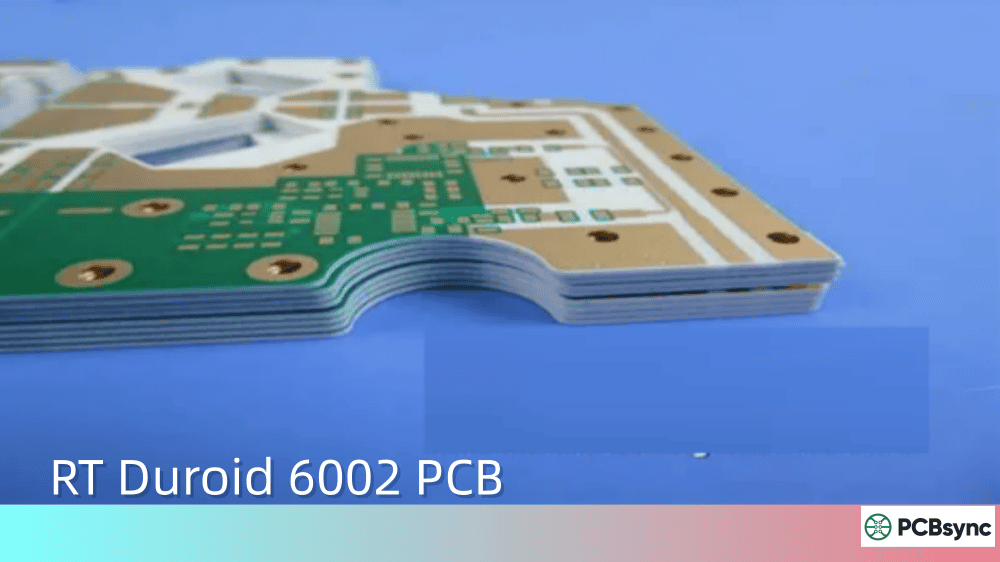
What sets the RT/Duroid 6202 PCB material apart from its sibling RT/Duroid 6002 is the addition of limited woven glass reinforcement. This structural enhancement significantly improves dimensional stability—achieving movement as low as 0.05 to 0.07 mils/inch—while maintaining the excellent electrical properties that PTFE-based materials are known for. For those of us working on complex multilayer builds or tight-tolerance antenna designs, this stability is invaluable.
RT/Duroid 6202 Material Composition
Understanding what goes into this laminate helps explain its performance characteristics. The RT/Duroid 6202 PCB substrate combines several carefully engineered components:
PTFE Fluoropolymer Resin: Provides the foundation for excellent electrical performance and stability across a wide frequency range and temperature envelope. PTFE also delivers superior chemical resistance.
Ceramic Filler: Enhances dielectric properties and thermal conductivity beyond what unfilled PTFE can achieve alone.
E-Glass Microfiber Reinforcement: The woven glass fabric construction offers dimensional stability and mechanical rigidity that pure PTFE substrates lack.
Fluoropolymer Impregnation: The PTFE resin fully impregnates the glass layers, creating a robust structure with consistent electrical integrity.
RT/Duroid 6202 PCB Properties and Specifications
When selecting materials for RF and microwave circuits, specifications matter. Here’s a detailed breakdown of what the RT/Duroid 6202 PCB laminate offers.
Electrical Properties of RT/Duroid 6202
The dielectric characteristics are what make RT/Duroid 6202 suitable for microwave frequencies up to 40 GHz and beyond:
The low dissipation factor of 0.0012 to 0.0015 at 10 GHz means minimal signal loss—critical for applications where every fraction of a dB counts. I’ve used this material in satellite communication systems where maintaining signal integrity across temperature extremes was essential, and the stable Dk performance from -55°C to +150°C proved invaluable.
Mechanical and Thermal Properties
Beyond electrical performance, the mechanical characteristics of RT/Duroid 6202 PCB material make it suitable for demanding manufacturing processes and operating environments:
Property
Value
Dimensional Stability
0.05 to 0.07 mils/inch
Tensile Modulus
2070 MPa (X-axis)
CTE (X/Y Plane)
16 ppm/°C (matched to copper)
CTE (Z-axis)
24 ppm/°C
Thermal Conductivity
0.60 – 0.70 W/m·K
Moisture Absorption
0.02% (very low)
Operating Temperature
-55°C to +150°C
The CTE matching with copper (16 ppm/°C in the X/Y plane) is particularly important. When building multilayer RT/Duroid 6202 PCB stackups, this compatibility minimizes bow and twist during thermal cycling—a common headache with mismatched materials.
Available Thicknesses and Configurations
Rogers offers RT/Duroid 6202 in various standard configurations to accommodate different design requirements:
Parameter
Standard Options
Notes
Dielectric Thickness
0.005″ to 0.060″ (0.127 to 1.524 mm)
Custom thicknesses available
Copper Cladding
½ oz to 2 oz/ft² (18 to 70 µm)
ED and rolled copper options
Panel Sizes
12″ × 18″, 18″ × 24″
305×457mm, 457×610mm
Thickness Tolerance
±0.0005″ to ±0.0010″
Depends on nominal thickness
Key Features and Benefits of RT/Duroid 6202 PCB
After working with numerous high-frequency laminates, I can highlight several features that make the RT/Duroid 6202 PCB material particularly effective for demanding applications:
Superior Dimensional Stability: The woven glass reinforcement achieves 0.05 to 0.07 mils/inch stability, often eliminating the need for double etching to achieve tight positional tolerances. This translates directly to higher yields and reduced manufacturing costs.
Low Etch Shrinkage: Unlike some PTFE materials that exhibit significant movement during etching, RT/Duroid 6202 maintains tight feature registration throughout the fabrication process.
Extremely Low Moisture Absorption: At just 0.02%, this material maintains stable electrical properties even in humid environments—essential for outdoor installations and military applications.
Low Outgassing: Ideal for space and vacuum applications where volatile compounds can contaminate sensitive optics or electronics.
CTE Matched to Copper: The in-plane expansion coefficient alignment with copper ensures reliable surface mount assembly and reduced solder joint stress.
RoHS Compliant: Meets environmental regulations for lead-free manufacturing processes.
RT/Duroid 6202 PCB Applications
The combination of low loss, tight dielectric control, and excellent dimensional stability makes RT/Duroid 6202 PCB material suitable for a wide range of high-frequency applications. Based on industry implementations and my own project experience, here are the primary application areas:
Aerospace and Defense Applications
Phased Array Antennas: The tight Dk tolerance enables precise beam steering and pattern control
Ground-Based and Airborne Radar Systems: Low loss supports detection range and sensitivity requirements
Electronic Warfare (EW) Systems: Stable performance across frequency and temperature
Commercial Aircraft Collision Avoidance Systems (TCAS): High reliability for safety-critical applications
Satellite and Space Communications
Satellite Communication Transponders: Low outgassing meets vacuum environment requirements
GPS Antenna Systems: Consistent performance for position accuracy
Deep Space Communication Links: Temperature stability across extreme thermal cycles
Commercial RF and Microwave Applications
5G Base Station Antennas: Supporting millimeter-wave frequencies
Getting the most out of RT/Duroid 6202 requires attention to design and fabrication best practices. Here are the key considerations I’ve learned through years of working with this material:
Impedance and Transmission Line Design
Use Design Dk Values: Rogers recommends using the design Dk (often slightly higher than process Dk) for accurate impedance calculations. For RT/Duroid 6202, this is typically around 2.94 for thinner substrates.
Account for Copper Roughness: Surface roughness affects effective Dk at higher frequencies. Use appropriate roughness correction models in your EM simulations.
Verify with Prototypes: Always build verification boards before committing to production volumes. Minor Dk variations between lots can affect precision circuits.
Multilayer PCB Considerations
RT/Duroid 6202 PCB material is compatible with various bonding systems for multilayer construction. For more information about multilayer Rogers builds, see our detailed Rogers PCB guide.
Thermoplastic Bonding Films: FEP (melting point 260°C) and Rogers 3001 film are commonly used. FEP offers better thermal stability for subsequent assembly processes.
Thermoset Prepregs: FR-4 prepreg or Gore Speedboard C can be used where electrical properties are less critical in the bonding layer.
Hybrid Constructions: RT/Duroid 6202 can be combined with FR-4 layers, but be aware of Dk mismatches that may affect impedance in transition zones.
Fabrication Best Practices
Drilling: Use carbide drills with 130° included lip angle. Maximum stack height should be less than 0.240″ for optimal hole quality. New drills are strongly recommended over re-pointed tools.
Surface Preparation: PTFE surfaces require sodium or plasma treatment before plating to ensure proper adhesion. Skipping this step will likely result in plating voids or delamination.
Etching: RT/Duroid 6202 is compatible with all standard copper etching systems including ferric chloride, cupric chloride, and ammonium persulfate.
Final Finishes: HASL, ENIG, immersion tin, immersion silver, and OSP are all suitable. Limit flux exposure to under 30 seconds before reflow.
Storage: Keep materials in original polyethylene packaging until use. Store in clean, dry conditions to prevent copper oxidation.
RT/Duroid 6202 vs. Alternative High-Frequency Materials
Choosing between high-frequency laminates depends on your specific requirements. Here’s how RT/Duroid 6202 PCB material compares to common alternatives:
Property
RT/Duroid 6202
RT/Duroid 6002
RT/Duroid 5880
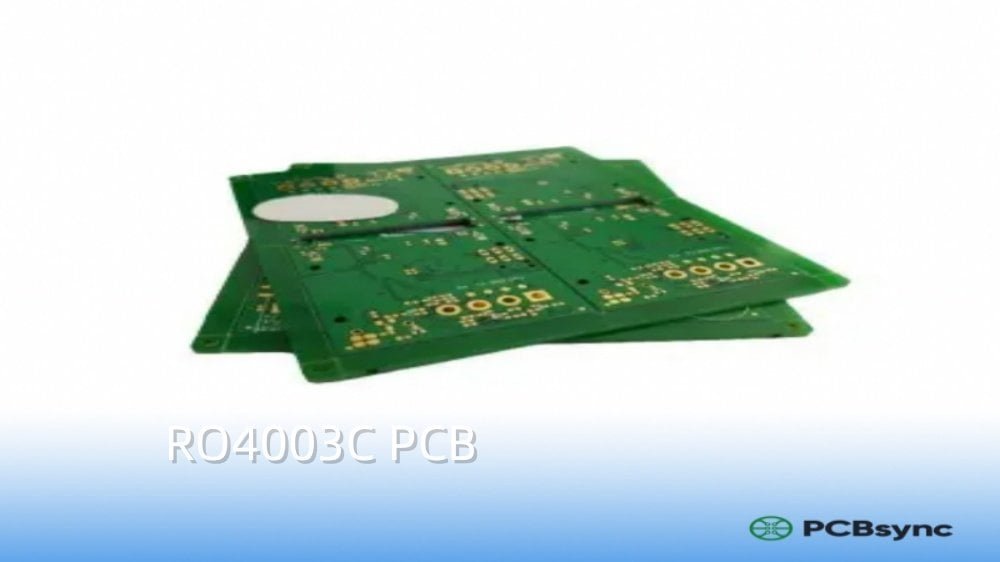
RO4003C
Dk
2.94
2.94
2.20
3.38
Df @ 10GHz
0.0012-0.0015
0.0012
0.0009
0.0027
Glass Reinforced
Yes (woven)
No
No (microfiber)
Yes (woven)
Dimensional Stability
Excellent
Good
Good
Excellent
Cost
High
High
High
Moderate
Best For
MLB, Antennas
Space apps
mmWave
Cost-sensitive RF
When to Choose RT/Duroid 6202 Over Alternatives
Choose RT/Duroid 6202 when: dimensional stability is critical, you’re building complex multilayer structures, or positional tolerances are tight.
Choose RT/Duroid 6002 when: you need the lowest possible loss and dimensional stability is less critical, or for space applications requiring minimal outgassing.
Choose RT/Duroid 5880 when: your application demands the lowest Dk (2.20) for wider traces or millimeter-wave performance is paramount.
Choose RO4003C when: budget constraints require a more economical option and slightly higher loss is acceptable.
Useful Resources for RT/Duroid 6202 PCB Design
Here are essential resources for engineers working with RT/Duroid 6202 PCB material:
Fabrication Guidelines PDF: Available from Rogers Corporation website under Technical Resources
Request Material Samples: Contact Rogers directly or authorized distributors like DigiKey, Mouser, or Arrow Electronics
Frequently Asked Questions About RT/Duroid 6202 PCB
1. What is the difference between RT/Duroid 6202 and RT/Duroid 6002?
The primary difference is the woven glass reinforcement in RT/Duroid 6202 PCB material. While both share similar electrical properties (Dk of 2.94, comparable loss tangent), the 6202 variant offers significantly better dimensional stability—0.05 to 0.07 mils/inch compared to 0.2 to 0.5 mils/inch for 6002. This makes RT/Duroid 6202 preferred for complex multilayer builds and tight-tolerance applications where positional accuracy is critical. RT/Duroid 6002 may be preferred for pure electrical performance or space applications due to its lower outgassing characteristics.
2. Can RT/Duroid 6202 be processed with standard FR-4 equipment?
Yes, RT/Duroid 6202 PCB material can be fabricated using standard PCB manufacturing equipment, but with some important modifications. Drilling, etching, and plating processes are similar to FR-4. However, PTFE-based materials require additional surface preparation (sodium or plasma treatment) before electroless copper plating to ensure proper adhesion. Most experienced high-frequency PCB manufacturers have these capabilities in place. Always discuss your specific requirements with your fabricator before committing to production.
3. What is the typical cost of RT/Duroid 6202 material?
RT/Duroid 6202 is a premium high-frequency material, with sheet prices typically ranging from $100 to $600 USD depending on thickness, copper weight, and panel size. This is significantly more expensive than FR-4 but comparable to other PTFE-based microwave laminates. For cost-sensitive applications where some performance trade-off is acceptable, consider alternatives like RO4003C. Always balance material cost against the total cost of ownership, including yield rates and performance requirements.
4. What frequency range is RT/Duroid 6202 suitable for?
RT/Duroid 6202 PCB material maintains consistent electrical properties from approximately 1 GHz to 40 GHz, making it suitable for L-band through Ka-band applications. The stable dielectric constant across this range supports reliable impedance control for radar, satellite communications, 5G mmWave, and automotive radar systems operating at 77 GHz. For higher frequencies or extremely low-loss requirements, materials like RT/Duroid 5880 (Dk 2.20, Df 0.0009) may be more appropriate.
5. Can RT/Duroid 6202 be combined with FR-4 in hybrid multilayer PCBs?
Yes, hybrid constructions combining RT/Duroid 6202 with FR-4 layers are common and can help manage costs while maintaining RF performance where needed. However, engineers should be aware of the dielectric constant mismatch (RT/Duroid 6202 Dk ≈2.94 vs. FR-4 Dk ≈4.2-4.5), which affects impedance calculations in transition zones. The CTE compatibility between these materials is good, as both are reasonably matched to copper. Use appropriate bonding materials (RO4450B prepreg or thermoplastic films) and work closely with your fabricator to optimize the lamination cycle for hybrid stackups.
Conclusion
RT/Duroid 6202 PCB material represents a compelling balance of electrical performance, dimensional stability, and manufacturability for high-frequency applications. The combination of low dielectric loss, tight Dk tolerance, and woven glass reinforcement makes it particularly well-suited for complex multilayer microwave circuits, phased array antennas, and radar systems where both electrical and mechanical precision matter.
While premium materials like RT/Duroid 6202 come at a higher cost than standard FR-4, the investment pays dividends in improved yields, consistent RF performance, and reliable operation across demanding environments. For engineers tackling next-generation 5G infrastructure, automotive radar, satellite communications, or defense electronics, RT/Duroid 6202 remains a proven choice backed by decades of industry experience.
Whether you’re specifying materials for a new design or evaluating alternatives for an existing product, I hope this guide has provided the technical foundation you need to make an informed decision. When in doubt, reach out to Rogers Corporation’s technical support or your preferred PCB fabricator—they’ve seen countless implementations and can help optimize your design for both performance and manufacturability.
Inquire: Call 0086-755-23203480, or reach out via the form below/your sales contact to discuss our design, manufacturing, and assembly capabilities.
Quote: Email your PCB files to Sales@pcbsync.com (Preferred for large files) or submit online. We will contact you promptly. Please ensure your email is correct.
Notes: For PCB fabrication, we require PCB design file in Gerber RS-274X format (most preferred), *.PCB/DDB (Protel, inform your program version) format or *.BRD (Eagle) format. For PCB assembly, we require PCB design file in above mentioned format, drilling file and BOM. Click to download BOM template To avoid file missing, please include all files into one folder and compress it into .zip or .rar format.