Inquire: Call 0086-755-23203480, or reach out via the form below/your sales contact to discuss our design, manufacturing, and assembly capabilities.
Quote: Email your PCB files to Sales@pcbsync.com (Preferred for large files) or submit online. We will contact you promptly. Please ensure your email is correct.
Notes: For PCB fabrication, we require PCB design file in Gerber RS-274X format (most preferred), *.PCB/DDB (Protel, inform your program version) format or *.BRD (Eagle) format. For PCB assembly, we require PCB design file in above mentioned format, drilling file and BOM. Click to download BOM template To avoid file missing, please include all files into one folder and compress it into .zip or .rar format.
If you’ve spent any time designing microwave circuits or high-frequency antennas, you’ve probably come across the Rogers RT/duroid family of materials. Among these, RT/duroid 6006 and 6010.2LM stand out as the go-to options when your design calls for a high dielectric constant substrate. But choosing between RT/duroid 6006 vs 6010.2LM isn’t always straightforward, and getting it wrong can mean redesigning your entire circuit.
I’ve worked with both materials on various projects, from patch antennas to radar systems, and I want to share what I’ve learned about when to pick one over the other. This guide covers everything from the technical specs to practical fabrication tips that’ll save you headaches down the road.
RT/duroid 6006 and 6010.2LM are ceramic-PTFE (polytetrafluoroethylene) composite laminates manufactured by Rogers Corporation. They’re specifically engineered for electronic and microwave circuit applications where you need a high dielectric constant material.
The “LM” in 6010.2LM stands for “Low Moisture,” indicating improved moisture resistance compared to earlier versions. Rogers actually discontinued the older 6010.5LM and 6010.8LM variants, leaving 6010.2LM as the sole option in the high-Dk 6010 family.
Both materials share the same ceramic-PTFE composite structure, which gives them excellent stability and ease of fabrication. The key difference lies in their dielectric constants: RT/duroid 6006 offers a Dk of 6.15, while RT/duroid 6010.2LM provides a Dk of 10.2. This difference might seem small on paper, but it has significant implications for your circuit design.
Key Electrical Properties: RT/duroid 6006 vs 6010.2LM Comparison
Let me break down the specifications in a way that actually matters for your design decisions:
Here’s something that trips up a lot of engineers: Rogers specifies two different Dk values for each material. The “Process Dk” is measured at 10 GHz using a clamped stripline method, while the “Design Dk” uses a differential phase length method across 8-40 GHz.
For circuit simulation and trace width calculations, you should use the Design Dk values (6.45 for RT/duroid 6006, 10.9 for RT/duroid 6010.2LM). These values better represent how the material will behave in your actual circuit. Using the Process Dk in your simulations will lead to impedance mismatches.
Mechanical and Thermal Properties Comparison
The mechanical behavior of these materials matters more than many engineers realize, especially for multilayer designs or applications with thermal cycling:
Property
RT/duroid 6006
RT/duroid 6010.2LM
Direction
Test Method
Young’s Modulus (Tension)
627 MPa (91 kpsi)
931 MPa (135 kpsi)
X
ASTM D638
Young’s Modulus (Tension)
517 MPa (75 kpsi)
559 MPa (81 kpsi)
Y
ASTM D638
Young’s Modulus (Compression)
1069 MPa (155 kpsi)
2144 MPa (311 kpsi)
Z
ASTM D695
Ultimate Tensile Stress (X)
20 MPa (2.8 kpsi)
17 MPa (2.4 kpsi)
X
ASTM D638
Ultimate Strain
12-13%
9-15%
X
ASTM D638
Density
2.7 g/cm³
~2.9 g/cm³
–
–
Specific Heat
0.97 J/g/K
~0.93 J/g/K
–
–
Copper Peel Strength
14.3 pli
~12 pli
–
IPC-TM-650
Z-Axis Expansion: A Critical Difference
RT/duroid 6010.2LM has notably lower Z-axis expansion compared to RT/duroid 6006. This characteristic makes 6010.2LM the better choice for multilayer boards with plated through holes (PTH). Lower Z-axis CTE reduces the stress on via barrels during thermal cycling, improving long-term reliability.
Moisture Absorption
Both materials have low moisture absorption, but RT/duroid 6010.2LM edges ahead here. For applications exposed to humid environments—outdoor installations, marine systems, or tropical climates—the 6010.2LM’s superior moisture resistance translates to more stable electrical performance over time.
Why Choose High-Dk Materials? The Circuit Size Advantage
The primary reason engineers choose RT/duroid 6006 vs 6010.2LM over lower-Dk alternatives comes down to circuit miniaturization. The relationship is straightforward: wavelength in a dielectric medium decreases with the square root of the dielectric constant.
For a microstrip line, the guided wavelength is approximately:
λg ≈ λ₀ / √εeff
Where εeff (effective dielectric constant) is related to the substrate Dk. Higher Dk means shorter wavelength, which means smaller antenna elements, shorter transmission lines, and more compact overall designs.
Practical Size Reduction Examples
Consider a patch antenna design. At 10 GHz:
On FR-4 (Dk ≈ 4.4): Patch would need to be approximately 7.1 mm
On RT/duroid 6006 (Dk = 6.45): Patch reduces to approximately 5.9 mm (17% smaller)
On RT/duroid 6010.2LM (Dk = 10.9): Patch reduces to approximately 4.5 mm (37% smaller)
This size reduction is crucial for space-constrained applications like phased array antennas, satellite terminals, and portable communication devices.
Typical Applications for RT/duroid 6006 and 6010.2LM
Both materials find homes in demanding RF and microwave applications. Here’s where each one typically shines:
RT/duroid 6006 Applications
Patch Antennas: The moderate Dk provides a good balance between size reduction and bandwidth
Satellite Communication Systems: Proven performance in harsh space environments
Power Amplifiers: Good thermal stability under high-power operation
X-Band Radar Systems: Optimal performance at frequencies up to 10 GHz
GPS Receiver Antennas: Compact designs with stable performance
RT/duroid 6010.2LM Applications
Miniaturized Antennas: Maximum size reduction for space-constrained designs
Ground Radar Warning Systems: Reliable performance in defense applications
Aircraft Collision Avoidance Systems (TCAS): High reliability requirements
Multilayer RF Boards: Superior PTH reliability due to low Z-axis expansion
High-Density Microwave Circuits: Where board real estate is at a premium
For more Rogers PCB material options and applications, exploring the full range of Rogers laminates can help you find the optimal solution for your specific requirements.
How to Choose Between RT/duroid 6006 vs 6010.2LM
Making the right choice between these two materials depends on several factors. Here’s a decision framework I use:
Choose RT/duroid 6006 When:
Your frequency is below 10 GHz: The material performs excellently in this range
Bandwidth is a priority: Lower Dk generally means wider bandwidth for antenna designs
Cost is a significant factor: 6006 is typically more readily available
Single or double-sided boards: No PTH reliability concerns
Temperature coefficient matters less: Though both have negative TCDk, specific applications may favor one over the other
Choose RT/duroid 6010.2LM When:
Maximum miniaturization is needed: The higher Dk provides greater size reduction
Multilayer construction is required: Superior Z-axis stability for PTH reliability
Both materials come in a range of standard thicknesses to accommodate different design requirements:
Standard Dielectric Thicknesses
Thickness (inches)
Thickness (mm)
Tolerance
0.005
0.127
±0.0005″
0.010
0.254
±0.001″
0.025
0.635
±0.0015″
0.050
1.270
±0.002″
0.075
1.905
±0.003″
0.100
2.540
±0.003″
Non-standard thicknesses from 0.005″ to 0.200″ are available in 0.005″ increments by contacting Rogers directly.
Standard Panel Sizes
Size (inches)
Size (mm)
Availability
10 × 10
254 × 254
All thicknesses
10 × 20
254 × 508
All thicknesses
20 × 20
508 × 508
Standard
18 × 12
457 × 305
Non-standard
18 × 24
457 × 610
≥0.025″ thickness only
Copper Cladding Options
Both materials are supplied with copper cladding on both sides:
Electrodeposited copper: ¼ oz to 2 oz/ft² (8.5 to 70 μm)
Rolled copper: Available upon request
Heavy metal backing: Thick aluminum, brass, or copper plate available on one side
When ordering, always specify:
Material grade (6006 or 6010.2LM)
Dielectric thickness
Copper type (electrodeposited or rolled)
Copper weight
PCB Fabrication Guidelines for RT/duroid 6006 and 6010.2LM
Working with PTFE-based materials requires some adjustments to your standard fabrication processes. Here’s what I’ve learned works best:
Material Handling and Storage
The materials come with protective polyethylene cover sheets (thick cores) or sealed in polyethylene bags (thin laminates). Keep these protections in place until you’re ready to process. They prevent copper oxidation and protect against corrosive atmospheres.
Store cartons on flat surfaces, stacked no more than five high to avoid crushing the bottom packages.
Use carbide drills: Standard style with 130° included lip angle
Stack height: Maximum 0.240″ (6.1 mm) including entry and exit materials
Feed rates: 0.002″ per revolution typical
Surface speed: 250-300 surface feet per minute (60-90 m/min)
Consider undercut drills: These can help reduce smear redeposition
Always use new or precision-ground re-pointed drills. Dull cutting edges cause excessive smear.
Surface Preparation
Before plating or bonding:
Clean with appropriate solvents
Bake at 125°C for 30-60 minutes to remove moisture
Use plasma treatment for improved adhesion on PTFE surfaces
Surface Finish Considerations
Important: Electroless nickel/immersion gold (ENIG) finishes should only be used on RT/duroid 6010 materials when absolutely necessary. ENIG processes can stain the surface of high dielectric constant materials. Alternative finishes like immersion silver or HASL are generally preferred.
Bonding and Multilayer Assembly
For multilayer RT/duroid 6006/6010 constructions:
FEP film: Melts at 260°C (500°F), stable through most assembly processes
Rogers 3001 film: Melts at 200°C (390°F), avoid for subsequent high-temperature processes
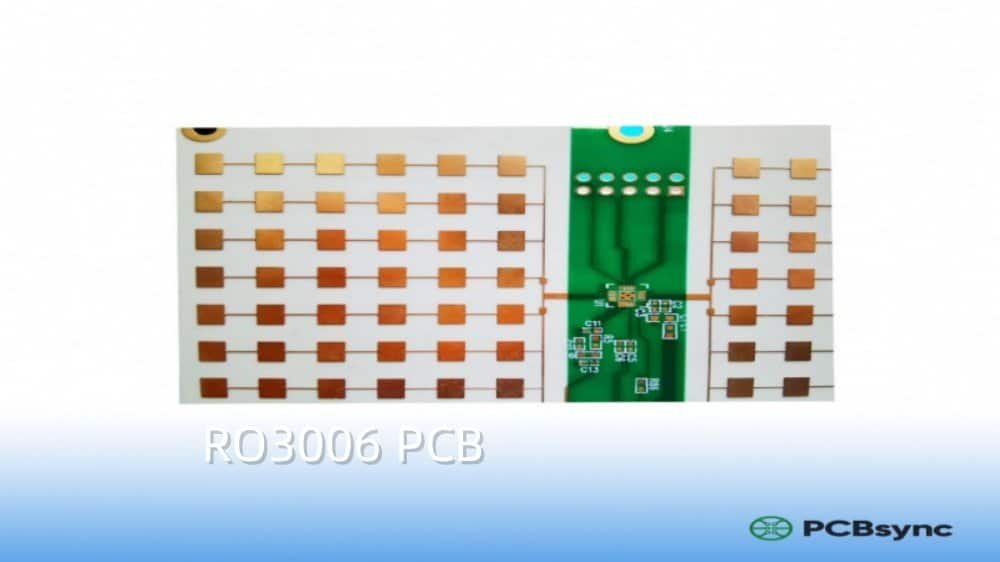
RO3006 bondply: Recommended if you need matching Dk for the bond layer (minimum 5 mil thickness)
2929 bondply: When bond layer Dk matching isn’t critical (1.5 mil available)
Don’t use 3001 film against continuous copper planes.
Routing and Scoring
Individual circuits can be routed, scored, punched, or laser-cut:
Pre-route vacuum channels in backer boards for adequate air flow
Double-pass routing (opposite directions) when two clean edges are needed
Use carbide tools designed for PTFE materials
Comparing RT/duroid 6006/6010.2LM with Alternative Materials
How do these materials stack up against other high-frequency laminates? Let’s look at some common alternatives:
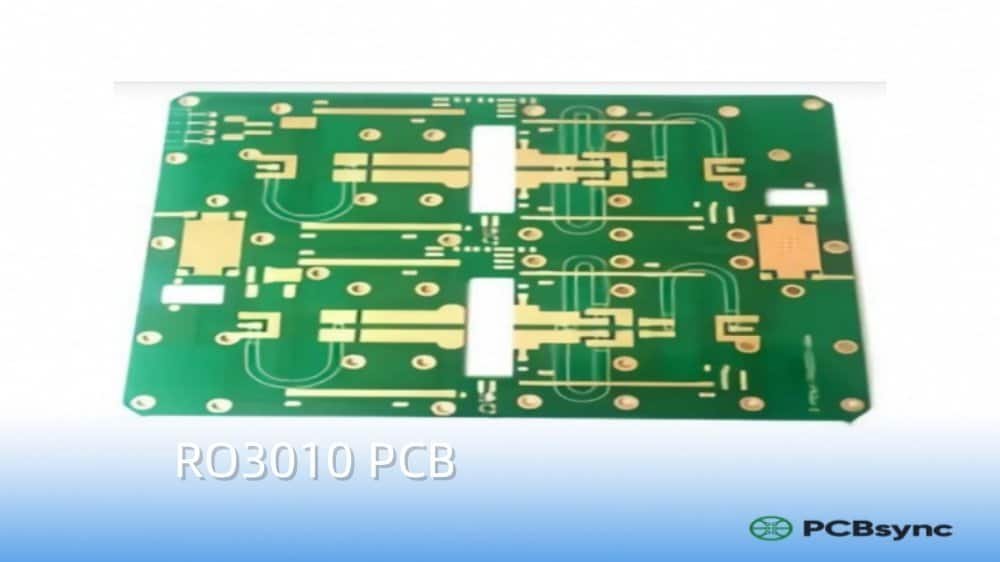
vs RO3010 (Also Dk = 10.2)
RO3010 is Rogers’ ceramic-filled PTFE material with the same nominal Dk as RT/duroid 6010.2LM:
Parameter
RT/duroid 6010.2LM
RO3010
Dk @ 10 GHz
10.2 ± 0.25
10.2 ± 0.30
Df @ 10 GHz
0.0023
0.0022
TCDk
-425 ppm/°C
-350 ppm/°C
Processing
Traditional PTFE
Easier (FR-4 compatible)
RO3010 offers easier processing similar to thermoset materials, while RT/duroid 6010.2LM provides tighter Dk tolerance and the proven reliability of the RT/duroid family.
vs RT/duroid 5880 (Low Dk Option)
If you don’t need high Dk, RT/duroid 5880 offers:
Dk = 2.2 (much lower)
Df = 0.0009 (ultra-low loss)
Better for millimeter-wave applications
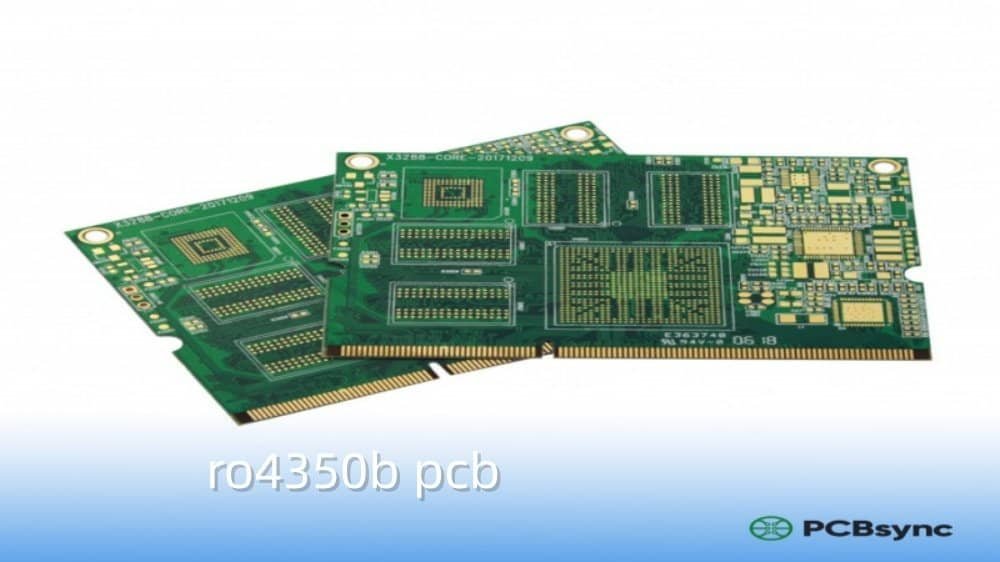
vs RO4350B (Thermoset Alternative)
RO4350B processes like FR-4 but can’t match the Dk values of 6006/6010:
Dk = 3.48
Df = 0.0037
Much easier fabrication
Cost-effective for moderate frequencies
Antenna Gain and Surface Quality Considerations
Something that’s often overlooked: antenna gain is directly related to both dielectric loss and copper surface quality. With RT/duroid 6010 especially, the soft texture of the ceramic-PTFE composite means you need to be careful during fabrication.
At high frequencies, copper foil loss plays a dominant role in overall system performance. Even small scratches or surface contamination can significantly impact your antenna’s gain figure. I’ve seen projects where antenna yield dropped dramatically simply because the fabrication team wasn’t aware of how sensitive these materials are to surface damage.
Protecting Antenna Performance
After copper etching:
Never mechanically grind the PTFE surface: This destroys surface roughness and increases loss
Use chemical cleaning only: Ensure surfaces are stain-free
Protect transmission lines: Scratches on microstrip lines increase copper loss
Inspect for stains at antenna ports: Dielectric stains at feed points significantly impact gain
The antenna yield directly correlates with how well you protect the copper foil surface and PTFE dielectric during processing.
Understanding Loss Mechanisms
The total loss in your antenna system comes from several sources:
Dielectric loss: Determined by the material’s dissipation factor (tan δ)
Copper conductor loss: Related to surface roughness and skin effect
Radiation loss: Desired for antennas, unwanted for transmission lines
Both RT/duroid 6006 and 6010.2LM have low dissipation factors (0.0027 and 0.0023 respectively), making dielectric loss relatively minor. However, at X-band and above, copper loss becomes the limiting factor. This is why protecting the copper surface during fabrication is so critical.
Design Tips for RT/duroid 6006 vs 6010.2LM Circuits
Based on my experience with these materials, here are some practical design tips that can save you time and improve first-pass success:
Trace Width Calculations
When calculating microstrip trace widths for 50Ω impedance, remember that higher Dk means narrower traces. On 25-mil RT/duroid 6010.2LM, a 50Ω line will be noticeably narrower than on RT/duroid 6006. This has implications for:
Current handling: Narrower traces handle less current
Manufacturing tolerances: Percentage errors have larger impact on narrow lines
Conductor loss: Narrower traces have higher resistance per unit length
For power amplifier applications, you may need to use thicker copper (1 oz or 2 oz) to compensate for narrower trace widths.
Grounding and Via Placement
The high Dk of these materials affects via placement strategy. The effective wavelength is shorter, so:
Via spacing for ground connections should be tighter
Edge via fences need closer spacing to prevent cavity resonances
Quarter-wave stub lengths are shorter (easier to fit but less tolerant of length errors)
Thermal Management
Both materials have moderate thermal conductivity. For high-power applications:
Consider materials with metal backing (aluminum, brass, or copper) on one side
Design adequate heat sinking into your mechanical assembly
Account for thermal expansion mismatches between the PCB and heat spreader
Cost Considerations and Material Availability
Let’s talk about something that often gets overlooked in technical guides: the practical aspects of specifying these materials.
Relative Cost
RT/duroid 6006 is generally more readily available and slightly less expensive than 6010.2LM. The cost difference isn’t dramatic, but on high-volume production runs, it adds up. If your design works with either material, 6006 often makes more economic sense.
Lead Times
Standard thicknesses in common panel sizes typically ship within 2-4 weeks. Non-standard configurations may require longer lead times. For prototyping, check distributor stock before finalizing your material selection.
Alternative Suppliers
While Rogers is the primary manufacturer, several PCB fabricators maintain significant inventory of RT/duroid materials. Working with a fabricator experienced in PTFE processing can streamline your project and potentially improve yields.
The RT/duroid 6000 Series: Historical Context
Understanding where RT/duroid 6006 and 6010.2LM fit in the broader Rogers product line helps put their capabilities in perspective. The RT/duroid family has been the industry’s benchmark for high-reliability microwave PCB materials for decades, earning its reputation in demanding aerospace and defense applications where failure isn’t an option.
Rogers originally offered three variants in the 6010 series: 6010.2LM, 6010.5LM, and 6010.8LM, with the number indicating the Dk value. However, the 6010.5LM and 6010.8LM variants have been discontinued due to limited market demand, leaving 6010.2LM as the sole high-Dk option in this family.
The “LM” designation indicates “Low Moisture” versions with improved moisture resistance compared to the original formulations. This evolution reflects Rogers’ continuous improvement approach based on field experience and customer feedback.
For applications requiring different Dk values, Rogers offers the complete RT/duroid portfolio including RT/duroid 5880 (Dk = 2.2) for millimeter-wave applications and RT/duroid 6002 (Dk = 2.94) for general high-frequency work. Each material is optimized for specific performance requirements, giving designers flexibility in their material selection.
Useful Resources and Downloads
Here are the official resources for RT/duroid 6006 and 6010.2LM:
Official Rogers Corporation Resources
RT/duroid 6006/6010LM Datasheet: Available from Rogers Corporation website (Publication #92-105)
Fabrication Guidelines: “RT/duroid 6002/6006/6010 High Frequency Laminates Fabrication Guidelines” – comprehensive processing guide
Laminate Properties Tool: Online tool at rogerscorp.com for filtering and comparing material properties
Technical Paper: “Dielectric Properties of High Frequency Materials” available at rogerscorp.com/acs
iConnect Software: Advanced design tool for high-frequency PCB materials
Contact Information
Rogers Advanced Circuit Materials Division:
Address: 100 S. Roosevelt Avenue, Chandler, AZ 85226
Phone: 480-961-1382
Fax: 480-961-4533
Frequently Asked Questions
What is the main difference between RT/duroid 6006 and 6010.2LM?
The primary difference is the dielectric constant: RT/duroid 6006 has a Dk of 6.15 (design Dk: 6.45), while RT/duroid 6010.2LM has a Dk of 10.2 (design Dk: 10.9). This higher Dk in 6010.2LM enables more aggressive circuit miniaturization but may result in narrower bandwidth for antenna designs. Additionally, 6010.2LM has lower Z-axis expansion, making it better suited for multilayer boards with plated through holes.
Which Dk value should I use in my circuit simulation—Process or Design?
Always use the Design Dk for your circuit simulations: 6.45 for RT/duroid 6006 and 10.9 for RT/duroid 6010.2LM. The Design Dk is measured using a differential phase length method across 8-40 GHz and better represents actual circuit behavior. Using the Process Dk will result in impedance mismatches between your simulation and fabricated board.
Can I use standard ENIG surface finish on RT/duroid 6010.2LM?
Avoid ENIG on RT/duroid 6010.2LM unless absolutely necessary. The ENIG process can stain high dielectric constant materials, potentially affecting performance. Better alternatives include immersion silver, immersion tin, HASL, or OSP finishes. If ENIG is required for your application, work closely with your fabricator to minimize surface staining.
What bonding materials work with RT/duroid 6006 and 6010.2LM for multilayer designs?
For multilayer constructions, Rogers recommends FEP film (melts at 260°C) or Rogers 3001 film (melts at 200°C) as thermoplastic options. If you need matching Dk for the bond layer, use RO3006 bondply with minimum 5 mil thickness. When Dk matching isn’t critical, 2929 bondply at 1.5 mil works well. Note that 3001 film shouldn’t be used against continuous copper planes due to potential remelting during subsequent processing.
Are RT/duroid 6006 and 6010.2LM suitable for millimeter-wave applications?
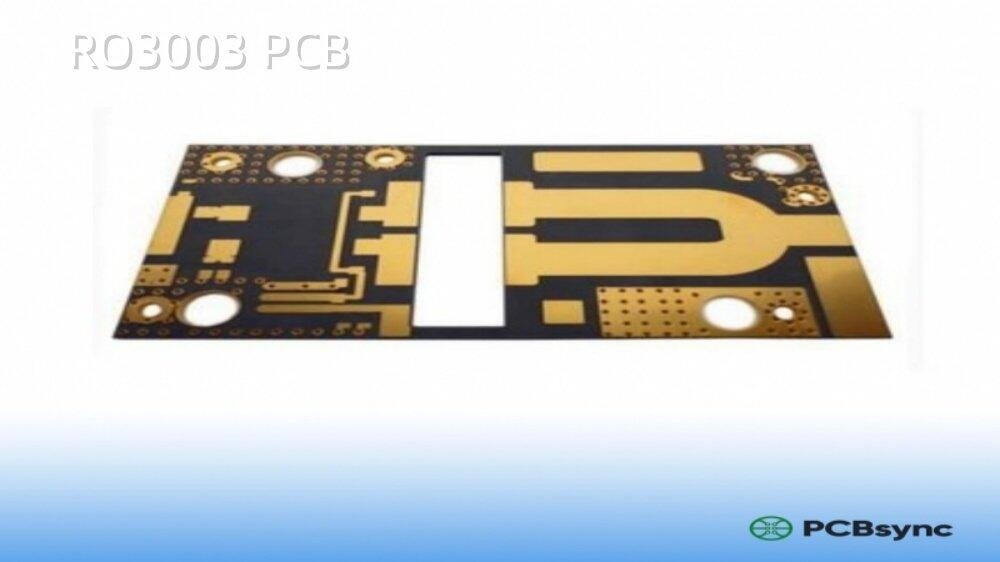
Both materials have relatively high negative thermal coefficients of dielectric constant (TCDk of -410 to -425 ppm/°C), which can cause Dk drift in environments with significant temperature variations. For millimeter-wave applications (above 30 GHz) or designs requiring very stable Dk across temperature, consider materials with lower TCDk like RO3003 or RT/duroid 5880. However, for X-band and below where the high Dk benefits outweigh TCDk concerns, both materials perform excellently.
Conclusion
Choosing between RT/duroid 6006 vs 6010.2LM comes down to your specific design requirements. For maximum miniaturization and multilayer reliability, RT/duroid 6010.2LM is the better choice. When you need a balance between size reduction and bandwidth, or when working with simpler board constructions, RT/duroid 6006 often makes more sense.
Both materials have proven themselves in demanding applications from satellite communications to aircraft collision avoidance systems. The key is understanding their differences and matching them to your design priorities. Take the time to run simulations with the correct Design Dk values, plan your fabrication process carefully (especially surface finishes), and you’ll get excellent results from either material.
Remember that these ceramic-PTFE composites require different handling than standard FR-4 materials. Work with a fabricator experienced in PTFE processing, specify the right surface finish (avoiding ENIG when possible on 6010.2LM), and protect the material surfaces throughout the manufacturing process.
If you’re still unsure which material fits your application, consider prototyping with both. The relatively small cost difference between the materials is worth it compared to the expense of a failed design revision. In my experience, the upfront investment in material evaluation pays dividends in reduced development cycles and improved product reliability.
The RF and microwave industry continues to demand smaller, lighter, and more capable circuits. High-Dk materials like RT/duroid 6006 and 6010.2LM will remain essential tools in the designer’s toolkit for meeting these challenges. Understanding their characteristics deeply—not just the numbers on a datasheet, but the practical implications for your specific application—is what separates successful designs from problematic ones.
Inquire: Call 0086-755-23203480, or reach out via the form below/your sales contact to discuss our design, manufacturing, and assembly capabilities.
Quote: Email your PCB files to Sales@pcbsync.com (Preferred for large files) or submit online. We will contact you promptly. Please ensure your email is correct.
Notes: For PCB fabrication, we require PCB design file in Gerber RS-274X format (most preferred), *.PCB/DDB (Protel, inform your program version) format or *.BRD (Eagle) format. For PCB assembly, we require PCB design file in above mentioned format, drilling file and BOM. Click to download BOM template To avoid file missing, please include all files into one folder and compress it into .zip or .rar format.