Inquire: Call 0086-755-23203480, or reach out via the form below/your sales contact to discuss our design, manufacturing, and assembly capabilities.
Quote: Email your PCB files to Sales@pcbsync.com (Preferred for large files) or submit online. We will contact you promptly. Please ensure your email is correct.
Notes: For PCB fabrication, we require PCB design file in Gerber RS-274X format (most preferred), *.PCB/DDB (Protel, inform your program version) format or *.BRD (Eagle) format. For PCB assembly, we require PCB design file in above mentioned format, drilling file and BOM. Click to download BOM template To avoid file missing, please include all files into one folder and compress it into .zip or .rar format.
If you’ve ever worked on a high-frequency circuit design where every gram counts—think aerospace antennas or satellite feed networks—you’ve probably come across RT/duroid 5880LZ. This PTFE-based laminate from Rogers Corporation holds the distinction of having the lowest dielectric constant (Dk) of any commercially available copper-clad material. At Dk 1.96 @ 10 GHz, it opens up design possibilities that simply aren’t achievable with standard laminates.
I’ve spent years specifying high-frequency materials for various RF projects, and RT/duroid 5880LZ consistently comes up when weight and electrical performance both sit at the top of the requirements list. In this guide, I’ll walk you through everything you need to know—from the technical specs to practical fabrication tips that can save you headaches down the road.
RT/duroid 5880LZ is a filled PTFE (polytetrafluoroethylene) composite laminate engineered specifically for demanding stripline and microstrip circuit applications. Rogers Corporation developed this material as part of their long-running RT/duroid family, which has been an industry standard in high-reliability RF/microwave applications since the late 1950s.
The “LZ” designation tells you two critical things about this material. First, it uses a unique filler system based on hollow silica microspheres, which dramatically reduces the material density compared to standard RT/duroid 5880. Second, it exhibits a low coefficient of thermal expansion (CTE) along the Z-axis—hence the “LZ” naming convention.
RT/duroid 5880LZ Material Composition
Understanding what goes into RT/duroid 5880LZ helps explain its performance characteristics:
Component
Function
PTFE Matrix
Provides the base dielectric properties, chemical resistance, and temperature stability
Hollow Silica Microspheres
Reduces density while maintaining low Dk; enables lightweight construction
Copper Cladding
Available in electrodeposited (ED) or rolled copper; standard weights from 0.5 oz to 2 oz
The hollow microsphere filler is what sets RT/duroid 5880LZ apart from its cousin, the standard RT/duroid 5880. While 5880 uses randomly oriented glass microfibers as reinforcement, 5880LZ employs these hollow spheres that achieve a lower density (1.4 g/cm³ vs. approximately 2.2 g/cm³) while simultaneously delivering the industry’s lowest Dk value.
RT/duroid 5880LZ Technical Specifications
Getting the specifications right matters when you’re running simulations or calculating trace widths. Here’s the complete technical profile for RT/duroid 5880LZ:
The Dk value of 1.96 deserves special attention. This is remarkably consistent across the frequency range from 8 GHz to 40 GHz, which means your simulation results will correlate well with actual measured performance—something that can’t always be said for other laminate materials.
Thermal and Mechanical Properties
Property
Value
Notes
Density
1.4 g/cm³
Significantly lower than standard PTFE composites
CTE (X-axis)
44 ppm/°C
0-100°C range
CTE (Y-axis)
43 ppm/°C
0-100°C range
CTE (Z-axis)
41 ppm/°C
Key advantage for PTH reliability
Moisture Absorption
<0.02%
Per IPC-TM-650
Operating Temperature
-40°C to +260°C
Short-term exposure
The Z-axis CTE of 41 ppm/°C is particularly significant for multilayer constructions. This value closely matches the thermal expansion of copper (approximately 17 ppm/°C in-plane), which dramatically improves plated-through-hole (PTH) reliability during thermal cycling.
RT/duroid 5880LZ vs RT/duroid 5880: Key Differences
One question I get frequently: “Should I use 5880 or 5880LZ?” The answer depends on your specific application requirements. Here’s a direct comparison:
Parameter
RT/duroid 5880LZ
RT/duroid 5880
Dielectric Constant (Dk)
1.96 ± 0.04
2.20 ± 0.02
Dissipation Factor (Df)
0.0019-0.0027
0.0009
Density
1.4 g/cm³
2.2 g/cm³
Filler Type
Hollow silica microspheres
Random glass microfibers
Z-axis CTE
41 ppm/°C
48 ppm/°C
Best For
Weight-critical, mmWave
General RF/microwave
Choose RT/duroid 5880LZ when:
Weight reduction is a primary design driver (aerospace, UAVs, satellites)
You need the absolute lowest dielectric constant available
Your application operates at millimeter-wave frequencies where lower Dk helps with wider trace widths
Multilayer PTH reliability under thermal stress is critical
Choose standard RT/duroid 5880 when:
You need the absolute lowest loss tangent (Df < 0.0009)
Weight isn’t a major concern
Cost sensitivity is higher (5880 is generally less expensive)
You’re working in the traditional microwave bands where the slightly higher Dk isn’t problematic
Applications for RT/duroid 5880LZ PCBs
The unique combination of ultra-low Dk, low density, and excellent thermal stability makes RT/duroid 5880LZ the material of choice for several demanding applications.
Aerospace Antenna Systems
RT/duroid 5880LZ dominates in airborne antenna applications where payload weight directly impacts fuel consumption and flight performance. Phased array antennas, feed networks, and beam-forming networks all benefit from the weight savings. A 30-40% reduction in substrate weight compared to standard PTFE laminates can translate to meaningful payload capacity improvements on aircraft and spacecraft.
Military Radar and Missile Guidance Systems
Defense applications demand both performance and reliability. RT/duroid 5880LZ meets military specifications for environmental stress screening while delivering the electrical performance needed for advanced radar systems. The material’s low Z-axis CTE ensures PTH integrity even under the severe thermal cycling encountered in defense electronics.
Satellite Communications
GEO and LEO satellite applications leverage RT/duroid 5880LZ for both its weight advantages and its stable electrical properties across temperature extremes. When your circuit experiences temperature swings from -40°C during eclipse to +85°C in direct sunlight, you need a material with predictable behavior—and RT/duroid 5880LZ delivers exactly that.
5G mmWave Infrastructure
The rollout of 5G networks operating at 28 GHz, 39 GHz, and beyond has created new demand for low-loss, low-Dk substrates. RT/duroid 5880LZ is finding applications in 5G base station antennas and backhaul equipment where millimeter-wave performance is essential.
Point-to-Point Digital Radio Antennas
Wireless backhaul links operating in the E-band (71-86 GHz) and beyond require substrates that maintain performance at these extreme frequencies. The stable Dk of RT/duroid 5880LZ across the frequency spectrum makes it well-suited for these demanding applications.
Automotive Radar Systems
The automotive industry’s push toward advanced driver assistance systems (ADAS) and autonomous vehicles has created significant demand for high-performance radar substrates. While 77 GHz automotive radar commonly uses other materials due to cost pressures, premium applications—particularly in luxury vehicles and commercial autonomous systems—benefit from RT/duroid 5880LZ’s superior electrical properties.
Test and Measurement Equipment
RF test fixtures, probe cards, and calibration standards require substrates with highly predictable electrical properties. RT/duroid 5880LZ’s tight Dk tolerance (±0.04) and stability over temperature make it an excellent choice for metrology applications where measurement accuracy is paramount.
To truly appreciate what RT/duroid 5880LZ brings to a design, it helps to understand how its electrical properties translate to real-world circuit performance.
Why Low Dk Matters for High-Frequency Design
The dielectric constant directly affects several critical design parameters:
Wavelength in the substrate: Signal wavelength is inversely proportional to the square root of Dk. With RT/duroid 5880LZ’s Dk of 1.96, signals travel at approximately 71% the speed of light—significantly faster than in higher-Dk materials. This means quarter-wave transformers and other wavelength-dependent structures will be physically larger, which can actually be advantageous for manufacturing tolerances at millimeter-wave frequencies.
Trace width for a given impedance: Lower Dk allows wider traces for the same characteristic impedance. This provides several benefits: easier manufacturing (wider traces are more tolerant of etching variations), lower conductor losses (wider traces have lower resistance), and improved power handling capability.
Fringing field effects: The low Dk reduces the fringing field extension beyond the conductor edges, resulting in more predictable electromagnetic behavior and tighter correlation between simulation and measurement.
Loss Mechanisms in RT/duroid 5880LZ Circuits
Total insertion loss in a transmission line comprises dielectric loss and conductor loss. Understanding both is key to optimizing your design:
Dielectric loss: Proportional to frequency and the dissipation factor (Df). RT/duroid 5880LZ’s typical Df of 0.0019 at 10 GHz is excellent, though not quite as low as standard 5880’s 0.0009. At 40 GHz, dielectric losses become increasingly significant, and RT/duroid 5880LZ still performs admirably.
Conductor loss: Becomes the dominant loss mechanism at millimeter-wave frequencies, particularly for thin substrates. This is where copper foil selection (rolled vs. ED) makes a measurable difference. The wider traces enabled by 5880LZ’s low Dk also help minimize conductor loss.
Frequency Dependence of Dk and Df
One of RT/duroid 5880LZ’s most valuable characteristics is its stable electrical properties across frequency:
Frequency
Dk Typical
Df Typical
8 GHz
1.96
0.0018
10 GHz
1.96
0.0019
24 GHz
1.96
0.0021
40 GHz
1.97
0.0024
This stability is remarkable compared to many other laminate materials, which can exhibit significant Dk drift with frequency. For wideband designs spanning multiple octaves, this consistency simplifies matching network design and improves overall circuit performance.
RT/duroid 5880LZ PCB Design Guidelines
Designing with RT/duroid 5880LZ requires attention to several material-specific considerations. Here’s what I’ve learned works well.
Impedance Control and Trace Width Calculations
The ultra-low Dk of RT/duroid 5880LZ means your trace widths will be wider than you might expect compared to designs on FR-4 or even standard Rogers materials. For a 50Ω microstrip on 10 mil (0.254 mm) 5880LZ, you’re looking at approximately 24-26 mil trace width depending on copper thickness—notably wider than the ~18 mil you’d calculate for standard 5880.
Design tip: Always use the “design Dk” values provided by Rogers rather than the process specification Dk. The design Dk accounts for copper surface roughness effects and provides more accurate impedance predictions.
Stackup Recommendations for Multilayer RT/duroid 5880LZ
For Rogers PCB multilayer constructions, consider these stackup guidelines:
Layer Count
Recommended Approach
2-layer
Direct copper-clad laminate; most cost-effective
4-layer
Fusion bonding preferred for best electrical performance
6+ layers
Consider hybrid stackups with RO4000 series bonding plies
Fusion bonding creates a monolithic PTFE structure without adhesive interfaces, preserving the excellent electrical properties throughout the stackup. However, it requires specialized lamination equipment and expertise. For less demanding applications, thermoset or thermoplastic bonding systems (like Rogers 2929 bondply or 3001 film) offer easier processing with acceptable performance trade-offs.
Via Design for RT/duroid 5880LZ
The low Z-axis CTE of RT/duroid 5880LZ (41 ppm/°C) provides excellent PTH reliability, but proper via design still matters:
Annular ring: Minimum 5 mil (0.127 mm) annular ring recommended
Via fill: Not typically required given the good CTE match, but can be specified for extreme applications
Copper Foil Selection
RT/duroid 5880LZ is available with several copper options:
Copper Type
Weight Options
Best For
Electrodeposited (ED)
0.5 oz, 1 oz, 2 oz
General applications; good adhesion
Rolled Copper
0.5 oz, 1 oz, 2 oz
Lower insertion loss; critical RF applications
Reverse-treated
0.5 oz, 1 oz
Best surface for fine-line etching
For mmWave applications where conductor loss dominates, rolled copper provides measurably lower losses due to its smoother surface finish.
Fabrication Guidelines for RT/duroid 5880LZ
Working with PTFE-based materials requires some adjustments to standard PCB fabrication processes. Here’s what fabricators need to know.
Cutting and Machining
RT/duroid 5880LZ machines readily using standard carbide tooling:
Shearing: Material can be sheared cleanly for panel sizing
Routing: Use carbide, double-fluted, spiral-up end mills
Drilling: Carbide drills with 130° included lip angle; new drills strongly recommended to minimize smear
Important: The hollow microsphere filler can be punctured during drilling, potentially exposing the inner diameter of the spheres at the hole wall. This is normal and expected—these areas will plate with copper during the metallization process.
Drilling Parameters for RT/duroid 5880LZ
Parameter
Recommendation
Drill material
Carbide only
Drill style
Standard, 130° included angle
Entry material
Phenolic composite, 0.010″-0.030″ thick
Exit material
Phenolic composite, >0.060″ thick
Maximum stack height
0.240″ (6.1 mm)
Stack thickness
≤75% of drill flute length
Surface Preparation and Plating
PTFE surfaces require activation before metal deposition to achieve adequate adhesion. Two common approaches:
Sodium treatment (preferred): Uses a sodium naphthalene complex in glycol ether solution to modify the PTFE surface chemistry. This creates a wettable surface for electroless copper deposition. Tetra-Etch® from Gore is a commonly used proprietary formulation.
Plasma treatment: An alternative for direct metallization processes. Less effective than sodium treatment for electroless copper but may be preferred in certain process flows.
After sodium treatment, standard electroless copper followed by electrolytic copper plating produces reliable metallization. The hole wall topography from punctured microspheres actually promotes mechanical adhesion of the plated copper.
Etching Process
Standard alkaline or acid cupric chloride etchants work well with RT/duroid 5880LZ. Important considerations:
Preserve the as-etched dielectric surface to promote solder mask adhesion
Rinse thoroughly after etching
Bake at 125°C (257°F) for 60 minutes before solder mask application (vacuum bake preferred)
Solder Mask Application
The micro-roughness left on the dielectric surface after copper etching promotes good solder mask adhesion. Liquid photoimageable (LPI) and dry film solder masks both work well. Ensure adequate rinsing and baking before mask application to remove any residual moisture or processing chemicals.
Available Thicknesses and Ordering Information
RT/duroid 5880LZ is available in several standard configurations:
Standard Dielectric Thicknesses
Thickness (mils)
Thickness (mm)
10
0.254
20
0.508
50
1.270
100
2.540
Custom thicknesses may be available on request for volume orders.
Copper Cladding Options
Standard: 1 oz (35 μm) electrodeposited copper, both sides
Options: 0.5 oz (17 μm), 2 oz (70 μm), rolled copper
Special: Reverse-treated foil for fine-line applications
Panel Sizes
Standard panel sizes up to 12″ × 18″ (305 mm × 457 mm) are typically available. Larger panels may be available depending on thickness configuration.
When ordering RT/duroid 5880LZ, specify:
Dielectric thickness and tolerance
Copper type (ED or rolled)
Copper weight
Panel size
Any special requirements (e.g., lot traceability for aerospace)
Cost Considerations for RT/duroid 5880LZ Projects
Let’s be straightforward—RT/duroid 5880LZ is not a budget material. It commands a significant premium over standard FR-4 and even over other Rogers high-frequency laminates. However, for applications where its unique properties are truly needed, the cost is justified by the performance gains.
Material Cost Breakdown
The pricing structure for RT/duroid 5880LZ reflects several factors:
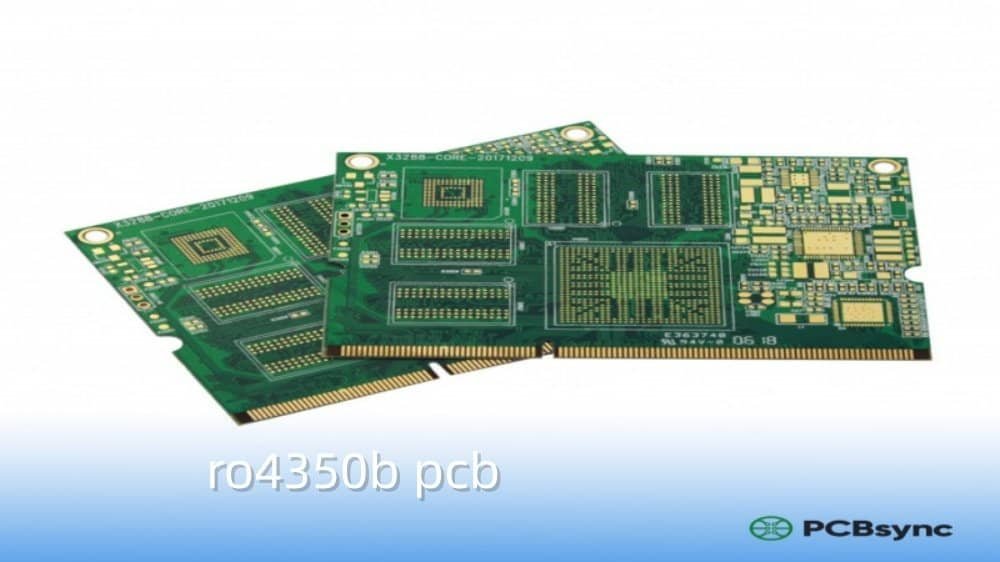
Typical pricing runs several times the cost of standard FR-4 and notably higher than workhorse high-frequency materials like RO4350B. The exact premium varies with thickness, copper weight, and order quantity.
Strategies to Manage Costs
Right-size your material selection: Use RT/duroid 5880LZ only where its properties are genuinely required. For less demanding portions of a system, consider hybrid constructions with less expensive materials.
Optimize panel utilization: Work with your fabricator to maximize the number of parts per panel. The high material cost makes panel efficiency even more important than with standard materials.
Consider design changes: Sometimes a slight relaxation of weight requirements allows use of standard 5880, which typically costs less than 5880LZ.
Volume commitments: For production quantities, discuss material pricing directly with Rogers or through your fabricator’s supply chain.
Useful Resources for RT/duroid 5880LZ Design
Here are the key reference documents and tools for working with RT/duroid 5880LZ:
Official Rogers Corporation Resources
RT/duroid 5880LZ Datasheet: Available from rogerscorp.com; includes complete electrical and mechanical specifications
Dimensional verification: Critical features per drawing
Cross-sectioning: Sample boards for plating quality verification
Frequently Asked Questions About RT/duroid 5880LZ
What is the dielectric constant of RT/duroid 5880LZ?
RT/duroid 5880LZ has a dielectric constant (Dk) of 1.96 ± 0.04 when measured at 10 GHz per IPC-TM-650 method 2.5.5.5. This is the lowest Dk available in any commercially produced copper-clad laminate. The Dk remains remarkably stable across the frequency range from 8 GHz to 40 GHz, varying by less than 2%, which ensures predictable performance in wideband applications.
Is RT/duroid 5880LZ compatible with lead-free soldering?
Yes, RT/duroid 5880LZ is fully compatible with lead-free assembly processes. The material can withstand peak reflow temperatures of 260°C for short durations without degradation. The low Z-axis CTE (41 ppm/°C) also helps minimize thermal stress on solder joints during reflow, contributing to improved assembly yield and long-term reliability.
What frequency range is RT/duroid 5880LZ suitable for?
RT/duroid 5880LZ performs well from DC through millimeter-wave frequencies, with validated performance up to 40 GHz and beyond. Its low dissipation factor (typically 0.0019 at 10 GHz) and stable dielectric constant make it particularly well-suited for Ku-band (12-18 GHz), K-band (18-27 GHz), and Ka-band (27-40 GHz) applications. Many designers use it successfully at W-band (75-110 GHz) frequencies as well.
Does RT/duroid 5880LZ require special fabrication equipment?
RT/duroid 5880LZ can be processed using standard PCB fabrication equipment with some process modifications. The key requirements are: carbide tooling for drilling and routing, sodium treatment capability (or plasma) for surface activation before plating, and lamination equipment capable of the temperatures required for fusion bonding if multilayer construction is needed. Most fabricators experienced with PTFE materials can handle RT/duroid 5880LZ without significant equipment investment.
How does RT/duroid 5880LZ compare to RO4003C for high-frequency applications?
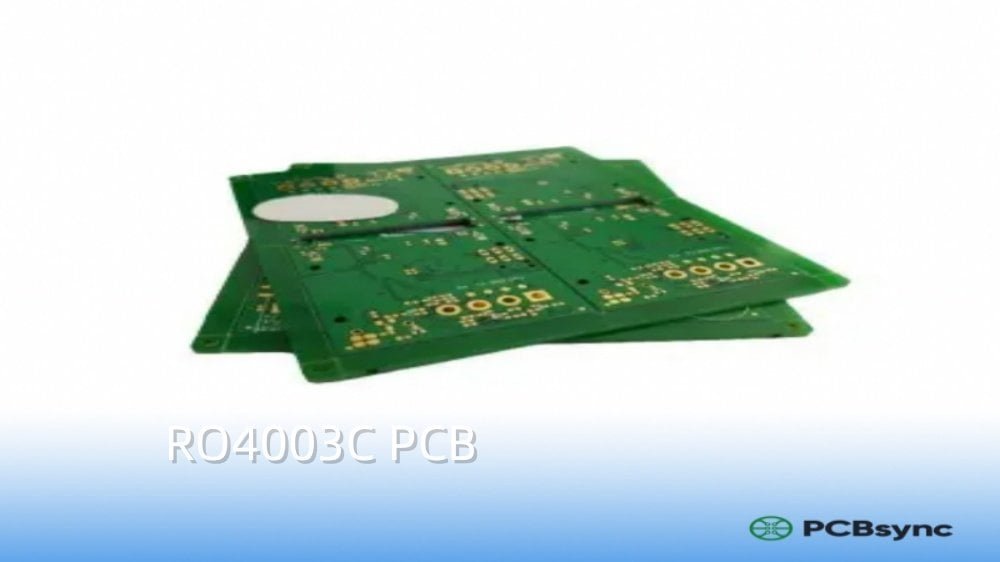
These materials serve different niches. RO4003C offers easier processing (no sodium treatment required), lower cost, and a Dk of 3.38—making it suitable for many RF applications through 10 GHz. RT/duroid 5880LZ provides the lowest possible Dk (1.96), lower weight, and better performance at millimeter-wave frequencies, but at higher cost and with more demanding fabrication requirements. Choose RO4003C for cost-sensitive applications where its higher Dk is acceptable; choose RT/duroid 5880LZ when you need absolute minimum Dk, minimum weight, or the best possible mmWave performance.
Conclusion
RT/duroid 5880LZ occupies a unique position in the high-frequency laminate market. Its combination of ultra-low dielectric constant, low density, and excellent thermal properties makes it the go-to choice for weight-sensitive, high-performance RF and microwave applications. From aerospace phased arrays to 5G mmWave infrastructure, this material enables designs that simply wouldn’t be possible with conventional substrates.
The key is matching RT/duroid 5880LZ to applications that truly benefit from its distinctive properties. When weight matters, when you’re pushing into millimeter-wave frequencies, or when you need rock-solid PTH reliability through extreme thermal cycling—that’s when RT/duroid 5880LZ earns its premium price tag.
Work with a fabricator experienced in PTFE materials, follow Rogers’ processing guidelines, and you’ll achieve the performance this remarkable material promises.
Inquire: Call 0086-755-23203480, or reach out via the form below/your sales contact to discuss our design, manufacturing, and assembly capabilities.
Quote: Email your PCB files to Sales@pcbsync.com (Preferred for large files) or submit online. We will contact you promptly. Please ensure your email is correct.
Notes: For PCB fabrication, we require PCB design file in Gerber RS-274X format (most preferred), *.PCB/DDB (Protel, inform your program version) format or *.BRD (Eagle) format. For PCB assembly, we require PCB design file in above mentioned format, drilling file and BOM. Click to download BOM template To avoid file missing, please include all files into one folder and compress it into .zip or .rar format.