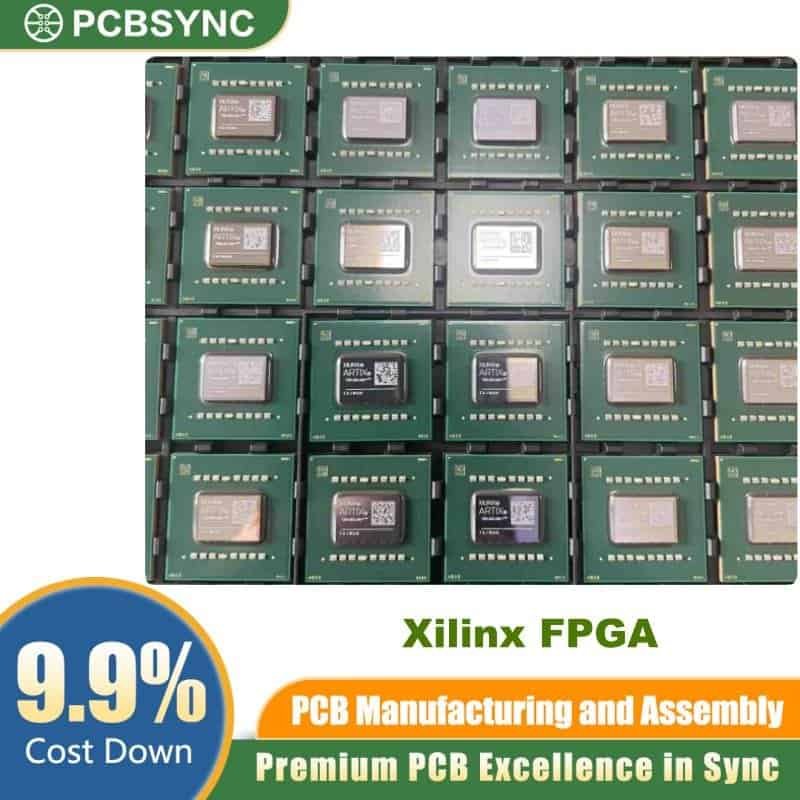
The XC2C384-7TQ144C is a powerful Complex Programmable Logic Device (CPLD) from AMD/Xilinx’s CoolRunner-II family. Featuring 384 macrocells, 9,000 system gates, and ultra-low power consumption, this CPLD delivers exceptional performance for embedded systems, industrial automation, and portable electronics applications.
What is the XC2C384-7TQ144C CoolRunner-II CPLD?
The XC2C384-7TQ144C is a Complex Programmable Logic Device (CPLD) manufactured by AMD (formerly Xilinx) as part of the renowned CoolRunner-II family. This device combines high-speed operation with industry-leading low power consumption, making it ideal for both data communication systems and portable battery-powered products. The -7 speed grade designation indicates optimized timing performance with a minimum propagation delay of 7.1 nanoseconds.
For more Xilinx programmable logic devices and FPGA solutions, visit our comprehensive Xilinx FPGA product catalog.
XC2C384-7TQ144C Key Specifications and Technical Data
Logic Resources and Architecture
| Parameter |
Value |
| Device Family |
CoolRunner-II CPLD |
| Number of Macrocells |
384 |
| System Gates |
9,000 |
| Function Blocks |
24 |
| Product Terms Per Macrocell |
56 |
| Process Technology |
0.18µm CMOS |
Performance and Timing Specifications
| Performance Parameter |
Specification |
| Maximum Frequency (Fmax) |
217 MHz |
| Pin-to-Pin Propagation Delay (tPD) |
7.1 ns (minimum) |
| Global Clock Setup Time |
2.9 ns |
| Speed Grade |
-7 (High Performance) |
| Global Clocks |
3 |
Electrical and Power Specifications
| Electrical Parameter |
Value |
| Core Supply Voltage (VCC) |
1.8V (1.7V – 1.9V) |
| I/O Voltage Compatibility |
1.5V, 1.8V, 2.5V, 3.3V |
| I/O Banks |
4 |
| Maximum User I/O Pins |
118 |
| Operating Temperature |
0°C to +70°C (Commercial) |
Package Information and Pinout
| Package Detail |
Specification |
| Package Type |
144-Pin TQFP (Thin Quad Flat Pack) |
| Package Dimensions |
20mm x 20mm |
| Pin Count |
144 |
| Lead Pitch |
0.5mm |
| Mounting Type |
Surface Mount (SMD/SMT) |
Advanced CoolRunner-II CPLD Features
The XC2C384-7TQ144C incorporates several innovative technologies that set it apart from competing CPLD solutions:
DataGATE Technology for Power Optimization
DataGATE is a proprietary method to selectively disable CPLD inputs that are not required during certain operational phases. By blocking unnecessary input switching, DataGATE significantly reduces dynamic power consumption, extending battery life in portable applications.
DualEDGE Clocking for Enhanced Performance
DualEDGE technology enables the device to utilize both rising and falling clock edges, effectively doubling data throughput while maintaining the same clock frequency. This feature is particularly valuable in high-bandwidth data communication applications.
CoolCLOCK Power Management
CoolCLOCK combines the clock divider and DualEDGE options to provide high-performance synchronous operation while using lower frequency clocking, substantially reducing overall power consumption without sacrificing system performance.
Built-in Clock Divider Circuit
The integrated clock divider can divide one externally supplied global clock (GCK2) by eight different selections, providing both even and odd division ratios for maximum design flexibility.
Supported I/O Standards and Voltage Compatibility
The XC2C384-7TQ144C supports multiple JEDEC I/O standards for seamless interfacing with various system components:
- LVTTL (Low Voltage TTL)
- LVCMOS33 (3.3V CMOS)
- LVCMOS25 (2.5V CMOS)
- LVCMOS18 (1.8V CMOS)
- LVCMOS15 (1.5V CMOS with Schmitt-trigger inputs)
- SSTL2_1 and SSTL3_1 (Stub Series Terminated Logic)
- HSTL_1 (High-Speed Transceiver Logic)
XC2C384-7TQ144C Applications and Use Cases
The XC2C384-7TQ144C CoolRunner-II CPLD is optimized for a wide range of applications requiring high performance and low power consumption:
- Portable and battery-powered electronic devices
- Industrial automation and control systems
- High-speed data communication equipment
- Glue logic and system integration
- Consumer electronics and handheld devices
- Telecommunications infrastructure
- Medical instrumentation
- Automotive electronics systems
- Remote monitoring and wireless interfacing
Programming and Development Support
IEEE 1149.1/1532 JTAG Programming Interface
The XC2C384-7TQ144C features full IEEE 1149.1 and IEEE 1532 boundary-scan (JTAG) support, enabling in-system programming (ISP), prototyping, and comprehensive testing capabilities. This allows designers to program, reprogram, and debug the device while it remains soldered on the PCB.
Quadruple Data Security Protection
The device incorporates quadruple data security features to protect proprietary designs from unauthorized access or copying. This robust security mechanism ensures intellectual property protection throughout the product lifecycle.
Why Choose the XC2C384-7TQ144C for Your Design?
- Ultra-Low Power Consumption: Advanced 0.18µm CMOS technology delivers industry-leading low standby and dynamic power
- High-Speed Performance: 217 MHz maximum frequency with 7.1ns propagation delay
- Flexible I/O: Multi-voltage support from 1.5V to 3.3V for easy system integration
- Innovative Power Features: DataGATE, DualEDGE, and CoolCLOCK technologies
- Easy Development: Full JTAG support with Xilinx ISE and Vivado design tools
- Robust Protection: Hot-plugging capability and design security features
- Enhanced Signal Integrity: Schmitt-trigger inputs and open-drain outputs
XC2C384-7TQ144C Part Number Decoder
| Code |
Meaning |
| XC2C |
Xilinx CoolRunner-II Family |
| 384 |
384 Macrocells |
| -7 |
Speed Grade -7 (High Performance, 7.1ns tPD) |
| TQ |
TQFP Package Type (Thin Quad Flat Pack) |
| 144 |
144-Pin Configuration |
| C |
Commercial Temperature Grade (0°C to +70°C) |
Summary: XC2C384-7TQ144C CoolRunner-II CPLD
The XC2C384-7TQ144C represents an optimal balance of performance, power efficiency, and design flexibility in the CPLD market. With 384 macrocells, 217 MHz operation, and advanced power management features like DataGATE and CoolCLOCK, this CoolRunner-II device is the ideal choice for engineers designing next-generation portable devices, industrial systems, and high-speed communication equipment. Its comprehensive I/O standard support and robust programming interface ensure seamless integration into virtually any electronic system design.