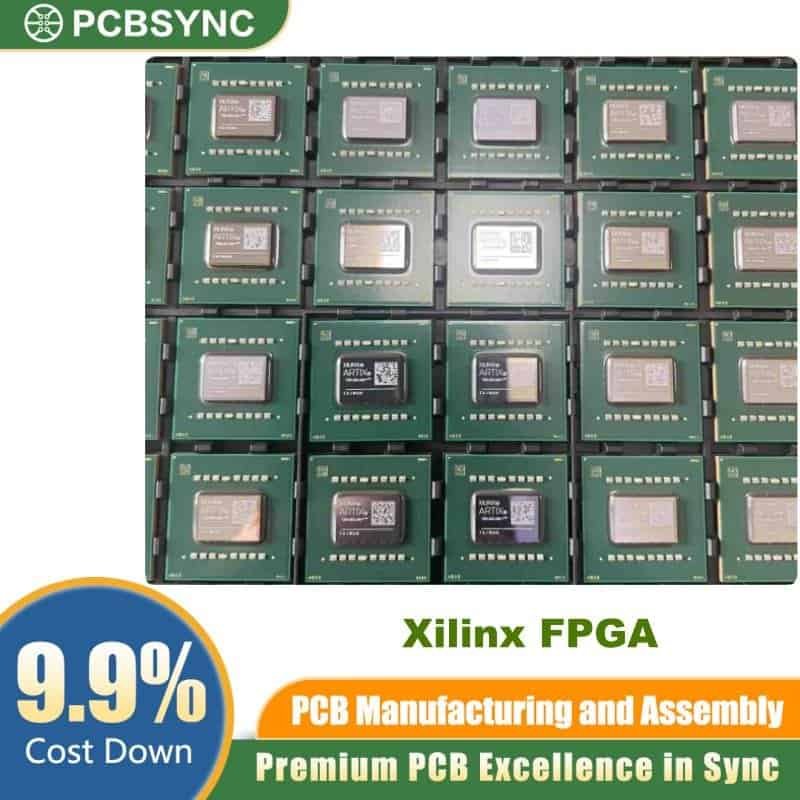
Overview of XC18V01PCG20C Serial Configuration Memory
The XC18V01PCG20C is a high-performance, in-system programmable (ISP) configuration PROM manufactured by AMD (formerly Xilinx). This 1-Megabit serial configuration memory device provides reliable, non-volatile storage for FPGA configuration data, making it an essential component for Xilinx FPGA applications across telecommunications, industrial control, and embedded systems.
Key Features and Specifications
Technical Specifications Table
| Parameter |
Specification |
| Memory Capacity |
1 Megabit (128KB) |
| Operating Voltage |
3.0V to 3.6V (3.3V typical) |
| Package Type |
20-Pin PLCC (9x9mm) |
| Programming Type |
In-System Programmable (ISP) |
| Operating Temperature |
0°C to +70°C (Commercial) |
| Interface Type |
Serial Configuration |
| Access Time |
Fast clock speed support |
| Manufacturer |
AMD (Xilinx Inc.) |
| RoHS Compliance |
Yes |
Performance Characteristics
| Feature |
Value |
| Configuration Speed |
High-speed serial data transfer |
| Power Consumption |
Low power operation |
| Data Retention |
20+ years |
| Programming Cycles |
10,000+ cycles |
| Cascading Support |
Multiple device chaining capability |
| JTAG Support |
IEEE 1149.1 compatible |
Understanding XC18V01PCG20C Architecture
Memory Organization and Configuration
The XC18V01PCG20C features a 1-Megabit memory array organized for efficient FPGA configuration. The device utilizes serial data transfer protocol, enabling streamlined configuration of Xilinx FPGAs while minimizing pin count requirements.
Pin Configuration and Package Details
The 20-pin PLCC (Plastic Leaded Chip Carrier) package provides:
- Compact 9x9mm footprint
- J-lead configuration for reliable PCB mounting
- Standard PLCC socket compatibility
- Excellent thermal characteristics
Applications and Use Cases
Primary Applications
- FPGA Configuration Storage
- Stores configuration bitstreams for Xilinx FPGAs
- Enables automatic configuration on power-up
- Supports remote system updates
- Industrial Control Systems
- Factory automation equipment
- Process control applications
- Programmable logic controllers (PLCs)
- Telecommunications Equipment
- Network infrastructure devices
- Communication protocol converters
- Signal processing systems
- Embedded Systems
- Medical devices
- Automotive electronics
- Consumer electronics products
Technical Advantages
Why Choose XC18V01PCG20C?
In-System Programmability: The ISP capability allows field updates without device removal, reducing maintenance costs and system downtime. This feature is particularly valuable for deployed systems requiring firmware updates.
Low Power Operation: Operating within the 3.0V to 3.6V range, the XC18V01PCG20C delivers excellent power efficiency, making it suitable for battery-powered and energy-conscious applications.
High Reliability: With 20+ years of data retention and 10,000+ programming cycles, this configuration PROM ensures long-term system reliability and durability.
Flexible Cascading: Multiple XC18V01PCG20C devices can be cascaded to support larger FPGA configurations, providing scalability for complex designs.
Compatibility and Integration
Compatible FPGA Families
| FPGA Family |
Compatibility |
| Spartan Series |
Fully Compatible |
| Virtex Series |
Fully Compatible |
| XC4000 Series |
Fully Compatible |
| XC17V00 Series |
Cross-compatible |
Integration Guidelines
When integrating the XC18V01PCG20C into your design:
- Power Supply Design: Ensure stable 3.3V power with proper decoupling capacitors (0.1µF ceramic near device pins)
- Signal Integrity: Maintain controlled impedance for serial data lines
- Thermal Management: Provide adequate airflow for continuous operation
- Programming Interface: Implement JTAG or serial programming interface according to datasheet specifications
Programming and Configuration
Programming Methods
The XC18V01PCG20C supports multiple programming approaches:
- JTAG Programming: IEEE 1149.1 compliant boundary scan programming
- Serial Programming: Direct serial interface programming
- In-System Programming: Field programming without device removal
Configuration Process
The device automatically configures the target FPGA through the following sequence:
- Power-up initialization
- Serial data stream transmission
- FPGA configuration verification
- Normal operation mode
Comparison with Alternative Solutions
XC18V01PCG20C vs. Other Configuration PROMs
| Feature |
XC18V01PCG20C |
Standard Flash |
EEPROM Solutions |
| Configuration Speed |
Fast |
Medium |
Slower |
| Power Consumption |
Low |
Medium |
Low |
| Programming Cycles |
10,000+ |
100,000+ |
100,000+ |
| Cost Effectiveness |
Excellent |
Higher |
Medium |
| FPGA Optimization |
Dedicated |
Generic |
Generic |
Quality and Compliance
Certifications and Standards
- RoHS Compliant: Lead-free manufacturing
- Commercial Temperature Grade: 0°C to +70°C operation
- Quality Standards: ISO-certified manufacturing processes
Purchasing and Availability
Package Options
The XC18V01PCG20C is available in:
- Tube packaging for automated assembly
- Bulk quantities for high-volume production
- Engineering samples for prototyping
Ordering Information
When ordering XC18V01PCG20C, specify:
- Part number: XC18V01PCG20C
- Package type: 20-PLCC
- Temperature grade: Commercial (C)
- Quantity requirements
Design Considerations
Best Practices for Implementation
- Power Supply Filtering: Use low-ESR capacitors for voltage regulation
- PCB Layout: Minimize trace lengths for clock and data signals
- ESD Protection: Implement proper ESD protection circuits
- Thermal Design: Consider ambient temperature and airflow
Common Design Challenges
Programming Voltage Verification: Ensure correct 3.3V supply voltage to prevent programming failures. Voltage deviations can lead to unreliable configuration data storage.
Signal Timing: Match FPGA clock requirements with PROM specifications to ensure reliable configuration timing.
Interface Compatibility: Verify JTAG chain configuration when using in-system programming to avoid communication errors.
Troubleshooting Guide
Common Issues and Solutions
| Issue |
Possible Cause |
Solution |
| Configuration Failure |
Incorrect voltage |
Verify 3.3V ±5% supply |
| Slow Configuration |
Long PCB traces |
Reduce trace length, add termination |
| Programming Error |
JTAG chain issues |
Check cable, verify pinout |
| Data Corruption |
ESD damage |
Implement proper ESD protection |
Environmental and Storage
Storage Recommendations
- Temperature: -40°C to +125°C storage range
- Humidity: 5% to 95% non-condensing
- ESD Precautions: Store in anti-static packaging
- Shelf Life: Unlimited when properly stored
Frequently Asked Questions
Q: Can XC18V01PCG20C be reprogrammed?
Yes, the device supports in-system programming with 10,000+ programming cycles, allowing field updates and configuration changes.
Q: What is the maximum configuration speed?
Configuration speed depends on the FPGA clock frequency, typically supporting speeds suitable for most commercial applications.
Q: Is the XC18V01PCG20C pin-compatible with other family members?
Yes, it maintains pin compatibility with other XC18V00 series devices, facilitating easy capacity upgrades.
Q: What programming tools are required?
Standard Xilinx programming tools including iMPACT and Vivado Hardware Manager support this device.
Technical Support and Resources
Additional Documentation
- Detailed datasheet with electrical specifications
- Application notes for FPGA configuration
- Reference designs and example projects
- Programming software and utilities
Getting Technical Assistance
For technical support regarding the XC18V01PCG20C:
- Consult AMD/Xilinx technical documentation
- Access community forums for design discussions
- Contact authorized distributors for application assistance
Conclusion
The XC18V01PCG20C represents a reliable, cost-effective solution for FPGA configuration storage. Its combination of in-system programmability, low power consumption, and robust performance makes it an ideal choice for modern embedded systems and industrial applications. Whether you’re designing telecommunications equipment or industrial controllers, this configuration PROM delivers the reliability and flexibility required for professional FPGA implementations.