Inquire: Call 0086-755-23203480, or reach out via the form below/your sales contact to discuss our design, manufacturing, and assembly capabilities.
Quote: Email your PCB files to Sales@pcbsync.com (Preferred for large files) or submit online. We will contact you promptly. Please ensure your email is correct.
Notes: For PCB fabrication, we require PCB design file in Gerber RS-274X format (most preferred), *.PCB/DDB (Protel, inform your program version) format or *.BRD (Eagle) format. For PCB assembly, we require PCB design file in above mentioned format, drilling file and BOM. Click to download BOM template To avoid file missing, please include all files into one folder and compress it into .zip or .rar format.
If you’ve been designing antenna systems or RF circuits for telecom infrastructure, you’ve probably come across Rogers AD255C. I’ve worked with this material on several base station antenna projects, and it’s become my go-to choice when PIM performance and cost really matter.
In this guide, I’ll break down everything you need to know about AD255C—from its technical specs and real-world applications to fabrication tips that took me years to figure out. Whether you’re evaluating materials for a new 5G antenna design or comparing AD255C against alternatives like RO4350B, this article should help you make an informed decision.
AD255C is a third-generation PTFE-based laminate developed by Rogers Corporation (originally Arlon before the acquisition). It belongs to the AD Series of antenna-grade materials specifically engineered for wireless infrastructure applications.
What makes AD255C stand out is its composite construction. Rogers combines a fluoropolymer (PTFE) resin system with micro-dispersed ceramic fillers and woven fiberglass reinforcement. This three-component approach delivers something most engineers are always chasing: excellent RF performance at a reasonable price point.
The material was designed as an improvement over the earlier AD255A product, offering better cost efficiency while maintaining the electrical characteristics that antenna designers need.
Why AD255C Matters for Antenna Design
Here’s the thing about antenna PCBs—they’re not like your typical FR-4 boards. When you’re working at frequencies above 1 GHz, every dB of loss matters. And if you’re building base station antennas that need to handle multiple carriers simultaneously, passive intermodulation (PIM) becomes critical.
AD255C addresses both concerns. The PTFE base keeps losses low across a wide frequency range, while the ceramic fillers provide the thermal stability that prevents your antenna’s phase characteristics from drifting with temperature changes.
AD255C Technical Specifications
Let me walk you through the key specifications that matter for actual design work. I’ve pulled these from Rogers’ official datasheet and added some context based on my experience.
The Dk tolerance of ±0.05 is worth highlighting. That tight control means you can actually hit your target impedance without excessive tuning, which saves time during prototype iterations.
Mechanical Properties
Property
Value
Test Method
Copper Peel Strength
2.4 N/mm
After thermal stress
Flexural Strength (MD/CD)
8.8 / 6.4 MPa
–
Tensile Strength (MD)
8.1 MPa
ASTM D3039
Tensile Strength (CD)
6.6 MPa
ASTM D3039
Flexural Modulus (MD/CD)
930 / 818 MPa
IPC-TM-650 2.4.4
Dimensional Stability (MD/CD)
0.03 / 0.07 mils/inch
After etch and bake
Thermal Properties
Property
Value
Test Method
Decomposition Temperature (Td)
>500°C
TGA
Delamination Time @ 288°C
>60 minutes
–
CTE (Z-axis)
50 ppm/°C
TMA
Thermal Conductivity
0.35 W/mK
Z-direction
Flammability Rating
V-0
UL 94
Moisture Absorption
0.03%
–
That Z-axis CTE of 50 ppm/°C is considerably lower than typical PTFE laminates, which improves plated through-hole reliability significantly.
PIM Performance
This is where AD255C really shines. Using reverse-treated ED copper foil:
Thickness
Typical PIM Value
Test Frequency
30 mil (0.762mm)
-159 dBc
1900 MHz
60 mil (1.524mm)
-163 dBc
1900 MHz
For base station antennas, these PIM numbers are excellent. You’re looking at values that won’t cause issues even with modern multi-carrier systems.
AD255C Available Configurations
Copper Options
AD255C is available with several copper foil choices:
Standard ED (electrodeposited) copper: General-purpose option, good balance of cost and performance
Reverse-treated ED copper: Better PIM performance, recommended for antenna applications
IM Series copper foil: High peel strength option for demanding mechanical requirements
Available Thicknesses
Dielectric Thickness
Metric Equivalent
20 mil
0.508 mm
30 mil
0.762 mm
40 mil
1.016 mm
60 mil
1.524 mm
125 mil
3.175 mm
Copper weight options typically include 1 oz (35 µm) and 2 oz (70 µm).
Panel Sizes
Standard panel sizes follow industry conventions:
12″ × 18″ (305 × 457 mm)
24″ × 18″ (610 × 457 mm)
24″ × 36″ (610 × 915 mm)
Key Benefits of AD255C Laminate
After using AD255C on multiple projects, here are the advantages that actually matter in practice:
1. Excellent Low-Loss Performance
With a dissipation factor of just 0.0013 at 10 GHz, AD255C keeps insertion losses minimal. This translates directly to higher antenna efficiency—something your system engineers will thank you for.
2. Superior PIM Characteristics
PIM values reaching -163 dBc mean you can design multi-band antennas without worrying about intermodulation products interfering with sensitive receive channels.
3. Outstanding Phase Stability
The micro-dispersed ceramic fillers provide thermal compensation that keeps phase stable across temperature variations. This is crucial for phased array antennas where phase drift across elements can destroy beam pointing accuracy.
4. Cost-Effective PTFE Alternative
Compared to some high-end PTFE materials, AD255C offers a compelling price-performance ratio. You get most of the RF benefits without the premium pricing.
5. Standard PTFE Processing Compatibility
If your fabrication shop already handles PTFE materials, they can work with AD255C using their existing processes and equipment. No special treatment required for PTH preparation.
6. Improved Reliability
The lower Z-axis CTE compared to traditional PTFE laminates means better plated through-hole reliability, while the low X-Y expansion improves BGA solder joint reliability for designs that include surface-mount components.
AD255C Applications
Cellular Infrastructure Base Station Antennas
This is the primary target market for AD255C. The combination of low loss, excellent PIM, and phase stability makes it ideal for:
4G/LTE antenna arrays
5G sub-6 GHz antenna systems
Multi-band antenna panels
Distributed antenna systems (DAS)
Automotive Telematics Antenna Systems
Modern vehicles require multiple antenna systems for:
AD255C’s thermal stability handles the demanding automotive temperature range well.
Advanced Driver Assistance Systems (ADAS)
Radar antennas for ADAS applications benefit from AD255C’s consistent dielectric properties and low loss at millimeter-wave frequencies.
Commercial Satellite Radio Antennas
SDARS antennas need consistent performance across the 2.3 GHz band. AD255C delivers the required electrical characteristics.
IoT and Wireless Infrastructure
For industrial IoT gateways, backhaul radios, and other wireless infrastructure equipment operating at high frequencies, AD255C provides a reliable foundation.
AD255C vs Other Rogers Materials
One of the most common questions I get is how AD255C compares to other Rogers laminates. Here’s a practical comparison:
AD255C vs RO4350B
Parameter
AD255C
RO4350B
Dielectric Constant
2.55
3.48
Dissipation Factor (10 GHz)
0.0013
0.0037
Material Type
PTFE/Ceramic/Glass
Hydrocarbon/Ceramic
Processing
PTFE processes
FR-4 compatible
PIM Performance
Excellent (-159 to -163 dBc)
Good
Primary Use
Antenna elements
RF front-end, general RF
Cost
Moderate-High
Moderate
When to choose AD255C: Pure antenna applications where PIM and phase stability are critical.
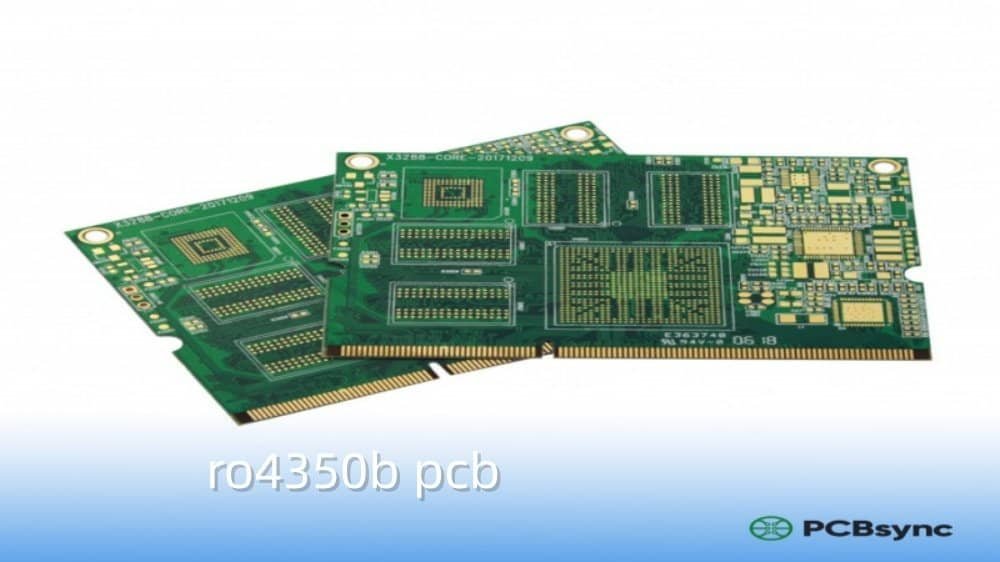
When to choose RO4350B: Mixed RF/digital designs, boards requiring FR-4 compatible processing, cost-sensitive applications where PTFE performance isn’t necessary.
The AD Series offers Dk options at 2.50, 2.55, 2.60, 3.00, 3.20, and 3.50, allowing designers to optimize antenna dimensions for their specific frequency and form factor requirements.
AD255C PCB Design and Fabrication Guidelines
Getting the most out of AD255C requires attention to a few key fabrication considerations.
Pre-Processing
Storage: Store laminates in ambient conditions. AD255C has low moisture absorption (0.03%), so humidity control is less critical than with some other materials.
Pre-bake: Bake cores at 110-125°C for 30 minutes before lamination to remove any absorbed moisture.
Drilling and Routing
AD255C can be processed using standard PTFE drilling practices
Entry and backup materials should be appropriate for PTFE substrates
Control feed rates to prevent smearing
Hole Preparation
Plasma treatment (CF₄/O₂ mixture) is preferred before PTH plating for optimal adhesion
Standard sodium etchback processes also work well
The key is ensuring proper desmear to achieve good copper adhesion
Imaging and Etching
Standard photoresist processes are compatible
Etch chemistry and parameters should follow PTFE guidelines
For antenna applications where corrosion resistance and long-term stability matter, immersion gold is the most common choice.
Multilayer Considerations
When building multilayer constructions:
Use compatible bonding films (Rogers RO4400 series, FEP films work well)
Consider hybrid stackups with FR-4 for non-RF layers to reduce cost
Match CTE between layers to prevent warpage
Design Dk Value
Use the design Dk of 2.60 for impedance calculations. This accounts for manufacturing tolerances and ensures your fabricated boards match simulations more closely than using the nominal 2.55 value.
IPC-TM-650: Test methods for printed board materials
Frequently Asked Questions About AD255C
What is the dielectric constant of AD255C?
AD255C has a process dielectric constant of 2.55 ±0.05 at 10 GHz. For design purposes, Rogers recommends using a design Dk of 2.60 to account for manufacturing tolerances. This ensures your impedance calculations align with fabricated board performance.
Is AD255C compatible with lead-free soldering?
Yes. AD255C has excellent thermal resistance with a decomposition temperature exceeding 500°C and delamination time greater than 60 minutes at 288°C. These properties make it fully compatible with lead-free soldering processes and multiple reflow cycles.
What frequency range is AD255C suitable for?
AD255C performs well from low MHz frequencies up through millimeter-wave ranges. It’s commonly used in applications from 700 MHz (cellular bands) through 6 GHz (5G sub-6). The material’s low and stable Dk/Df make it suitable even for higher frequency applications when required.
What’s the difference between AD255C and AD255A?
AD255C is the third-generation improvement over AD255A. The primary differences are improved cost efficiency and continued refinement of electrical properties while maintaining backward compatibility with existing fabrication processes.
Can I create hybrid PCBs combining AD255C with FR-4?
Yes, hybrid constructions are possible and common for reducing costs. You would typically use AD255C for the antenna layers where RF performance is critical, and standard FR-4 for non-RF layers. Use compatible bonding materials and work with a fabricator experienced in mixed-dielectric stackups.
Common Design Mistakes to Avoid with AD255C
Over the years, I’ve seen engineers make the same mistakes with AD255C. Here’s what to watch out for:
Using Process Dk Instead of Design Dk
This is the most common error. The process Dk (2.55) is measured under laboratory conditions. Your actual board will behave closer to the design Dk (2.60). Using the wrong value leads to impedance mismatches and wasted prototype iterations.
Ignoring Copper Foil Selection for Antenna Applications
Standard ED copper works fine for many RF applications, but if you’re building antennas where PIM is specified, you need reverse-treated ED copper. The difference between -150 dBc and -163 dBc PIM can mean the difference between passing and failing carrier acceptance tests.
Skipping the Pre-Bake Step
Even though AD255C has low moisture absorption, skipping the pre-bake before lamination can lead to delamination issues during assembly, especially with lead-free processes. It’s a simple step that prevents expensive failures.
Aggressive Mechanical Scrubbing
PTFE-based materials don’t respond well to aggressive mechanical brushing during surface preparation. Use chemical cleaning methods instead. Mechanical abrasion can damage the surface and create adhesion problems with solder mask or plating.
Not Specifying Material on the Drawing
Always call out “Rogers AD255C” specifically on your fabrication drawing, not just “PTFE laminate” or “high-frequency material.” Generic callouts leave room for substitution, and material properties vary significantly between manufacturers.
AD255C in the 5G Era
With 5G infrastructure deployment accelerating globally, AD255C has found new relevance. Sub-6 GHz 5G networks (particularly in the 3.5 GHz band) require antenna arrays with excellent PIM performance and stable phase characteristics—exactly what AD255C delivers.
For massive MIMO antenna panels that might contain 64 or more elements, consistent material properties across the panel are essential. AD255C’s tight Dk tolerance (±0.05) helps ensure uniform performance across all antenna elements, which is critical for beam forming accuracy.
The material’s thermal stability also matters for 5G. Active antenna units (AAUs) integrate radio electronics directly behind the antenna panel, creating thermal challenges. AD255C’s thermal properties help maintain consistent electrical performance even as temperatures fluctuate during operation.
Final Thoughts
AD255C has earned its place as a workhorse material for antenna applications. It delivers the RF performance that modern wireless systems demand without the extreme cost of some premium PTFE alternatives.
If you’re designing base station antennas, automotive telematics systems, or any application where PIM performance and phase stability matter, AD255C deserves serious consideration. The key is working with a fabricator who understands PTFE processing and can help you optimize your stackup for both performance and manufacturability.
For your next antenna project, request samples from Rogers or their distributors and run some prototypes. The material’s consistent properties make design iteration straightforward, and you’ll quickly see why so many antenna designers have made AD255C their default choice.
Inquire: Call 0086-755-23203480, or reach out via the form below/your sales contact to discuss our design, manufacturing, and assembly capabilities.
Quote: Email your PCB files to Sales@pcbsync.com (Preferred for large files) or submit online. We will contact you promptly. Please ensure your email is correct.
Notes: For PCB fabrication, we require PCB design file in Gerber RS-274X format (most preferred), *.PCB/DDB (Protel, inform your program version) format or *.BRD (Eagle) format. For PCB assembly, we require PCB design file in above mentioned format, drilling file and BOM. Click to download BOM template To avoid file missing, please include all files into one folder and compress it into .zip or .rar format.