Inquire: Call 0086-755-23203480, or reach out via the form below/your sales contact to discuss our design, manufacturing, and assembly capabilities.
Quote: Email your PCB files to Sales@pcbsync.com (Preferred for large files) or submit online. We will contact you promptly. Please ensure your email is correct.
Notes: For PCB fabrication, we require PCB design file in Gerber RS-274X format (most preferred), *.PCB/DDB (Protel, inform your program version) format or *.BRD (Eagle) format. For PCB assembly, we require PCB design file in above mentioned format, drilling file and BOM. Click to download BOM template To avoid file missing, please include all files into one folder and compress it into .zip or .rar format.
If you’ve ordered PCBs in panel format, you’ve probably encountered the term “X-out” during the quoting process. Your manufacturer may have asked whether you’d accept X-out boards, or you noticed a price difference between the two options. Understanding X-out PCBs helps you make smarter procurement decisions and potentially save significant costs.
In this guide, I’ll explain what X-out boards are, why they happen, the industry standards around them, and help you decide whether accepting them makes sense for your project.
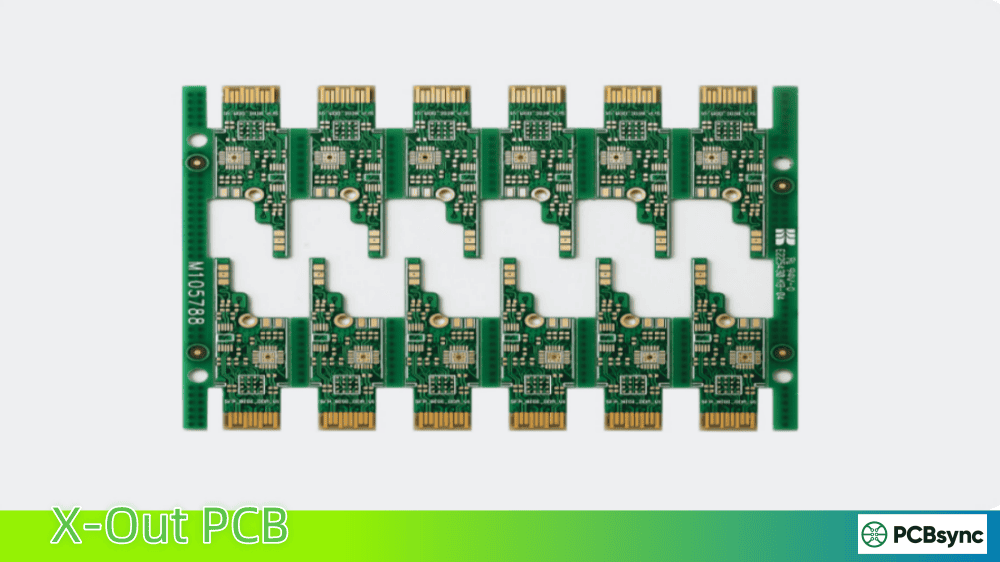
An X-out PCB (also called “cross-out board,” “X-board,” or “crossed board”) is a defective printed circuit board within a panelized array that has been marked with an “X” to indicate it shouldn’t be used. The marking is typically done with a permanent marker, creating a large, visible X across the board surface.
When PCBs are manufactured in panels containing multiple identical boards, some individual units inevitably fail quality inspection. Rather than scrapping the entire panel because of one defective board, manufacturers mark the bad ones with an X and ship the panel with the good boards intact.
Here’s the important part: you don’t pay for X-out boards. They’re shipped within your panels but aren’t counted toward your order quantity. If you order 100 boards and some panels contain X-outs, the manufacturer produces additional panels to ensure you receive your full 100 good boards.
Why Do X-Out PCBs Occur?
X-out boards aren’t necessarily a sign of poor manufacturing quality. PCB fabrication involves over 100 distinct processes, and every board has some chance of developing a defect. Even top-tier manufacturers experience X-outs—the difference is in the rate and how they’re managed.
Common Causes of X-Out Boards
Defect Type
Description
Impact
Open Circuits
Broken traces from over-etching or handling damage
Board won’t function
Short Circuits
Unintended connections from under-etching or contamination
The more boards per panel, the higher the chance of having at least one X-out. If each board has a 2% defect probability:
Boards per Panel
Probability of X-Out in Panel
4
~8%
10
~18%
20
~33%
This is why high-count panels with many small boards almost inevitably contain some X-outs—it’s simply statistics, not poor quality.
Industry Standards for X-Out PCB Acceptance
While there’s no single universal standard, the PCB industry has widely accepted guidelines:
Typical AQL (Acceptable Quality Level) Limits
Boards per Panel
Max X-Outs Allowed
Percentage
1-4
1
25%
5-8
2
25-40%
9-20
2-5
10-25%
20+
5 max or 10%
10%
Additionally, total X-out boards across the entire shipment should not exceed 10% of total quantity.
IPC Class Considerations
IPC-6012 defines three product classes that influence X-out expectations:
Class 1 (General Electronics): Higher X-out tolerance acceptable
Class 2 (Dedicated Service): Moderate standards
Class 3 (High Reliability): Minimal or no X-outs expected
How X-Out PCBs Affect SMT Assembly
One of the biggest considerations is how X-out boards impact your assembly process. Many procurement teams focus only on PCB price, but assembly efficiency can significantly affect total cost.
SMT Line Handling Methods
Modern assembly lines handle X-outs through several methods:
Bad Mark Recognition: The SMT machine’s vision system detects a specific mark and skips that board position. This requires consistent marking and programming time.
Fiducial-Based Skip: A fiducial on the defective board is blocked, causing the machine to skip it automatically.
Manual Programming: Operators inspect incoming panels and program skip positions for each batch containing X-outs.
Batch Segregation: Panels with X-outs are separated and processed with special programming, while perfect panels run at full speed.
Efficiency Impact
For a 4-up panel with 1 X-out board (25% affected):
Component placement efficiency drops to ~75%
Overall line throughput decreases 10-15%
Risk of component waste if skip fails
For high-volume automated assembly, this efficiency loss can be significant and may outweigh PCB cost savings.
Contract requirements — Customer mandates no X-outs
High-volume automated assembly — Efficiency matters more than PCB savings
Simple board designs — Low X-out rates make premium small
IPC Class 3 requirements — Quality system demands it
Cost Comparison Example
Factor
Accept X-Out
No X-Out
PCB unit price
$5.00
$5.75 (+15%)
Assembly efficiency loss
-5%
None
Component waste risk
0.5%
None
Best for
Low-medium volume, cost-sensitive
High volume, critical applications
The price premium for no X-out typically ranges from 5% for simple boards to 50%+ for complex HDI designs with many boards per panel.
X-Out PCB Marking Methods
Method
Pros
Cons
Permanent Marker
Simple, immediate, low cost
Not machine-readable
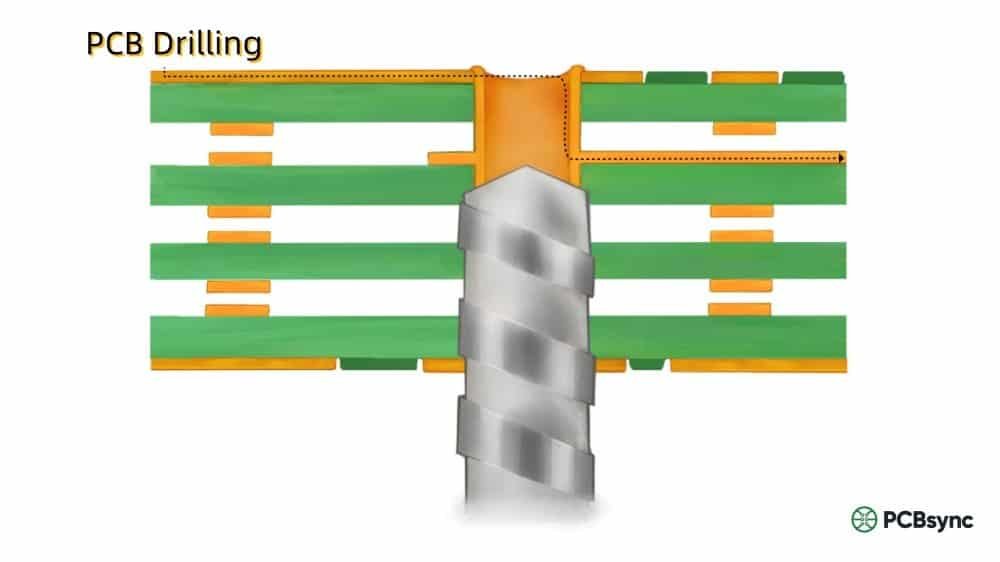
Drilled Hole
Machine-readable, permanent
Solder paste can fall through
Adhesive Label
High visibility, can include info
May fall off during processing
Ink Jet
Automated, consistent
Requires special equipment
Most manufacturers use permanent markers as the standard method. If you need automated skip detection, specify drilled hole marking or discuss options with your supplier.
Best Practices for Managing X-Out PCBs
Document Your Policy
Include X-out terms in your purchase specifications:
X-Out Policy:☐ Accept X-out (standard AQL limits)☐ No X-out accepted (premium pricing applies)Maximum per panel: ___Maximum per shipment: ___%
Communicate with Your Assembler
Before ordering PCBs, discuss with your contract manufacturer:
Their preferred handling method
Any additional charges for X-out panels
Efficiency impact estimates
Monitor Performance
Track X-out rates by supplier and technology. Investigate if rates exceed:
3% for simple 2-4 layer boards
5% for standard multilayer
10% for complex/HDI designs
Frequently Asked Questions
What exactly causes a board to be marked as X-out?
Boards fail electrical testing (opens, shorts) or visual inspection during pcb manufacturing. The X marking prevents defective boards from reaching assembly or field use.
Do I pay for X-out boards?
No. The manufacturer ensures you receive your ordered quantity of good boards, producing extra panels if needed.
Can X-out boards ever be used?
Never in production. However, they’re useful for training, fixture development, and destructive testing.
How do SMT machines skip X-out boards?
They don’t automatically recognize X markings. Machines must be programmed to skip specific positions, or boards need machine-readable markers like drilled holes.
What X-out rate should I expect?
Simple 2-layer boards should have less than 1-3% X-out rate. Standard 4-6 layer boards typically see 2-4%. Complex multilayer boards (8+ layers) commonly have 3-5%. HDI and advanced technology boards may see 5-15% or higher. Additionally, more boards per panel increases the probability of X-outs appearing in any given panel, even if the per-board rate remains low.
Conclusion
X-out boards are a normal part of PCB manufacturing—not a quality failure. The decision to accept or reject them depends on your specific situation: product requirements, assembly process, volume, and cost sensitivity.
For most prototype and low-volume projects, accepting X-outs saves money without meaningful quality impact. For high-reliability or high-volume production, the no X-out premium may be worthwhile.
Whatever you decide, document your policy clearly, communicate with suppliers and assemblers, and make it a deliberate choice rather than a default. That’s the mark of smart PCB procurement.
Quick Reference: X-Out Decision Matrix
Your Situation
Recommended Policy
Why
Prototype run
Accept X-out
Save cost, faster delivery
Consumer product
Accept X-out
Cost savings outweigh risks
Medical device
No X-out
Reliability is critical
High-speed SMT line
No X-out
Efficiency impact too high
Many small boards/panel
Accept X-out
Perfect panels very expensive
Simple 2-layer board
No X-out
Premium is minimal
Useful Resources
Industry Standards:
IPC-6012: Qualification and Performance Specification for Rigid Printed Boards
Inquire: Call 0086-755-23203480, or reach out via the form below/your sales contact to discuss our design, manufacturing, and assembly capabilities.
Quote: Email your PCB files to Sales@pcbsync.com (Preferred for large files) or submit online. We will contact you promptly. Please ensure your email is correct.
Notes: For PCB fabrication, we require PCB design file in Gerber RS-274X format (most preferred), *.PCB/DDB (Protel, inform your program version) format or *.BRD (Eagle) format. For PCB assembly, we require PCB design file in above mentioned format, drilling file and BOM. Click to download BOM template To avoid file missing, please include all files into one folder and compress it into .zip or .rar format.