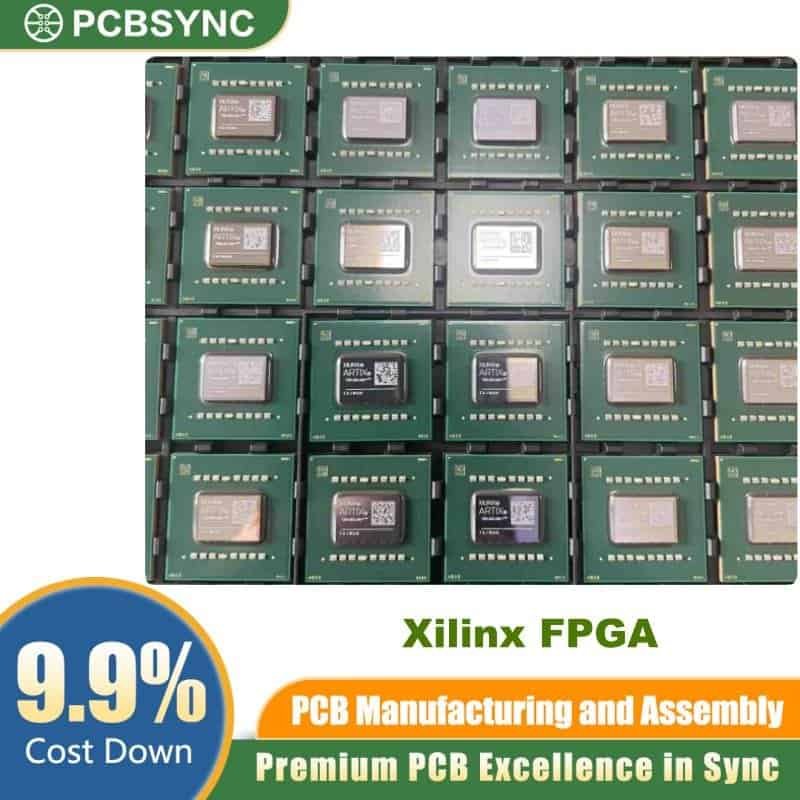
The XC2C64A-7PC44C is a high-performance Complex Programmable Logic Device (CPLD) from Xilinx’s renowned CoolRunner-II family. This 64-macrocell device combines exceptional speed with ultra-low power consumption, making it the ideal choice for battery-operated devices, portable electronics, and power-sensitive industrial applications. With its 44-pin PLCC package and 1.8V operation, the XC2C64A-7PC44C delivers reliable performance in space-constrained designs.
Overview of XC2C64A-7PC44C CPLD
The XC2C64A-7PC44C represents Xilinx’s commitment to providing designers with flexible, efficient programmable logic solutions. As part of the Xilinx FPGA and CPLD ecosystem, this device offers in-system programmability, making it perfect for rapid prototyping and field upgrades. The CoolRunner-II architecture ensures minimal power consumption during both standby and active operation, significantly improving overall system reliability and battery life.
Key Product Specifications
| Parameter |
Specification |
| Part Number |
XC2C64A-7PC44C |
| Manufacturer |
Xilinx |
| Product Family |
CoolRunner-II CPLD |
| Macrocells |
64 |
| Logic Gates |
1.5K |
| Operating Voltage |
1.8V |
| Maximum Frequency |
159MHz |
| Package Type |
44-Pin PLCC |
| Technology Node |
0.18μm |
| Temperature Range |
-40°C to +85°C |
| RoHS Compliance |
Contact Supplier |
Technical Features and Advantages
Advanced Architecture Design
The XC2C64A-7PC44C features an innovative architecture consisting of eight Function Blocks interconnected through a low-power Advanced Interconnect Matrix (AIM). This design delivers exceptional routing flexibility while maintaining minimal power consumption.
Function Block Capabilities
| Feature |
Details |
| Function Blocks |
8 |
| Input Signals per Block |
40 (true and complement) |
| PLA Configuration |
40 x 56 P-term |
| Macrocells per Block |
16 |
| Register Types |
D flip-flop, T flip-flop, D latch |
Power Management Excellence
One of the standout features of the XC2C64A-7PC44C is its industry-leading power efficiency:
- Zero-Power Technology: Ultra-low standby current consumption
- DataGATE Function: Reduces dynamic power by minimizing signal switching
- DualEDGE Capability: Enables high-performance operation with lower frequency clocking
- Dynamic Power Management: Intelligent power scaling based on utilization
XC2C64A-7PC44C Performance Specifications
Timing and Speed Characteristics
| Parameter |
Value |
Unit |
| Maximum Frequency |
159 |
MHz |
| Pin-to-Pin Delay |
7.5 |
ns (typical) |
| Clock-to-Output |
5.0 |
ns (typical) |
| Setup Time |
3.0 |
ns (typical) |
| Global Clock Lines |
3 |
– |
I/O Capabilities and Standards
The XC2C64A-7PC44C supports multiple I/O standards and voltage levels:
Supported I/O Standards
| Standard |
Voltage Level |
Application |
| LVTTL |
3.3V |
General Purpose |
| LVCMOS33 |
3.3V |
High-Speed Logic |
| LVCMOS25 |
2.5V |
Mixed Voltage Systems |
| LVCMOS18 |
1.8V |
Low Power Design |
| LVCMOS15 |
1.5V |
Ultra-Low Power |
Configurable Pin Features
- Slew Rate Control: Minimize EMI and signal reflections
- Bus Hold: Maintain last driven state
- Pull-up Resistors: Programmable weak pull-ups
- Open Drain Output: Support for wired-OR configurations
- Schmitt Trigger Inputs: Enhanced noise immunity
- Programmable Grounds: Flexible power distribution
Programming and Configuration
In-System Programmability
The XC2C64A-7PC44C offers flexible programming options:
| Feature |
Specification |
| Programming Method |
JTAG (IEEE 1149.1) |
| Program/Erase Cycles |
20,000 minimum |
| Configuration Time |
< 100ms (typical) |
| ISP Support |
Yes |
| Boundary Scan |
IEEE 1149.1/1532 |
Development Tool Compatibility
- Xilinx ISE Design Suite: Complete design flow support
- Vivado Design Suite: Advanced synthesis and implementation
- iMPACT: Device programming and verification
- ChipScope: Real-time debugging and analysis
Application Areas for XC2C64A-7PC44C
Industrial and Commercial Applications
The XC2C64A-7PC44C excels in diverse application domains:
Primary Application Fields
| Industry |
Typical Use Cases |
| Industrial Automation |
Motor control, sensor interfaces, PLC logic |
| Consumer Electronics |
Battery management, power sequencing, LED control |
| Telecommunications |
Protocol conversion, signal conditioning, timing control |
| Medical Devices |
Portable monitoring equipment, diagnostic tools |
| IoT Devices |
Edge computing, sensor nodes, data acquisition |
| Automotive |
Dashboard controls, lighting systems, interface logic |
| 5G Technology |
Base station logic, timing synchronization |
| Cloud Computing |
Server management, power distribution |
Design Implementation Examples
Glue Logic Replacement
Replace multiple discrete logic chips with a single XC2C64A-7PC44C:
- Reduces board space by up to 70%
- Lowers power consumption
- Improves system reliability
- Enables field upgrades
Interface Bridging
- UART to SPI Conversion: Protocol translation
- Parallel to Serial: Data format conversion
- Level Shifting: Voltage domain translation
- Bus Arbitration: Multi-master system control
XC2C64A-7PC44C Package Information
Physical Dimensions and Pinout
| Package Detail |
Specification |
| Package Type |
PLCC (Plastic Leaded Chip Carrier) |
| Pin Count |
44 |
| Body Size |
17.5mm x 17.5mm (typical) |
| Pitch |
1.27mm |
| Mounting Style |
Through-hole or surface mount |
| Thermal Resistance |
θJA: 45°C/W (typical) |
Pin Configuration Overview
The 44-pin PLCC package provides:
- 32 User I/O Pins: Maximum routing flexibility
- 2 Dedicated Input Pins: Clock and control signals
- 4 JTAG Pins: Programming and boundary scan
- Power and Ground Pins: Robust power distribution
Quality and Reliability
Environmental Specifications
| Parameter |
Rating |
| Operating Temperature |
-40°C to +85°C |
| Storage Temperature |
-65°C to +150°C |
| Humidity |
0-85% RH (non-condensing) |
| Thermal Cycling |
JESD22-A104 |
| ESD Protection |
HBM Class 1C (>1000V) |
Compliance and Standards
- IEEE 1149.1: Standard Test Access Port and Boundary-Scan Architecture
- IEEE 1532: In-System Configuration of Programmable Devices
- JEDEC Standards: Package and testing compliance
- UL Recognition: Component safety certification (where applicable)
Design Resources and Support
Available Documentation
| Resource Type |
Description |
| Datasheet |
Complete electrical and timing specifications |
| User Guide |
Comprehensive design and implementation manual |
| Application Notes |
Specific design examples and best practices |
| IBIS Models |
Signal integrity simulation models |
| Reference Designs |
Proven implementation examples |
Getting Started with XC2C64A-7PC44C
Design Flow Steps
- Requirements Definition: Specify logic functions and I/O requirements
- Schematic Entry or HDL Design: Create design using Verilog or VHDL
- Functional Simulation: Verify logic behavior
- Synthesis: Convert HDL to gate-level netlist
- Implementation: Place and route design
- Timing Analysis: Verify performance requirements
- Programming: Configure device via JTAG
- Testing: Validate in-system operation
Competitive Advantages
Why Choose XC2C64A-7PC44C?
| Advantage |
Benefit |
| Low Power Consumption |
Extended battery life, reduced cooling requirements |
| High Speed |
159MHz operation enables demanding applications |
| Flexible I/O |
Support for multiple voltage standards |
| Small Footprint |
44-pin PLCC saves board space |
| Cost-Effective |
Excellent price/performance ratio |
| Proven Reliability |
Xilinx quality and support |
| Easy to Program |
Standard JTAG interface |
| Rich Ecosystem |
Extensive tools and support resources |
Ordering Information and Availability
Part Number Breakdown
XC2C64A-7PC44C nomenclature explanation:
- XC2C: CoolRunner-II CPLD family
- 64: 64 macrocells
- A: Advanced product version
- 7: Speed grade (7ns)
- PC44: 44-pin PLCC package
- C: Commercial temperature range
Package Options and Variants
| Part Number |
Package |
Temperature Range |
| XC2C64A-7PC44C |
44-PLCC |
Commercial (0°C to +70°C) |
| XC2C64A-7PC44I |
44-PLCC |
Industrial (-40°C to +85°C) |
| XC2C64A-7VQ44C |
44-VQFP |
Commercial (0°C to +70°C) |
| XC2C64A-7CPG56C |
56-BGA |
Commercial (0°C to +70°C) |
Frequently Asked Questions
Technical Support FAQs
Q: Is the XC2C64A-7PC44C 5V tolerant? A: The device is not 5V tolerant. Maximum input voltage is VCCIO + 0.3V. Use external level shifters for 5V interface requirements.
Q: Can I reprogram the XC2C64A-7PC44C in the field? A: Yes, the device supports in-system programming via JTAG interface with over 20,000 program/erase cycles.
Q: What development tools are required? A: Xilinx ISE or Vivado Design Suite, along with a JTAG programmer such as Platform Cable USB II.
Q: Does this device have non-volatile configuration? A: Yes, the CoolRunner-II architecture uses Flash technology, maintaining configuration without external memory.
Q: What is the power consumption in standby mode? A: Typical standby current is less than 100μA, making it ideal for battery-powered applications.
Conclusion
The XC2C64A-7PC44C delivers an outstanding combination of performance, power efficiency, and flexibility for modern embedded system designs. Whether you’re developing IoT edge devices, industrial control systems, or portable electronics, this CPLD provides the perfect balance of capability and economy. Its proven CoolRunner-II architecture, extensive I/O options, and robust development ecosystem make it a reliable choice for both prototype and production applications.
With comprehensive design resources, excellent tool support, and Xilinx’s reputation for quality, the XC2C64A-7PC44C represents a smart investment for your next programmable logic project. Contact authorized distributors today to discuss your specific requirements and volume pricing options.