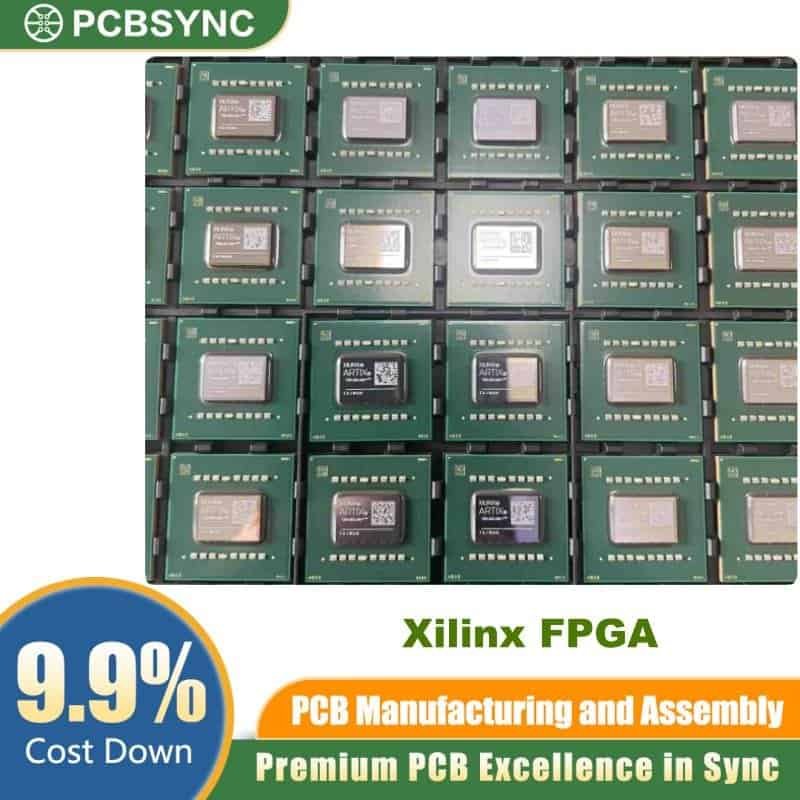
The XC2C64A-7CPG56C is a cutting-edge Complex Programmable Logic Device (CPLD) from AMD Xilinx’s renowned CoolRunner-II family. This 64-macrocell CPLD delivers exceptional performance with ultra-low power consumption, making it the ideal choice for battery-operated devices, portable electronics, and high-speed communication systems. Whether you’re designing embedded systems or prototyping advanced digital circuits, the XC2C64A-7CPG56C offers the perfect balance of speed, efficiency, and programmability.
Overview of XC2C64A-7CPG56C CPLD
The XC2C64A-7CPG56C represents AMD Xilinx’s commitment to delivering advanced programmable logic solutions. Built on 0.18-micron CMOS technology, this CPLD combines high-speed operation with minimal power consumption. The device features in-system programmability (ISP) through JTAG, allowing for easy updates and modifications without removing the chip from your circuit board.
Key Features and Benefits
The XC2C64A-7CPG56C stands out in the market due to its impressive feature set:
- Ultra-Low Power Consumption: CoolRunner-II technology ensures minimal power draw in both standby and active modes
- High-Speed Performance: 159MHz maximum operating frequency with 6.7ns propagation delay
- Flexible I/O Configuration: 45 user-configurable I/O pins supporting multiple voltage standards
- In-System Programmability: JTAG-based programming for quick design iterations
- RoHS Compliant: Lead-free package meeting environmental standards
- Wide Operating Temperature: Functions reliably from 0°C to 70°C
Technical Specifications
Electrical Characteristics
| Parameter |
Specification |
| Part Number |
XC2C64A-7CPG56C |
| Manufacturer |
AMD Xilinx |
| Product Family |
CoolRunner-II CPLD |
| Number of Macrocells |
64 |
| Usable Gates |
1,500 |
| Logic Elements/Blocks |
4 Function Blocks |
| Maximum Frequency |
159 MHz |
| Propagation Delay |
6.7 ns (tpd max) |
| Internal Voltage Supply |
1.7V ~ 1.9V (typical 1.8V) |
| Process Technology |
0.18μm CMOS |
Package and Physical Specifications
| Specification |
Details |
| Package Type |
56-LFBGA, CSPBGA |
| Supplier Device Package |
56-CSBGA (6mm x 6mm) |
| Ball Pitch |
0.5mm |
| Mounting Type |
Surface Mount Technology (SMT) |
| Number of I/O Pins |
45 user I/O |
| Operating Temperature |
0°C ~ 70°C (Commercial) |
| Package Weight |
Approximately 65mg |
| RoHS Status |
Lead-free / RoHS Compliant |
Programming and Configuration
| Feature |
Description |
| Programmable Type |
In-System Programmable (ISP) |
| Programming Interface |
IEEE 1149.1/1532 JTAG Boundary-Scan |
| Configuration Memory |
Non-volatile Flash-based |
| Programming Voltage |
Single 1.8V supply |
| Programming Cycles |
10,000+ erase/write cycles |
| Data Retention |
20 years typical |
Architecture and Design
CoolRunner-II Architecture
The XC2C64A-7CPG56C employs AMD Xilinx’s advanced CoolRunner-II architecture, specifically designed for power-sensitive applications. The device consists of eight function blocks interconnected by an Advanced Interconnect Matrix (AIM), providing 40 true and complement inputs to each block.
Function Block Architecture
Each function block contains:
- 16 Macrocells: Configurable for combinatorial or registered operation
- Programmable AND Array: Flexible logic implementation
- OR Array: Optimized sum-of-products generation
- Product Term Allocator: Efficient resource utilization
I/O Capabilities
The XC2C64A-7CPG56C offers exceptional I/O flexibility with support for multiple industry-standard voltage levels:
- LVTTL/LVCMOS: 3.3V, 2.5V, 1.8V, and 1.5V
- JEDEC Standards: Compatible with various I/O specifications
- Schmitt-Trigger Inputs: Enhanced noise immunity for 1.5V operation
- Programmable Output Drive: Adjustable current for different load requirements
Applications and Use Cases
Ideal Applications
The XC2C64A-7CPG56C excels in numerous application domains:
Portable and Battery-Powered Devices
Thanks to its ultra-low power consumption, this CPLD is perfect for:
- Handheld medical devices
- Portable measurement instruments
- Battery-operated data loggers
- Wearable electronics
Communication Systems
High-speed performance makes it suitable for:
- Protocol conversion interfaces
- Communication gateway controllers
- Signal processing accelerators
- Network equipment control logic
Industrial Control
Reliability and flexibility benefit:
- Programmable Logic Controllers (PLCs)
- Motor control systems
- Sensor interface circuits
- Factory automation equipment
Consumer Electronics
Cost-effective solution for:
- Smart home devices
- IoT edge nodes
- Audio/video processing
- Display controllers
Design Resources and Tools
Development Software
When working with the XC2C64A-7CPG56C, designers have access to professional development tools. For those working with related Xilinx FPGA platforms, the design flow remains familiar and streamlined.
Recommended Tools:
- Xilinx ISE Design Suite: Complete design environment for CoolRunner-II CPLDs
- Vivado Design Suite: Modern design platform with enhanced features
- Third-Party Tools: Support for industry-standard synthesis and simulation tools
Getting Started
Basic Design Flow
- Specification: Define your logic requirements and I/O configuration
- Design Entry: Use schematic capture or HDL (Verilog/VHDL)
- Synthesis: Convert design to optimized netlist
- Implementation: Fit design into XC2C64A-7CPG56C architecture
- Programming: Download configuration via JTAG interface
Comparison with Similar Devices
XC2C64A Family Variants
| Part Number |
Speed Grade |
Package |
I/O Count |
| XC2C64A-5CPG56C |
-5 (faster) |
56-CSBGA |
45 |
| XC2C64A-7CPG56C |
-7 (standard) |
56-CSBGA |
45 |
| XC2C64A-5VQG100C |
-5 (faster) |
100-VQFP |
64 |
| XC2C64A-7VQG100C |
-7 (standard) |
100-VQFP |
64 |
Competitive Advantages
Compared to alternative CPLDs, the XC2C64A-7CPG56C offers:
- Lower Power: 95% less power than competing devices
- Faster Programming: Flash-based configuration vs. EEPROM
- Better Integration: More functionality per macrocell
- Proven Reliability: Extensive field deployment history
Quality and Reliability
Manufacturing Standards
The XC2C64A-7CPG56C is manufactured to the highest quality standards:
- ISO 9001 Certified: Quality management system compliance
- Automotive Grade Options: AEC-Q100 qualified variants available
- ESD Protection: Robust protection against electrostatic discharge
- Moisture Sensitivity: MSL 3 rating for proper handling
Testing and Qualification
Each device undergoes rigorous testing:
- 100% production testing at both wafer and final test stages
- Burn-in testing for enhanced reliability screening
- Temperature cycling and thermal shock testing
- Extended life testing for mission-critical applications
Ordering Information and Packaging
Part Number Breakdown
Understanding the XC2C64A-7CPG56C part number:
- XC2C64A: Device family and macrocell count (64)
- -7: Speed grade (propagation delay specification)
- C: Commercial temperature range (0°C to 70°C)
- PG56: Package type (CSBGA with 56 balls)
- C: RoHS-compliant, lead-free package
Available Packaging Options
| Packaging |
Units per Package |
Tape & Reel Option |
| Tube |
119 devices |
No |
| Tape & Reel |
1,000 devices |
Yes |
| Tape & Reel |
2,500 devices |
Yes |
Power Management Considerations
Power Supply Requirements
The XC2C64A-7CPG56C requires careful power supply design:
Supply Voltage Specifications
- VCCINT (Core): 1.7V to 1.9V (nominal 1.8V)
- VCCIO (I/O Banks): 1.5V to 3.3V (depending on I/O standard)
- Supply Current: Typically <50μA in standby mode
Recommended Bypass Capacitors
For optimal performance, implement proper decoupling:
- 0.1μF ceramic capacitor on each power pin
- 10μF tantalum capacitor per power supply
- Place capacitors close to device pins
Layout and PCB Design Guidelines
Board Layout Best Practices
Signal Integrity
To ensure reliable operation of the XC2C64A-7CPG56C:
- Keep high-speed signals short: Minimize trace lengths for critical paths
- Use ground planes: Solid ground plane reduces EMI and improves signal quality
- Separate analog and digital grounds: If mixed-signal design
- Implement proper termination: For high-speed I/O signals
Thermal Management
Although the XC2C64A-7CPG56C has low power consumption:
- Ensure adequate airflow around the device
- Consider thermal vias under the package for improved heat dissipation
- Monitor junction temperature in high-ambient environments
Frequently Asked Questions
What is the difference between CPLD and FPGA?
CPLDs like the XC2C64A-7CPG56C offer non-volatile configuration, instant-on operation, and deterministic timing. FPGAs provide higher gate counts but require external configuration memory.
Can I reprogram the XC2C64A-7CPG56C in the field?
Yes, the device supports in-system programming through JTAG interface, allowing unlimited reprogramming for design updates or feature modifications.
What development boards support this device?
Several third-party development boards feature the CoolRunner-II family. Check manufacturer websites for current availability of XC2C64A-based boards.
Is the device suitable for industrial applications?
The commercial temperature range (-7C grade) is suitable for many industrial applications. For extended temperature requirements (-40°C to 125°C), consider the industrial grade variants.
Support and Resources
Technical Documentation
Comprehensive resources available for the XC2C64A-7CPG56C:
- Datasheet: Complete electrical and mechanical specifications
- User Guide: Detailed architecture and design information
- Application Notes: Design tips and best practices
- Reference Designs: Example projects and proven implementations
Community Support
Access extensive community resources:
- Xilinx Community Forums for peer-to-peer assistance
- Knowledge Base articles for common design challenges
- Video tutorials covering basic to advanced topics
- Technical support through authorized distributors
Conclusion
The XC2C64A-7CPG56C represents an excellent choice for designers seeking a reliable, low-power CPLD solution. With its combination of high performance, low power consumption, and extensive I/O capabilities, this device addresses the needs of modern embedded systems across multiple industries. The comprehensive development tools, proven reliability, and strong ecosystem support make the XC2C64A-7CPG56C an ideal platform for both prototyping and production designs.
Whether you’re developing next-generation portable electronics, upgrading existing industrial systems, or creating innovative IoT solutions, the XC2C64A-7CPG56C provides the programmable logic functionality you need with the power efficiency your application demands.