Inquire: Call 0086-755-23203480, or reach out via the form below/your sales contact to discuss our design, manufacturing, and assembly capabilities.
Quote: Email your PCB files to Sales@pcbsync.com (Preferred for large files) or submit online. We will contact you promptly. Please ensure your email is correct.
Notes: For PCB fabrication, we require PCB design file in Gerber RS-274X format (most preferred), *.PCB/DDB (Protel, inform your program version) format or *.BRD (Eagle) format. For PCB assembly, we require PCB design file in above mentioned format, drilling file and BOM. Click to download BOM template To avoid file missing, please include all files into one folder and compress it into .zip or .rar format.
The electronics industry never stops evolving. One of the more fascinating developments in recent years has been the emergence of transparent PCBs—circuit boards you can actually see through. These clear circuit boards combine cutting-edge technology with striking visual appeal, opening doors to applications that were once impossible with traditional opaque boards.
Picture a smartwatch where you can see the intricate circuitry beneath the display, or LED lighting panels that seem to float in mid-air, or augmented reality glasses where electronics blend invisibly with the lenses. These aren’t concepts from a distant future—they’re real products enabled by transparent PCB technology available today.
Whether you’re an engineer exploring new design possibilities, a product designer seeking aesthetic innovation, or simply curious about where PCB technology is heading, this guide covers everything you need to know about transparent printed circuit boards. We’ll explore the materials, manufacturing processes, applications, advantages, limitations, and future trends shaping this technology.
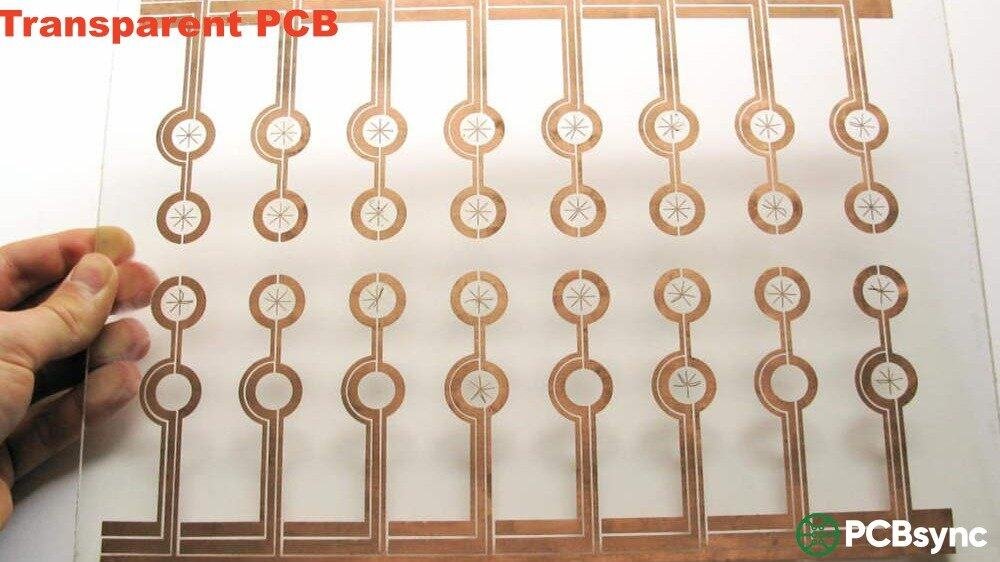
A transparent PCB (also called a clear circuit board or see-through PCB) is a specialized printed circuit board that uses clear or semi-transparent materials as its substrate instead of the typical opaque FR-4 fiberglass. This allows light to pass through the board, making internal components and circuitry visible from both sides.
Unlike conventional PCBs that hide their inner workings beneath layers of green, blue, or black solder mask, transparent PCBs put the electronics on display. The transparency can range from partial (where only the substrate is clear) to nearly complete (where even conductive traces are made with transparent materials).
The concept might sound simple, but achieving reliable electrical performance while maintaining optical clarity requires sophisticated materials and manufacturing techniques. Traditional copper traces remain visible on most transparent boards, though emerging technologies using indium tin oxide (ITO) or silver nanowires can create nearly invisible conductors.
These boards serve both functional and aesthetic purposes. In optical devices, the transparency enables light transmission and reduces scattering. In consumer products, the see-through design creates a futuristic, high-tech appearance that appeals to modern sensibilities. The technology has become particularly relevant in the context of 5G networks, where experts believe transparent PCBs could significantly change digital communication infrastructure.
Transparent PCB vs Traditional PCB: Key Differences
Understanding how transparent PCBs differ from their conventional counterparts helps clarify when and why you might choose one over the other. Here’s a detailed comparison:
Feature
Transparent PCB
Traditional PCB
Substrate Material
Glass, PET, Polyimide, Ceramic, PMMA
FR-4 Fiberglass, Metal Core
Light Transmission
75-95% transparency
Opaque (0%)
Manufacturing Cost
20-50% higher
Standard/Lower
Layer Count
Typically 1-4 layers
Up to 40+ layers
Flexibility
Available in flexible forms
Mostly rigid
Heat Resistance
Up to 200-1000°C (varies)
130-180°C typical
Primary Use Cases
Optical, Display, Aesthetic
General Electronics
Types of Transparent PCBs
Transparent PCBs come in several varieties, each suited to different applications based on their material properties, durability requirements, and performance characteristics.
Glass Transparent PCBs
Glass-based transparent PCBs offer the highest optical clarity among all types, with transparency rates exceeding 90%. The substrate is typically made from tempered glass, quartz glass, or sapphire glass—each offering distinct advantages.
Tempered glass provides excellent durability and impact resistance at a reasonable cost. The tempering process involves heating regular glass and rapidly cooling it, creating internal stresses that make the material much stronger than ordinary glass. This makes tempered glass PCBs suitable for demanding applications where mechanical robustness matters.
Quartz glass excels in high-temperature applications and offers superior UV transmission, making it popular in semiconductor and optical industries. Its chemical stability and resistance to thermal shock make it ideal for laboratory equipment and precision instruments. Sapphire glass represents the premium option, delivering exceptional hardness (second only to diamond) and thermal properties for high-end devices.
Glass substrates can withstand temperatures up to 1000°C and provide 360-degree light transmission—meaning light passes through omnidirectionally. They’re also environmentally friendly since glass materials (sand, limestone, soda ash) are abundant and recyclable. The flat surface of glass substrates ensures excellent dimensional stability with minimal deformation over time.
Ceramic Transparent PCBs
Ceramic transparent PCBs use materials like aluminum oxide (alumina), magnesium oxide, or yttrium oxide spinel. While not achieving the same transparency levels as glass (typically 75-85%), ceramic substrates offer superior thermal conductivity ranging from 24-31 W/mK.
This thermal performance makes ceramic transparent PCBs ideal for high-power applications such as high-power LEDs, infrared lighting, and laser modules. The substrate provides excellent electrical insulation while efficiently dissipating heat away from components.
Ceramic boards also feature a stable coefficient of thermal expansion (CTE), maintaining structural integrity even when temperatures fluctuate significantly. However, they come at a higher price point than glass alternatives.
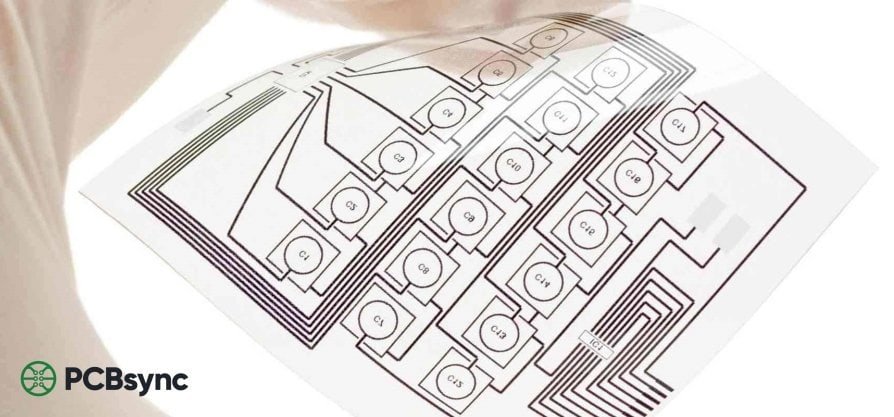
Flexible Transparent PCBs (Clear FPCs)
Flexible transparent PCBs combine optical clarity with the ability to bend, fold, and twist. These boards typically use PET (polyethylene terephthalate) or transparent polyimide films as substrates, achieving transparency levels around 85-95%.
The flexibility doesn’t compromise durability—polyimide-based variants resist thermal and mechanical stress remarkably well. These PCBs weigh up to 90% less than rigid equivalents of similar volume, making them perfect for portable electronics and wearable devices.
Some advanced PCB manufacturing methods can produce fully transparent flexible PCBs where even the conductive traces are invisible. This is achieved by clamping the circuit between two transparent materials, creating completely see-through electronics.
Materials Used in Transparent PCB Manufacturing
Substrate Materials
The substrate forms the foundation of any transparent PCB. Here are the primary materials used:
Polycarbonate: A clear thermoplastic with excellent impact resistance and optical clarity. Lightweight, shockproof, and tolerant of extreme temperatures.
PET (Polyethylene Terephthalate): Offers mechanical strength, chemical resistance, and flexibility at lower cost. Widely used in flexible transparent circuits.
Polyimide: Provides phenomenal thermal stability and flexibility with up to 95% clarity. Resistant to thermal and mechanical stress.
PMMA (Acrylic): Excellent light transmission properties, lighter than glass, and commonly used in illumination systems and optical devices.
Glass-Reinforced Epoxy: Offers partial transparency with high mechanical strength and good electrical insulation.
While copper traces remain visible even on transparent substrates, several technologies enable truly invisible conductors:
ITO (Indium Tin Oxide): The most widely used transparent conductor, offering good electrical performance but brittle under stress.
Silver Nanowires: Highly flexible and transparent, ideal for curved or wearable devices.
Graphene: Ultra-thin with excellent conductivity and flexibility. Represents the future of transparent electronics.
Conductive Polymers (PEDOT:PSS): Printable and flexible, often used in low-power or disposable electronics.
Material Properties Comparison
Material
Transparency
Best For
Limitations
Glass
90%+
Displays, Optical
Fragile under stress
Ceramic
75-85%
High-power LEDs
Higher cost
PET Film
85-95%
Flexible, Wearables
Lower heat tolerance
Polyimide
Up to 95%
High-temp flexible
More expensive
Polycarbonate
85-90%
Impact-resistant
Scratches easily
How Transparent PCBs Are Made
Manufacturing transparent PCBs requires specialized techniques that differ significantly from traditional PCB fabrication. The process must maintain optical clarity while ensuring electrical functionality.
Step-by-Step Manufacturing Process
Substrate Preparation: The transparent base material (glass, polymer film, or ceramic) is cut to the required panel size and cleaned to remove contaminants.
Conductive Layer Deposition: Transparent conductive materials (ITO, silver nanowires) or copper foils are deposited using sputtering, chemical vapor deposition (CVD), or lamination with clear adhesives.
Circuit Patterning: Photoresist is applied and the circuit design is transferred using photolithography, laser ablation, or nanoimprint lithography. UV light hardens the protected areas.
Etching: Chemical etching (often using ferric chloride) removes unwanted conductive material, leaving only the designed circuit traces.
Via Formation: Holes are drilled or laser-cut for interconnections between layers. Special care is needed to prevent cracking transparent substrates.
Plating: Through-holes are plated with copper to enable conductivity between layers.
Solder Mask Application: A clear photoimageable solder mask is applied to define solderable regions while maintaining transparency.
Surface Finishing: ENIG (Electroless Nickel Immersion Gold) or Immersion Silver finishes are applied for good conductivity and appearance.
Testing and Inspection: Electrical testing and optical inspection verify both functionality and clarity.
Applications of Transparent PCBs
Transparent PCBs serve diverse industries where optical properties, aesthetic appeal, or both are essential to the product design.
Consumer Electronics
Modern smartphones, tablets, smartwatches, and fitness trackers increasingly incorporate transparent PCB elements. The technology enables slimmer devices while providing visual differentiation in crowded markets. Gaming peripherals and high-end audio equipment showcase internal circuits as design features, appealing to enthusiasts who appreciate seeing the technology they’re using.
The wearables sector particularly benefits from transparent flexible PCBs, which allow designers to create circuits that conform to curved surfaces and fit into compact spaces. Training monitors, cameras, calculators, and mobile phones all utilize these boards for both functional and aesthetic purposes. Some manufacturers have reported significant consumer interest in products that reveal their internal workings.
Display Technology
LED displays, OLED screens, touch panels, and edge-lit displays rely on transparent PCBs for optimal light transmission. The technology is crucial for augmented reality (AR) glasses and heads-up displays (HUDs) where users need to see through the display while viewing digital information overlay.
Transparent PCBs reduce light scattering, improving display efficiency and image quality. Edge-lit LED displays create stunning visual effects with thin form factors by placing LEDs along panel edges and using total internal reflection to distribute light evenly. Some prototypes have achieved signal speeds up to 25 Gbps while maintaining transparency, opening possibilities for next-generation display technologies.
Medical Devices
The medical field uses transparent PCBs in wearable health monitors, diagnostic equipment, and aesthetic devices like magnetic facial lifting tools. The biocompatibility of certain transparent materials makes them suitable for devices in direct contact with skin. Optical biosensors and imaging equipment benefit from the light transmission properties.
Recent surveys indicate substantial interest from medical device manufacturers in transparent PCB technology. Dialysis machines, surgical equipment, and patient monitoring systems are increasingly incorporating these boards. The ability to visually inspect circuits without disassembly can aid troubleshooting and maintenance in critical healthcare settings.
Automotive Industry
Dashboard displays, ambient lighting systems, instrument panels, and ABS systems incorporate transparent PCBs. The technology enables seamless integration of electronics into windshield HUDs and interior design elements while meeting automotive-grade reliability standards.
Automotive tail lights and indicator systems benefit from the uniform light distribution that transparent PCBs provide. As vehicles become increasingly connected and electronic, the demand for visually appealing and functionally efficient circuit boards in automotive applications continues to grow. Some luxury manufacturers are exploring transparent PCBs as premium interior features.
Additional Applications
5G Communication: Expected to revolutionize digital communication infrastructure
Electronic Skin: Flexible transparent circuits for e-skin applications
Aerospace and Defense: Avionics displays, cockpit interfaces, infrared windows
Architectural Smart Glass: Building windows with integrated electronics
Industrial HMI: Interactive kiosks and control panels
Advantages and Disadvantages of Transparent PCBs
Advantages
Disadvantages
Aesthetic visual appeal and futuristic design
Higher manufacturing costs (20-50% more)
Excellent light transmission (up to 95%)
Limited layer count (typically 1-4 layers)
Reduced light scattering in optical apps
Complex manufacturing process
High thermal stability (glass up to 1000°C)
Substrate fragility (especially glass)
Lightweight (up to 90% lighter than rigid)
Laser drilling can crack substrates
Eco-friendly recyclable materials
Lower fabrication yield rates
Flexibility options for wearables
Limited component density
Enhanced thermal conductivity (ceramic)
Specialized expertise required
Design Considerations for Transparent PCBs
Designing effective transparent PCBs requires attention to factors unique to these specialized boards.
Key Design Rules
Trace Width and Spacing: Allow slightly larger spacing (3-5 mils minimum) between conductors to account for lower resolution in transparent materials.
Layer Count: Keep to 4 layers maximum to maintain transparency. More layers reduce optical clarity.
Copper Thickness: Stay within 1-2 oz copper weight. Thicker copper improves conductivity but reduces transparency.
Component Selection: Use transparent or reverse-mounted SMD components where visibility matters. Place opaque components strategically.
Thermal Management: Conduct thermal simulations early. Transparent substrates may have limited heat conduction, and traditional heat sinks cannot be used.
Board Thickness: Typical range is 0.3-1mm for flexible boards, with glass substrates allowing up to 1mm.
Surface Finish: Choose ENIG or Immersion Silver for good conductivity and smooth appearance.
Future of Transparent PCB Technology
The transparent PCB industry continues evolving rapidly. Market analysts project significant growth as manufacturing costs decrease and new applications emerge. Several trends are shaping its future:
Advanced Materials: Graphene-based conductors promise lower resistance while maintaining transparency, potentially reducing resistivity below 10⁻⁶ ohm-cm. Research into alternative transparent conductors continues to yield promising results.
Manufacturing Innovation: Additive manufacturing and advanced printing technologies will enable cost-effective large-scale production. Inkjet printing of transparent conductors is already showing commercial viability.
Higher Density: Improvements in fabrication will allow more copper layers and via-holes while maintaining transparency. Current limitations of 2-4 layers may expand significantly.
5G Integration: Transparent PCBs are expected to play a significant role in 5G infrastructure and devices. The technology’s potential in telecommunications could be transformative.
Wearable Expansion: Growing demand for flexible transparent electronics in smart clothing, health monitoring devices, and athletic equipment drives innovation in this sector.
Cost Reduction: As technology matures and production volumes increase, costs are expected to decrease substantially, making transparent PCBs accessible for broader applications beyond premium products.
Frequently Asked Questions (FAQs)
1. Can transparent PCBs replace traditional PCBs?
No, transparent PCBs won’t replace traditional boards for most applications. They serve specific niches where optical transparency matters. Traditional PCBs remain the standard for applications prioritizing cost, high component density, and complex multi-layer designs.
2. How much do transparent PCBs cost compared to regular PCBs?
Transparent PCBs typically cost 20-50% more than traditional FR-4 boards due to specialized materials and complex manufacturing processes. Ceramic variants can be significantly more expensive than glass options.
3. Are transparent PCBs completely see-through?
It depends on the type. Some boards have only transparent substrates with visible copper traces, while advanced flexible PCBs can achieve near-complete transparency using transparent conductive materials. Glass substrates offer the highest clarity (90%+), while ceramic variants achieve 75-85%.
4. Can I make a transparent PCB at home?
Creating functional transparent PCBs with truly transparent conductors (ITO, silver nanowires) is extremely difficult outside professional settings due to the need for specialized equipment, vacuum processes, and toxic chemicals. Simple experiments are possible but not recommended for practical applications.
5. What industries use transparent PCBs most?
Consumer electronics, display technology, medical devices, and automotive industries are the primary users. Emerging applications include 5G communications, aerospace, smart architecture, and wearable technology.
Conclusion
Transparent PCBs represent a fascinating intersection of technology and design, enabling applications that were previously impossible with traditional opaque circuit boards. From glass substrates offering maximum clarity to flexible PET films enabling bendable electronics, the variety of transparent PCB options continues to expand.
While higher costs and manufacturing complexity currently limit widespread adoption, the technology is maturing rapidly. As materials science advances and production processes become more efficient, transparent PCBs will become increasingly accessible for diverse applications across consumer electronics, medical devices, automotive systems, and beyond.
The sustainability aspect deserves attention too. Transparent PCBs often use recyclable materials like glass, and their thinner, lighter construction can reduce environmental impact during manufacturing and transportation. Edge-lit displays using transparent PCBs consume significantly less energy than traditional lighting solutions.
For designers and engineers considering transparent PCB technology, understanding the trade-offs between different substrate materials, the unique design rules, and the specific applications where transparency provides genuine value is essential. Working with experienced manufacturers who specialize in transparent PCB fabrication can help navigate the technical challenges and achieve optimal results.
The future of electronics may well be transparent—and that future is already taking shape. As 5G networks expand, wearable technology evolves, and consumer expectations for aesthetic electronics rise, transparent PCBs will play an increasingly important role in defining how we interact with technology.
Inquire: Call 0086-755-23203480, or reach out via the form below/your sales contact to discuss our design, manufacturing, and assembly capabilities.
Quote: Email your PCB files to Sales@pcbsync.com (Preferred for large files) or submit online. We will contact you promptly. Please ensure your email is correct.
Notes: For PCB fabrication, we require PCB design file in Gerber RS-274X format (most preferred), *.PCB/DDB (Protel, inform your program version) format or *.BRD (Eagle) format. For PCB assembly, we require PCB design file in above mentioned format, drilling file and BOM. Click to download BOM template To avoid file missing, please include all files into one folder and compress it into .zip or .rar format.