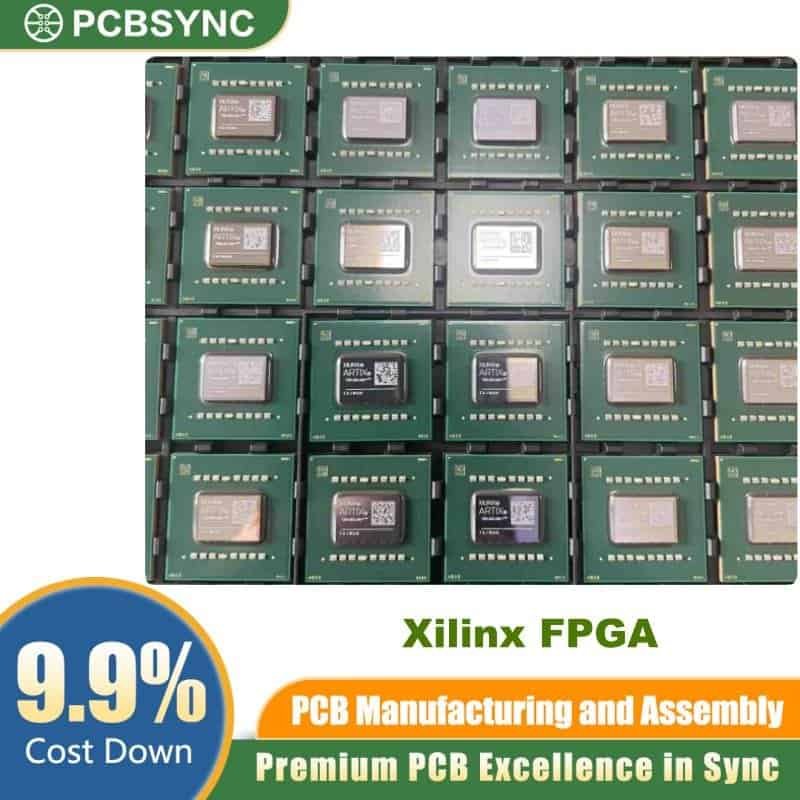
AMD Xilinx XC7S15-1CSGA225Q Spartan-7 FPGA Overview
The XC7S15-1CSGA225Q is a highly efficient, low-power Field Programmable Gate Array (FPGA) from the AMD Xilinx Spartan-7 family. Built on a advanced 28nm High-Performance Low-Power (HPL) process technology, this integrated circuit balances small form-factor packaging with high I/O counts per square millimeter. Designed with the stringent automotive Q-grade qualification, it operates seamlessly across an expanded temperature range from -40°C to +125°C, making it exceptionally reliable for critical applications.
This semiconductor component addresses complex system integration requirements. It features a high pin-count to logic ratio optimized for cost-sensitive markets. Hardware designers frequently select this device to scale modern digital architectures where board space and power efficiency are primary constraints.
Key Technical Specifications of XC7S15-1CSGA225Q
Understanding the exact architecture of an IC helps ensure software and hardware compatibility. This Spartan-7 device contains 12,800 logic cells and 1,000 Configurable Logic Blocks (CLBs) to handle concurrent hardware description processing. It includes a built-in MicroBlaze™ soft processor core capable of running over 200 DMIPs, giving engineers an accessible path to implement embedded control systems directly within the programmable fabric.
Advanced Processing Performance & Interface Capabilities
Beyond basic logic processing, this structural chip integrates 20 dedicated DSP (Digital Signal Processing) slices to manage high-speed algorithms. This makes it a great choice for localized sensor filtering, compute-heavy conversions, and real-time processing.
The physical configuration supports data transfer bandwidth up to 800 Mb/s for DDR3 interfaces via a flexible, soft memory controller. For high-speed differential signal transfer, the structural interface pins support up to 1.25 Gb/s LVDS (Low-Voltage Differential Signaling) lines.
Common Target Industrial Applications
The balance of lower structural power consumption and reliable environmental ratings makes this hardware ideal for:
-
Industrial Automation: Sensor fusion, robotics motor control systems, and machinery IO breakout interfaces.
-
Automotive Subsystems: Advanced Driver Assistance Systems (ADAS) data aggregation, camera integration modules, and in-vehicle networking.
-
Consumer & Test Devices: Smart displays, medical monitoring interfaces, and communications test infrastructure.