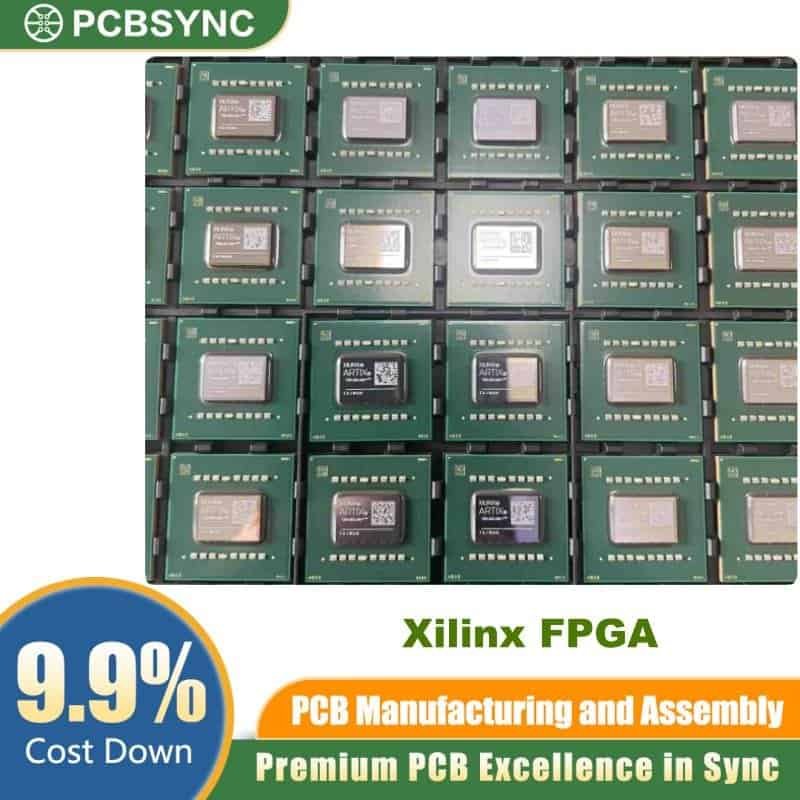
In the rapidly evolving landscape of embedded systems, the Xilinx XC7S50-2FGGA484C stands out as a pinnacle of the Spartan-7 family. Designed to deliver an optimal balance of cost, power efficiency, and high-performance logic density, this FPGA is a cornerstone for developers working on industrial automation, automotive sensor fusion, and advanced signal processing applications.
Unmatched Versatility with Spartan-7 Architecture
The XC7S50-2FGGA484C leverages the proven 28nm technology node to provide a robust platform for designers. With 52,160 logic cells and a wealth of integrated resources, it enables complex parallel processing that traditional microcontrollers simply cannot match. Whether you are implementing custom IO protocols or accelerating compute-heavy algorithms, this device provides the flexibility required to adapt to changing project requirements without hardware redesigns.
For those looking to integrate high-performance silicon into their next design, exploring a comprehensive range of Xilinx FPGA components is essential to ensure your supply chain remains robust and scalable.
Key Technical Specifications
The XC7S50-2FGGA484C is engineered for precision. Below is a detailed breakdown of its core technical parameters to assist in your hardware architecture planning:
| Feature |
Specification |
| Device Family |
Spartan-7 |
| Part Number |
XC7S50-2FGGA484C |
| Logic Cells |
52,160 |
| Total Block RAM |
2,700 Kb |
| DSP Slices |
120 |
| Package Type |
FGGA484 (Fine-Pitch BGA) |
| Operating Temp. |
0°C to 85°C (Commercial) |
| Speed Grade |
-2 |
| Voltage Range |
0.95V – 1.05V |
Why Choose the XC7S50 for Your Design?
Engineers favor the XC7S50 series for its streamlined feature set that avoids the unnecessary overhead of larger, more expensive FPGAs. By focusing on essential connectivity and logic capacity, Xilinx allows designers to maintain a smaller physical footprint while still benefiting from the sophisticated Vivado Design Suite.
Reliability and Performance
The “2” in the speed grade signifies a balanced performance profile, making it an excellent candidate for real-time applications where latency jitter must be strictly controlled. Furthermore, the 484-pin package offers sufficient I/O density to handle complex interface requirements, such as high-speed LVDS signaling or parallel memory bus architectures.
By leveraging the XC7S50-2FGGA484C, you are not just selecting a chip; you are adopting a reliable, industry-standard architecture that guarantees long-term support and a vibrant ecosystem of development tools and community knowledge. Whether you are scaling an IoT gateway or a high-precision medical instrument, this FPGA provides the performance headroom necessary for innovation.